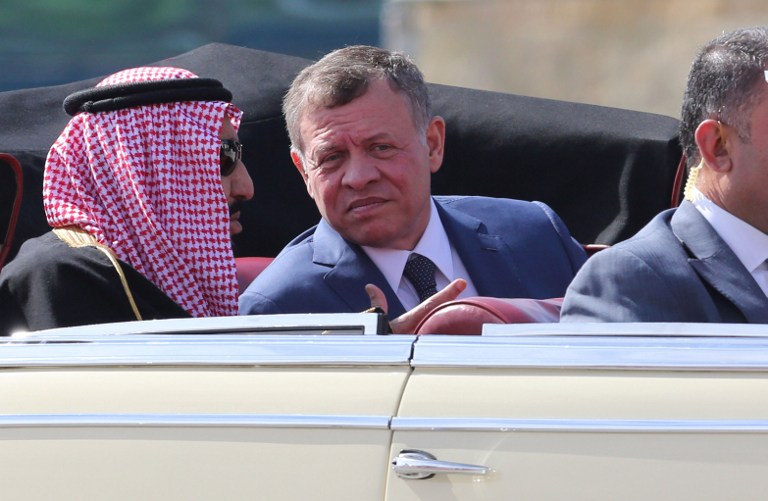
Saudi Arabia's King Salman bin Abdulaziz al-Saud and Jordanian King Abdullah II sit in a vintage car during a welcome ceremony at the airport in the Jordanian capital Amman on March 27, 2017 ahead of the 28th Summit of the Arab League. / AFP PHOTO / Khalil MAZRAAWI
The Jordanian army on Saturday denied a report that two of King Abdullah II’s brothers had been arrested over contacts with Saudi Arabian officials.
The alleged arrests were said to have been directed by Abdullah after his intelligence services notified him of communications between his two brothers, as well as a cousin, with officials in Saudi Arabia and the UAE, the al-Sura regional site reported.
The website said the two were held in house arrest.
Amman is reportedly frustrated with Crown Prince Mohammad Bin Salman’s new agenda, namely his desire to strip the Hashemite Kingdom of its custodianship over the Temple Mount, according to the Haaretz daily.
But in denying the arrests, Jordanian military officials said the brothers — Prince Faisal bin Hussein and Prince Ali bin Hussein — had simply “retired.”
Get The Times of Israel's Daily Editionby email and never miss our top stories
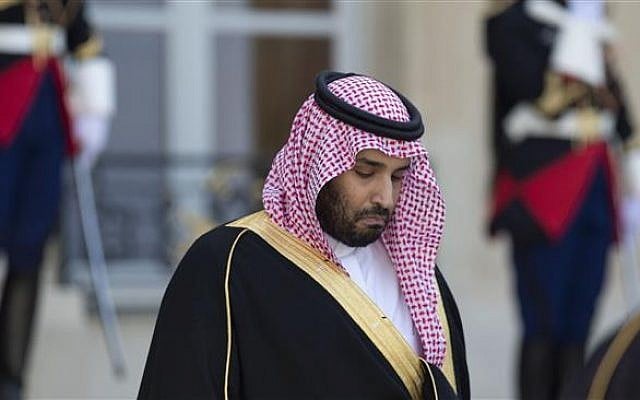
Saudi Deputy Crown Prince and Defense Minister Prince Mohammad bin Salman bin Abdul Aziz Al Saud (AFP)
The state-run Petra news agency said the dismissal of Abdullah’s relatives was merely part of a “restructuring” plan to make way for the king’s eldest son, Hussein, to serve a larger role in the army.
The Saudi crown prince has led a broad anti-corruption campaign which has included the arrests of 11 princes as well as some 200 other officials and business-people. US analysts believe the move may have been an attempt to push out rivals ahead of his father stepping down, the New York Times reported.
Advertisement
Help us report truthfully on social media
As a multimedia journalist, my job is to take the quality, fact-based journalism produced by The Times of Israel newsroom and make it accessible across every platform — from Instagram posts to podcasts to short-form videos.
This is how many, especially young people, consume news these days. But misinformation is rampant on social media. Our team at ToI produces accurate, responsible short-form reporting on Israel and the Jewish world.
If you believe in the importance of factual social media journalism, please consider joining our reader support group, The Times of Israel Community. Your financial support is essential to sustain responsible multimedia reporting.
We’re really pleased that you’ve read X Times of Israel articles in the past month.
That’s why we started the Times of Israel - to provide discerning readers like you with must-read coverage of Israel and the Jewish world.
So now we have a request. Unlike other news outlets, we haven’t put up a paywall. But as the journalism we do is costly, we invite readers for whom The Times of Israel has become important to help support our work by joining The Times of Israel Community.
For as little as $6 a month you can help support our quality journalism while enjoying The Times of Israel AD-FREE, as well as accessing exclusive content available only to Times of Israel Community members.
Thank you, David Horovitz, Founding Editor of The Times of Israel


 Add ToI as a Preferred Source on Google