 Add ToI as a Preferred Source on Google
As locals made their way along the winding, tree-lined paths of Kibbutz Bar’am on their way to the communal dining room for lunch, visitors could see that most of the displaced residents of this small farming collective in the Upper Galilee have returned home.
Inside, over a lunch of schnitzel and rice, kibbutz member Avi Ifergan gestured around the spacious dining hall. “You see it in here,” he said. “It’s like everything is back to normal.”
The Times of Israel visited the kibbutz on the eve of the first anniversary of the November 2024 ceasefire with the terror group, after more than a year of war had left much of Israel’s north heavily damaged and deserted.
The community, which lies just 300 meters (roughly 1,000 feet) from the border with Lebanon, was evacuated in its entirety on October 9, 2023, two days after the bloody Hamas invasion of Israel’s Gaza border communities on October 7, amid fears that the Lebanon-based Hezbollah terror group could attempt a similar onslaught.
Bar’am residents were among the 60,000 people of 32 communities in northern Israel who were evacuated after Hezbollah and allied terror groups began firing missiles and drones into Israel in solidarity with Hamas on October 8, 2023.
On October 9, Ifergan, the 70-year-old volunteer curator of the kibbutz’s Bar-David Art and Judaica Museum, hurriedly stored much of the museum’s permanent artwork in a basement storage room and rolled up a collection of sketches that were on display, stuffing them into his car to return to the artists in Tel Aviv.
“It was very tense,” said Ifergan. “Some of the artists wanted to know what was happening with their artwork, some couldn’t care less; and I just took care of it.”
Some 90 percent of the displaced kibbutz members are now back home after returning in the spring and summer of this year — including Ifergan, who spent much of the time with his sister in Beit She’an.
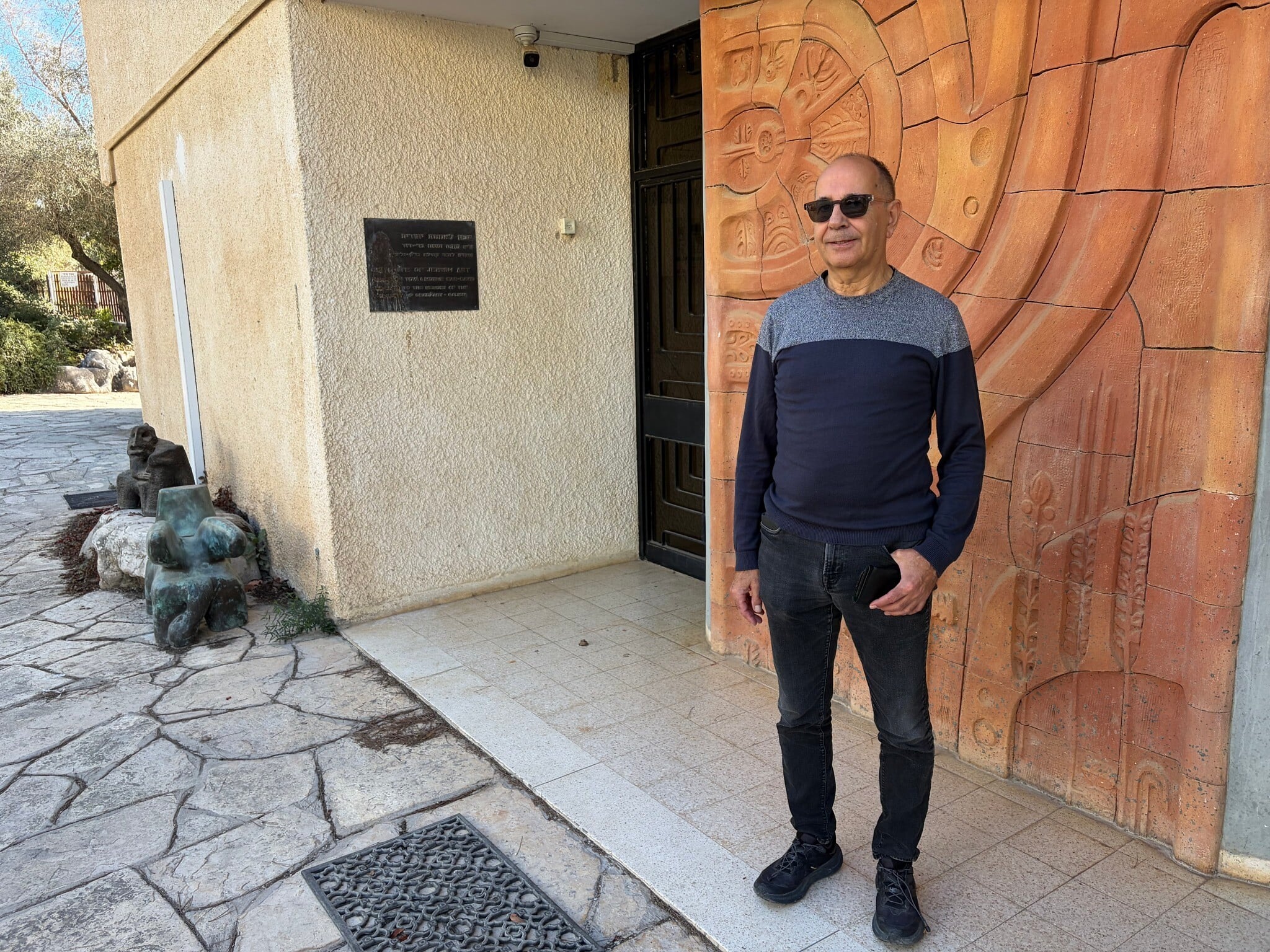
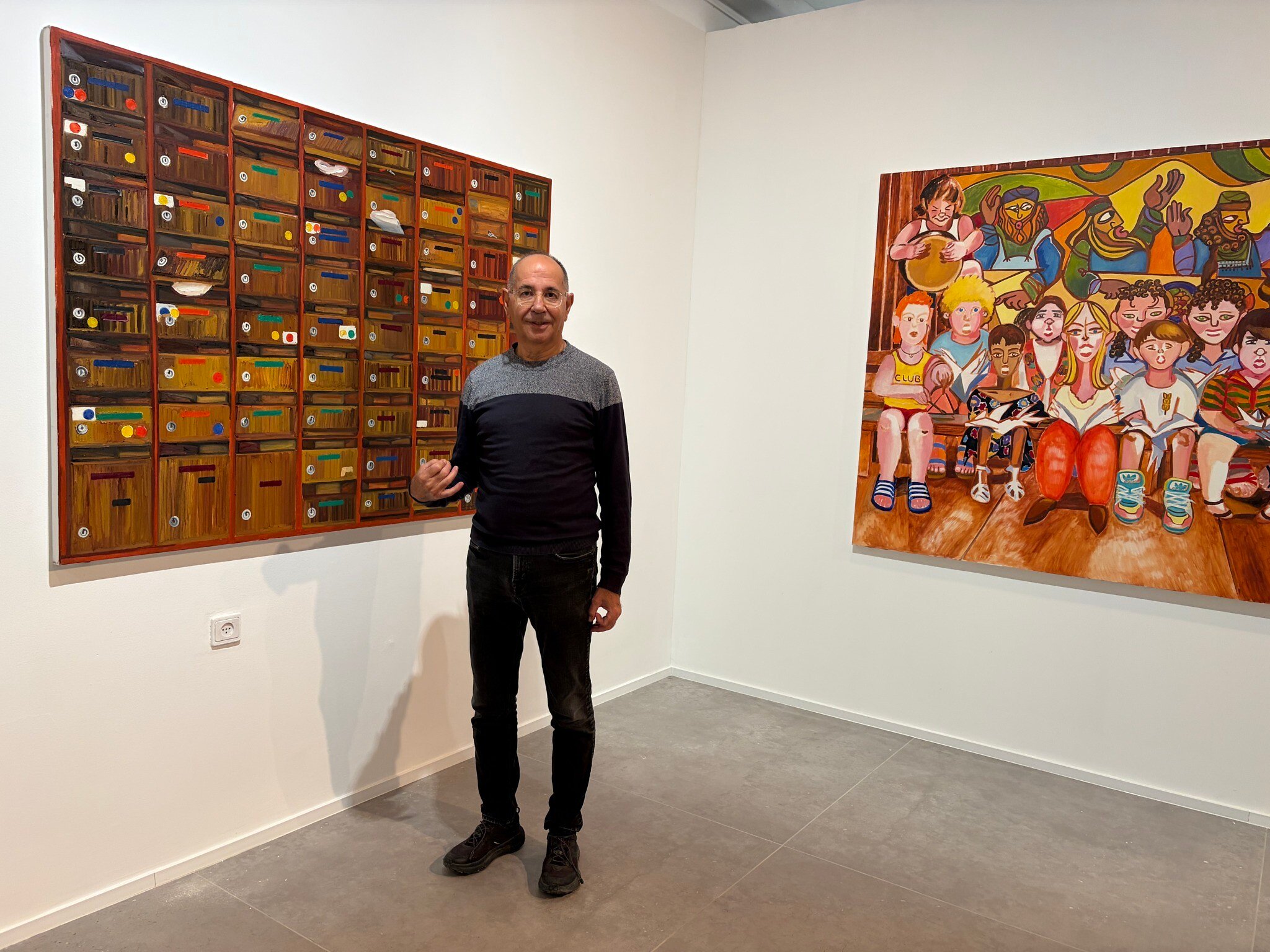
The Bar-David Museum is now open again, with three new exhibits that opened on November 8 and will remain at the museum through February 20.
The exhibits include Noam Edry’s first solo show, “Red Day,” a broad, vibrant collection of oils depicting life in her community, Kibbutz Ramat Yohanan in the Haifa area, where she returned to from Tel Aviv several years ago.
There is also Yael Toren’s “At the Edges of Sorrow,” showing her work with glass, clay, nerve, bone, paper, light — all fragile or perishable materials that examine what sorrow becomes when it is turned into an object.
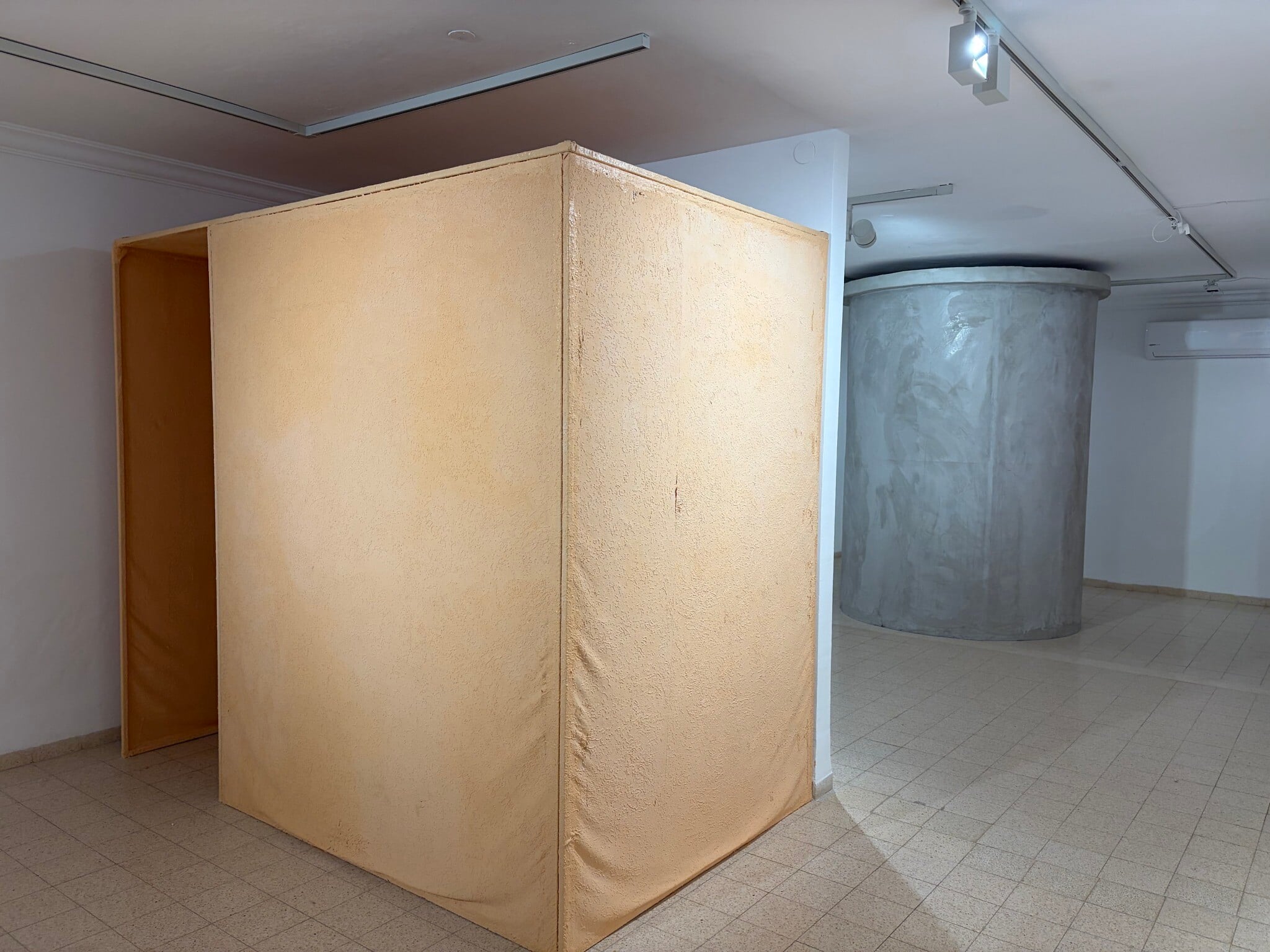
The third exhibit is “Protected Landscape” by Gabriella Wilentz, in which she offers a look at defensive structures, including a pillbox guardhouse that doubles as a place of prayer and a bunker, as well as a latex bomb shelter in human skin tone.
The exhibits were planned before October 7 and the ensuing wars with Hamas, Hezbollah, Iran, and Yemen’s Houthis, but much of the artwork feels appropriately current with the tensions and trauma of the last two years.
‘Who was going to come here?’
Throughout his displacement, Ifergan would return every week or so to visit his home village, nervously traveling along a back road, fearful that at any moment a heat-seeking rocket or airborne missile could strike without warning.
He said he wondered when he would be able to reopen the museum and restart his planned exhibits, but would dismiss the thoughts as soon as they entered his mind.
“I mean, who was going to come here?” said Ifergan. “Really, that’s what I was thinking.”
Ifergan, like the other kibbutz members, was nervous that Elcam Medical, a decades-old medical device factory and the kibbutz’s main source of income, would get hit by a Hezbollah rocket.
In fact, fairly little damage was incurred at the kibbutz, although the roof of the museum and several other buildings did sustain some minor rocket impacts.
Ifergan often drives visitors over a bumpy, sandy road to an observation post across from the kibbutz, where the Lebanese homes visible across the way once flew the Hezbollah flag, before the November 2024 ceasefire stipulated that the terror group clear out of southern Lebanon.
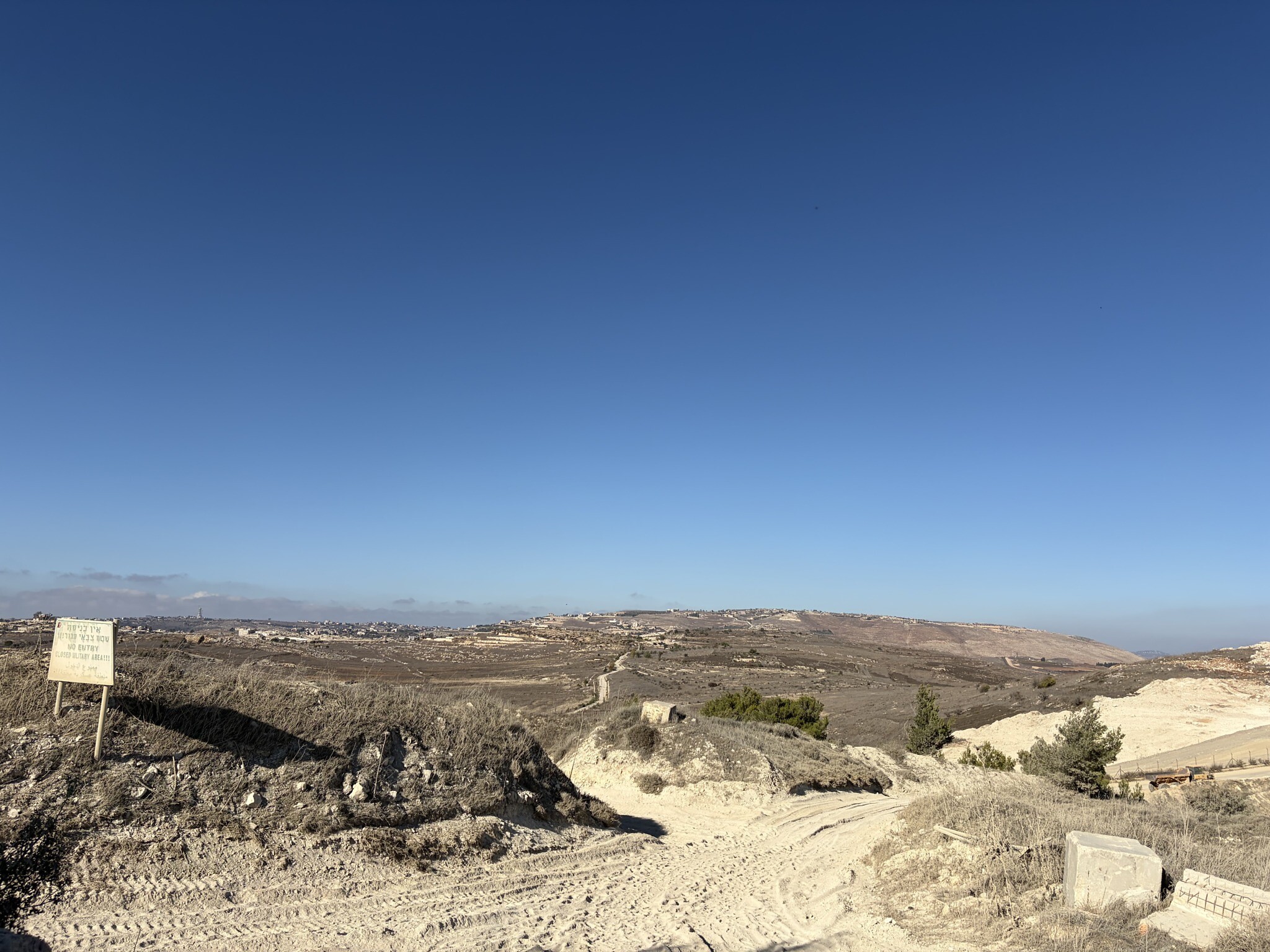
“You live in this amazing pastoral place, but it can change in a moment,” said Ifergan, who has lived at Bar’am for all of his adult life.
While Bar’am is within spitting distance of its Lebanese neighbors, since the war the community is less fearful that Hezbollah’s tunnel network — some of which the IDF says reaches Israel — can open up into the kibbutz, as it is situated uphill from the Lebanese border.
Still, said Ifergan, the kibbutz members have been told many times that Hezbollah had underground infrastructure built all along the border with Israel, equipped with “everything — ammunition and kitchens and tunnels that led to various Israeli communities.”
“There were a lot of spaces like that, and the army blew them all up,” he said.
“We can’t wait, we can’t be naive,” said Ifergan. “We were very fortunate on October 7, when the whole border with Lebanon didn’t blow up into another front of the war.”
Ifergan said the kibbutz residents always been told to have a bag ready for evacuation, which he did. When they were told to evacuate, “tons of tanks and soldiers” arrived immediately, he said.
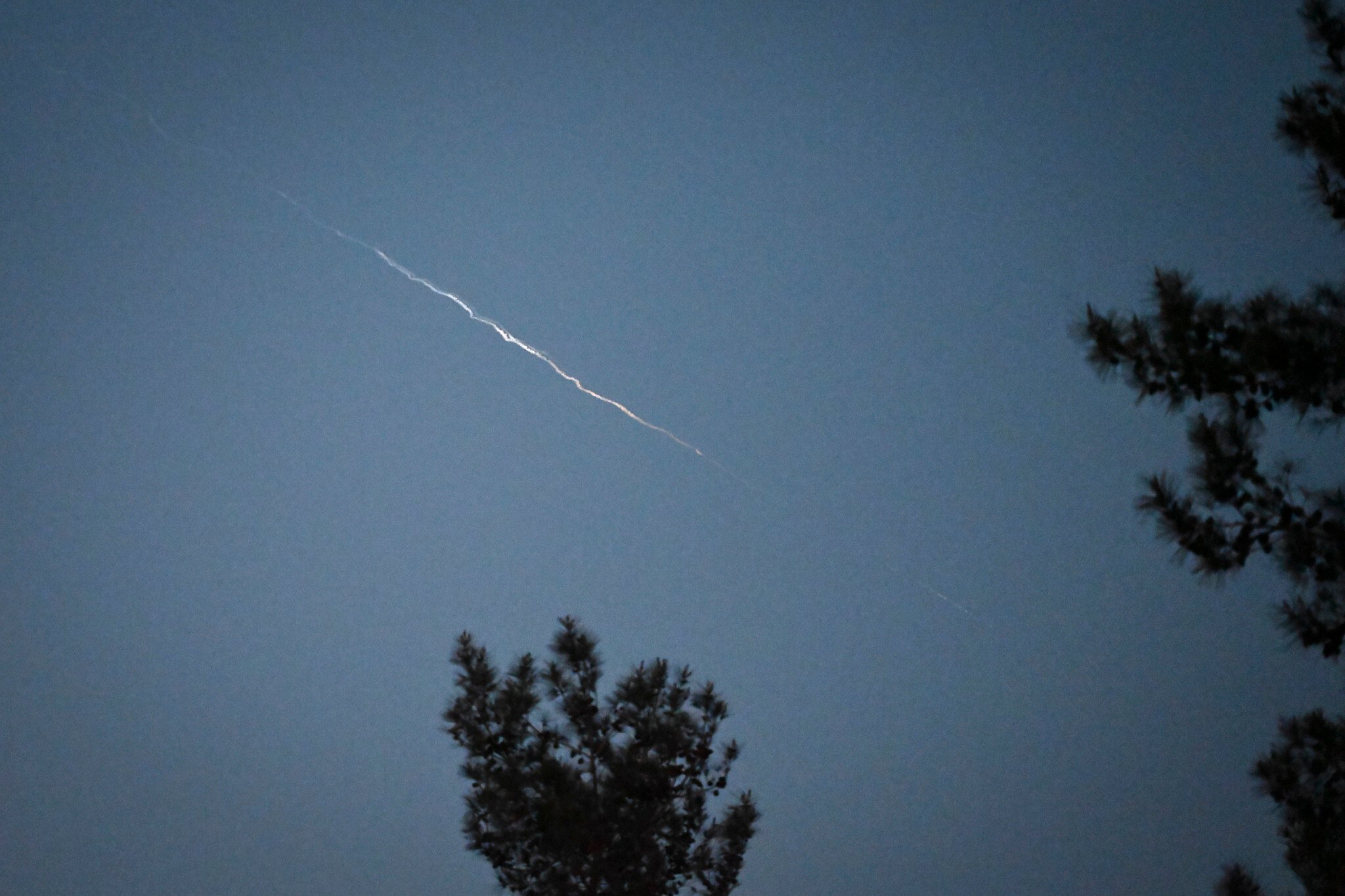
But by this past summer, shortly after his return, Ifergan was ready to install the three exhibit long planned for the museum.
‘Everything you want in a painting is here’
The contemporary artworks in all three displays are at a remove from the museum’s permanent collection, a massive collection of Judaica, Israeli works from the Bezalel art period of the early 1900s, and German expressionism collected by Moshe Bar David, a Haifa municipal worker who bought and bartered for hundreds of artworks throughout his life and then donated them to the Hashomer Hatzair kibbutz where his daughter lived.
The collection, which includes works by Marc Chagall, Boris Schatz, Herman Struck, Max Lieberman, and others, is held in the community’s former children’s house, which was renovated and turned into a museum in 1980.
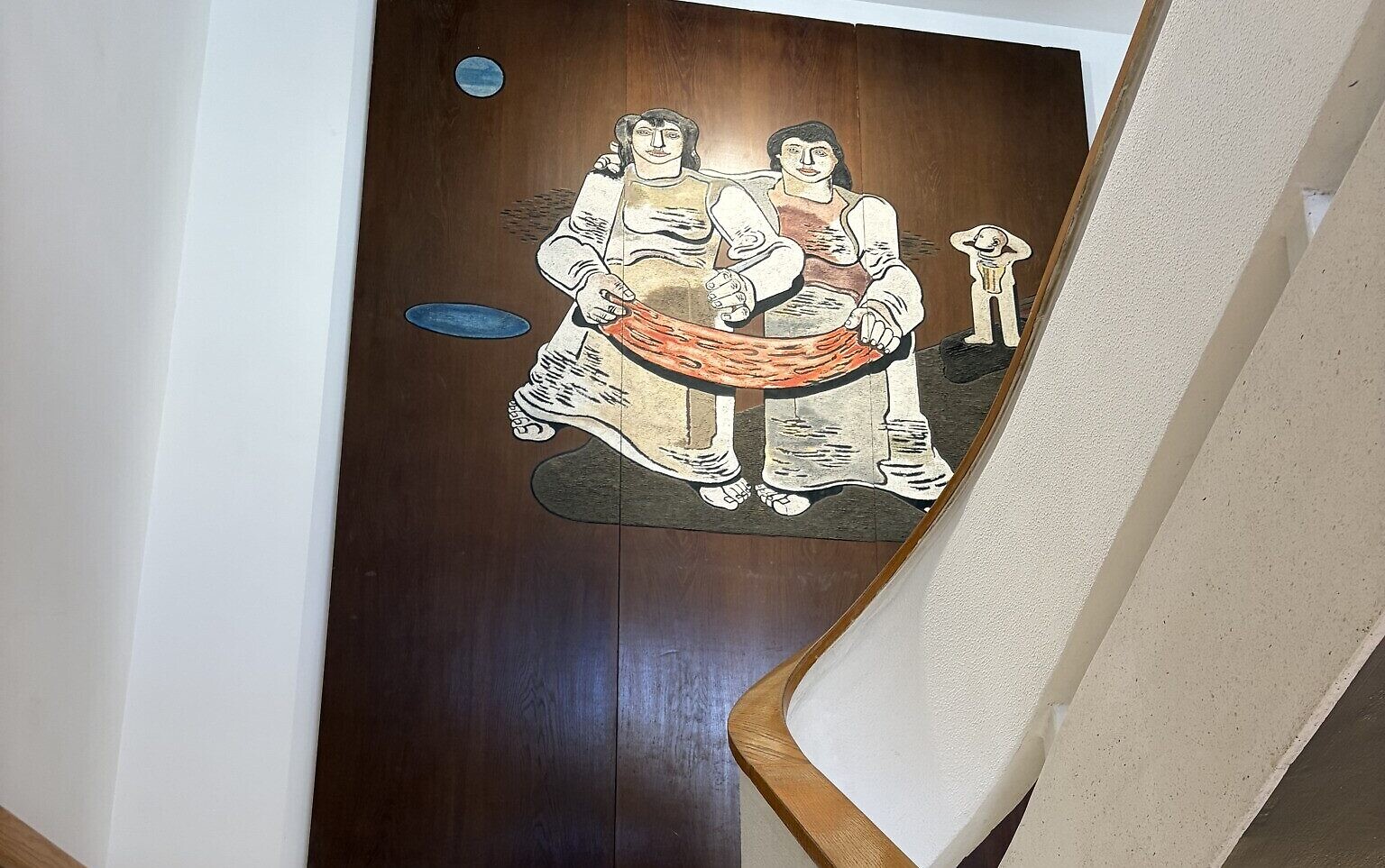
Like most kibbutz members, Ifergan has filled many roles in his community, including maintenance manager. He taught art at local colleges before taking on the volunteer role of curator at the kibbutz museum five years ago.
Born in Morocco, Ifergan arrived at the kibbutz during his IDF service in the Nahal Brigade and ended up staying.
“It’s a lot of work, but it’s my kibbutz,” said Ifergan, who rotated exhibits regularly before October 7, holding gallery talks and symposia, and hosting fellow curators and artists from the country’s center.
It’s been wonderful to return home, he said, which he did in stages, first for one day to see how it felt, then adding successive days until it felt right to move back home permanently.
On a Friday night, soon after their return home, the kibbutz members received urgent WhatsApp messages to shut the lights in their homes and close the shutters due to a suspected terrorist invasion.
“I had no gun. I used to be a combat soldier, but now I was thinking, ‘Where would I go, to the roof?'” said Ifergan. “That’s what goes through your head.”
Still, he’s happy to be back home, planning events around the exhibits, hosting guests once again.
He gazed at Noam Edry’s oils paintings that depict familiar scenes from kibbutz life from costume and sewing rooms to preschool children singing in a choir, and one final canvas depicting an amalgam of the hostage rallies and protests of the last two years.
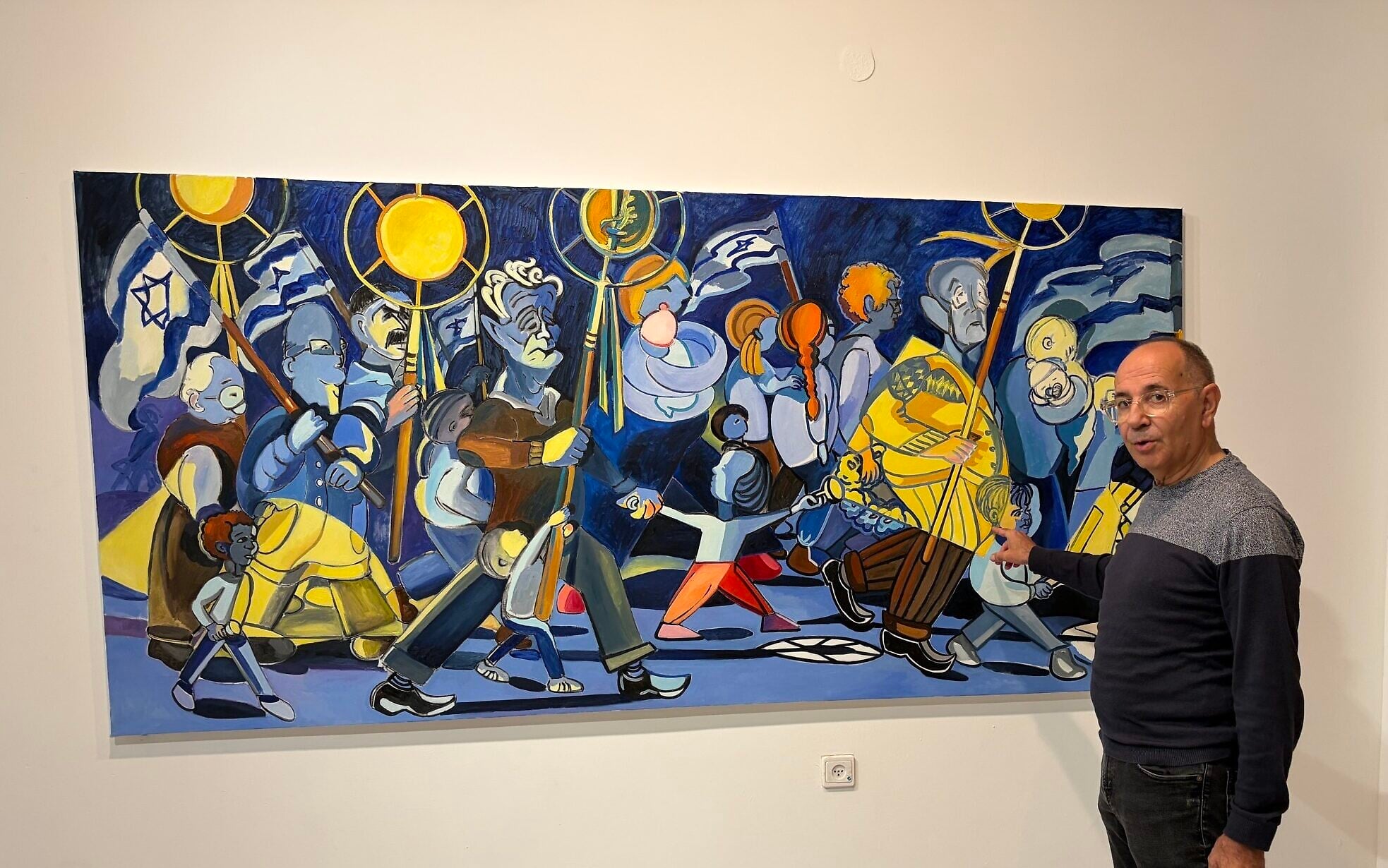
“Everything you want in a painting is here,” he said. “It’s an entire narrative, and people come to see it and recognize the faces, and they just see themselves.”
It’s a show about life on a kibbutz, and right now, it’s the life that Ifergan hopes he can continue living.

The Times of Israel Community.