

Live updates (closed)
 Add ToI as a Preferred Source on Google
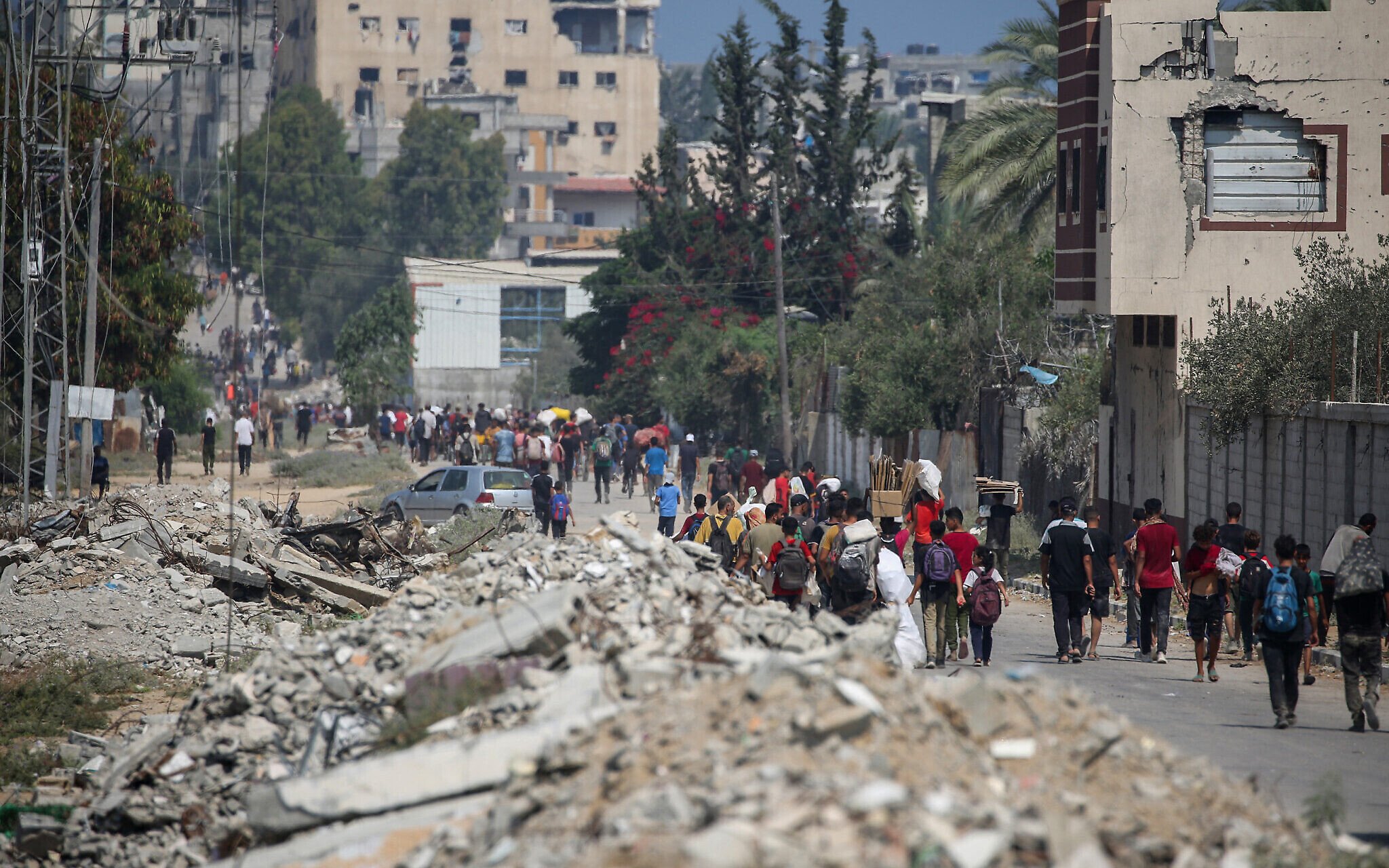
The Times of Israel liveblogged Saturday’s events as they unfolded.
Ex-hostage Emily Damari says remaining captives must be freed: ‘Come on already!’

Freed hostage Emily Damari being prepped for surgery on her left hand at Sheba Medical Center on March 2, 2025, after she was shot on October 7, 2023, and not given proper medical care during 15 months of Hamas captivity in Gaza. (Pomi Ofi Tal)
Speaking to the Daily Mail about her time in captivity, British-Israeli Emily Damari says: “Come on already! What is taking so long?”
Appealing to the American and Israeli leaders, she says, “You saved my life, now you must do the same for the last 50 hostages. Only then can we start to heal.”
Damari recalls being held in a tiny cage in a Gaza tunnel in unbearable conditions with other hostages. She recalls hiding her sexual identity from her captors, as they spoke of killing their own family members if they were to find out they were gay.
She recounts, as she was being abducted on Oct 7, telling the terrorists “‘Shoot me!’ I didn’t want to be kidnapped, I would prefer to die. I took his gun, put it to my head and said: ‘Shoot me! Shoot me!’
“We just continued to survive,” she says. “We were totally surrounded by terrorists. Five girls. They have weapons. They are stronger than you. They can do whatever they like, whenever they like.”
At one point Damari said she tricked a guard into giving her his weapon “to play with.” When he walked away she told the other girls, “‘Maybe I should kill him?’ I started getting really excited about the idea.
“‘But then the girls said, ‘Yeah, but then what? Then we’re all going to die.'”
Damari speaks of the synchronicity and “twin-like” connection she developed with fellow hostage Romi Gonen. With Emily missing two fingers from the attack and Romi’s right arm not working where she herself had been shot, the two learned to work in tandem to eat, dress, and wash.
Death toll rises in Thai-Cambodian clashes despite ceasefire call
Thailand and Cambodia clash for a third day, as the death toll from their bloodiest fighting in years rises to 33 and Phnom Penh calls for an “immediate ceasefire.”
A long-running border dispute erupted into intense conflict involving jets, artillery, tanks and ground troops on Thursday, prompting the UN Security Council to hold an emergency meeting on the crisis Friday.
Cambodia’s defense ministry says 13 people are now confirmed killed in the fighting, including eight civilians and five soldiers, with 71 people wounded.
In Thailand, the army says five soldiers were killed on Friday, taking the toll there to 20 — 14 civilians and six military.
The death toll across the two countries is now higher than the 28 killed in the last major round of fighting between 2008 and 2011.
Both sides reported a clash around 5 a.m today (2200 Friday GMT), with Cambodia accusing Thai forces of firing “five hea.vy artillery shells” into locations in Pursat province, which borders Thailand’s Trat province.
NASA says 20% of workforce to depart space agency
About 20% of the employees at the US National Aeronautics and Space Administration are set to depart the space agency, a NASA spokesperson says.
Around 3,870 individuals are expected to depart, but that number may change in the coming days and weeks, the spokesperson says, adding that the remaining number of employees at the agency would be around 14,000.
Lion cub found chained in yard in Palestinian town near Jerusalem
A lion cub has been found in the West Bank Palestinian town of Abu Dis near Jerusalem, wildlife officials say.
The cub, found chained in a yard during a police sweep against criminals, is the sixth lion cub found this year.
The Israel Parks and Nature Authority says the cub has been transferred for veterinary treatment at one of their centers.
“The cub does not have any external injuries, but he is thin,” the authority says. “After a series of further checks we will be able to see if he has any other problems.”
Law enforcement officials suspect that smugglers have been using drones to fly monkeys and lion cubs into Israel and the West Bank by way of Egypt and Jordan.
Rocket warning sirens sound in Kissufim, near Gaza border
Rocket warning sirens are sounding in the community of Kissufim near the Gaza Strip border.
The IDF says it is investigating the cause.
Rocket fired from Gaza at Kissufim lands in open area, no injuries
A rocket launched from the southern Gaza Strip struck an open area near the border community of Kissufim, the military says.
Sirens had sounded in Kissufim. There are no reports of injuries.
Italy’s Meloni: Recognising Palestinian state before it is established may be ‘counterproductive’

Italy's Prime Minister Giorgia Meloni addresses a joint press conference with Algeria's President during a summit at the Villa Doria Pamphili in Rome on July 23, 2025. (Tiziana Fabi/AFP)
Italy’s Prime Minister Giorgia Melonisays that recognizing the State of Palestine before it is established could be counterproductive.
“I am very much in favor of the State of Palestine but I am not in favor of recognizing it prior to establishing it,” Meloni tells Italian daily La Repubblica.
“If something that doesn’t exist is recognized on paper, the problem could appear to be solved when it isn’t,” Meloni adds.
France’s decision to recognize a Palestinian state at the United Nations General Assembly in September drew condemnation from Israel and the United States, amid the war in Gaza between Israel and Hamas.
On Friday, Italy’s foreign minister said recognition of a Palestinian state must occur simultaneously with recognition of Israel by the new Palestinian entity.
A German government spokesperson said on Friday that Berlin was not planning to recognize a Palestinian state in the short term and said its priority now is to make “long-overdue progress” towards a two-state solution.
Courthouse attacked by separatists in Iran’s Sistan-Baluchestan province, casualties reported
Gunmen from the Sunni Jaish al-Adl Baluch group attack a courthouse in Iran’s restive southeastern Sistan-Baluchestan province, Iranian media report.
The semi-official Fars news agency says there may have been a suicide bomber involved in the assault in Zahedan, the capital of Sistan-Baluchestan.
It says explosions and gunfire were heard around the courthouse building, adding that Jaish al-Adl had in a statement taken responsibility for the attack.
Mehr news agency says a number of injured had been taken to hospital.
The Baluch human rights group HAALVSH, quoting eyewitnesses, said several judiciary staff and security personnel were killed or wounded when the assailants stormed the judges’ chambers.
Sistan-Baluchestan province, near the borders with Pakistan and Afghanistan, is home to Iran’s Sunni Muslim Baluch minority, who have long complained of economic marginalization and political exclusion.
The province frequently sees clashes between security forces and armed groups, including Sunni militants and separatists who say they are fighting for greater rights and autonomy. The Iranian government accuses some of them of ties to foreign powers and involvement in cross-border smuggling and insurgency.
Set by Israeli DJ Skazi nixed at Tomorrowland over ‘security considerations’

Israeli DJ Skazi performs at a protest against the government and the government's new restrictions following the spread of the coronavirus in Tel Aviv on July 25, 2020. (Tomer Neuberg/Flash90)
A scheduled set by Israeli EDM project Skazi at Belgium’s Tomorrowland music festival has been canceled due to “security considerations.”
Israeli musician Asher Swissa, who performs as Skazi, writes on his Instagram story, “My message has always been and will continue to be: one of unity, joy, and mutual respect.”
Israelis flock to the Belgian EDM festival annually, and it is common to see Israeli flags waved in the large crowds.
While the event is generally welcoming to Israelis, a civilian and an IDF soldier attending the festival were detained this week for questioning by police and released shortly thereafter.
Belgium’s public broadcaster reported, citing the federal prosecutor’s office, that the Israelis were briefly detained after a war crimes complaint was lodged against them by the Hind Rajab Foundation.
Five civilians, three gunmen killed in attack on Iranian courthouse
TEHRAN, Iran — Gunmen killed five civilians during a “terrorist attack” on a judiciary building in southeast Iran before being killed themselves, state media reports.
“Unknown gunmen attacked the judiciary centre in Zahedan,” the capital of southeastern Sistan-Baluchistan province, the judiciary’s Mizan Online says.
“Five people have been killed and 13 injured in this terrorist attack,” the report says, while adding that the counts are “preliminary” and the toll may rise.
Separately, the official IRNA news agency reports that three of the attackers were killed during the assault, citing the regional headquarters of the Islamic Revolutionary Guard Corps.
According to Alireza Daliri, deputy police commander of Sistan-Baluchistan province, the attackers attempted to enter the building disguised as visitors.
The assailants threw a grenade into the building, Daliri says, killing several people inside, including a one-year-old baby and the child’s mother.
According to Iranian media, Jaish al-Adl (Arabic for “Army of Justice”), a Baloch jihadist group based in Pakistan but also active in Iran, claimed responsibility for the attack.
IDF footage shows airstrikes on Gaza terror cell that detonated bomb against troops
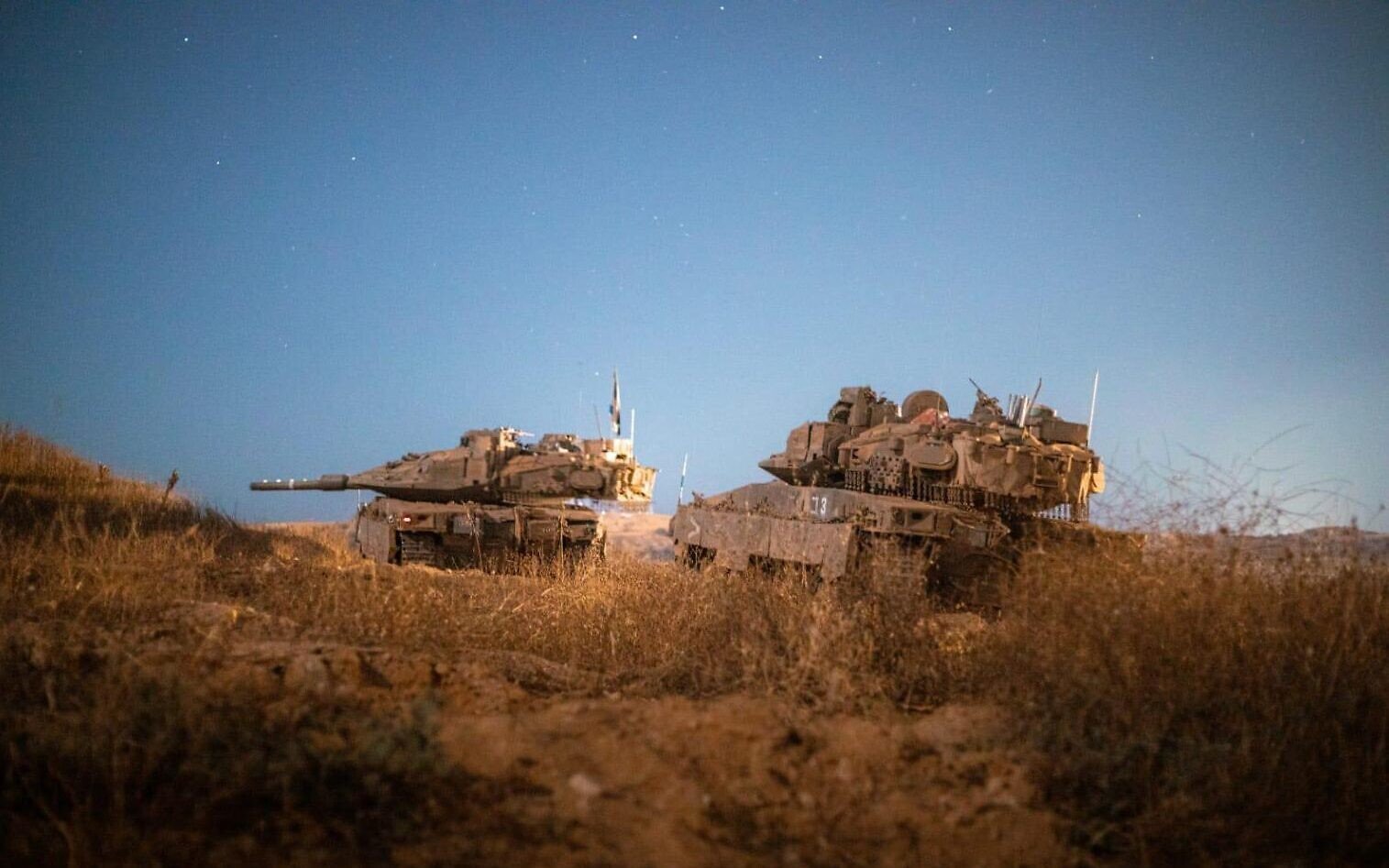
IDF troops operating in the Gaza Strip, in images published on July 26, 2025. (Israel Defense Forces)
The IDF releases footage showing airstrikes on a cell of terror operatives that detonated a bomb against troops operating in southern Gaza’s Khan Younis.
According to the IDF, no soldiers were wounded in the attack. Troops of the 188th Armored Brigade spotted the operatives and directed drone strikes that killed them.
Meanwhile, in Gaza City, the military says troops of the 7th Armored Brigade directed airstrikes on launchers used to fire anti-tank missiles at the forces.
In the past day, the IDF says the Israeli Air Force carried out strikes on over 100 terror targets across Gaza, including cells of operatives, tunnels, buildings used by Hamas, weapon depots, and anti-tank launch positions.
The Hamas-run health ministry in Gaza reported yesterday that 89 people had been killed in the previous 24 hours.
Exiled crown prince says some 50,000 Iranian military, government officials have signed up to his opposition campaign
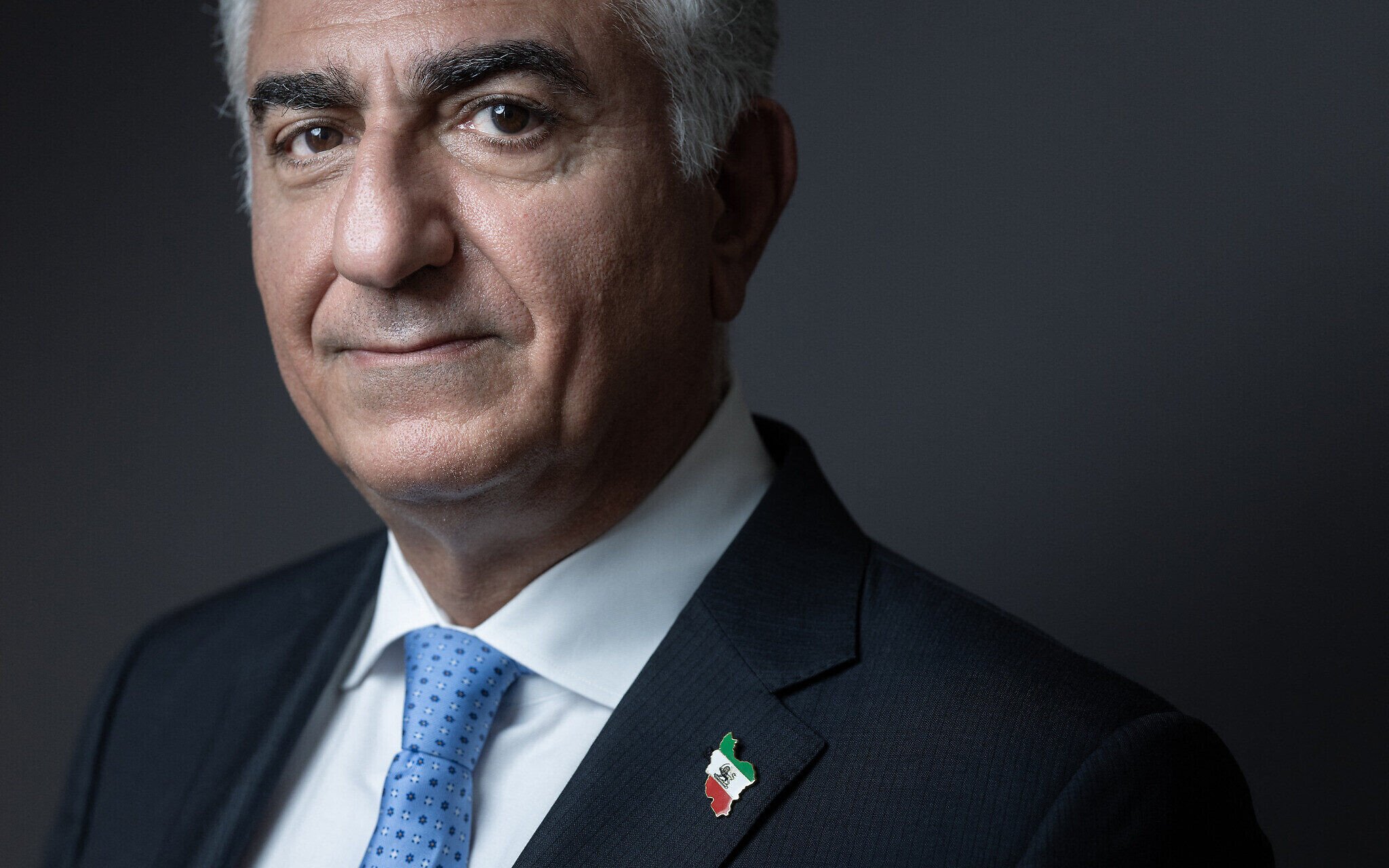
Iran's exiled Crown Prince Reza Pahlavi poses during a session photo after a press conference in Paris, France on June 23, 2025. (JOEL SAGET / AFP)
Reza Pahlavi, the crown prince of Iran, says at least 50,000 military and government officials have registered for a secure opposition platform aimed at overthrowing the Islamic Republic and Supreme Leader Ayatollah Ali Khamenei.
Pahlavi, who lives in exile in the United States, says there is a separate website for regular citizens interested in participating in the national opposition.
“Every week we have additional numbers coming. Clearly we have to analyze the data, it’s an arduous process — it will take some time — but the signals are quite strong. We have received [a] tremendous […] response, and of course we are giving top priority to key elements within those designated segments that I mentioned,” he says.
Gazan officials say at least 25 killed, most by gunfire while waiting for aid
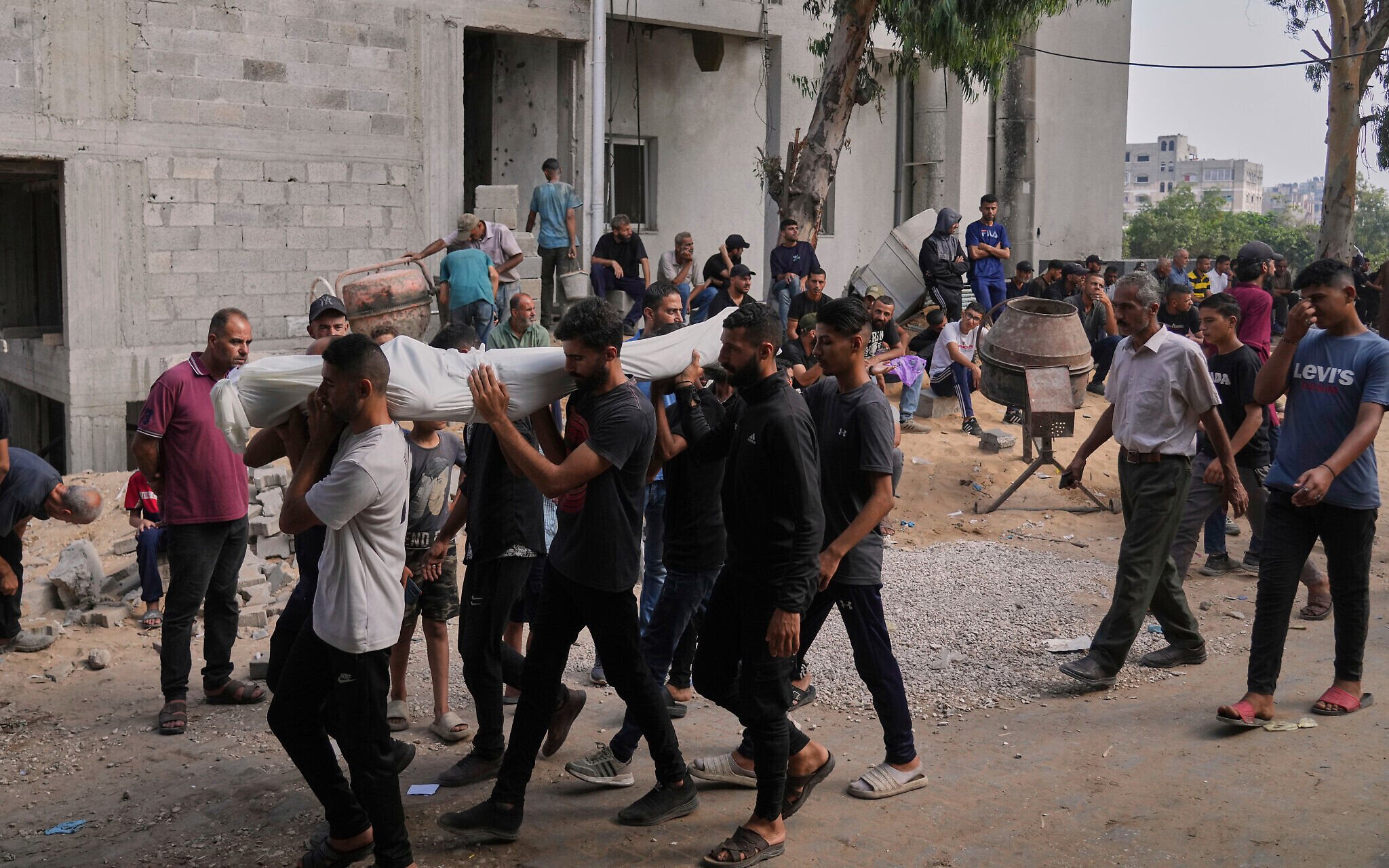
Palestinians carry a body of a man during his funeral outside Shifa Hospital, in Gaza City, July 26, 2025. (AP Photo/Abdel Kareem Hana)
At least 25 people were killed by Israeli airstrikes and gunshots overnight, according to unnamed health officials and Gaza’s ambulance service.
The majority of victims were killed by gunfire as they waited for aid trucks close to the Zikim crossing with Israel, say staff at Shifa Hospital, where the bodies were brought.
Israel’s army didn’t respond to a request for comments about the latest shootings.
Those killed in strikes include four people in an apartment building in Gaza City, among others, hospital staff, and the ambulance service say.
The figures cannot be independently verified and do not differentiate between combatants and civilians.
Times of Israel staff contributed to this report.
Settler extremists set several homes ablaze in West Bank village last night, IDF says
Israeli settler extremists set fire to several homes in the West Bank Palestinian village of Kisan last night, according to Palestinian media and the IDF.
The IDF says troops were dispatched to the scene upon receiving reports of the arson, and several suspects were detained and handed over to police.
No injuries were reported in the attack.
COGAT: Over 100 trucks’ worth of aid collected by UN, other groups from Gaza crossings yesterday
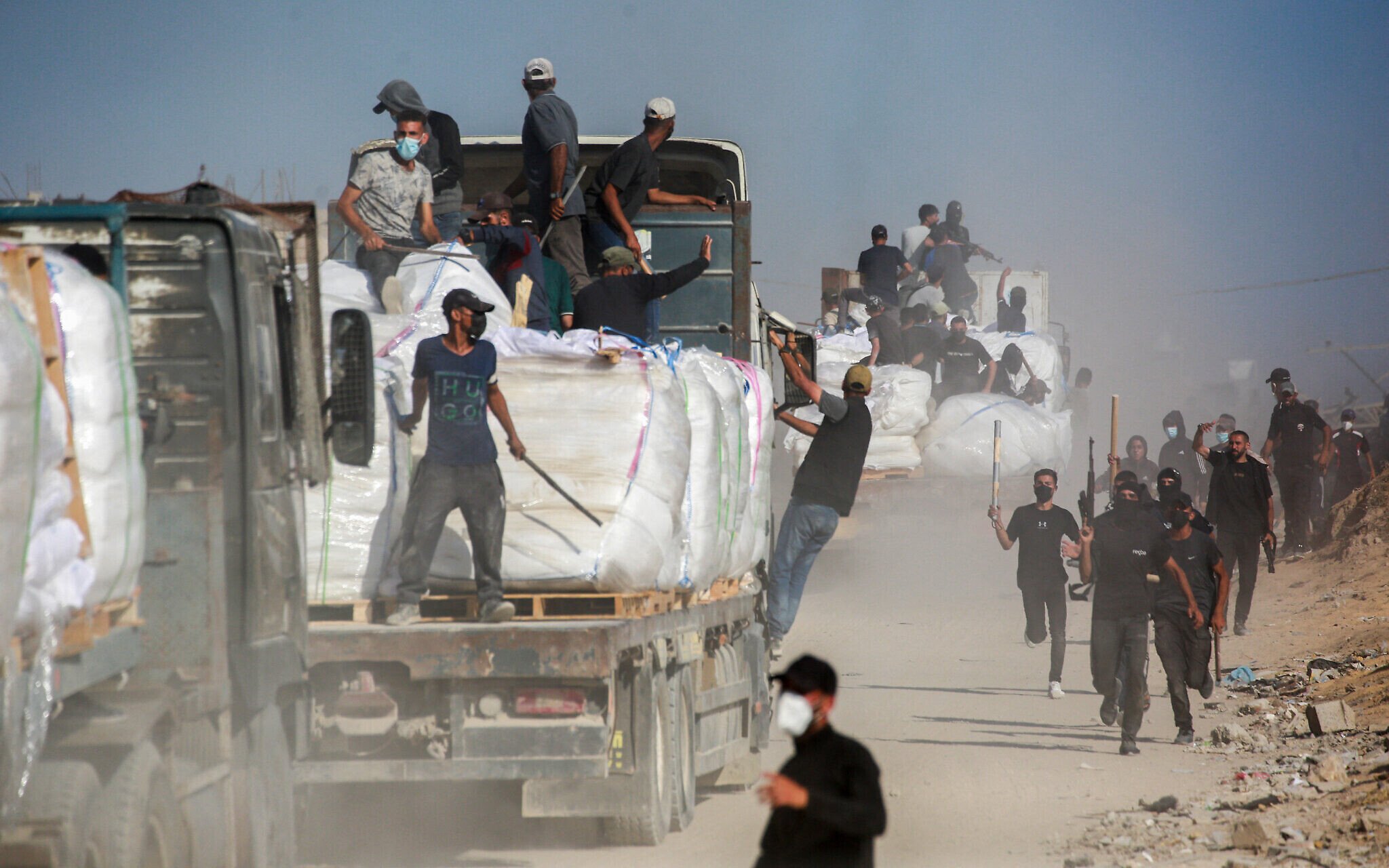
Volunteers from Palestinian families guard trucks carrying aid that entered the Gaza Strip from the Zikim border crossing, June 25, 2025. (Bashar TALEB / AFP)
More than 100 trucks’ worth of aid were collected by the United Nations and other international organizations from the Gaza side of Israel’s border crossings with Gaza and distributed in the Strip yesterday, the Coordinator of Government Activities in the Territories says.
According to COGAT, some 90 trucks of food were also unloaded at the crossings and are now waiting to be collected.
“Hundreds of trucks still await pickup. We continue to facilitate the entry of humanitarian aid into Gaza,” COGAT adds.
NYT: Israel has no evidence of systematic Hamas looting of UN aid in Gaza
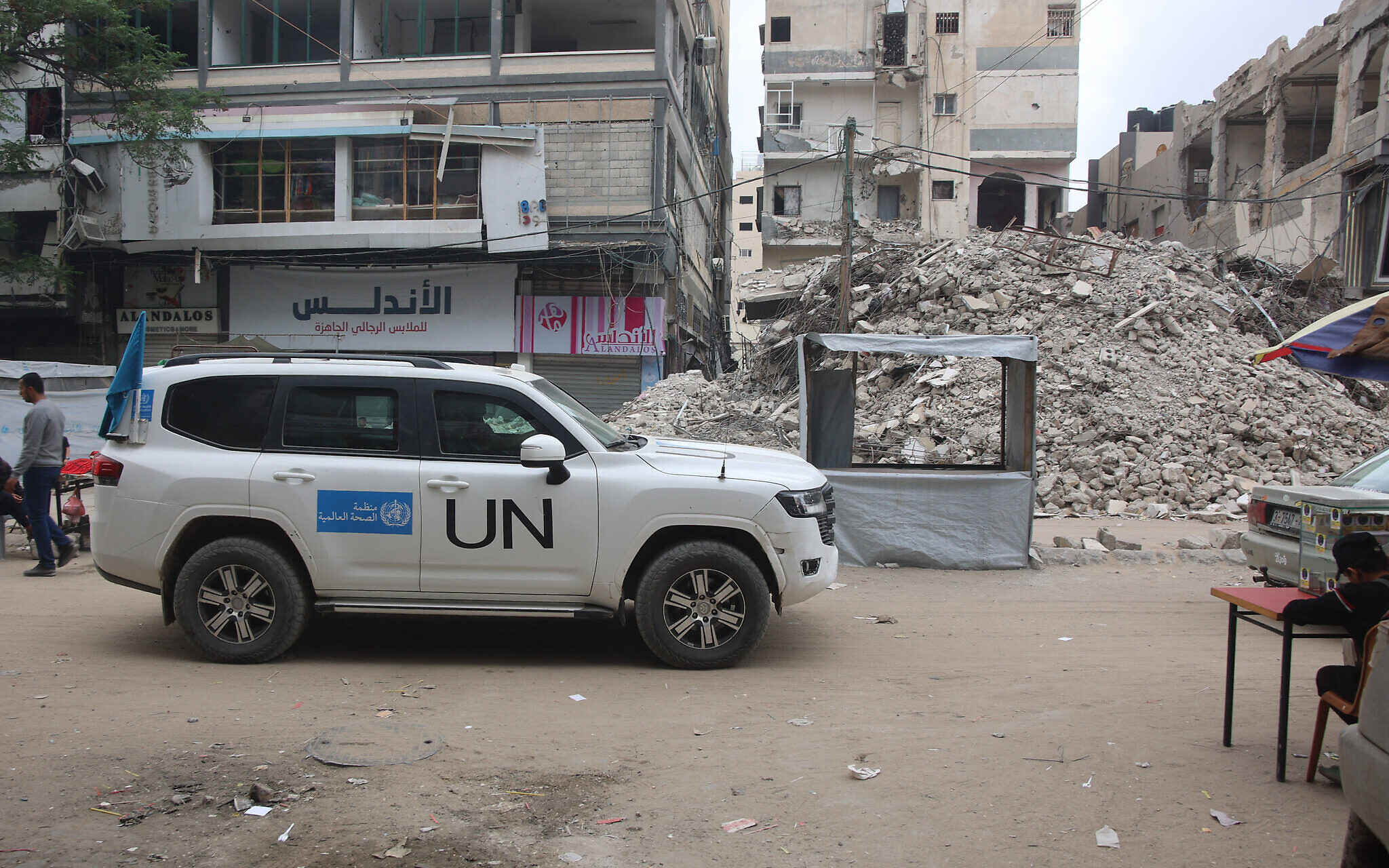
A United Nations vehicle is parked next to the rubble of a destroyed building in Gaza City, on May 12, 2025. (Omar AL-QATTAA / AFP)
Israel has no evidence that Hamas regularly steals aid from the United Nations, despite using it as the main justification for establishing the controversial Gaza Humanitarian Foundation, The New York Times reports, citing two senior Israeli military officials and two other Israelis involved in the matter.
The sources, who spoke on condition of anonymity, say that the UN system for distributing aid was the most reliable and effective method of distributing aid, while Hamas would steal from smaller organizations that contributed aid.
A Hamas representative did not immediately respond to requests for comment, and neither did the Prime Minister’s Office.
The military tells the Times in a statement that Hamas’s looting of aid is “well documented” and “exploited humanitarian aid to fund terrorist activities,” however, it did not deny the report that there was no evidence to suggest regular looting of UN assistance.
The report comes a day after a USAID analysis came to the conclusion that US-funded supplies were not being systematically looted.
Rubio said to tell ex-hostages, families that Trump administration must ‘rethink’ Gaza war strategy

US Secretary of State Marco Rubio speaks during a ceremony at the US State Department in Washington, July 16, 2025. (Alex Wroblewski/AFP)
US Secretary of State Marco Rubio told former hostages and hostage families yesterday that the Trump administration needs to “rethink” its strategy regarding solving the war in Gaza, after being unable to end the conflict since coming into office in January, Channel 12 news reports, citing two unnamed sources who took part in the meeting.
Rubio says that it was necessary to “come to the president with new options” on strategy regarding the war, the report quotes him as saying, without detailing what those options may be.
Captivity survivors and hostage families met with US Secretary of State Marco Rubio in Washington on Friday.
Participants included Hamas captivity survivors Keith and Aviva Siegel; Lishay Miran-Lavi, wife of hostage Omri Miran; Liran Berman, older brother of twin-brother hostages Gali and Ziv Berman; Anat and Hagai Angrest, parents of captive soldier Matan Angrest; Ronen and Orna Neutra, parents of slain captive soldier Omer Neutra; and Ruby and Hagit Chen, parents of slain captive soldier Itay Chen.
Syrian media reports talks with Israel in Paris did not yield final deal, but talks to continue
Syrian and Israeli officials held talks in Paris mediated by the United States about containing any escalation in southern Syria, Syria’s state-run Ekhbariya TV reports, citing a diplomatic source.
The diplomatic source says the meeting did not result in any final agreements, but they agreed to continue talks and evaluate steps aimed at maintaining stability in southern Syria.
Starmer says UK moving to advance plans to airdrop aid to Gaza
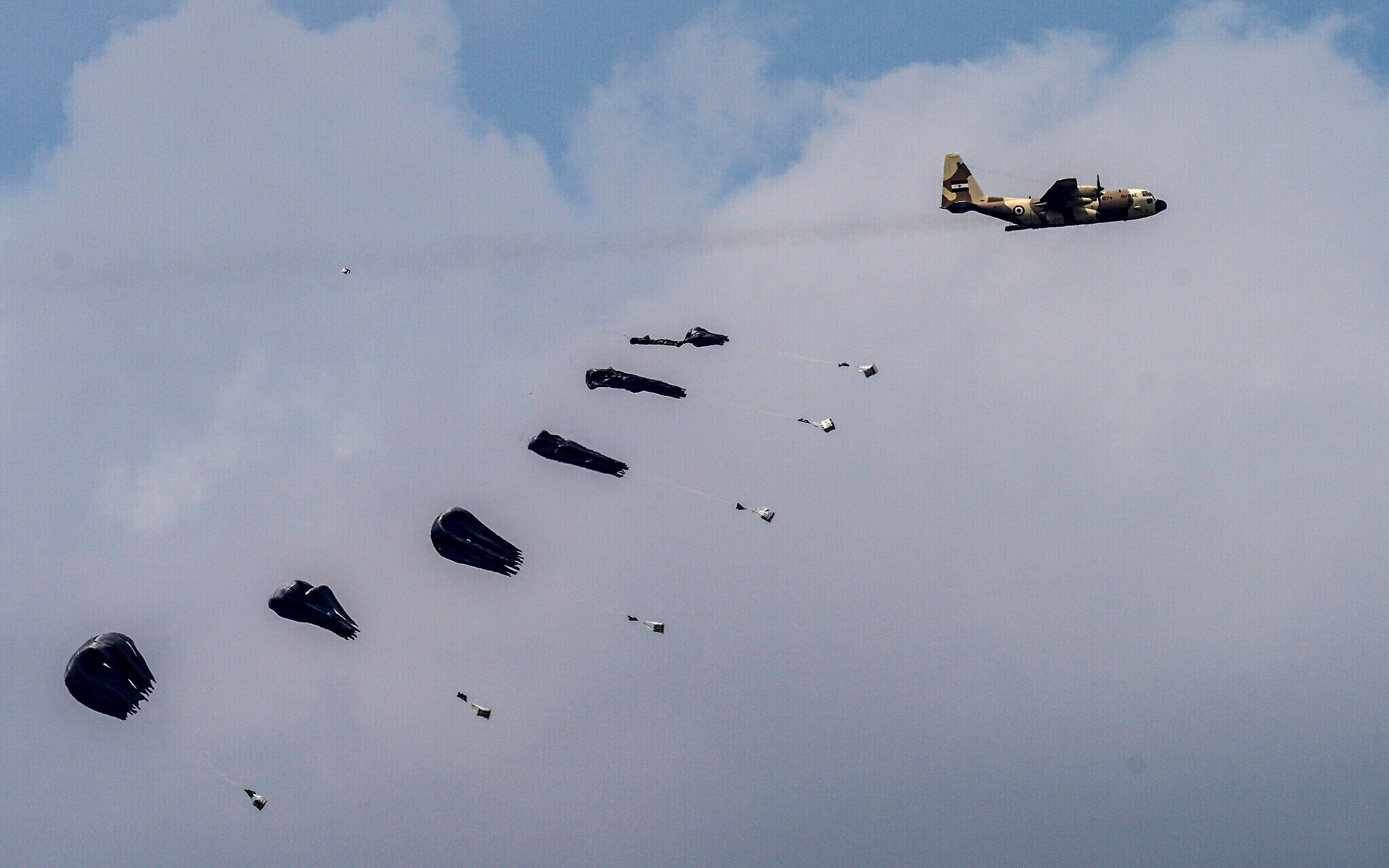
An aircraft airdrops humanitarian aid over the northern Gaza Strip, as seen from southern Israel, March 24, 2024. (AP/Tsafrir Abayov)
LONDON — British Prime Minister Keir Starmer spoke to his French and German counterparts and outlined UK plans to get aid to people in Gaza and evacuate sick and injured children, his office says.
“The prime minister set out how the UK will also be taking forward plans to work with partners such as Jordan to airdrop aid and evacuate children requiring medical assistance,” a statement says.
Israeli DJ says pro-Palestinian group pushed for canceling of Tomorrowland set
After landing in Israel from Belgium, DJ Skazi tells reporters that his Tomorrowland set was canceled due to pressure from a pro-Palestinian group.
“There was a pro-Palestinian group that sat very strongly on us. It ensured that it all wouldn’t happen,” he tells reporters at Ben Gurion Airport.
Hamas officials ‘surprised’ by Trump’s accusation that it doesn’t want truce, say progress was being made
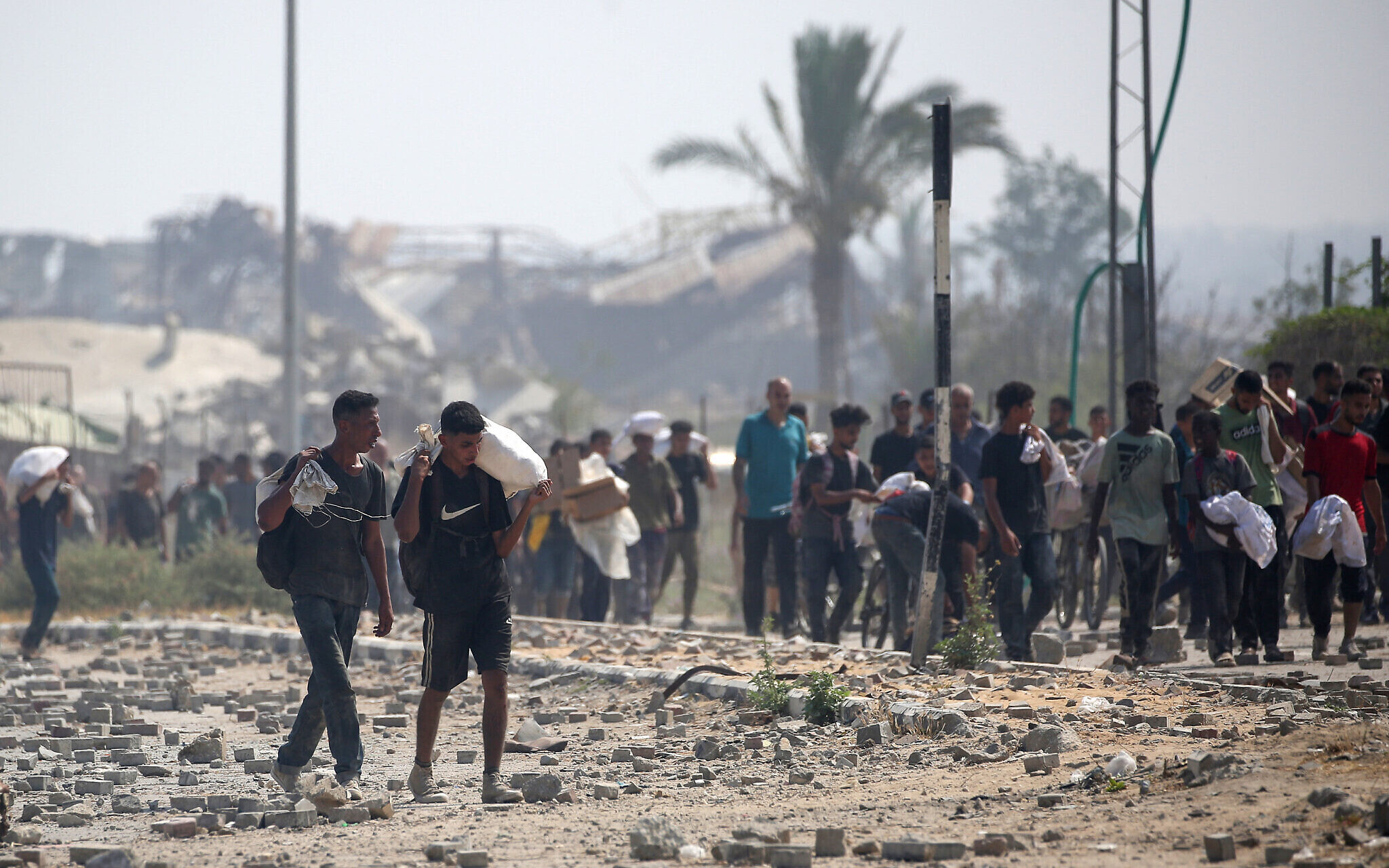
Illustrative: Displaced Palestinians at the Nuseirat refugee camp haul food parcels and other items they managed to get from a GHF aid distribution point at the Netzarim corridor in the central Gaza Strip. on July 26, 2025. (Eyad BABA / AFP)
Hamas officials express surprise at US President Donald Trump’s accusation that the terror group “didn’t really want” a ceasefire and hostage release deal for Gaza.
“Trump’s remarks are particularly surprising, especially as they come at a time when progress had been made on some of the negotiation files,” Hamas official Taher al-Nunu tells AFP.
“So far, we have not been informed of any issues regarding the files under discussion in the indirect ceasefire negotiations,” he adds.
Nunu, who is close to Hamas’s most senior political officials, says he was “surprised” that Israel and the United States had pulled negotiators and mediators from talks in Doha.
Announcing the recall of US mediators on Thursday, Trump’s special envoy Steve Witkoff accused Hamas of not “acting in good faith.”
Though not part of the Hamas negotiating team, Hamas politburo member Izzat al-Rishq insists the group had shown “flexibility” in the talks.
“The American statements deliberately ignore the real obstructionist to all agreements, [Prime Minister Benjamin] Netanyahu’s government, which continues to put obstacles, deceive, and evade commitments,” he says.
Both Hamas officials call on the United States to be more even-handed in its role as mediator in the quest for a ceasefire after more than 21 months of fighting.
“We call for an end to the US bias in favour of Netanyahu, who is obstructing any agreement,” Nunu says.
Times of Israel staff contributed to this report.
Aid flotilla approaching Gaza Strip, organizers say
A boat carrying pro-Palestinian activists and humanitarian aid supplies is approaching the Gaza Strip, according to the organizers.
The Handala boat, with 15 activists, set sail from Sicily earlier this month, a month after Israel intercepted a different vessel that had made a high-profile attempt to break the maritime blockade on the Gaza Strip.
Handala is operated by the Freedom Flotilla Coalition, which also dispatched the earlier boat, the Madleen, on a mission to challenge Israel’s blockade on the Strip.
The organizers say Handala is now 105 nautical miles from Gaza’s shores, after passing the point where the Israeli Navy intercepted the Madleen.
Agencies contributed to this report.
IDF says drone strike killed Hezbollah commander in southern Lebanon
A Hezbollah commander was killed in an Israeli drone strike in southern Lebanon’s Bint Jbeil earlier today, the military says.
According to the IDF, the commander, Ali Abed al-Qader Ismail, was involved in efforts to restore Hezbollah capabilities in the Bint Jbeil area, adding that his actions “constituted a blatant violation of the understandings between Israel and Lebanon.”
Katz visits Israeli Druze leader, promises medical aid to community in Syria
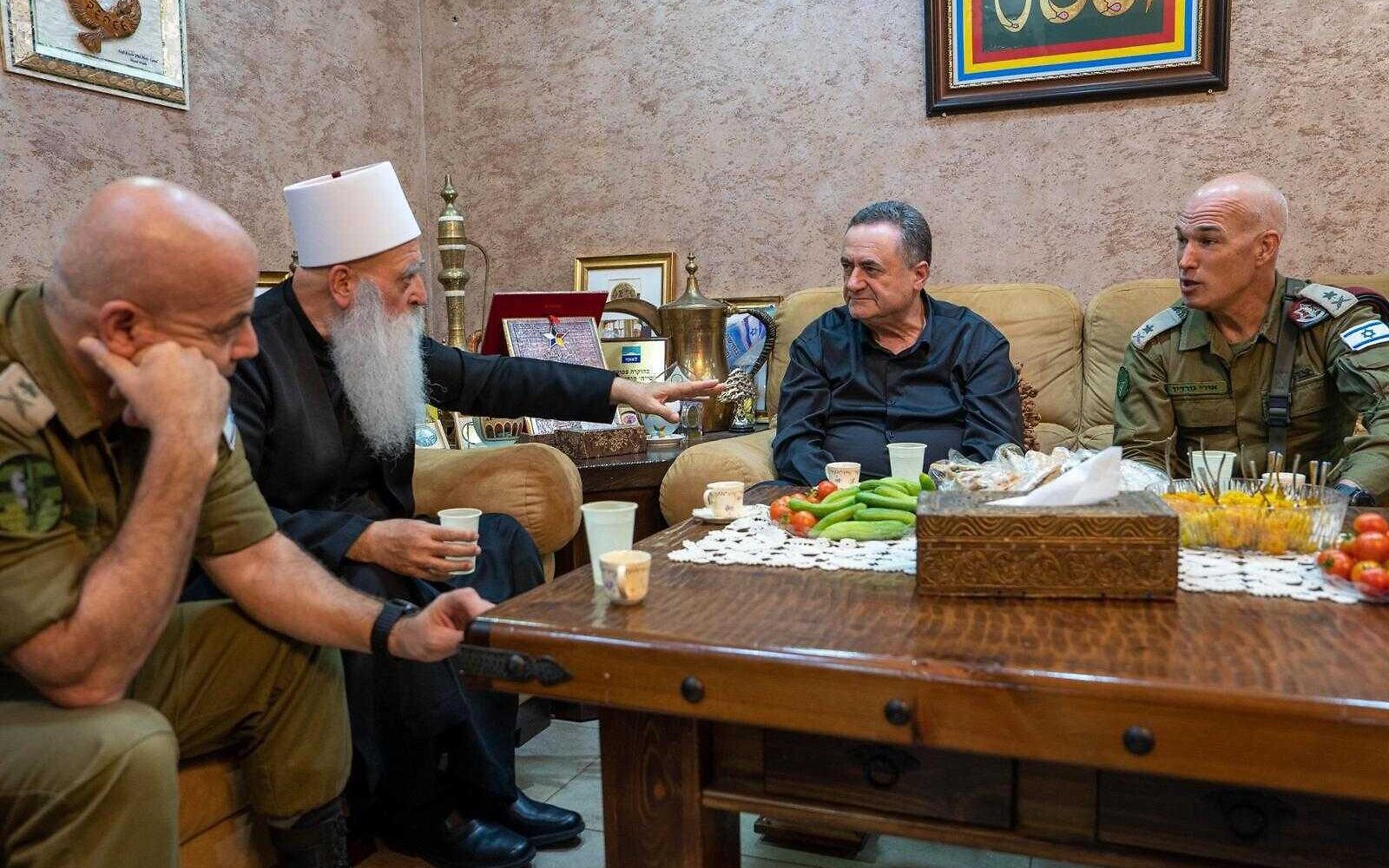
Defense Minister Israel Katz (center right) meets Druze spiritual leader Sheikh Muafak Tarif in the village of Julis, July 26, 2025. (Defense Ministry/Ariel Hermoni)
Defense Minister Israel Katz visits the home of the spiritual leader of the Druze community in Israel, Sheikh Muafak Tarif, vowing to aid their brethren in Syria.
Visiting the village of Julis, Katz says the military would work to provide medical assistance to the Druze of southern Syria, which suffered deadly attacks from Bedouin tribes earlier this month, according to a statement by the Defense Ministry.
Israeli tourist says Syrian man ripped off part of his ear in altercation on beach in Greece

Stav Ben-Shushan, who said a man bit part of his ear off after shouting anti-Israel slogans, on July 26, 2025 in Athens. (Channel 12 screenshot)
An Israeli tourist had part of his ear ripped off by an attacker at a beach while vacationing in Greece, then was arrested by police over alleged racist comments he made to his assailant, he tells Channel 12 news.
Speaking from a hospital in Greece, Stav Ben-Shushan says he and his wife were at Bolivar Beach on the Athenian Riviera speaking to another Israeli couple when a man started filming them and chanting: “Free Palestine, fuck Israel, I am Hamas.”
He says they initially ignored the disturbance, but then the man threw sand at the other Israeli to whom they were talking. Shushan says he started shoving the attacker before security guards intervened to separate them and removed the assailant from the beach.
Shushan says that an hour later, he was walking back to his wife from a bathroom at the beach where he saw the man return and approach her, and appear to attack her.
When he rushed to intervene, the attacker ripped part of his ear off, Shushan says.
Shushan was arrested after the man, who he says was from Syria, accused him of making racist comments.
The incident follows two other anti-Israeli incidents in Greece over the past week.
A group of Israeli teenagers were attacked early Wednesday by a gang of anti-Israel assailants while vacationing in the Greek island of Rhodes, less than a day after an Israeli-owned cruise ship was prevented from docking at the Greek island of Syros and was instead rerouted to Cyprus due to a large anti-Israel and pro-Palestinian protest taking place at the port.
Group of hostage families: Concepts Ben Gvir and Smotrich have forced upon us have failed
A group of hostage families holds a weekly press conference outside the Defense Ministry headquarters in Tel Aviv.
Einav Zangauker, whose son Matan is being held hostage in Gaza, declares, “We defeated Hamas, and because of Israel’s insistence on a few meters of land, Matan will pay with his life,” referring to gaps in talks regarding the IDF’s withdrawal as part of a ceasefire-hostage release deal.
“If the negotiations crumble, with it, my Matan will crumble; he and the other 49 hostages will crumble,” she says, warning that her son, who is suffering from muscular atrophy, is running out of time.
She insists that the military had succeeded in their work, but that further military pressure has not succeeded in bringing home the hostages: “The concepts that [National Security Minister Itamar] Ben Gvir and [Finance Minister Bezalel] Smotrich forced on us have failed.”
Smotrich has said Gaza must be “totally destroyed,” while Ben Gvir has threatened to bolt Netanyahu’s coalition if another hostage deal is signed.
Zangauker says that Israel has not proposed any deal that would lead to the release of all hostages and end the war, and that all of Israel’s offers for a hostage deal have led to consistent deadlock in the negotiations.
Yehuda Cohen, whose son Nimrod is held hostage, says that Netanyahu promised him he would bring all hostages home.
“In practice, he procrastinated on the way to a partial deal, and even that he has failed to bring,” he says, expressing alarm over the torturous conditions his son was experiencing, and urged a “comprehensive agreement” to end the war.
US blasts France’s release of Lebanese terrorist convicted of killing Israeli diplomat
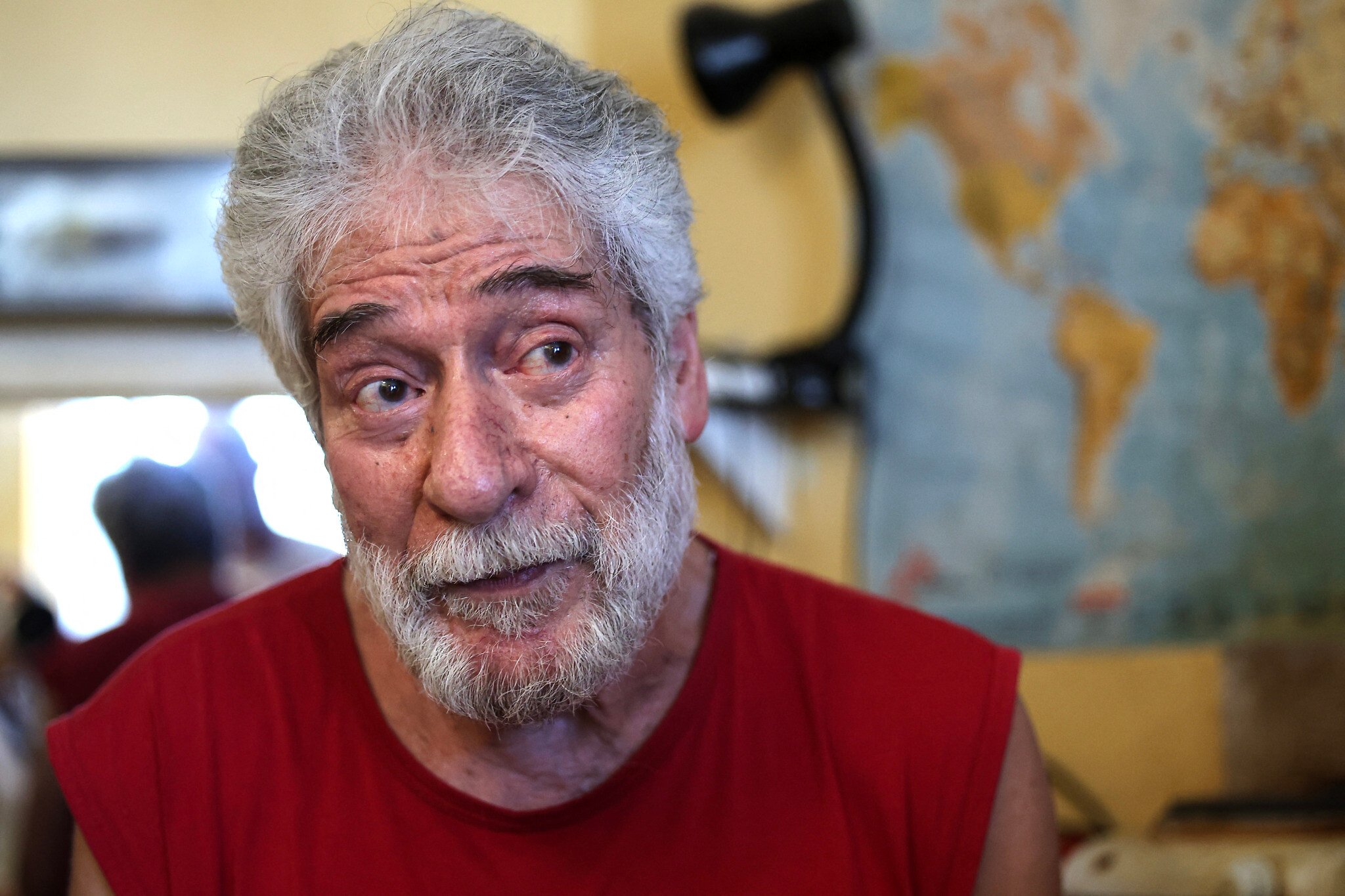
This photograph taken during a visit of French leftist party La France Insoumise (LFI)'s MP Andree Taurinya shows Georges Ibrahim Abdallah in his prison cell in Lannemezan, southwestern France, on July 17, 2025, after an appeals court ordered his release. (Valentine Chapuis / AFP)
WASHINGTON — The United States criticizes the release from a French prison of anti-Israel Lebanese terrorist Georges Ibrahim Abdallah, who spent more than 40 years behind bars for the killings of two diplomats, one of them American.
Abdallah was detained in 1984 and sentenced to life in prison in 1987 for his involvement in the murders of US military attache Charles Robert Ray and Israeli diplomat Yacov Barsimantov in Paris.
Earlier this month, a French appeals court ordered Abdallah’s release on the condition that he leave French territory and never return. He left a prison in southwest France on Friday and later arrived in his hometown in Lebanon.
“The United States opposes the French government’s release and expulsion to Lebanon of convicted terrorist Georges Ibrahim Abdallah,” State Department spokeswoman Tammy Bruce says in a statement on social media.
“His release threatens the safety of US diplomats abroad and is a grave injustice to the victims and the families of those killed. The United States will continue to support the pursuit of justice in this matter.”
While Abdallah had been eligible for release since 1999, his previous requests were denied as the United States — a civil party to the case — had consistently opposed his leaving prison.
Abdallah, who is Lebanese of Maronite Christian heritage, has always insisted he is not a “criminal” but a “fighter” for the rights of Palestinians, whom he said were targeted, along with Lebanon, by the United States and Israel.
Times of Israel staff contributed to this report.
Car-ramming suspect caught at central Israel construction site
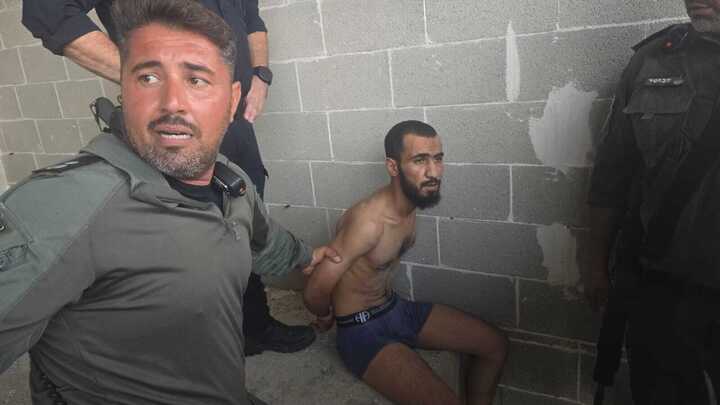
Israeli security forces arrest terror suspect Arkan Khaled in Kfar Yona, July 26, 2025. (Israel Police)
A man who allegedly carried out a car-ramming terror attack at Beit Lid Junction in central Israel on Thursday, wounding eight IDF soldiers, was detained a short while ago in the nearby town of Kfar Yona, police say.
Police say the suspect, named earlier as Arkan Khaled, a 27-year-old Israeli resident of Taybeh, was caught while hiding at a construction site.
Man killed in fire at Bat Yam bus terminal

Responders work to extinguish a fire in Bat Yam, July 26, 2025. (Israel Police)
A man was found dead inside a bus that went up in flames in Bat Yam this afternoon, part of a larger fire that broke out in a bus terminal in the city for reasons that are still unknown.
The victim was found by firefighters as they worked to extinguish the fire and rescue any trapped individuals.
Paramedics who treated the man, in his 30s, say he was found unconscious inside one of the buses while suffering from burns on his body and smoke inhalation. He was pronounced dead at the scene.
Firefighters and police are investigating the circumstances of the incident.
Trump says speaking with Cambodia, Thailand in bid to reach ceasefire

A Cambodian soldier stands on a truck carrying a Russian-made BM-21 rocket launcher travelling along a street in Oddar Meanchey province on July 26, 2025. (TANG CHHIN Sothy / AFP)
US President Donald Trump says he spoke with the leaders of Cambodia and Thailand in a bid to end their border conflict that has left at least 33 people dead.
“Just spoke to the prime minister of Cambodia relative to stopping the war with Thailand,” Trump, who is on a visit to Scotland, says in a post on his Truth Social network.
“I have just spoken to the Acting Prime Minister of Thailand, and it was a very good conversation,” he says in a second post.
“Thailand, like Cambodia, wants to have an immediate Ceasefire, and PEACE,” he adds.
“I am now going to relay that message back to the Prime Minister of Cambodia. After speaking to both Parties, Ceasefire, Peace, and Prosperity seems to be a natural. We will soon see!”
Clashes, now in their third day, broke out Saturday in the countries’ coastal regions where they meet on the Gulf of Thailand, around 250 kilometers (160 miles) southwest of the main frontlines.
“I am trying to simplify a complex situation! Many people are being killed in this War, but it very much reminds me of the Conflict between Pakistan and India, which was brought to a successful halt,” Trump says.
Trump also indicates he will not move forward on trade deals with either nation until fighting has stopped.
‘Not in our name’: Hundreds rail against war, government at Tel Aviv protest
Some 500 people gather for a weekly anti-government demonstration on Tel Aviv’s Habima Square.
Attendance is sparser than usual this week as prominent anti-government activists went to protest in Ness Ziona after a right-wing mob there assaulted Arab lawmaker Ayman Odeh last week while chanting “death to Arabs.”
Speakers at the protest rail against Prime Minister Benjamin Netanyahu and his government for rejecting a state commission of inquiry into failures leading up to the Hamas onslaught of October 7, 2023; attempting to codify a blanket exemption from military service for the Haredi community; and allegedly letting party politics permeate the police. They call for an end to the Gaza war and the return of the hostages.
The protest’s MC, Attorney Rotem Perlman Farhi, head of the “Free in our Land” protest group, also offers rare criticism of the war’s effect on residents of the Strip, where the UN and humanitarian groups reported skyrocketing starvation this week.
“It’s important for us to clarify again and again that the starvation and killing are not in our name,” she says.
Former police commissioner Moshe Karadi accuses National Security Minister Itamar Ben Gvir of effectively making the Israel Police a branch of his Otzma Yehudit party.
“I call from here to the officers and commanders of the Israel Police: Your only duty is to obey the law. You have no duty to obey a minister and the ideology of Otzma Yehudit,” he says, railing against Netanyahu for having handed over the police portfolio to a “man with a criminal record.”
Natalia Casarotti, whose son Keshet was killed fleeing the Nova music festival during the October 7 onslaught, says, “This war has long since lost its purpose. This war doesn’t protect us; it continues to stab us. It must end.”
At every mention of the war, left-wing protesters on the sidelines of the protest call on soldiers not to serve in Gaza, chanting: “Refuse! Refuse!”
After the speeches, protesters join attendees of other rallies in a march toward the US Embassy Branch Office.
Ex-captive Or Levy: Hostages ‘pay the price’ of faltering Gaza truce talks
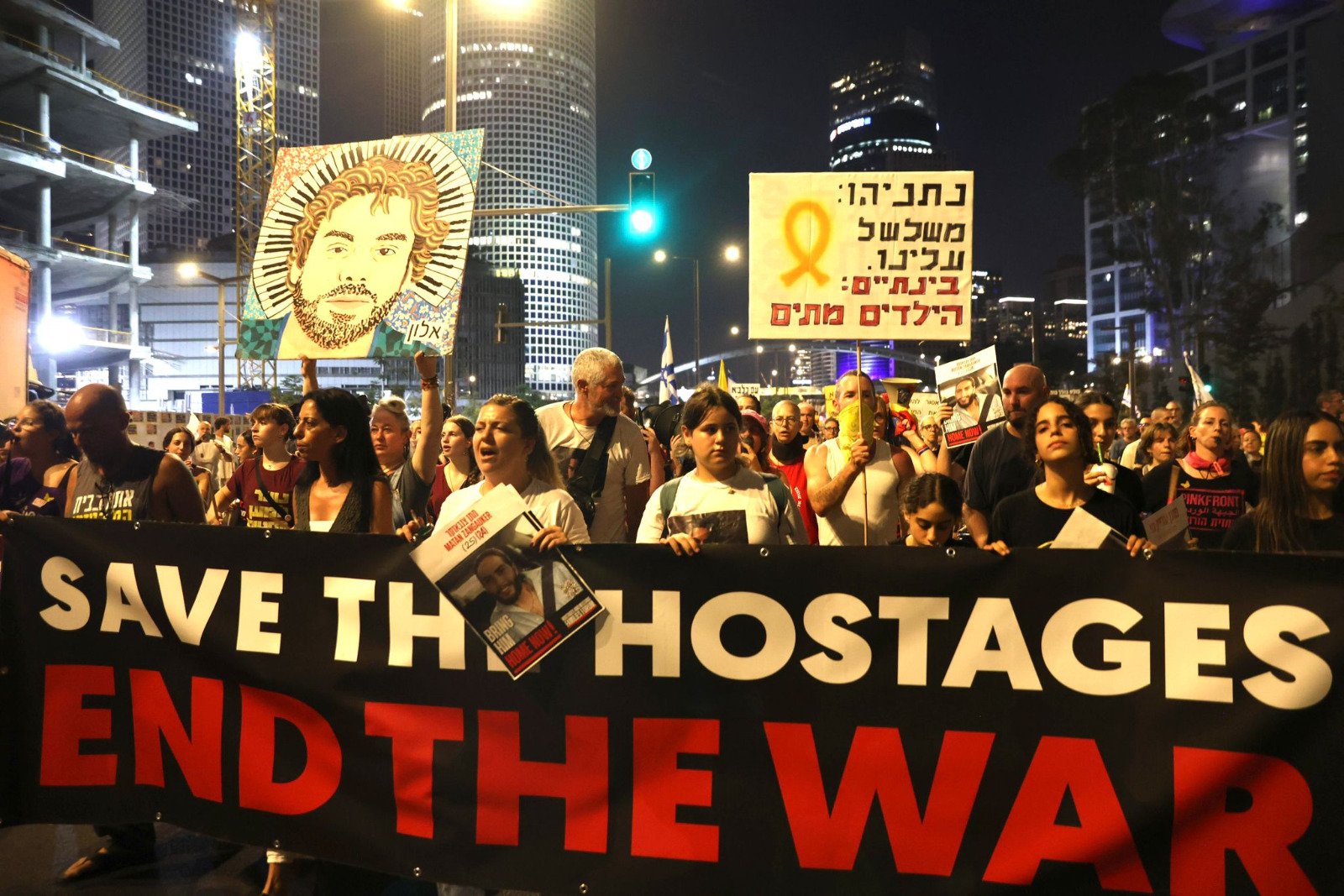
Protesters march from Begin Street to the US Embassy Branch in Tel Aviv during a demonstration in favor of a hostage release and ceasefire deal, on July 26, 2025. (Gil Beeri/Pro-Democracy Protest Movement)
Or Levy, who was released from Hamas captivity during the previous Gaza ceasefire in February, says the remaining captives “pay the price” of crises in truce-hostage negotiations, after Israel and the US on Thursday recalled their negotiators from talks in Doha.
“In these days — days of confusion, of distrust, of pauses, of ruptures in the talks — I want to make something abundantly clear to you: every time the talks stop, every time a deal blows up, those who pay the price are the hostages,” Levy tells thousands of people at Hostages Square in Tel Aviv, ahead of a march to the US Embassy Branch Office.
“We felt it each time, again and again, and every time it was harder,” he says. “It was on us. Our bodies. Our souls.”
“I live two lives,” he says. “I can tell you what it’s like to suffer from endless hunger. What it’s like to have your feet chained for days on end,” he says. “What it’s like to live 50 meters underground, without daylight, without sky, just constant fear that everything will end.”
“I can try to explain. You can try to understand. But what we went through there, and what they’re still going through there, can’t really be understood,” he says.
“What I do understand, and what you also understand, and what decision-makers understand as well, is that whoever’s there, in captivity, is in a very difficult condition,” says Levy.
He demands a deal that would bring back all the hostages — “not part, not in payments, not selektziya,” he says, referring to the Nazi practice of picking out able-bodied Jews for hard labor and sending others straight to the slaughter.
The most recent proposal would secure the release of only 10 living hostages and the remains of 18 slain hostages.
“Bring everyone back, so we can celebrate life again,” says Levy. “For them. For us. For all of us.”
Eisenkot says he wants to be prime minister if it’s right for Israel but declines to define his political ideology
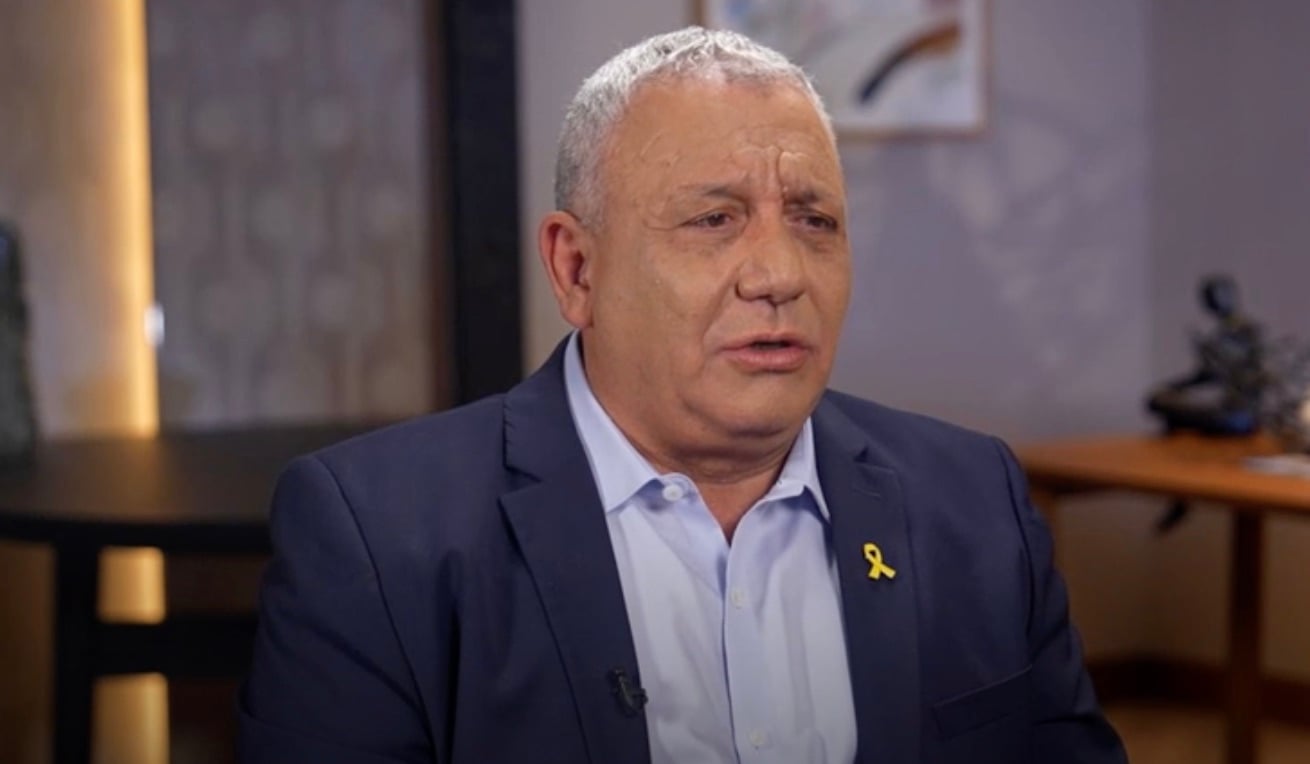
Former IDF chief of staff Gadi Eisenkot speaks to Channel 12 in an interview aired on July 26, 2025. (Screenshot, Channel 12)
Former IDF chief of staff Gadi Eisenkot tells Channel 12 that he believes he has what it takes to be the next prime minister of Israel, but says he will only present himself as such if he believes it is the right move for the country.
The interview with Channel 12 is the latest in a round of interviews he has given since formally leaving the National Unity party led by his predecessor as IDF chief, Benny Gantz.
He says that he decided to depart National Unity and resign as a member of Knesset once he realized the party was “falling apart” and was no longer aligned with his personal beliefs and vision for the future of Israeli politics.
Quitting wasn’t a matter of whether or not he had a good relationship with Gantz, Eisenkot stresses, but rather a question of “what the right thing is for the State of Israel.”
Asked if he is presenting himself as a viable candidate for prime minister, Eisenkot says that he may do so, but only if he can tell “that this will give us [the anti-Netanyahu bloc] a greater chance of victory at the next elections.”
Pushed further as to whether he believes that he has what is needed for the highest office in Israel, Eseinkot says, “I can be prime minister.”
“I want to be prime minister if I know that it will bring us victory,” he reiterates. “Time will tell.”
The ex-IDF chief says he believes the next election, currently scheduled for October 2026, will be “the most critical, most important one since the founding of the state.”
Eisenkot is reported to be considering three possible options for his political future: Establishing a party of his own, joining former prime minister Naftali Bennett’s new party, or joining Opposition Leader Yair Lapid’s Yesh Atid party, and possibly replacing him as party leader.
Asked about these reports, he says there are “many other options” he is considering, but declines to share details.
He also declines to clearly define his own political ideology at this point, and refuses to answer when asked if he considers it to be more closely aligned with right-wing Bennett or centrist Lapid, saying he wants to “break this toxic discourse of right or left.”
Asked if he would ever consider sitting in government with Netanyahu, Eisenkot suggests that he would not: “After October 7, I wouldn’t want to see Benjamin Netanyahu continue holding leadership positions in the State of Israel.”
“They’ll remember him for the good that he did, and they’ll remember him for the bad that he did, as well,” he says.
While he refuses to answer either “yes” or “no” to the question of joining Netanyahu in a future government, he again says that the failures surrounding the October 7, 2023, Hamas onslaught “disqualify him from leadership roles.”
French intel official met with Hamas leaders in 2020, report claims, days after France says it will recognize a Palestinian state
France’s President Emmanuel Macron approved a 2020 meeting between a senior French intelligence official and two Hamas leaders in Doha, Channel 12 reports, days after France announced that it would recognize a Palestinian state.
The meeting, which took place on October 16, 2020, was held between the number 3 official in France’s Directorate-General for External Security, and senior Hamas politburo member Mousa Abu Marzouk and then-retired former political leader Khaled Mashaal.
The French initiated the meeting, which was revealed in a document found by the IDF in Gaza, according to the report.
The document indicated that the senior French official told the Hamas leaders that Paris was unhappy with the way the US was handling the Palestinian issue.
“I am happy about this meeting,” said the official. “I am here after approval from President Macron. We don’t want to speak only with the Palestinian Authority, but also with you. We, France, are close historically to the Palestinian struggle.”
According to the report, the Hamas officials responded: “Even if the international community supports the Zionist entity, be certain that we will defeat them. This land is ours, and our resistance and revolution have continued for over 100 years, and we will continue until victory.”
There was reportedly no indication from the document that the French took exception to Hamas saying that their goal is to destroy Israel.
A French diplomat tells Channel 12 that the allegations are baseless, that Hamas is a terrorist organization, and that they are meant to harm the legitimacy of our attempts for a political solution of two states.
Macron announced on Thursday that France would recognize a Palestinian state. Given that the document was found by the IDF and was not leaked until this week, the idea that Israel is using it to hit back at France over the recognition is quite plausible.
UAE will resume aid airdrops to Gaza ‘immediately,’ foreign minister says
The United Arab Emirates will resume aid drops over Gaza at once, its foreign minister says, citing the “critical” humanitarian situation in the blockaded territory, where aid groups have warned of mass starvation.
“The humanitarian situation in Gaza has reached a critical and unprecedented level,” Emirati Foreign Minister Sheikh Abdullah bin Zayed Al Nahyan says in a post on X. “We will ensure essential aid reaches those most in need, whether through land, air or sea. Air drops are resuming once more, immediately.”
Israel’s Coordinator of Government Activities in the Territories said earlier this week that Israel would soon allow the UAE and Jordan to resume air-dropping supplies to Gaza, amid mounting reports of malnutrition-related deaths in the devastated Palestinian enclave.
IDF to airdrop aid into Gaza tonight, will create safe routes for UN to deliver food, medicine across Strip

Humanitarian aid is prepared on an Israeli Air Force cargo plane for an airdrop in the Gaza Strip, in a handout photo issued on July 26, 2025. (Israel Defense Forces)
The Israeli military will carry out an airdrop of humanitarian aid into Gaza tonight, among a “series of actions” aimed at improving the humanitarian situation in the Strip, the IDF announces.
It would be the first time Israel airdrops aid into Gaza since the current war began, after previously having only allowed other countries to carry out such operations.
In a statement, the IDF says that the airdrop is being conducted by the Israeli Air Force and Israel’s Coordinator of Government Activities in the Territories, “in coordination with international aid organizations.”
“The airdrops will include seven pallets of aid containing flour, sugar, and canned food to be provided by international organizations,” the IDF says.
The military says that the airdrop is being carried out “in accordance with directives from the political echelon and following a situational assessment held this evening,” and is aimed at improving the humanitarian situation in Gaza and “refuting the false claim of deliberate starvation in the Gaza Strip.”
Additionally, the IDF says it was decided that “designated humanitarian corridors would be established to enable the safe movement of UN convoys delivering food and medicine to the population.”
“The IDF is prepared to implement humanitarian pauses in densely populated areas and will continue to operate to dismantle terrorist infrastructure and eliminate terrorists in the areas of activity,” it says.
According to the IDF and COGAT, over 250 trucks of aid were unloaded at the Kerem Shalom and Zikim crossings with Gaza this week, joining hundreds more trucks waiting to be collected by the UN and other international groups. In all, some 600 trucks’ worth of aid were collected and distributed in Gaza this week, according to COGAT’s figures.
“The IDF, through COGAT, will continue coordinating with international organizations to collect the contents of hundreds of trucks that have not yet been collected,” the military says.
In another effort, the military and COGAT say that in the Israel Electric Corporation connected a power line from Israel to a desalination plant in the Strip’s south, which is is expected to supply “approximately 20,000 cubic meters of water per day, up from the 2,000 cubic meters supplied until now, to serve about 900,000 residents in the area.”
“The IDF emphasizes that there is no starvation in the Gaza Strip; this is a false campaign promoted by Hamas. Responsibility for food distribution to the population in Gaza lies with the UN and international aid organizations. Therefore, the UN and international organizations are expected to improve the effectiveness of aid distribution and to ensure that the aid does not reach Hamas,” the statement continues.
“The IDF emphasizes that combat operations have not ceased. We will continue to operate in the Gaza Strip to return all hostages and to defeat the Hamas terrorist organization, both above and below ground,” the military adds.
IDF reservist succumbs to wounds sustained in roadside bomb blast in southern Gaza last week
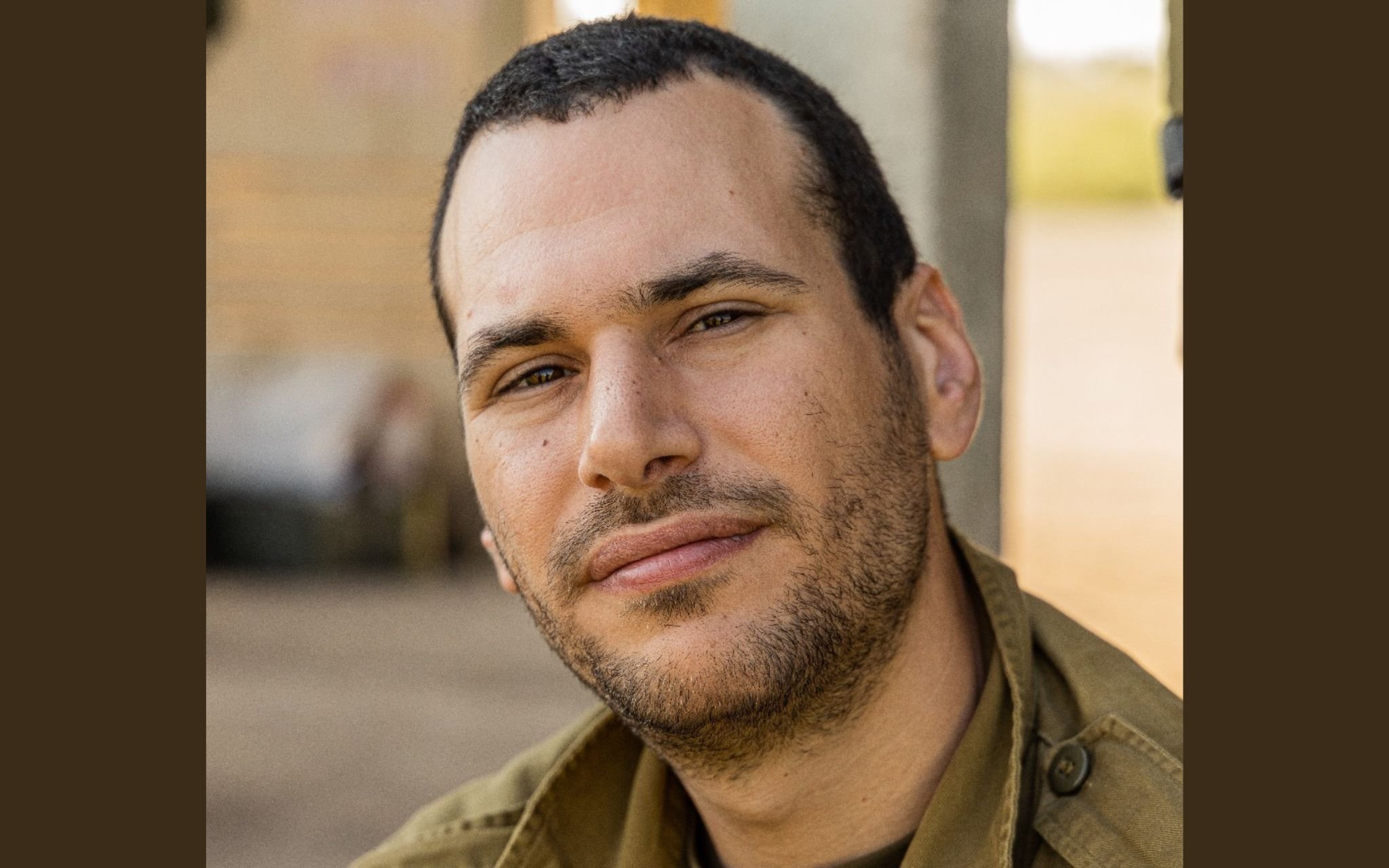
Sgt. Maj. (res.) Betzalel Yehoshua Mosbacher, of the 749th Combat Engineering Battalion. (Israel Defense Forces)
A reservist combat engineer seriously wounded by a roadside bomb in the southern Gaza Strip last week succumbed to his wounds today, the IDF announces.
The slain soldier is named as Sgt. Maj. (res.) Betzalel Yehoshua Mosbacher, 32, of the 749th Combat Engineering Battalion, from Avnei Eitan.
Mosbacher and another combat engineer driving in a Humvee in Khan Younis were seriously wounded in the roadside bomb attack on July 19.
Both were taken to a hospital, where Mosbacher died.
Israeli Navy expecting to intercept activist boat approaching Gaza in coming hours

Screenshots show the progress of the Handala boat as it heads to the region in an attempt to break Israel's naval blockade of the Gaza Strip, on July 26, 2025. (Screenshot: Salaamedia on Youtube)
The Israeli Navy is expected to intercept an activist boat attempting to break Israel’s naval blockade of the Gaza Strip in the coming hours.
The Handala boat set sail from Sicily earlier this month, weeks after Israel intercepted a different vessel that had made a high-profile attempt to reach Gaza.
Organizers of the Handala, the Freedom Flotilla Coalition, claim two apparent Israeli Navy vessels and a drone are approaching the boat at sea, and as a result, they have altered course, heading south toward Egypt.
“At this time, the Handala does not intend to enter Egyptian waters but plans to sail parallel to the coastline. Should the threat from Israeli authorities escalate, the crew will attempt to contact the Egyptian Coast Guard to request emergency entry based on the threat to their lives,” the Freedom Flotilla Coalition says.
Macron, Sharaa discuss Israeli strikes on Syria, recent sectarian violence
France’s President Emmanuel Macron speaks by phone with the interim Syrian President Ahmed al-Sharaa and discusses the recent Israeli strikes on Syria.
“I reiterated our commitment to Syria’s sovereignty and territorial integrity,” says Macron on X. “We discussed, in this regard, exchanges with Israel. We both expressed our support for cooperation in stabilizing the Syrian-Lebanese border. France is ready to support these efforts.”
Civilian populations must be protected, says Macron, after ethnic violence in southern Syria last week left around 1,000 dead.
“It is imperative to prevent further episodes of violence and to ensure that those responsible for these acts are prosecuted,” says Macron.
He says that the ceasefire between Druze and Bedouin militias in Sweida “is a positive signal. A calm dialogue must now enable progress toward the goal of unifying Syria while respecting the rights of all its citizens.”
Ben Gvir says Netanyahu excluded him from call with cabinet members about increasing Gaza aid
National Security Minister Itamar Ben Gvir says he was excluded from a phone call between Prime Minister Benjamin Netanyahu and senior cabinet members earlier today in which it was decided that Israel would increase and improve the flow of humanitarian aid into the Gaza Strip.
He says that an official from the Prime Minister’s Office told him after the fact that the reason he was excluded from the call, reportedly along with Finance Minister Bezalel Smotrich, was that the premier had not wanted to disturb him on Shabbat.
The ultranationalist lawmaker says he believes the real reason for his exclusion was his oft-vocalized opposition to sending humanitarian aid to Gaza in any capacity.
He says that by increasing aid to Gaza, Israel is “surrendering to Hamas’s false campaign” of famine and starvation across the Palestinian enclave, and is “endangering IDF soldiers.”
“The only way to win the war and return the hostages is to completely stop ‘humanitarian’ aid, occupy the entire Strip and encourage voluntary migration,” Ben Gvir says.
According to Ynet, the national security minister also told the PMO official that he knew Netanyahu “didn’t want to bring us into the conversation so that we wouldn’t be able to tell you what we think.
The outlet says he claimed that Hamas will “take advantage” of Israel’s decision to open humanitarian corridors that allow the UN to distribute aid safely across Gaza, and will operate within them.
“You didn’t include me in the conversation because you knew I was opposed,” he is said to have reiterated. “This is extremely serious.”
Foreign Ministry confirms Israel will implement ‘humanitarian pauses’ in Gaza fighting to enable aid distribution
Israel will implement “humanitarian pauses” in densely populated areas and humanitarian corridors in the Gaza Strip starting tomorrow morning, to enable the distribution of aid, the Foreign Ministry announces after the IDF said it was prepared to do so.
The IDF has not yet provided an exact schedule or locations of the “pauses.”
Anti-war activists slam Jerusalem hostage rally for ignoring plight of Gaza’s civilians

Anti-war activist Yoav Peck attends the weekly Jerusalem rally calling for the release of the hostages being held by Hamas in Gaza, July 26, 2025. (Jeremy Sharon/The Times of Israel)
Several protesters at the weekly Jerusalem rally for the release of the hostages being held by Hamas criticize the demonstration for failing to talk about the dire humanitarian situation facing the Palestinian civilian population in Gaza.
“Enough with genocide, enough with this pathos,” calls out Yoav Peck, a longtime anti-war activist.
Another woman shouts, “The time has come to cry out about something else.”
Organizers from the Hostages and Missing Families Forum try to quiet these protesters, but other demonstrators object, insisting they have a right to speak.
“This evening, I just lost my patience with the pathos. We need to stop the war in any way we can, and then begin to deal with the real problems we have here,” says Peck.
“Do you hear from the stage something about what is happening to the two million people in Gaza?” he demands, and alleges that the majority of those at the rally think it will be possible to go back to normal after the hostages are released.
“I am embarrassed about this. These are not the values I grew up on. These aren’t the values of my country, to ignore our neighbor, to behave as if we can make them disappear.”
Israeli Navy forces board activist boat heading for Gaza, live footage shows

Screenshots taken from live footage of the Handala activist boat trying to break the naval blockade on Gaza as it is boarded by Israeli Navy forces, on July 26, 2025. (Screenshot: Salaamedia on Youtube)
Israeli Navy forces have intercepted the Handala activist boat attempting to break Israel’s naval blockade of the Gaza Strip, live footage from the vessel shows.
The Navy troops reached the Handala and boarded it, a livestream shows. The cameras onboard have since been cut.
Handala is operated by the Freedom Flotilla Coalition, which also dispatched a previous boat that was stopped, the Madleen, on a mission to reach Gaza.
According to the Freedom Flotilla Coalition’s website, the Handala is carrying 19 activists as well as two Al Jazeera journalists.
The boat will be towed to Ashdod Port by the Navy, and the activists will then be deported from the country.
The IDF has not issued an official comment on the incident.


read more: