

 From the Liveblog of
Saturday, November 4, 2023
From the Liveblog of
Saturday, November 4, 2023
Blinken meeting Arab leaders in Jordan
 Add ToI as a Preferred Source on Google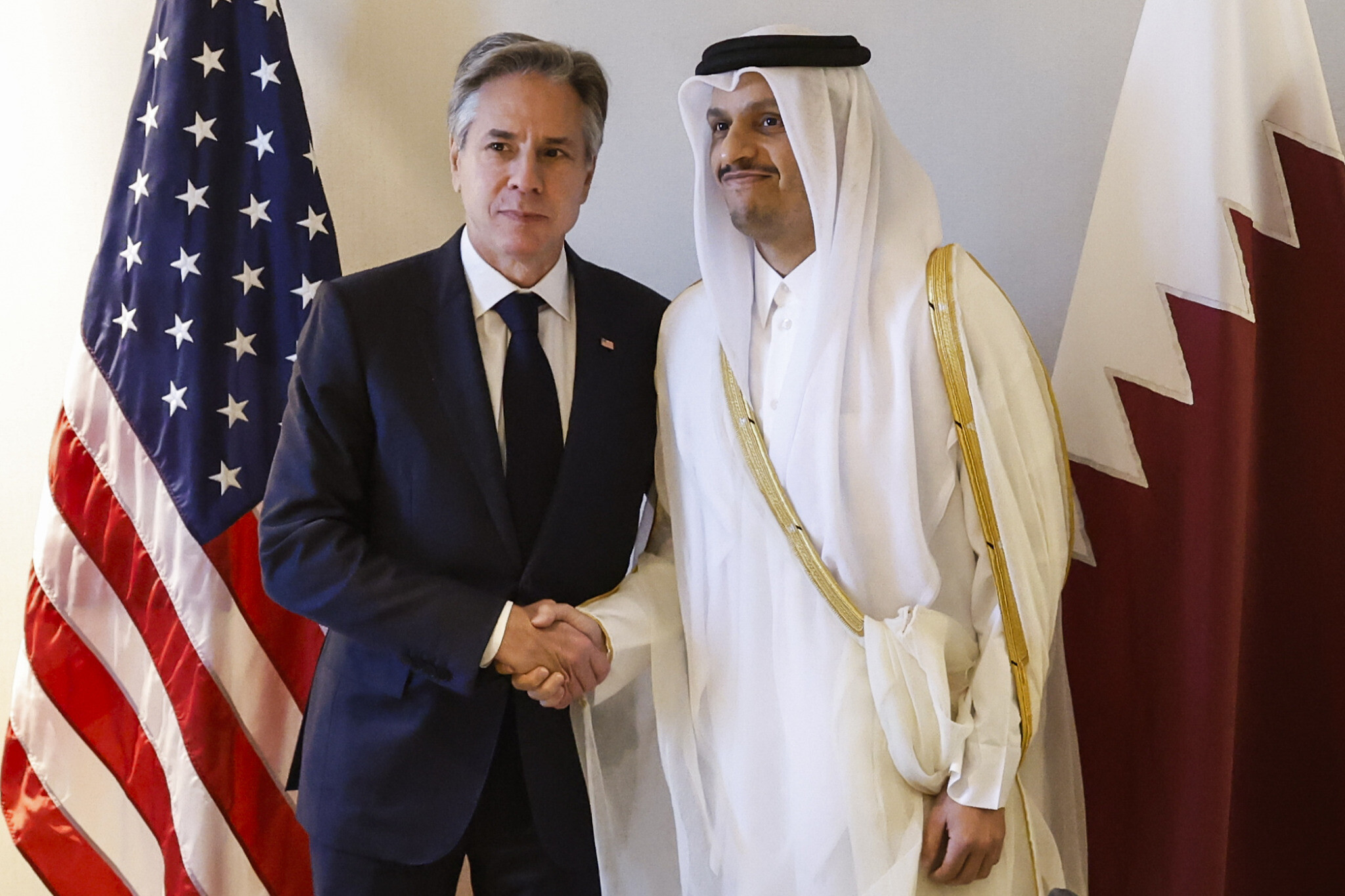
US Secretary of State Antony Blinken has begun meeting Arab leaders in Jordan as he continues his Middle East shuttle diplomacy in the wake of the Israel-Hamas war.
Blinken met first with Lebanon’s caretaker Prime Minister Najib Mikati, whose economically and politically ravaged country is home to Hezbollah — an Iranian-backed terror group hostile to Israel.
Neither Blinken nor Mikati speak to reporters at the top of their meeting in an Amman hotel. Nor did Blinken speak publicly as he posed for pictures with Qatar’s foreign minister, whose country has emerged as the most influential interlocutor with Hamas and has been key to negotiating the limited release of hostages held by the group as well as convincing it to allow foreign citizens to leave Gaza and cross into Egypt.
Blinken was then to meet with the head of the United Nations agency in charge of assisting Palestinian refugees.
Later, Blinken is to hold group talks with foreign ministers of Qatar, Jordan, Egypt, Saudi Arabia and the United Arab Emirates, and the chair of the PLO executive committee. All parties have denounced Israel’s tactics against Hamas, which they say constitutes unlawful collective punishment of the Palestinian people.
Blinken will also see King Abdullah II of Jordan, whose country this week recalled its ambassador to Israel and told Israel’s envoy not to return to the country until the Gaza crisis was over.
Still, the Arab states have thus far resisted American suggestions that they play a larger role in the crisis.










The Times of Israel Community.