Emanuel (Mannie) Fabian is The Times of Israel's military correspondent
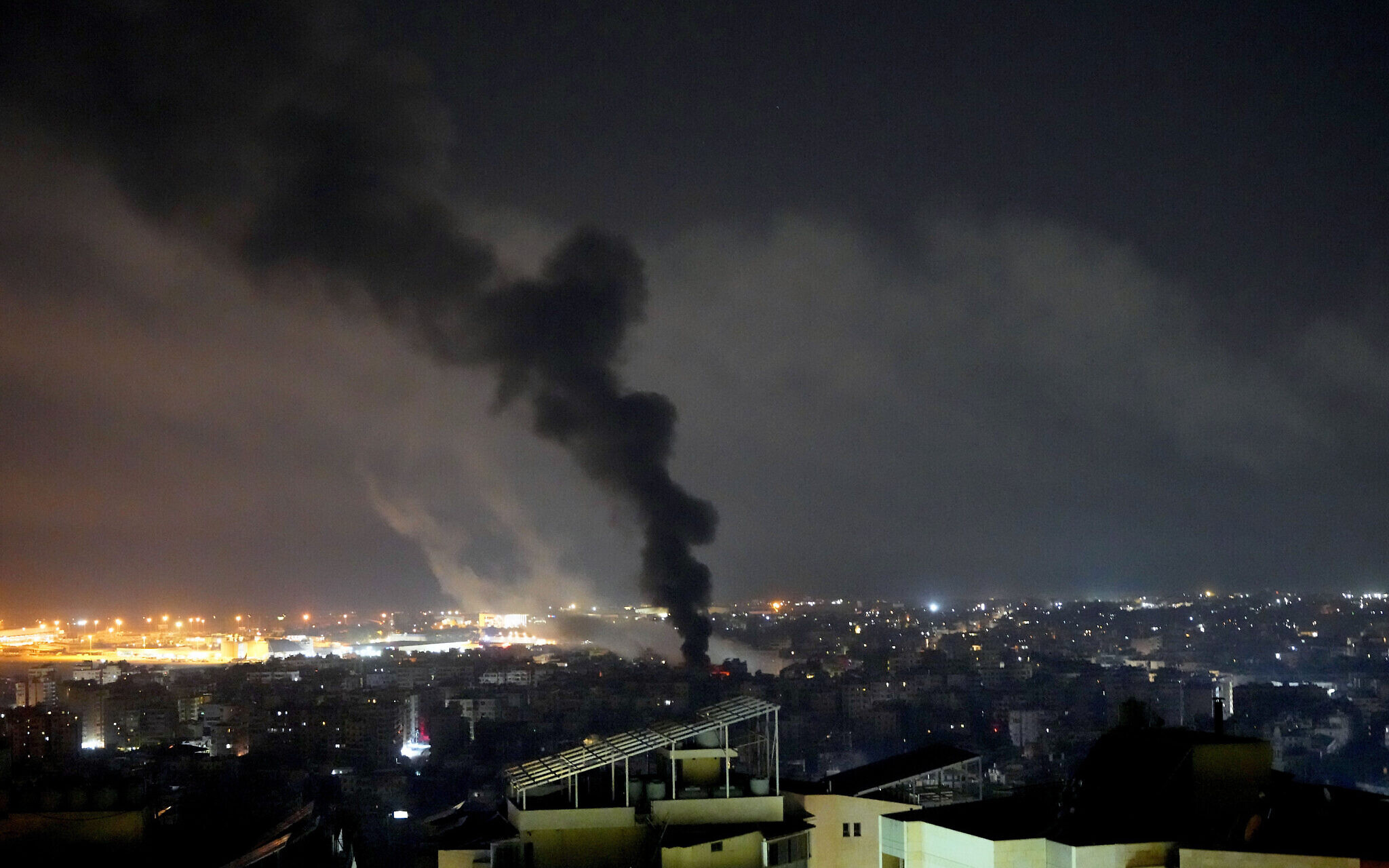
Smoke rises from Israeli airstrikes in Beirut's southern suburbs, September 28, 2024. (AP Photo/Hassan Ammar)
The Israeli military plans to ramp up its strikes on Hezbollah assets in the Lebanese capital of Beirut.
Earlier this evening, the IDF said it was striking three buildings in the Dahiyeh suburb of Beirut where Hezbollah stored Iranian anti-ship missiles. Other Hezbollah sites will also be hit in the Dahiyeh, military sources say.
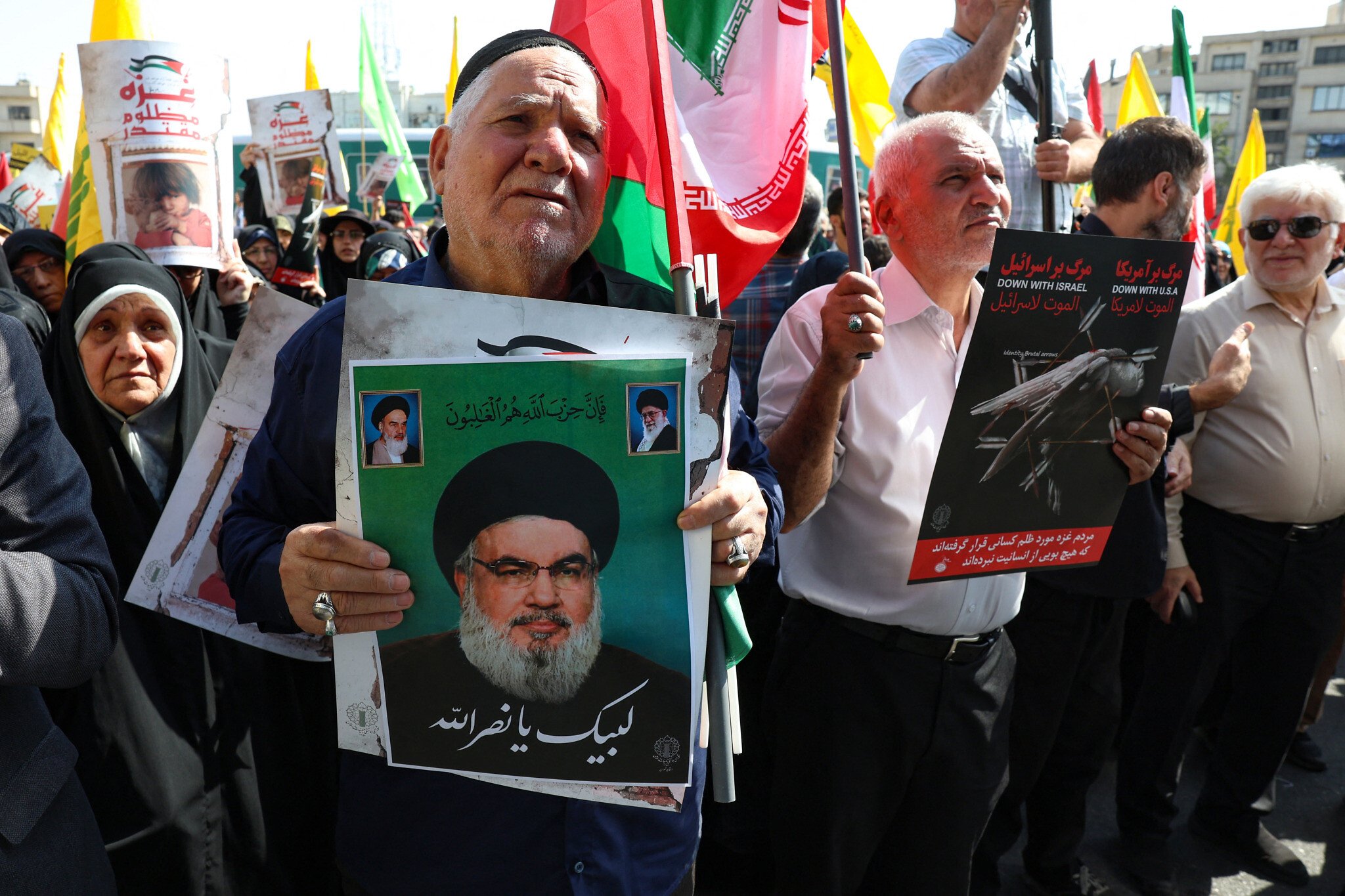
An Iranian man raises a picture of Lebanon’s Hezbollah chief Hasan Nasrallah during an anti-Israel protest in Tehran on September 27, 2024. (Photo by AFP)
It comes after the military carried out massive airstrikes on Hezbollah’s main headquarters in the Dahiyeh earlier on Friday, in an attack that targeted Hezbollah chief Hassan Nasrallah.
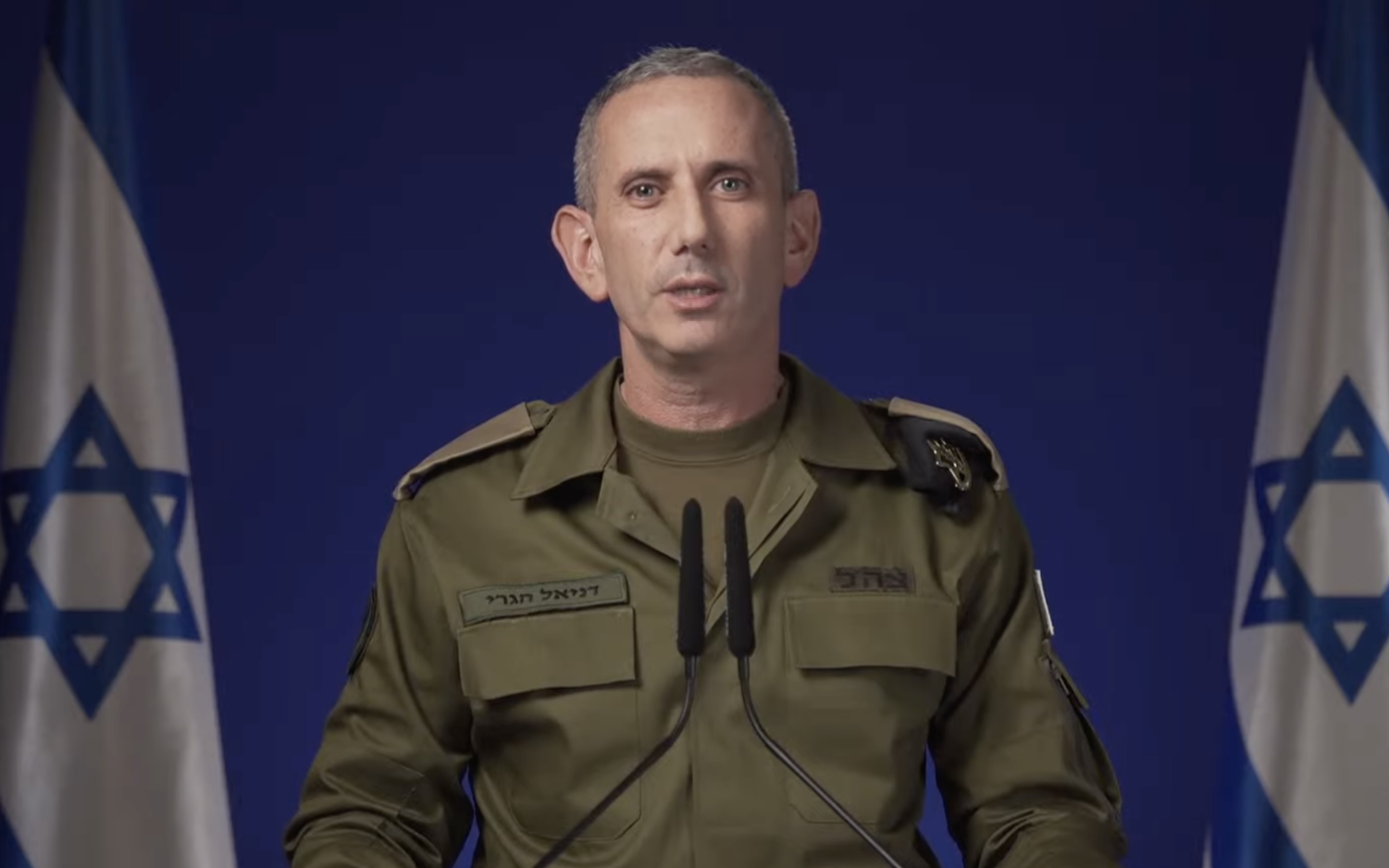
IDF Spokesman Rear Adm. Daniel Hagari said earlier this evening that the military is still looking into the results of its strike on Hezbollah’s headquarters in Beirut, and would not be drawn on whether Nasrallah was killed. “We will update as soon as we know. Our strike was very accurate,” he said.
IDF Spokesman Rear Adm. Daniel Hagari gives a press conference on September 27, 2024. (YouTube. Used in accordance with Clause 27a of the Copyright Law)
Until now, IDF strikes in Beirut had been “targeted assassinations” of top Hezbollah commanders. The latest strikes have been larger, and aimed at taking out infrastructure, along with top officials.
The coming days are expected to be complex, the military has assessed.
Help us report truthfully on social media
As a multimedia journalist, my job is to take the quality, fact-based journalism produced by The Times of Israel newsroom and make it accessible across every platform — from Instagram posts to podcasts to short-form videos.
This is how many, especially young people, consume news these days. But misinformation is rampant on social media. Our team at ToI produces accurate, responsible short-form reporting on Israel and the Jewish world.
If you believe in the importance of factual social media journalism, please consider joining our reader support group, The Times of Israel Community. Your financial support is essential to sustain responsible multimedia reporting.
We’re really pleased that you’ve read X Times of Israel articles in the past month.
That’s why we started the Times of Israel - to provide discerning readers like you with must-read coverage of Israel and the Jewish world.
So now we have a request. Unlike other news outlets, we haven’t put up a paywall. But as the journalism we do is costly, we invite readers for whom The Times of Israel has become important to help support our work by joining The Times of Israel Community.
For as little as $6 a month you can help support our quality journalism while enjoying The Times of Israel AD-FREE, as well as accessing exclusive content available only to Times of Israel Community members.
Thank you, David Horovitz, Founding Editor of The Times of Israel


 From
From  Add ToI as a Preferred Source on Google