

 From the Liveblog of
Thursday, June 8, 2023
From the Liveblog of
Thursday, June 8, 2023
Saudi FM: Israel normalization would have benefits, but less so without 2-state solution
 Add ToI as a Preferred Source on Google
Jacob Magid is The Times of Israel's US bureau chief
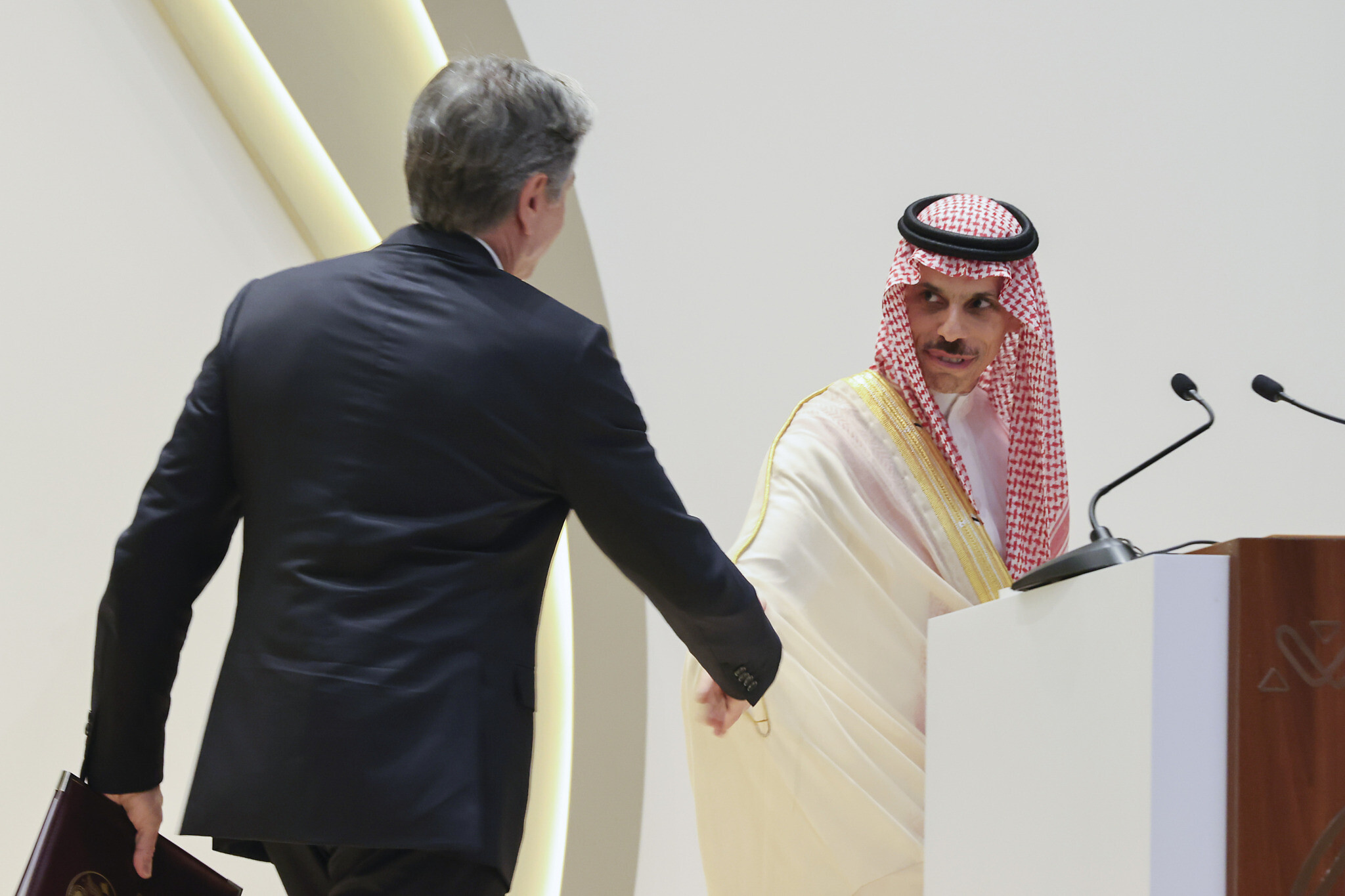
Saudi Foreign Minister Faisal bin Farhan says that Riyadh normalizing ties with Israel would bring significant benefits to the region but that those benefits would be more limited without a two-state solution to the Israeli-Palestinian conflict.
“We believe that normalization is in the interest of the region, that it would bring significant benefits to all,” bin Farhan says in response to a question during a press conference with US Secretary of State Antony Blinken following a meeting of the global coalition fighting the Islamic State terror group in Riyadh.
“But without finding a pathway to peace for the Palestinian people, without addressing that challenge, any normalization will have limited benefits,” he says, avoiding mentioning Israel by name in his answer. “Therefore, I think we should continue to focus on finding a pathway toward a two-state solution, on finding a pathway toward giving the Palestinians dignity and justice. I think the US has a similar view that it’s important to continue with those efforts.”
The response is largely standard for Saudi officials who have long said publicly that they won’t normalize relations with Israel before the establishment of a Palestinian state on the pre-1967 lines, even though they’ve offered more flexibility behind closed doors. However, bin Farhan’s acknowledgment that normalizing ties with Israel would offer significant benefits appears to stand out from his previous comments on the matter.




The Times of Israel Community.