

 From the Liveblog of
Thursday, February 12, 2015
From the Liveblog of
Thursday, February 12, 2015
‘We made a deal to make Liberman the PM’
 Add ToI as a Preferred Source on Google
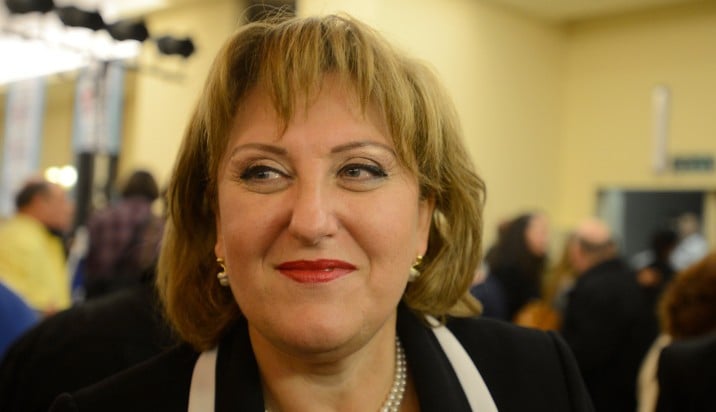
Yair Lapid and Moshe Kahlon agreed to recommend to the president to let Yisrael Beytenu leader Avigdor Liberman put together the next coalition, says Yisrael Beytenu MK Faina Kirshenbaum, who has recently been at the epicenter of a corruption probe involving dozens of officials from the party are affiliated with it.
“For the first time, there was a situation where our chairman could be the prime minister,” Kirshenbaum says.
According to Israeli law, the prime minister is not necessarily the head of the party which wins the most seats in the Knesset, but the head of the party which receives the most recommendations from heads of other parties and who is seen by the president to have a reasonable chance to put together a majority of more than 60 MKs.
“There was a deal that we would team up with Kahlon and Lapid and build a centrist bloc,” Kirshenbaum is heard saying during a Yisrael Beytenu campaign conference that was secretly recorded by a Channel 2 employee. “If Netanyahu would step down from Likud, we could ask Likud to join and then it would be a large national bloc.”
Kirshenbaum says there is “no chance” that a left wing government can govern in the near future. “I believe there should be a government of the national camp and I don’t think Buji [Isaac Herzog] and Tzipi [Livni] should be in this government.
Kirshenbaum says there is “no doubt” that the recent corruption probe damaged Yisrael Beytenu but lamented what she called the labeling of the entire party because of allegations made against individual members.
“When they did an investigation of Fuad [former Labor MK Binyamin Ben Eliezer] it was a probe of Fuad, not of all of Labor. In our case it’s treated as an investigation of the entire party,” says Kirshenbaum.





The Times of Israel Community.