Mideast Quartet urges ‘meaningful’ dialogue to reach two-state solution
Convening online, envoys from US, Russia, EU and UN express concern over potential ‘unilateral actions,’ in apparent reference to Israeli settlement expansion
View of the Israeli settlement of Ariel, in the West Bank on July 2, 2020. (Sraya Diamant/Flash90)
The four members of the so-called Middle East quartet discussed the resumption of “meaningful negotiations” to resolve the Israeli-Palestinian conflict in their first meeting since US President Joe Biden took office.
The body, which comprises the US, Russia, the EU and the UN, met virtually on Tuesday, a UN statement said.
“The Envoys… met virtually to discuss returning to meaningful negotiations that will lead to a two-state solution, including tangible steps to advance freedom, security, and prosperity for Palestinians and Israelis, which is important in its own right,” it said.
They discussed “the need for the parties to refrain from unilateral actions that make a two-state solution more difficult to achieve,” in an apparent reference to settlement expansion in the West Bank.
View of a Bedouin village (front) and the Palestinian village of az-Za’ayyem (back) near Ma’ale Adumim, in the West Bank, January 26, 2021. (Yaniv Nadav/Flash90)
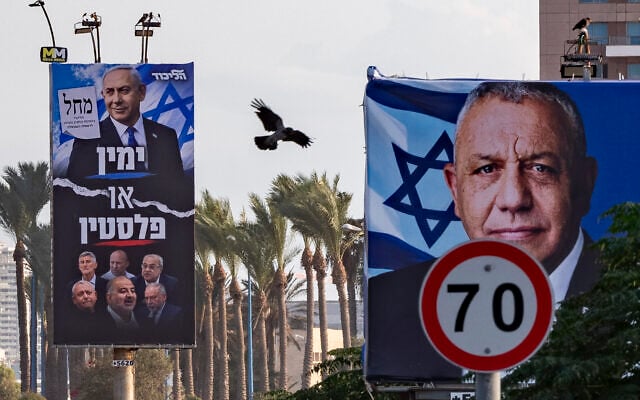
The meeting came as Israel was holding its fourth election in less than two years, with right-wing Prime Minister Benjamin Netanyahu seeking to extend his record 12 consecutive years in power.
Get The Times of Israel's Daily Editionby email and never miss our top stories
The quartet fell largely dormant during the administration of former president Donald Trump, seen by Palestinians as biased towards Israel.
The former president remained quiet as Israel announced new projects in the West Bank.
Biden has indicated his administration will restore traditional bipartisan US criticism of settlement expansion.
Advertisement
Help us report truthfully on social media
As a multimedia journalist, my job is to take the quality, fact-based journalism produced by The Times of Israel newsroom and make it accessible across every platform — from Instagram posts to podcasts to short-form videos.
This is how many, especially young people, consume news these days. But misinformation is rampant on social media. Our team at ToI produces accurate, responsible short-form reporting on Israel and the Jewish world.
If you believe in the importance of factual social media journalism, please consider joining our reader support group, The Times of Israel Community. Your financial support is essential to sustain responsible multimedia reporting.
We’re really pleased that you’ve read X Times of Israel articles in the past month.
That’s why we started the Times of Israel - to provide discerning readers like you with must-read coverage of Israel and the Jewish world.
So now we have a request. Unlike other news outlets, we haven’t put up a paywall. But as the journalism we do is costly, we invite readers for whom The Times of Israel has become important to help support our work by joining The Times of Israel Community.
For as little as $6 a month you can help support our quality journalism while enjoying The Times of Israel AD-FREE, as well as accessing exclusive content available only to Times of Israel Community members.
Thank you, David Horovitz, Founding Editor of The Times of Israel


 Add ToI as a Preferred Source on Google