

Mom-and-pop cafes and shops in Jerusalem struggle with new coronavirus reality
Restaurants and cafes offer takeout options in order to get through pandemic, but have been forced to put most of their regular staff on unpaid leave
 Add ToI as a Preferred Source on Google
Jessica Steinberg, The Times of Israel's culture and lifestyles editor, covers the Sabra scene from south to north and back to the center
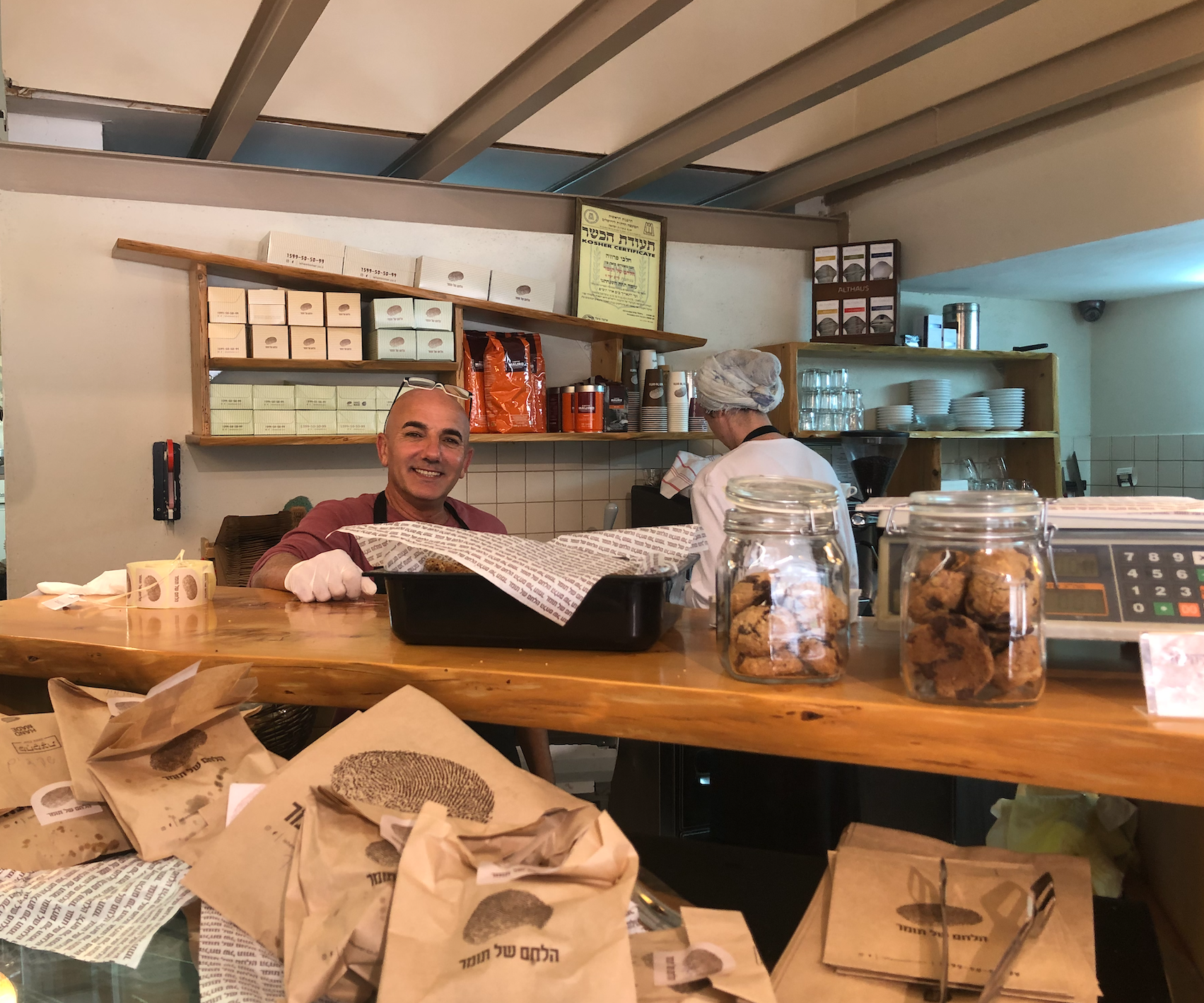
It was 10:30 a.m. and the shelves at Jerusalem artisanal bakery Lehem Shel Tomer, or Tomer’s Bread, were emptying quickly.
There were four people milling around the in the Arnona neighborhood’s small branch of the bakery/cafe, choosing fresh breads and items from a table loaded with vegetable quiches as well as prepared paper bags of rugelach, croissants and other breakfast pastries.
Outside, another few customers waited patiently for the store to empty, and to take their turns buying bread. The rule on this first day of increased closures for the coronavirus was four customers in the store at one time, and the rest had to wait outside.
“People have been waiting patiently,” said Nissim Naveh, the store staff member who opened at 7:30 a.m.
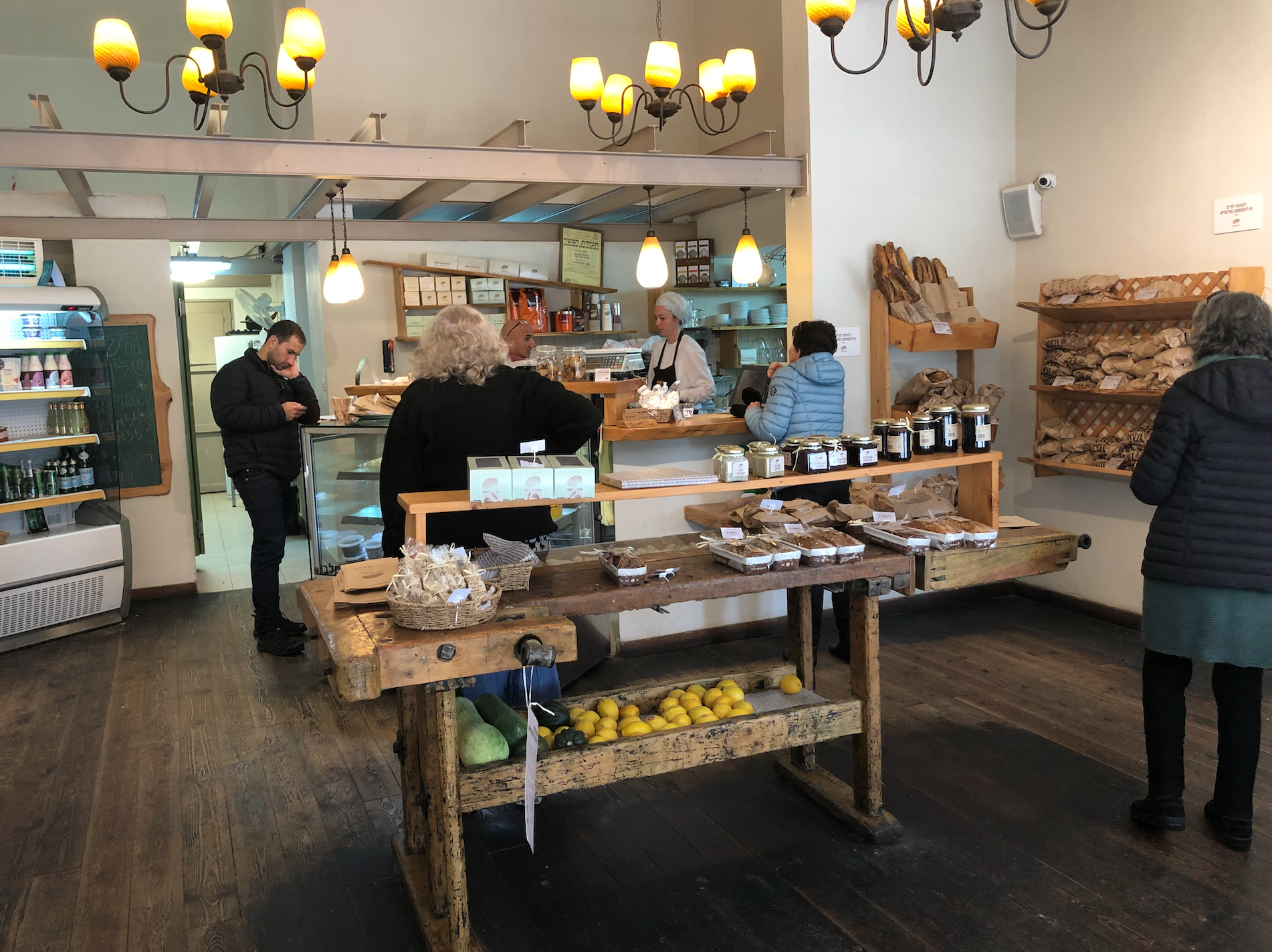
The few tables and chairs that are usually set up inside and outside the popular neighborhood cafe were out of sight, stacked behind the building, said Naveh. The store will close at 8:30 p.m.
“Most people seem to be buying bread and cookies,” said Vered Chen, who manages the bakery’s six stores, adding that her staff has been whittled down for the time being. “We’re just trying to keep things going.”
Staff considerations are a big portion of what concerns many local owners who have been told to shutter their cafes and restaurants as part of the local Israeli, and worldwide, battle against coronavirus.
At Zariffa, a popular cafe on Horkania Street in the Katamonim neighborhood, owner Merav Sami had shuttered the seating areas and wrought iron chairs were stacked neatly next to the tables. But the small kitchen was open at the front of the shop, with one staff member making salads, sandwiches and coffee for anyone who wanted takeout.
Zariffa also carries cookies, cakes and pastries, with a wide selection of vegan and gluten-free options, all made by several outside suppliers.
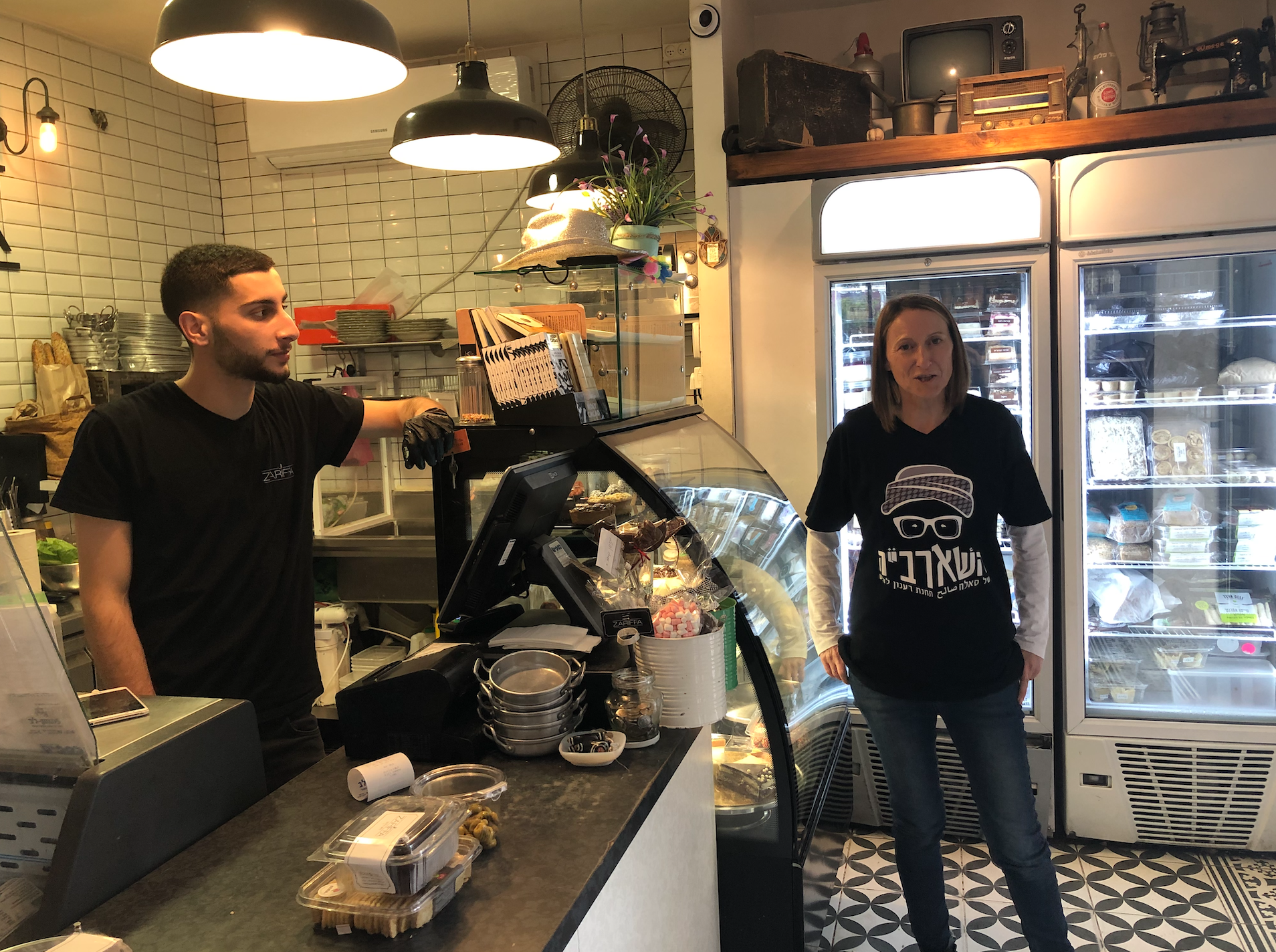
“It’s from minute to minute that we’re trying to figure this out,” said Sami, who owns the business with her husband, Dror. He has a preexisting health condition and is in self-quarantine at their house across the street.
Sami was nervous, standing the required two meters away from anyone in the shop, explaining that she didn’t want to take any chances given her husband’s situation.
“Can I get a coffee with soy milk?” asked one customer, who first tried to convince the barista to let her sit down in the cafe. “We’re locals, we’re like family.”
“I can’t let anyone sit down,” said Sami, spreading her hands wide. “These are the instructions I have from the Health Ministry.”
Zariffa is known for its great coffee, excellent sandwiches and salads, and fresh kade, a Kurdish cheese pocket stuffed with fresh sautéed greens or diced pumpkin.
The Samis opened Zariffa five years ago and business has been brisk from the start. They opened a pub as well next door, in the small cul-de-sac behind the cafe. They now have about 12 staff members and have put them on unpaid leave for now, save for one cook.
Sami is hoping to keep the business open and squeeze through this period. She’s currently offering takeout and possibly will offer deliveries as well, depending on how the takeout fares.
“We tried to prepare extra food last night that would be available for takeout today,” she said. “Right now, we just have to play it day by day.”
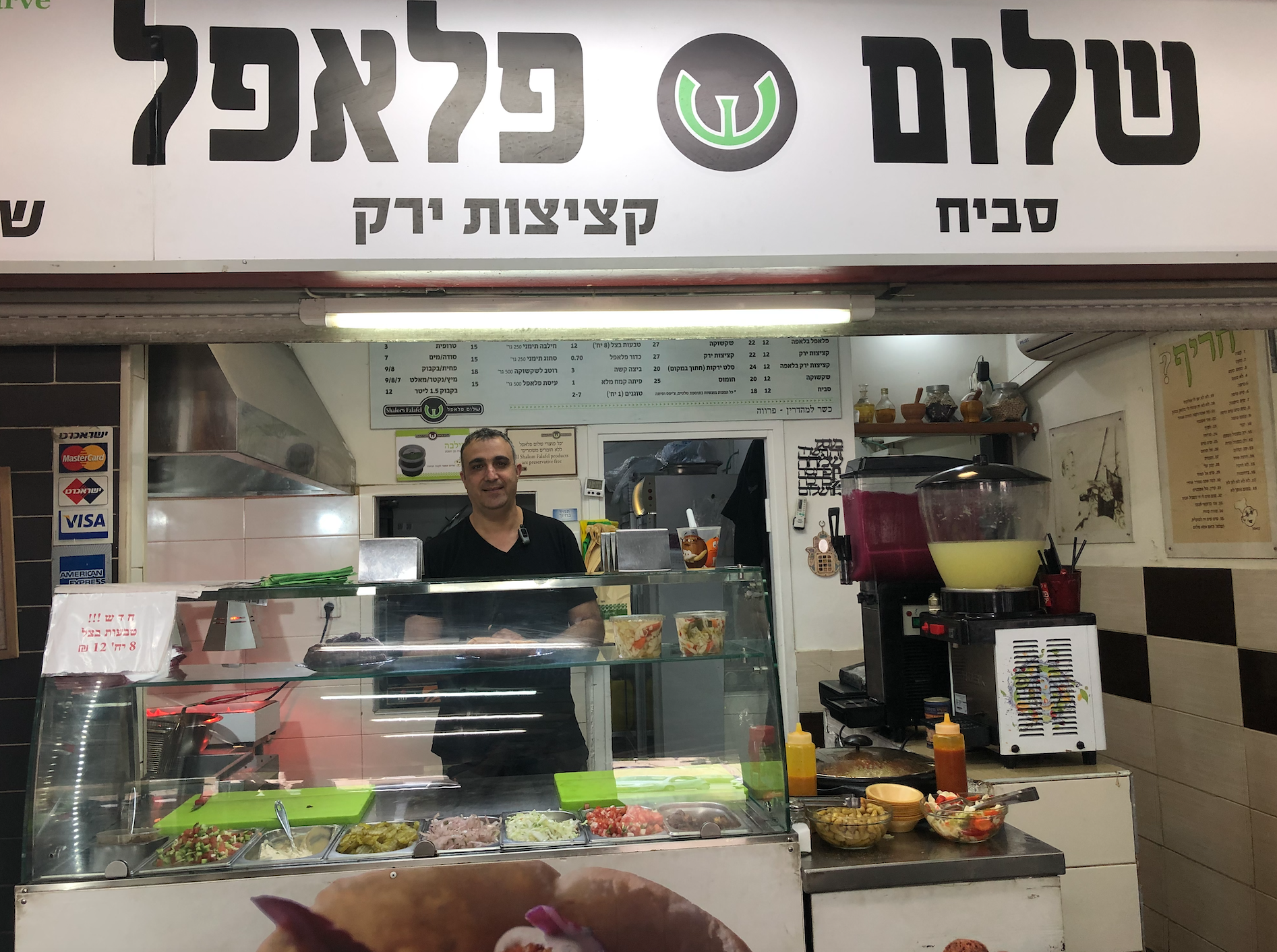
A few streets over, on Shai Agnon Street, Tzahi Mishan of Shalom Falafel wasn’t sure he’d be able to remain open for long in the current situation.
The containers in his stainless steel counter were full of freshly chopped cucumbers, tomatoes and cabbage salad, with fried falafel balls ready to be stuffed into pita bread. It had been a quiet morning so far, without many customers leaning over the counters letting Mishan know whether or not they wanted spicy schug spooned into their falafel as they usually do.
“I didn’t set up tables this morning, just that one,” he said, pointing at the single table in front of the shop. “Business has been down 50%, and if the coronavirus numbers go up and things get worse, it won’t be worth opening and I’ll have to close.”
Mishan’s neighbors are a Lotto store that also stocks candy and ice cream, money changer Manhattan Change, Cafe Agnon, a neighborhood stalwart that brings in baked goods and makes sandwiches, a branch of Bank Leumi and a Co-Op supermarket. Business was brisk in the little shopping center on Sunday morning, but quieter than usual without customers sitting and drinking coffee.
“We’re trying to keep our distance from the customers,” said a worker at Cafe Agnon, who was wrapping cakes and rugelach for several customers behind a high, makeshift counter.
“I don’t wait behind any counter,” said Dalia, an older customer who said she buys bread every few days at the cafe. She came around the side in order to get closer to the shelves of breads and pastries, and no one stopped her.
“Do you have corona in a pita? I gotta have it,” joked another customer.
Everyone smirked.
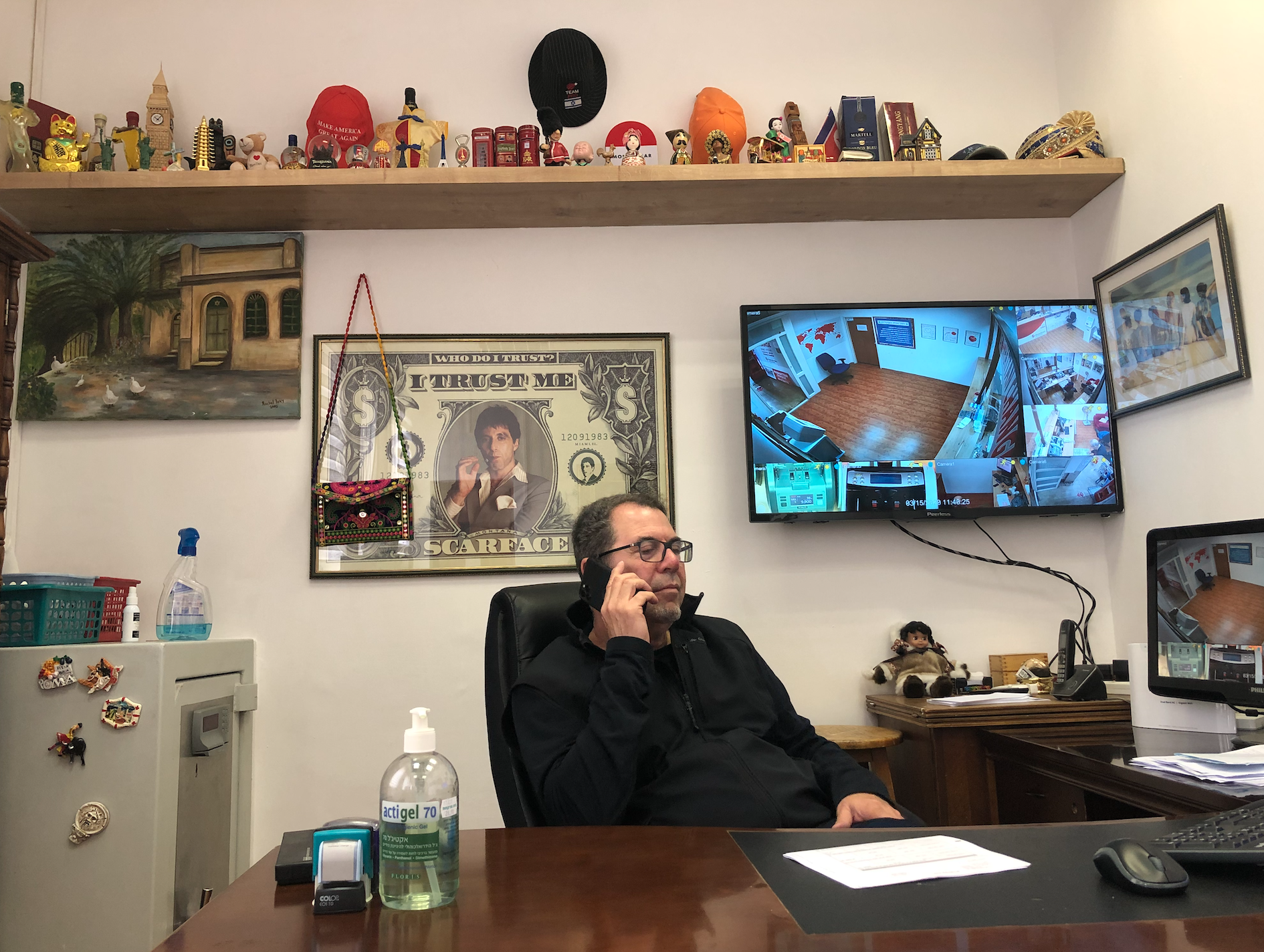
Two doors down at Manhattan Change, owned by the two Sasson brothers, trade has been ongoing but limited over the last week, said Avi Sasson. People purchased foreign currency to go abroad, but now that they don’t need it, they want their shekels back.
They’ll stay open as long as possible, and are thankful for the security glass window between them and their customers, said Sasson.
“Every time I handle cash, I wash my hands with gel,” said Sasson, pointing to the big pump bottle of antibacterial gel sitting on his desk.
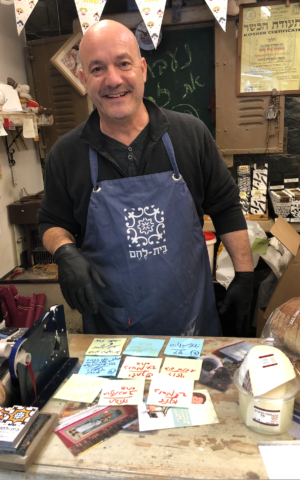
There’s a big bottle of gel and disposable gloves on a table outside Bethlehem, a Baka shop that carries fresh breads, cheeses, wine and condiments on Bethlehem Road. Owner Uri Ohayon was busy slicing fresh breads from the two artisanal bakeries, Teller and Duvdevan, that supply him with bread daily.
“You see this?” he said, pointing to two rows of scribbled notes taped to the counter. “There are two kinds of people who call, those who want to see if we’re open and those who want to order bread for tomorrow.”
Ohayaon and one of his sons were placing the fresh breads on their open shelves; his other teenage son was manning Tziga, the nearby ice cream parlor he opened with his wife Sigi in October. Tables were stacked at the ice cream store, and he isn’t sure it will remain open.
“Over there?” Ohayon said. “God knows.”
“We’ll get through this too, Uri,” said Chaim, a customer waiting to pay for his loaves of bread. “In the meantime, no one is giving up on their fresh bread.”
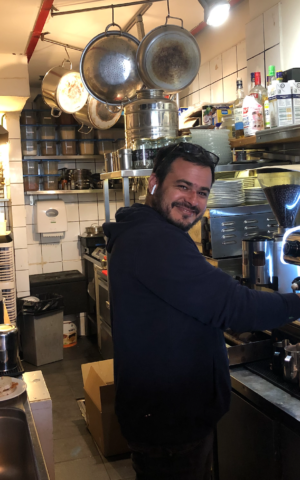
Ohayon’s next-door neighbor, Itzik Yaakov, who owns Hamakom Shel Itzik, a tiny cafe known for its coffee, shakshuka and daily tables full of regulars, had its tables stacked but Yaakov was in the tiny galley kitchen, making coffee and sandwiches for customers.
Hamakom Shel Itzik has been around for some 15 years, growing from a simple kiosk selling newspapers, bottles of wine and chewing gum, to this popular neighborhood hangout.
“Very few people are coming in, and they’re taking mostly coffee, sandwiches and salads,” he said.
While he usually has a rotating staff of six people cooking and serving customers, it’s just down to Yaakov right now, and he’s hoping customers will keep calling, ordering and picking up their food. Deliveries aren’t possible, because it’s just too expensive a venture.
“It could be that people who are walking around with their kids, or taking a break from their kids, will stop in and get something,” he said. “We’re here if they do.”
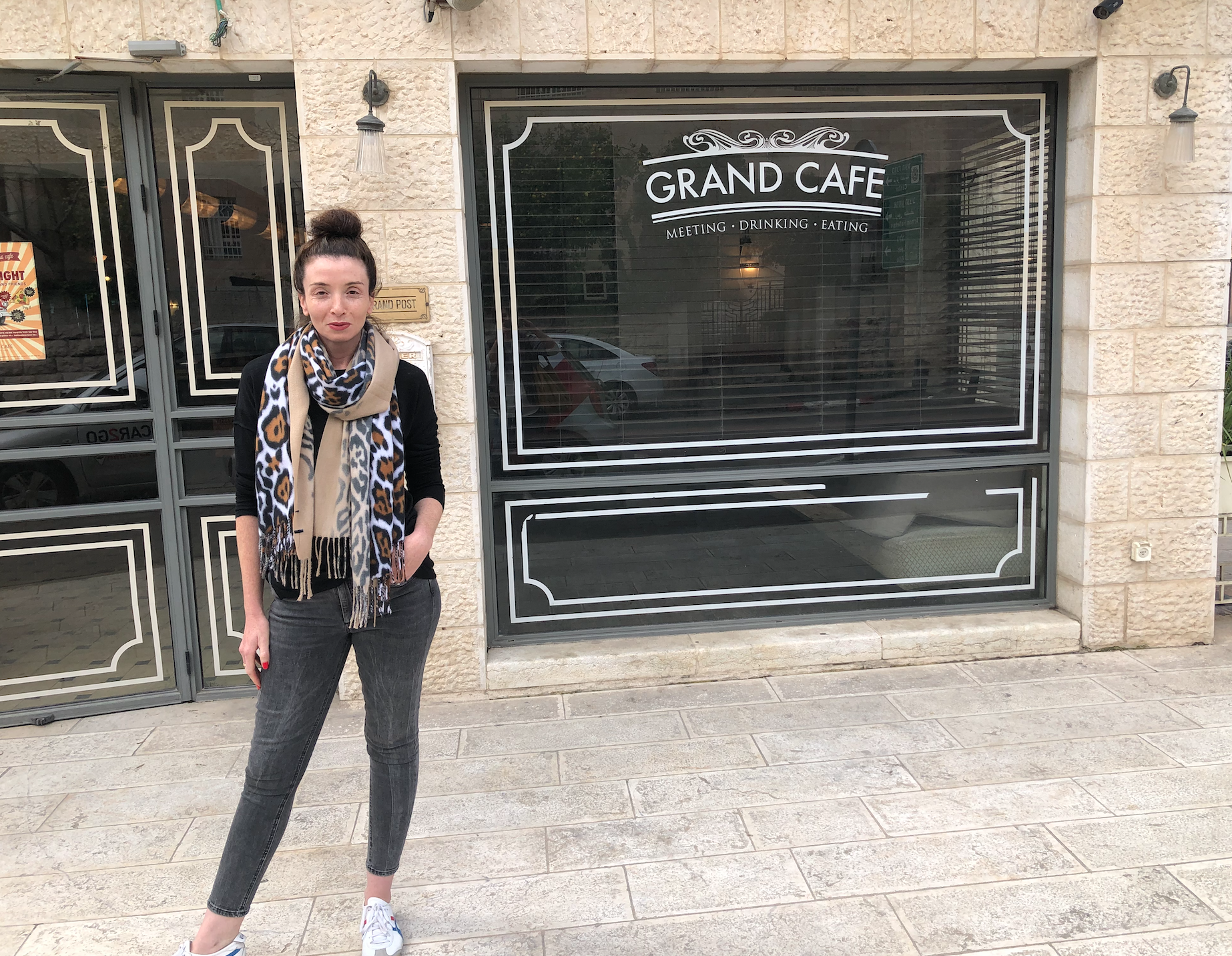
At Grand Cafe, the flagship cafe of Bethlehem Road, manager Sarah Talmor was standing outside the shuttered doors as her children climbed a nearby fence. She said she hoped to at least offer takeout for customers in the near future.
“We’re the living room of this street,” said Talmor, who had to send home the entire staff of 30 to 40 people. “Everybody sits here.”









The Times of Israel Community.