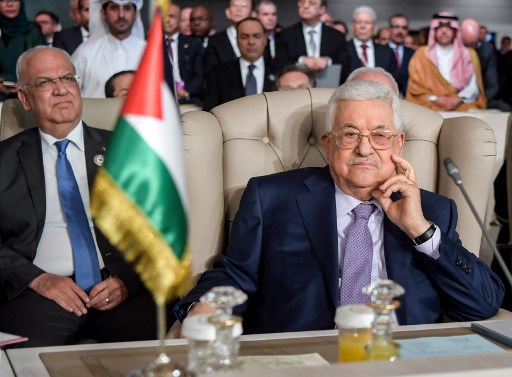
Palestinian Authority President Mahmoud Abbas (R) and Palestine Liberation Organization (PLO) Executive Committee Secretary-General Saeb Erekat (L) attend the opening session of the 30th Arab League summit in the Tunisian capital Tunis on March 31, 2019. (Fethi Belaid/Pool/AFP)
Palestinian Authority President Mahmoud Abbas said he hoped that Israel’s parliamentary elections on Tuesday could help bring peace.
Right-wing Prime Minister Benjamin Netanyahu was facing a close battle with centrist Benny Gantz in the polls, but seemed more likely than his challenger to be able to build a majority coalition and retain power.
Without supporting a particular candidate, Abbas told journalists in Ramallah he was following the elections.
He said he hoped the new government would understand “peace is in ours, theirs and the world’s interests.”
“All that we hope is there will be a just way, a correct way to reach peace,” he said. “We don’t need any government that doesn’t believe in peace.”
Get The Times of Israel's Daily Editionby email and never miss our top stories
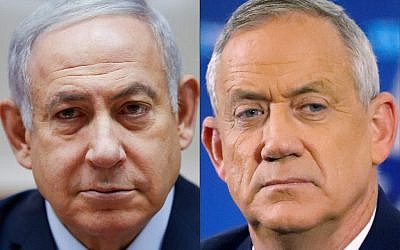
Prime Minister Benjamin Netanyahu (left) and Blue and White leader Benny Gantz (Oded Balilty and JACK GUEZ / AFP)
Israeli-Palestinian peace negotiations have been frozen since the US-brokered process collapsed in 2014 amid mutual accusations of blame.
Abbas, whose government is based in the West Bank, reiterated that the Palestinian leadership would be open to negotiations.
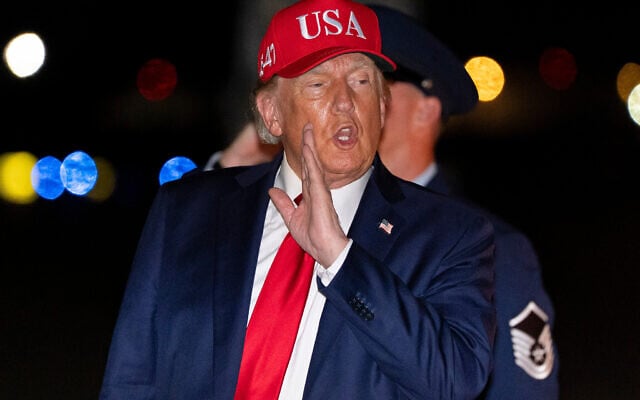
But he has frozen ties with the White House over US President Donald Trump’s recognition of Jerusalem as Israel’s capital and has vowed not to cooperate with the peace plan Washington is expected to release.
Advertisement
The Palestinians see Trump’s administration as blatantly biased in favor of Israel.
Help us report truthfully on social media
As a multimedia journalist, my job is to take the quality, fact-based journalism produced by The Times of Israel newsroom and make it accessible across every platform — from Instagram posts to podcasts to short-form videos.
This is how many, especially young people, consume news these days. But misinformation is rampant on social media. Our team at ToI produces accurate, responsible short-form reporting on Israel and the Jewish world.
If you believe in the importance of factual social media journalism, please consider joining our reader support group, The Times of Israel Community. Your financial support is essential to sustain responsible multimedia reporting.
We’re really pleased that you’ve read X Times of Israel articles in the past month.
That’s why we started the Times of Israel - to provide discerning readers like you with must-read coverage of Israel and the Jewish world.
So now we have a request. Unlike other news outlets, we haven’t put up a paywall. But as the journalism we do is costly, we invite readers for whom The Times of Israel has become important to help support our work by joining The Times of Israel Community.
For as little as $6 a month you can help support our quality journalism while enjoying The Times of Israel AD-FREE, as well as accessing exclusive content available only to Times of Israel Community members.
Thank you, David Horovitz, Founding Editor of The Times of Israel


 Add ToI as a Preferred Source on Google