

NY antisemitic attacker sentenced to 17 months, with hundreds on hand to support him
Federal judge’s sentence of Tarek Bazrouk is near the maximum stipulated by plea deal; victim says he’s ‘grateful,’ that decision will protect other Jews
 Add ToI as a Preferred Source on Google
Luke Tress is The Times of Israel's New York correspondent.
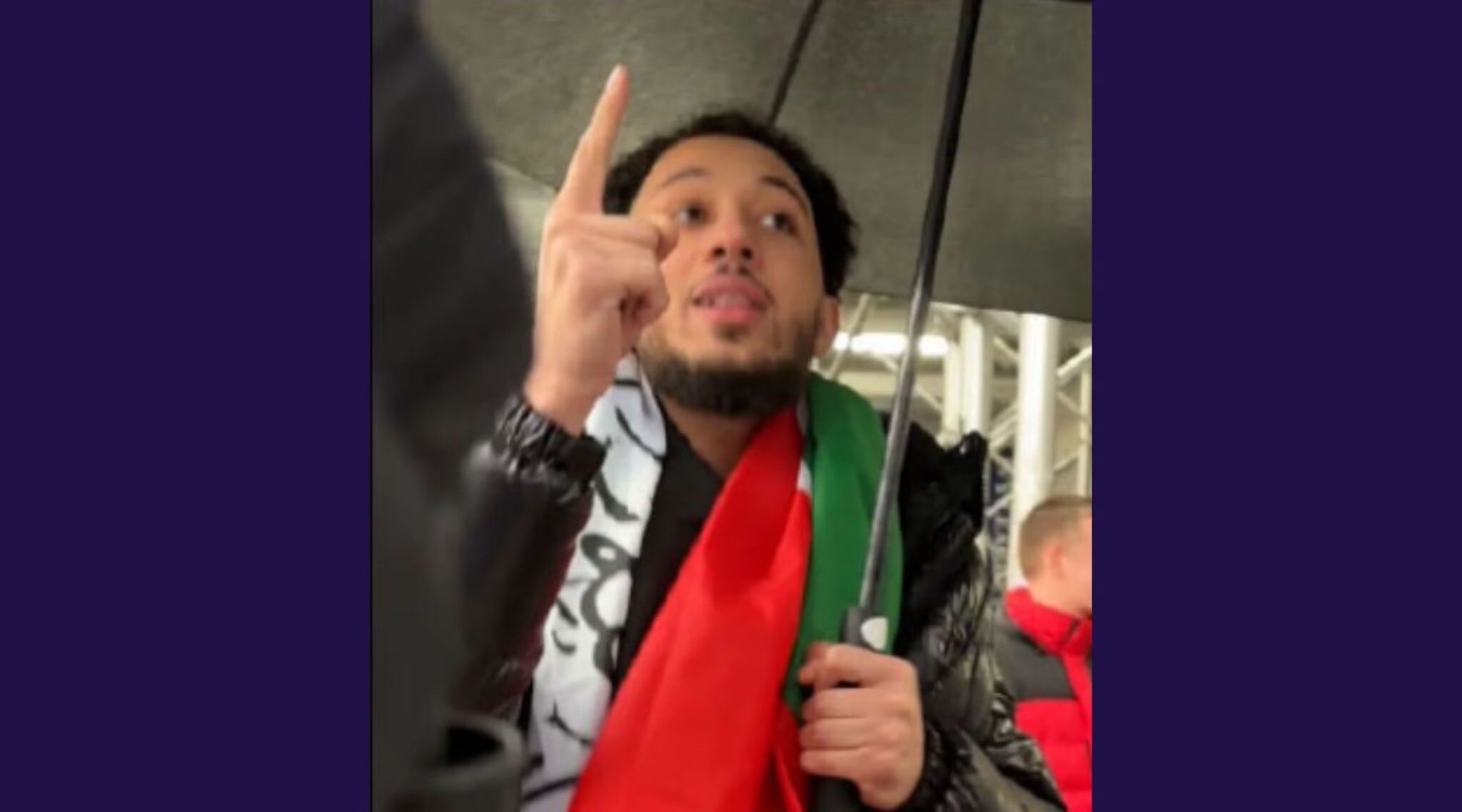
NEW YORK — A federal court in New York City on Tuesday sentenced an anti-Israel activist, Tarek Bazrouk, to 17 months in prison for attacking Jews, in a case that galvanized the pro-Palestinian activist movement in the US.
Bazrouk, 20, attacked Jews at anti-Israel protests in three incidents and pleaded guilty to conspiracy to commit hate crimes in June.
The victims of the attacks, which took place surrounding anti-Israel protests in 2024 and early 2025, were all wearing Jewish or Israeli symbols or were otherwise identifiable as such.
Bazrouk, who is Palestinian, became a cause célèbre for anti-Israel activists across the US after his arrest. Leading groups, such as National Students for Justice in Palestine, urged their followers to sign a letter to the judge in his case, arguing for leniency in the sentencing.
Around 200 Bazrouk supporters filed into the federal Southern District court in Manhattan on Tuesday morning for the sentencing. Several dozen, including his family, sat in the courtroom, while the rest were diverted to an overflow room to watch the proceedings via livestream. The attack victims and a smaller number of their supporters from the Jewish community sat across the aisle.
As Bazrouk entered the courtroom, dressed in a beige prison jumpsuit, his leg shackles clinking, he made a heart gesture to his supporters.
The judge in the case, Richard Berman, cited aggravating circumstances at the hearing, including text messages from Bazrouk uncovered by investigators that exposed his animosity toward Jews, his extensive criminal history, his support for terrorist groups, and an “arsenal” of weapons and more than $750,000 in cash found at his apartment.
The defense said Bazrouk had earned the cash while working at unlicensed, cash-only smoke shops in Connecticut. He forfeited the cash to the authorities as part of his plea agreement.
Tarek Bazrouk, a 20-year-old Palestinian student, has been locked up for over five months for speaking out against genocide.
Sign the mitigation letter by Oct 13 to demand his freedom and stand against political repression.https://t.co/8jOC0Ejhqu pic.twitter.com/YfbUuOIEdX
— CU Apartheid Divest (CUAD) (@ColumbiaBDS) October 12, 2025
Bazrouk has been arrested at least nine times, apart from the three hate crimes arrests, for charges including robbery, assault, possession of a controlled substance with intent to distribute, reckless endangerment, grand larceny and forgery, prosecutors said.
Berman also cited factors in Bazrouk’s favor, such as his youth, his stated contrition, his supportive family and the campaign in his support.
A letter seeking leniency in the sentencing garnered more than 11,000 signatures. The pro-Palestinian groups that campaigned for Bazrouk characterized him as a “political prisoner,” without mentioning his attacks on Jews. The defense submitted the letter to the court, but said it was not affiliated with the social media campaign that advertised the missive and elided Bazrouk’s hate crimes and antisemitism.
“Not all of the petitioners, obviously, were fully apprised that the defendant voluntarily pled guilty to hate crimes,” Berman said.
Bazrouk was born to a Palestinian family in the US, lived in the West Bank for 18 months during his childhood, and resided with his family in a Manhattan apartment before his arrest, Berman said.
In a brief statement, Bazrouk apologized to the victims. “I’m sorry, guys, and I hope you can forgive me,” he said.
Bazrouk’s older sister told the court that the family “strongly condemns violence in all forms” and has “never taught hatred against Jewish people.”
The victims, whose names were redacted by the court, said the attacks had a significant impact on their lives and that they did not believe that Bazrouk truly regretted the assaults.
“Never in my life did I imagine that walking in the streets of New York would become a scary, terrifying experience,” one of the victims told the court.
“My experience as a Jew in America has been altered forever,” he said, adding that Bazrouk had bragged about the attacks to friends in text messages, indicating that he was not contrite.
The victim asked for the “harshest possible sentence” to “protect me and all other Jews in New York.”
“If you assault somebody unprovoked just because that random somebody is an actual or perceived Jew,” Berman said, “because you, the assaulter, hates Jews, you are very likely to go to jail. It’s that simple.”
“It works in reverse,” Berman added, stating that Palestinians and members of other groups who were assaulted would receive similar protection under the law. In addition to the 17-month sentence, Bazrouk will be subject to three years of supervised release after his term ends.
Bazrouk was arrested in May and pleaded guilty weeks later. The plea agreement included a sentencing guideline of 12-18 months in prison, and 1-3 years of supervised release, meaning the judge’s decision was near the maximum sentence. Bazrouk has been incarcerated since his arrest in May, time that will be counted as part of his total sentence.
Some of Bazrouk’s supporters wept outside the courtroom after the sentencing.
One of the victims, Elisha Baker, said he was “grateful” for the judge’s decision.
“The message that the court sent today is that if you assault Jews on the basis of their Judaism and membership in the Jewish people, you will be held accountable,” Baker told The Times of Israel.
Jews are targeted in hate crimes more than any other group in New York City, according to NYPD data, but antisemitic hate crimes convictions are rare because prosecutors need to prove a bias motivation, a high legal bar. In Bazrouk’s case, prosecutors relied on his antisemitic text messages and his repeated attacks on Jews to demonstrate bias.
Hate crimes are seen as more serious than other crimes because they are viewed as an attack on a community at large, stoking fear in the targeted group.
Bazrouk’s case was one of the most high-profile antisemitism hate crime cases in the city since a 2021 assault on Jewish pro-Israel activist Joey Borgen. That attack also occurred near an anti-Israel protest and resulted in a series of convictions and prison sentences.
The prosecution also referred to Saadah Masoud, another anti-Israel activist convicted of antisemitic hate crimes by the Southern District for attacks in 2021 and 2022. Like Bazrouk, Masoud carried out assaults on three Jews, discussed the attacks with friends, and was sentenced to 18 months.
Bazrouk’s first attack was in April 2024. Bazrouk, while wearing a Hamas headband, scuffled with pro-Israel demonstrators at a protest outside the New York Stock Exchange. He was arrested during the altercation, and while he was being escorted to a police vehicle, he kicked a Jewish college student in the stomach, court filings said.
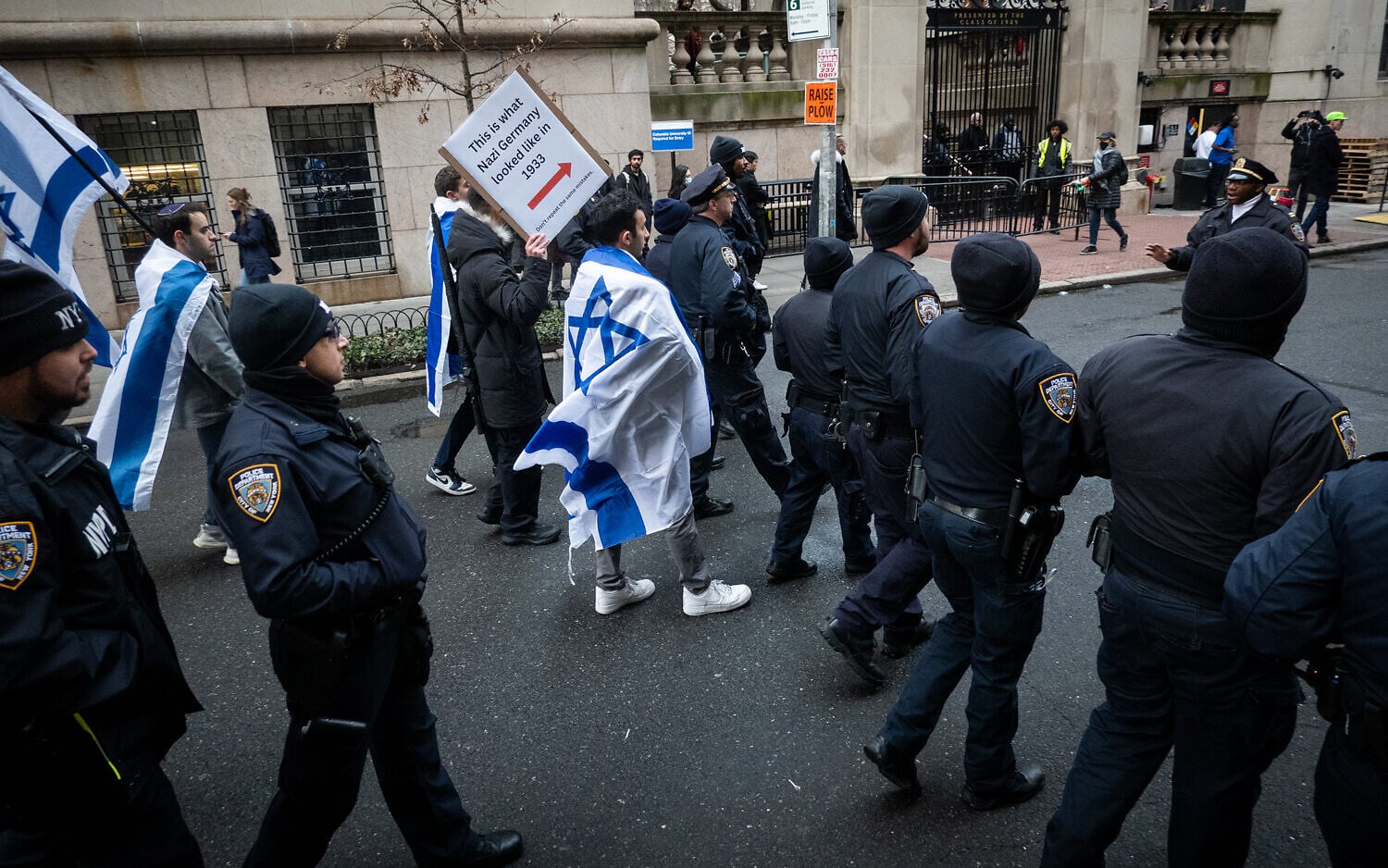
In December 2024, at a protest near Columbia University, Bazrouk snatched an Israeli flag from two Jewish brothers while calling them “Nazis.” As the brothers followed Bazrouk through a crowd to retrieve the flag, he ambushed them from the side, punching one of the brothers in the face.
In January 2025, at another protest, Bazrouk jostled a Jewish counter-protester. The Jewish individual pushed aside Bazrouk, who then punched him in the nose.
All of the victims were wearing kippahs, Stars of David, or Israeli flags, or were in groups singing Jewish songs.



The Times of Israel Community.