 Add ToI as a Preferred Source on Google
On a hill overlooking the Gaza border community of Kibbutz Nahal Oz and the adjacent army base of the same name, relatives of 16 fallen female lookout soldiers have erected a memorial to commemorate their service on October 7.
The elevated location allows visitors to gaze westward toward Gaza City and the Shejaiya neighborhood, where the ruins are visible across the border.
Climbing up to the lookout hill makes clear just how vital these soldiers’ service was. From this vantage point, one can picture the PASCAL system — the digital surveillance technology they operated — and grasp their critical contribution to Israel’s security.
Yet here, too, the painful gap is revealed: the intelligence the young women relayed was ignored by senior command, leading to the deadliest disaster in Israel’s history.
This memorial is one of two new sites erected in the past year alone as Israel’s public spaces are taking on a new focus — the commemoration of female soldiers who fell in battle.
It is a necessary development in a nation beset by terror attacks and wars, especially after Hamas’s surprise October 7, 2023, attack on the western Negev, when thousands of terrorists broke through the Gaza border and overran Israeli communities and army bases. The surprise strike led to a record number of women killed in combat — both on the day of the massacre and in the battles that followed.
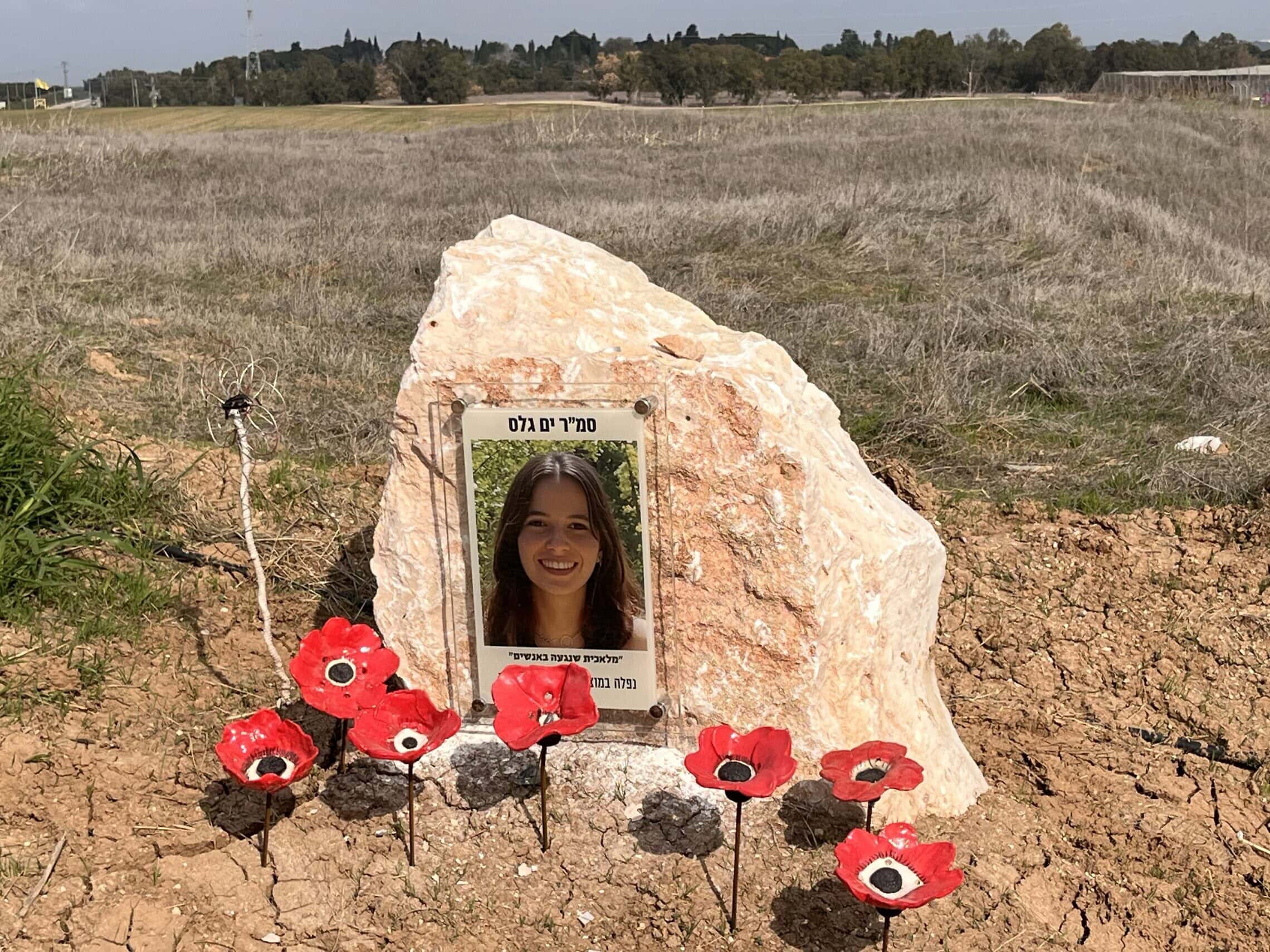
The Times of Israel visited this site in January 2025, just days before the release of five lookout officers who had been taken hostage by Hamas. A few weeks later, in mid-March, Prime Minister Benjamin Netanyahu decided not to continue with the second stage of ceasefire negotiations and ordered the IDF to resume fighting. Since then, the area has been designated a closed military zone, and attempts to return have failed.
The memorial was a private initiative by relatives of the fallen in partnership with the group Fields Instead of Fences and with the assistance of the KKL-JNF Jewish National Fund. The Israeli government, despite its many ministries — Heritage, Diaspora, Public Diplomacy, Negev and Galilee and more — has not yet taken responsibility for organizing state-run memorial projects.
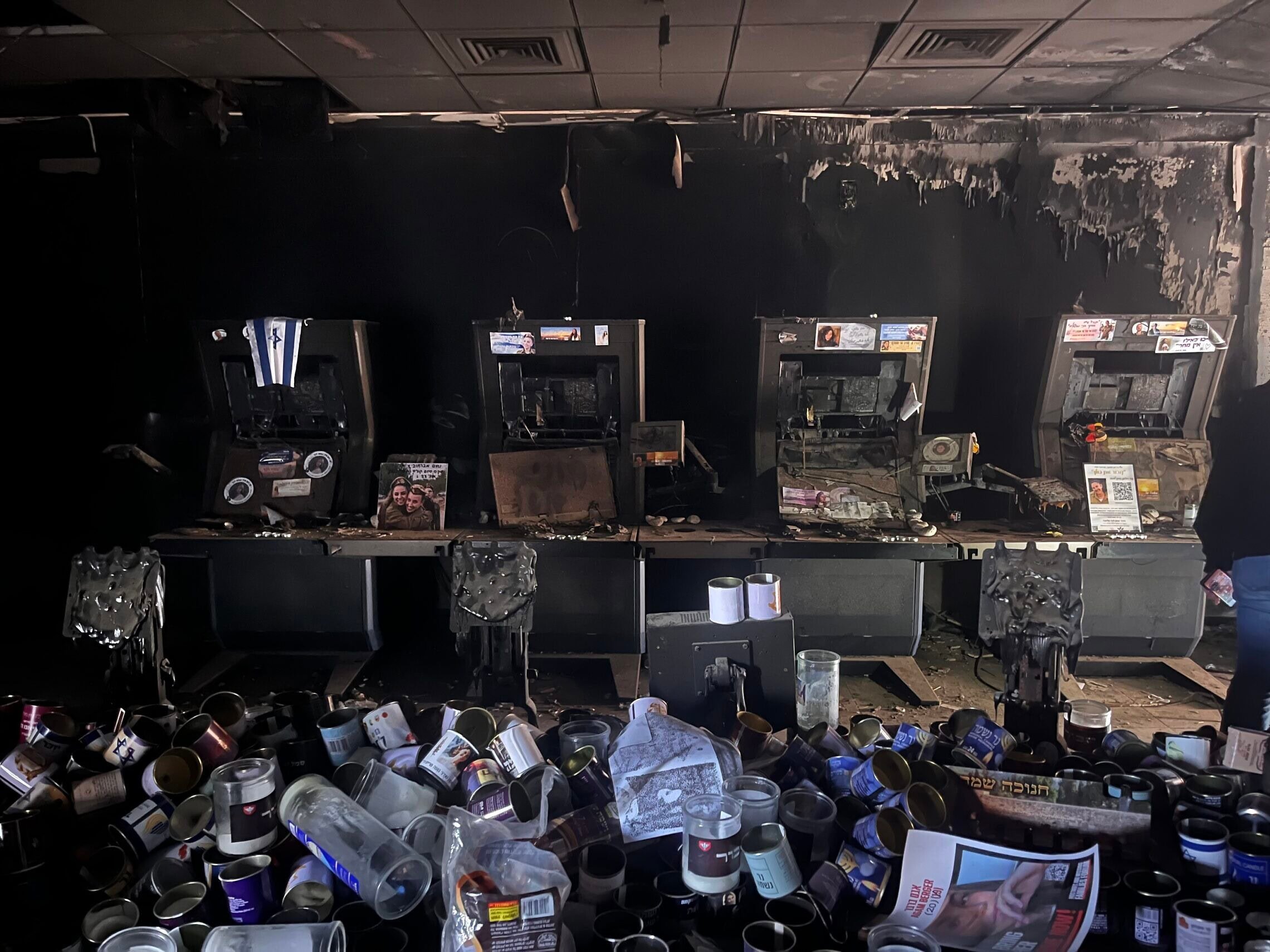
Entry into the charred operations room of the Nahal Oz base, where many of the women were killed, is now almost impossible. Those who manage to get permission face a searing experience. For that reason, the lookout memorial has become a necessary stop for those wishing to engage with their legacy.
A fraught discussion is now underway between bereaved parents and the IDF over how to preserve the memory of the 54 dead from the Nahal Oz outpost.
Tours of the base still show the command center and positions exactly as they were on October 7 — burned and blackened like coal. The fallen troops’ relatives fear that one day the army will decide to demolish the remains of the facility, which has become a symbol of failure.
Today, many visitors come (only with prior IDF approval) to the outpost, and even enter the reinforced shelter where many female soldiers were murdered and seven lookout officers were abducted.
The base no longer functions as a frontline post, but signs of the battle are everywhere: bullet holes, machine guns and blast scars from RPG fire. Preservation work is complicated, not least due to the deterioration of materials and the risk of the asbestos roof collapsing.
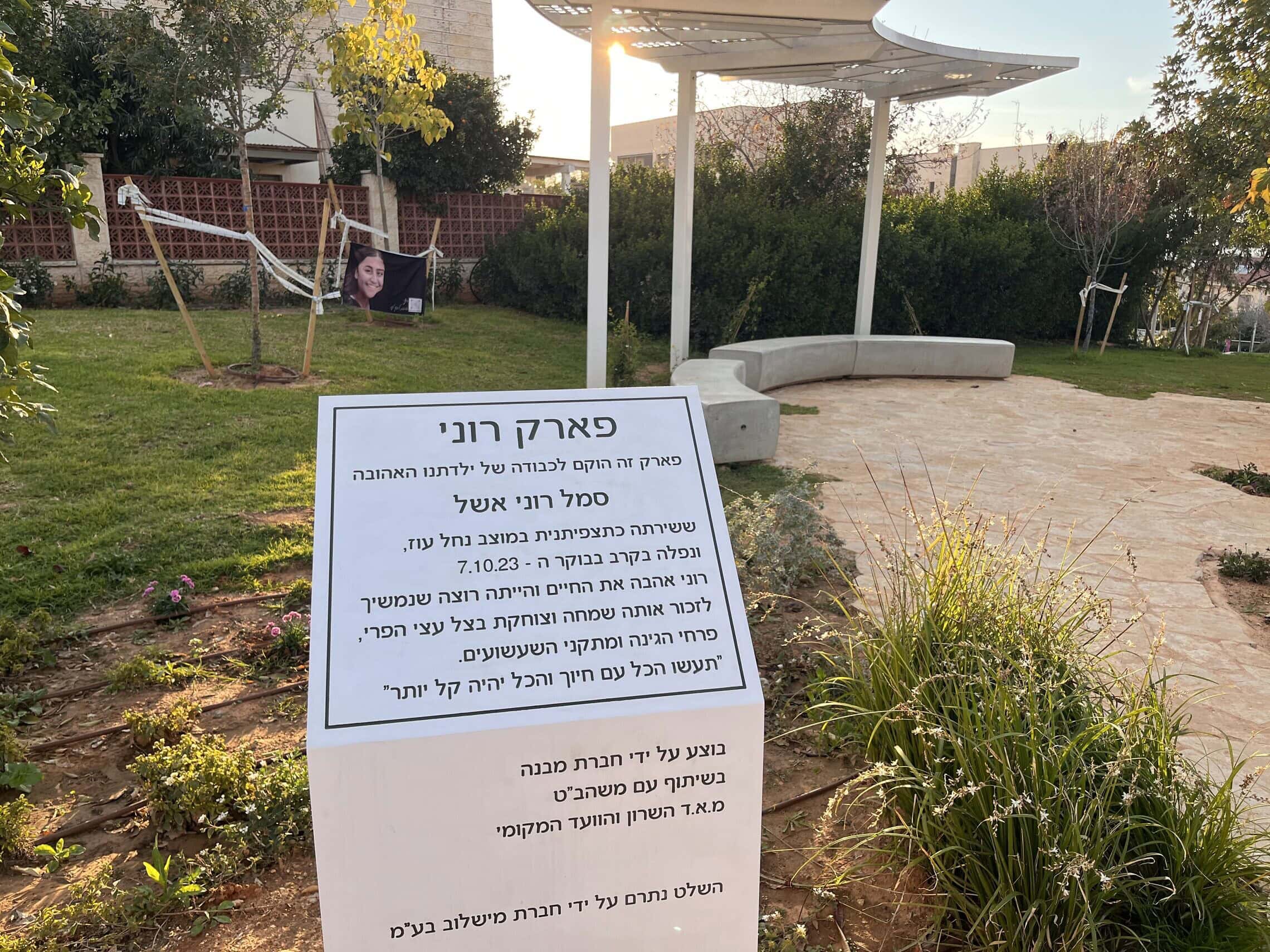
Meanwhile, other commemoration projects have been launched. The parents of Sgt. Roni Eshel, the first lookout soldier from the town of Tzur Yitzhak to be killed, created an educational garden in her memory. The local council allocated a section of the municipal park, where children play daily.
Eshel’s parents, Eyal and Sharon, obtained two original PASCAL stations from the Defense Ministry, built a wooden shelter and explanatory panels around them, and turned the place into an open classroom for young people wishing to learn about Eshel and her fellow lookout soldiers.
A memorial for Iron Dome soldiers slain Oct. 7
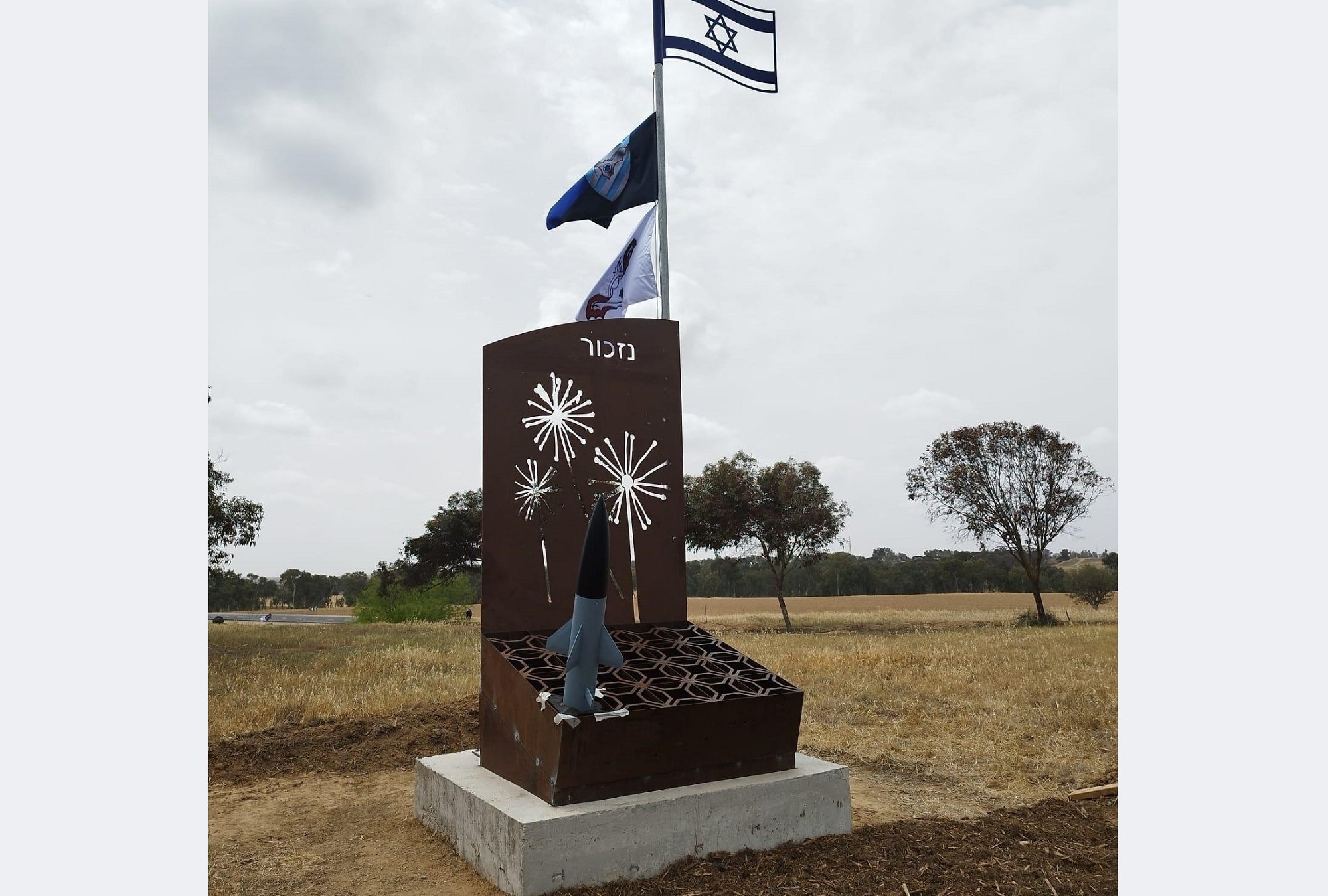
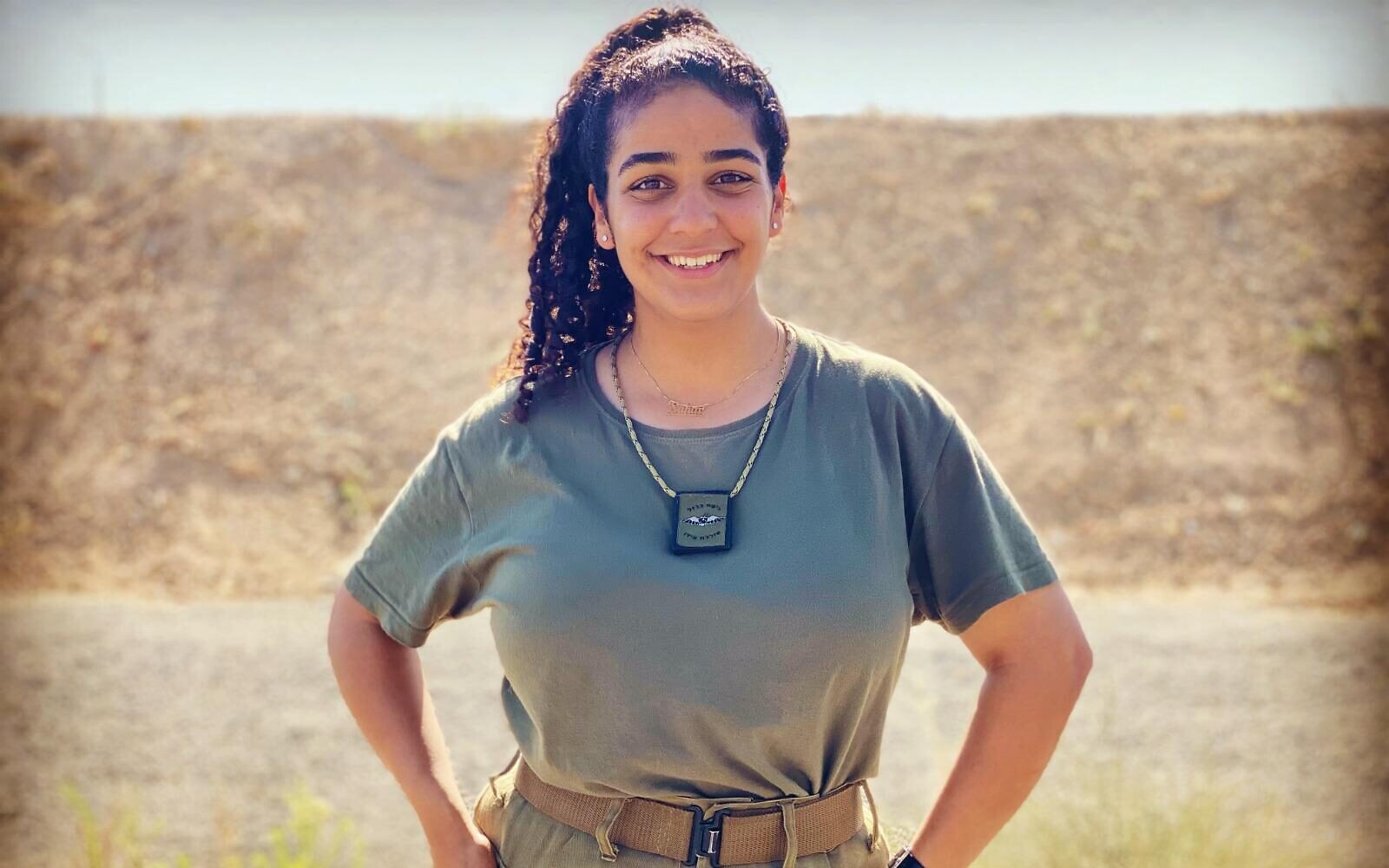
Near the cemetery of Kibbutz Re’im, a community close to the Gaza border that was likewise overrun by Hamas, a monument has recently been erected in memory of three soldiers who helped operate the Iron Dome missile defense system: Cpt. Sahar Saudyan and her soldiers, Sgt. Nativ Kuzaro and Sgt. Binyamin Gavriel Yona.
On the morning of October 7, around 9:30 a.m., Saudyan left the Iron Dome battery in a military vehicle to deliver additional interceptor missiles. Two of her soldiers drove with her. On Route 234, between Re’im and Urim, they were ambushed by Hamas gunmen and shot dead.
The monument, called “The Dome of Three,” was built at the initiative of the Air Defense Array and Battalion 947, in which the three served. The Israeli Air Force suffered 20 casualties that day and in the weeks that followed, most from its elite Shaldag commando unit and Unit 669, the air rescue force. Saudyan and her two soldiers were the first Iron Dome casualties.
Daughters of Deborah
In Moreno Park, near the cluster of museums in the city of Petah Tikva and beside the abandoned dining hall of Kibbutz Givat HaShlosha, a new monument to female fighters was recently inaugurated: “Daughters of Deborah.”
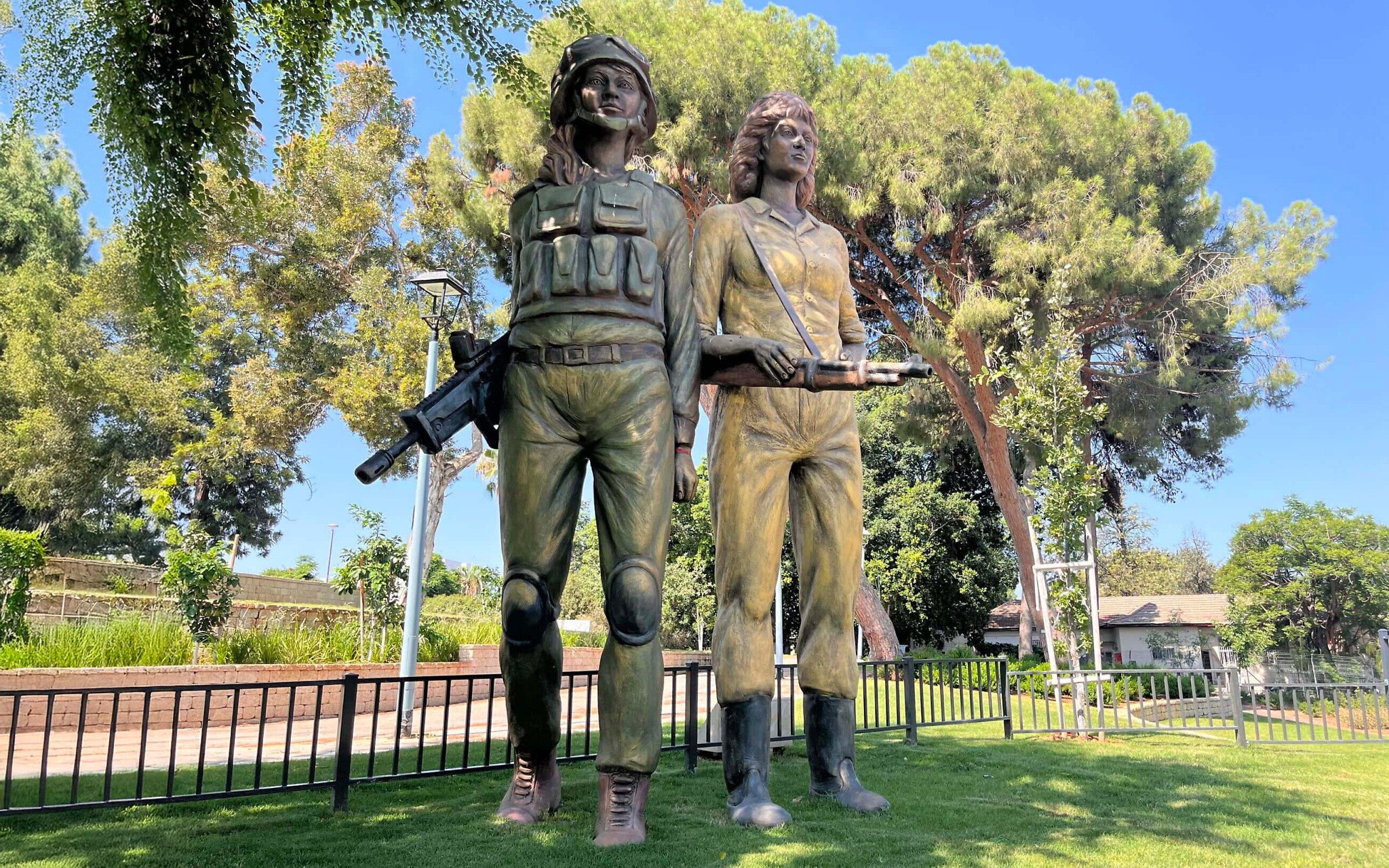
At the center of the site rises a four-meter-high (13-foot) bronze statue by sculptor Sam Phillip. It depicts two figures: one, a female fighter from 1948 holding an old wooden-stock rifle; the other, a soldier from October 7 wearing a flak vest, carrying a short machine gun and wearing a helmet.
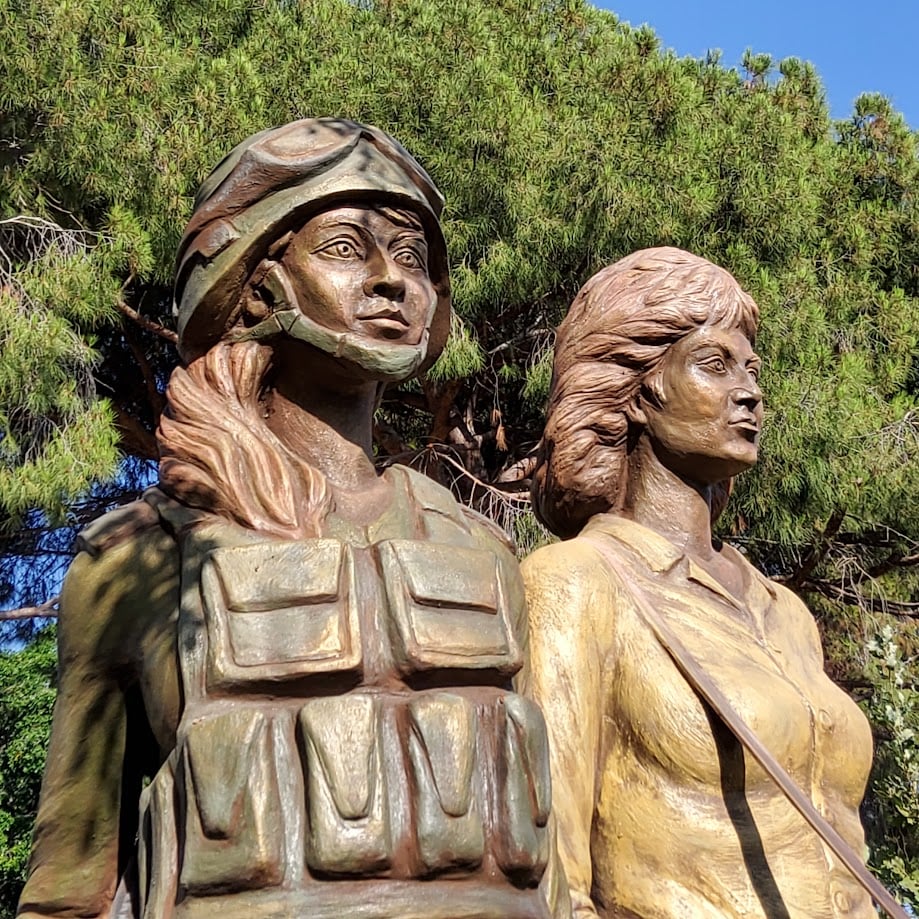
The initiative came from the World Zionist Organization, the Petah Tikva municipality and the Jewish American Society for Historical Preservation. It was conceived and built while the five abducted lookout soldiers were still in Hamas captivity. By the time of its June 2025 dedication, they had returned home, and a plaque was added honoring the fallen.
Yaakov Hagoel, chairman of the World Zionist Organization, told The Times of Israel that the organizers debated where to place the monument: “We wanted to set it in a large city, in a prominent location. In Petah Tikva, it stands near the Scouts and Hashomer Hatzair youth movements and several municipal museums — an area where many teenagers gather.
“The commemoration of women is important to us in the Zionist Organization,” he continued. “From the day it was founded in Basel in 1897, the movement granted women the right to vote, decades before many Western countries.”
“Today we see the women fighters, the fallen and the civilian heroines of the war,” said Hagoel. “We saw great bravery on October 7 and afterward, and the statue places side by side a 1948 fighter and a modern soldier. That connection is important to us.”
A history of heroism and heroines
Few monuments have been dedicated to the heroism of women in combat. During the pre-state era and Israel’s early years, women took an active part in the underground militias and in the Haganah, the main Jewish defense organization, yet their memory was hardly preserved.
Exceptions include the memorial at Kibbutz Sdot Yam for Hannah Szenes, a Hungarian-born Jewish paratrooper who was captured and executed by the Nazis in World War II, and a stone in the Negev honoring Miriam Shachor, a Palmach fighter killed in the 1948 War of Independence.
Three other Palmach fighters — Tamar Baumgart, Leila Yosef and Miriam Osia, all killed at age 18 — were not commemorated until 68 years later, when a plaque was erected near Kibbutz Dorot.
Even in the large memorials like Tel Hai in northern Israel, Mishmar HaYarden in the Galilee, or the Monument to the Defenders of Negba in the south, women’s names appear alongside those of male fighters. In Nathan Rapoport’s massive 1953 statue at Negba, the sculptor even included the figure of a combat medic.
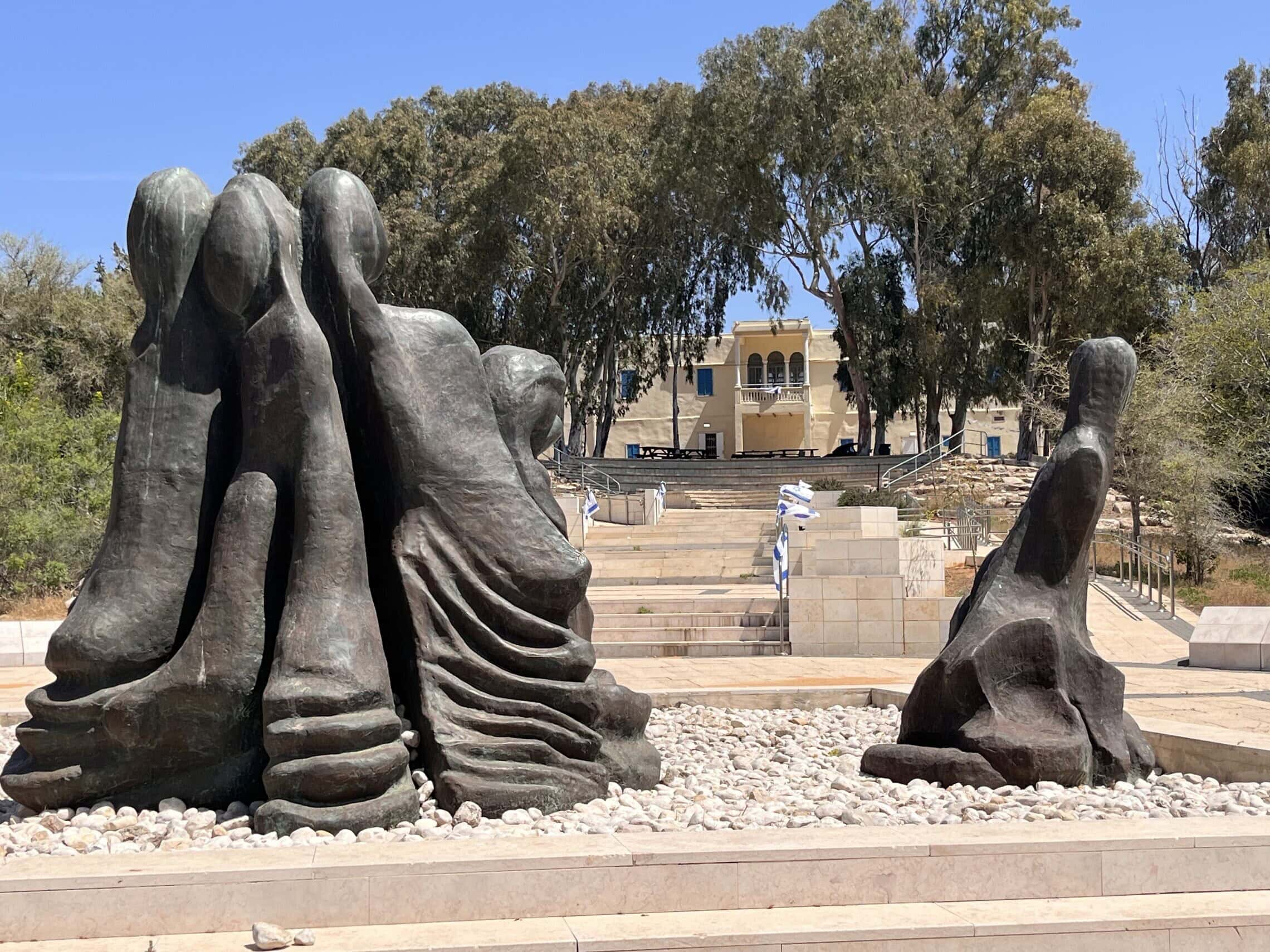
In fact, until recent years, only one site in Israel was entirely dedicated to female fighters: “Yad La’isha HaLochemet” (“Monument to the Fighting Woman”), built in 1988 inside the Shikmim Field School near the village of Nitzan, halfway between Ashkelon and Ashdod.
It was no coincidence this was the only such site: from Israel’s founding until the early 2000s, women were not permitted to serve in combat roles in the Israel Defense Forces. The lone exception was Master Sgt. Keren Tendler, a helicopter mechanic killed in the 2006 Second Lebanon War.
A recent tour of the “Monument to the Fighting Woman” shows how much further there is to go. A faded sign on the road to Nitzan points toward the site, but at the gate to the Shikmim Field School, where the memorial is located, there is no mention of women fighters. And in contrast to the active combatants on the battlefield seen in “Daughters of Deborah,” the “Monument to the Fighting Woman” depicts soft, rounded female figures.
When The Times of Israel visited one Friday morning, the gate was locked, and entry to the grounds — where the monument includes a 1998 sculpture by Shosh Heifetz surrounded by striking landscape — was not possible. This means that anyone wishing to see the site must schedule in advance or join a school activity.
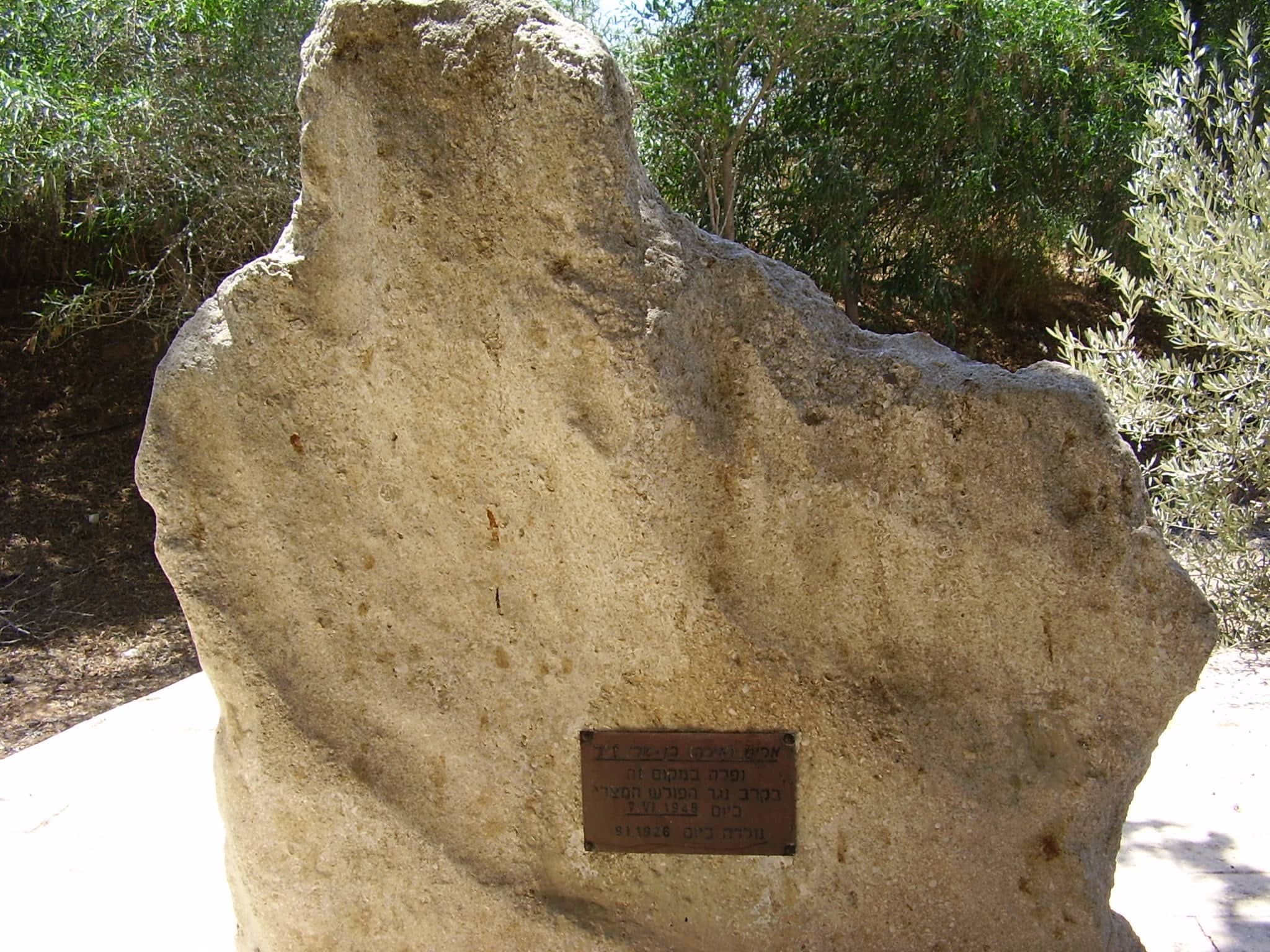
The gate was locked. Intent on entering, after walking in circles, I found a hole in the fence near the yellow gate of Nitzan. Pushing through the bushes, I came upon the monument for Mira Ben-Ari, a Palmach radio operator who was killed in the Battle of Nitzanim during the 1948 War of Independence.
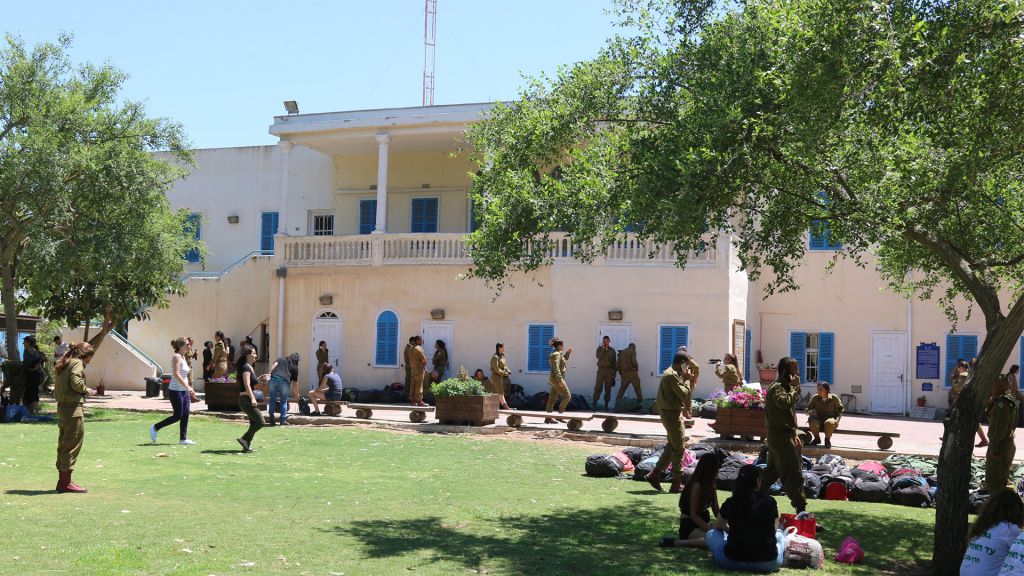
The memorial stands on the grounds of the school, at the very spot where she fell, not far from the impressive Nitzanim Palace, a large Ottoman-era estate house.
Beside the monument, a sign bears the words “Hen Eim Hi” (“Though She Be a Mother”), since Ben-Ari, who was a young mother, could have evacuated when the battle against the Egyptian army began, but chose to remain and fight, and was killed in the battle. Her story was at the heart of Avi Nesher’s 2021 film “Image of Victory.”
The site also commemorates two other women killed in the battle: medic Shlomit Dorchin and Deborah Epstein.
At the center of the monument is a large bronze sculpture depicting women and girls with delicate, flowing features, draped in fluttering cloth. The soft aesthetic is far from the image of Palmach fighters — or today’s female combat soldiers — but it offers a different interpretation of their story.
For those able to schedule a visit when the school is open, the site is worth seeing not only for the sculpture but also for the broad, pale stone steps that connect it to the Nitzanim Palace. Built in 1917 by a wealthy orchard owner, the palace has since been restored through a major preservation effort.
The palace was the last stronghold of Nitzanim’s defenders; more than 100 of them, including seven women, were taken from there into Egyptian captivity.
Along the steps, the names of other women fighters from Israeli history are engraved: Sarah Aaronsohn of the World War I Nili underground spy network; Hannah Szenes; Esther Arditi, an IDF soldier who became known as the “Angel in White” for saving pilots from a burning plane in 1954; Sarah Cizik, who fell at Tel Hai in 1920; and Bracha Fuld, killed in a 1946 firefight with British soldiers in Tel Aviv.
As for why the site is closed to casual visitors, the Society for the Protection of Nature in Israel, which manages the ground, explained that this is part of a policy to safeguard heritage sites from vandalism. Without fences and restricted access, they said, private visitors sometimes damage the monuments.

The Times of Israel Community.