

On water for Gaza, put politics aside
The acute shortage of drinking water in the Strip poses dire health hazards, and not just in Gaza
 Add ToI as a Preferred Source on Google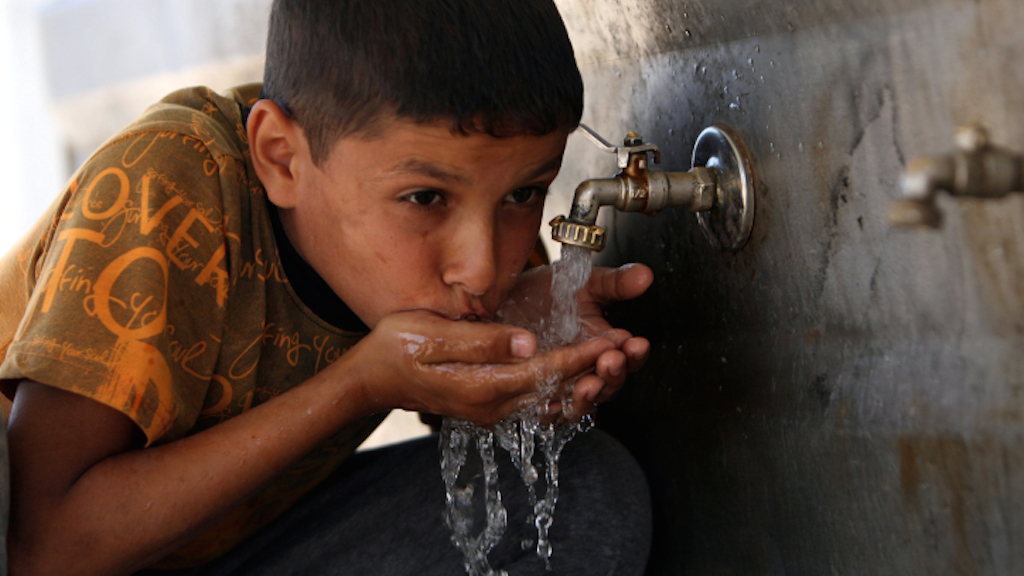
There is a serious humanitarian crisis in Gaza and water is at its center. Holding water issues hostage to the conflict will have dire consequences for Palestinians in Gaza, Israelis and Egyptians. Directly due to the hostilities, an estimated 1.2 million Palestinians in Gaza have no running water. There exists insufficient electricity in Gaza to treat or pump out sewage. This will no doubt result in even higher than present levels of drinking water contamination that risk the outbreak of pandemic disease, such as cholera and typhoid. The health risk is compounded by the present inability to even chlorinate drinking water.
This situation requires an urgent response if the outbreak of pandemic disease is to be avoided. Pandemics risk Palestinian, Israeli and Egyptian populations. But here lies the dilemma. Tackling the urgent water, environment, economic and energy problems all have to go through a central government and in Gaza that means Hamas. How can Israel and the international community therefore deal with the crisis?
The fact is that Israel presently sells an average of 4.7 million cubic meters (MCM) of potable water to Gaza, delivered through two grid connections: 2.8 MCM via the Bani Suhaila connection east of Khan-Younis, and 1.9 MCM via the Ben Said connection east of Deir el-Balah. Infrastructure constraints permitting, Israel could double this water supply for the immediate period.
Following political delays of nearly 20 years, a third Israeli pipeline connection, at Nahal Oz in Israel, to northern Gaza, was completed several months ago but no water has yet flowed into Gaza. An urgent agreement should be reached between Israel and the Palestinian Water Authority, an arm of the Palestinian Government in Ramallah, to open the lever in Israel and provide up to 10 MCM of potable water flow into Gaza.
In addition fuel and more generators need to be urgently delivered to Gaza to help operate what exists of Gaza’s inadequate sanitation system, with direct supply from Israel of an additional 3MW of electricity needed to operate the newly completed World Bank coordinated waste water treatment plant in Beit Lahia.
These examples of two types of measures, water supply and sanitation, require the urgent agreement of the Palestinian and Israeli governments. If promptly implemented, they would go a long way to help prevent an additional humanitarian health crisis from developing due to lack of drinking water. They would also serve as a model for other longer term projects that are required for the reconstruction of Gaza. No less important, they would represent concrete evidence to the Palestinian and Israeli public that a relationship of mutual interest is capable of being advanced. In this way Palestinian, Israeli and international mutual interests are served in a manner that strengthens the Palestinian Government of Abu Mazen.
—
Dr. Oded Eran is a Senior Researcher at the Institute for National Security Studies, Tel Aviv, former Israeli Ambassador to the European Union and Jordan, and Head of Israel’s Negotiations Team with the Palestinians (1999-2000).
Advocate Gidon Bromberg is the Israeli Director at EcoPeace/ Friends of the Earth Middle East (FoEME) and Chair of the Alliance for Middle East Peace (ALLMEP).
The views expressed are those of the authors.








The Times of Israel Community.