

Palestinian killed during alleged attempt to sabotage Gaza border barrier
Army says five Gazans hurt when ‘security infrastructure’ explodes during attempt to damage underground wall, denies claim they were shot
 Add ToI as a Preferred Source on Google
Judah Ari Gross is The Times of Israel's religions and Diaspora affairs correspondent.
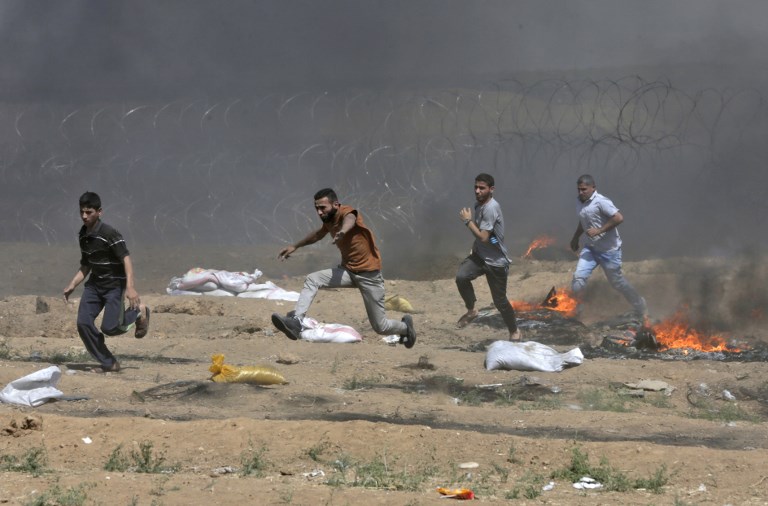
A Palestinian man was killed and four others were injured during an alleged attempt to damage what the army called security infrastructure near the Gaza border, authorities said Monday.
According to the Israel Defense Forces, five Palestinian men “tried to sabotage security infrastructure in the area near the barrier north of Gaza Strip. The security infrastructure exploded and as a result, a number of the terrorists were injured.”
The Palestinian Health Ministry said 24-year-old Sabri Abu Khader died an hour after arriving at a hospital, without specifying the cause of his death.
The military denied Palestinian reports that the men had been shot by Israeli troops.
The “barrier” is an underground wall that Israel is currently constructing around the Gaza Strip, which is meant to thwart attack tunnels dug into Israeli territory from the coastal enclave.
The army would not immediately provide details on what was damaged in the incident, which occurred near the now-abandoned Karni Crossing in the northern Gaza Strip — a frequent site of riots and clashes between Palestinians and Israeli troops.
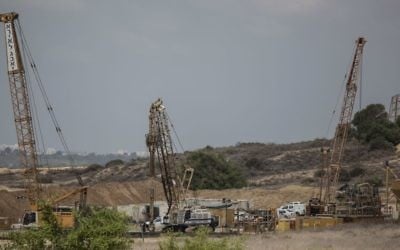
The border incident occurred hours after a flareup between Israel and terror groups in the Gaza Strip in the early hours of Monday.
Responding to a number of incendiary and explosive kites and balloons that had been flown into Israel on Sunday, the Israeli Air Force conducted a number of predawn raids on Hamas positions in Gaza.
Palestinians then launched three rockets toward southern Israel. One fell short of the border and the other two apparently struck open fields, causing neither injury nor damage.
On Monday morning, Defense Minister Avigdor Liberman warned Hamas and other terror groups in the Strip that Israel would not allow Gazans to continue launching incendiary devices into Israeli territory, which have caused hundreds of brush fires and burned thousands of acres of land in recent months.
“If anyone thinks it will be possible to continue with the daily kites and fires, they are wrong,” Liberman said during a tour of Israel Aerospace Industries, the country’s primary aerospace manufacturer.
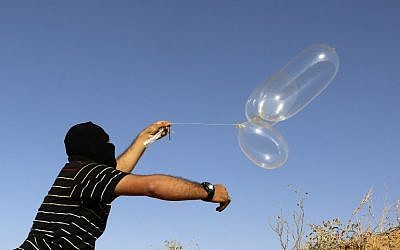
The airstrikes on Hamas facilities appeared to be a new tactic by the military to deter Palestinians from flying the airborne arson devices into Israel, after its previous attempts to do so by firing warning shots at kite-flyers failed to yield results. The Palestinian rocket fire appeared to come in response to the airstrikes.
The projectiles shot at Israel triggered sirens in the Hof Ashkelon region and the city of Ashkelon’s industrial area, sending thousands of Israelis into bomb shelters. The alarms were triggered in two waves, first at 4:40 a.m. and then again shortly after 5 a.m.
The Iron Dome missile defense system did not appear to have been activated, indicating the two incoming rockets that cleared the border struck open fields, where there was no risk to life and thus no need to intercept them.
Times of Israel staff and agencies contributed to this report.








The Times of Israel Community.