

Parents of IS fighters stage protest in Germany to allow kids back
Relatives want Berlin to allow repatriation of women and children of jihadists held in Syria
 Add ToI as a Preferred Source on Google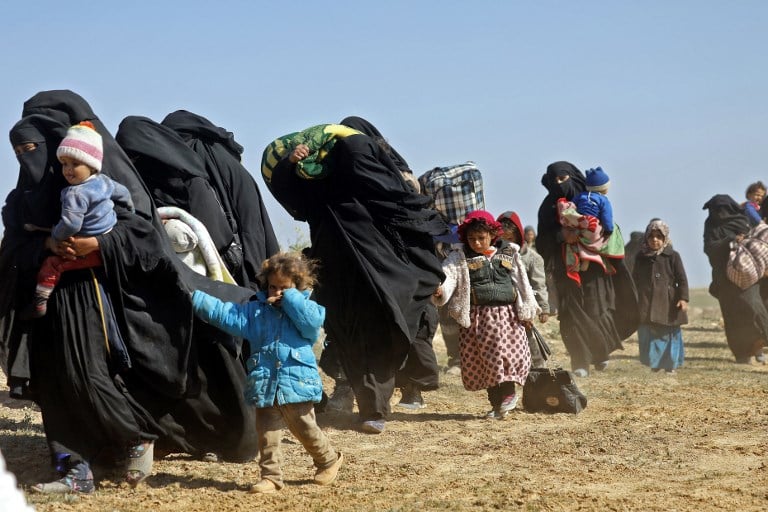
BERLIN, Germany (AFP) – German parents and relatives of Islamic State militants demonstrated Monday outside the foreign ministry, urging Berlin to repatriate wives and children of fighters held in Syria.
Some brought posters saying “Children are not responsible,” while others held up banners reading “Innocent German children will die and the state is just watching.”
“I want my grandchildren to leave Syria and come to Hamburg, to live normally, to go to the nursery, to be protected, to be able to hug them, to have food, to be warm, and to love them,” said Intessar Aataba, 51, who is the grandmother of a 3-year-old and a 1-year-old toddler born in Syria.
Another protester who identified himself as Shawani, 55, pleaded for his three grandchildren, aged 2, 3, and 4, to be repatriated.
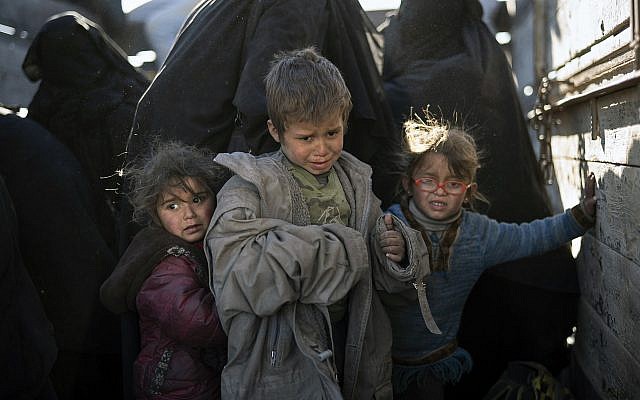
“Why blame the grandchildren? What are they guilty of? I don’t understand,” he said.
According to the interior ministry, at least 59 children of German jihadists were still in Syria at the end of March.
With the collapse of the last IS bastion in Syria last month, the fate of foreign fighters and their families has become a significant problem for governments as the conflict draws to a close.
US President Donald Trump has called for European allies to take back hundreds of IS fighters who were captured in recent months in Syria.
The alternative is to hold them long-term in camps or prisons in Syria or Iraq, but that would need financing.
Germany has begun repatriating from Iraq several children of jailed jihadists since early April.
The foreign ministry has said it was aware of cases of German nationals in custody in northern Syria, but added that it did not have direct consular access to them as the embassy in Damascus has been closed.
Nevertheless, the government is looking for ways to repatriate the German nationals.





The Times of Israel Community.