

Paris and Washington call on Iran to accept nuclear deal
France’s ambassador to Israel says world powers accepted French position, which requires additional concessions by the Iranians
 Add ToI as a Preferred Source on Google
Raphael Ahren is a former diplomatic correspondent at The Times of Israel.
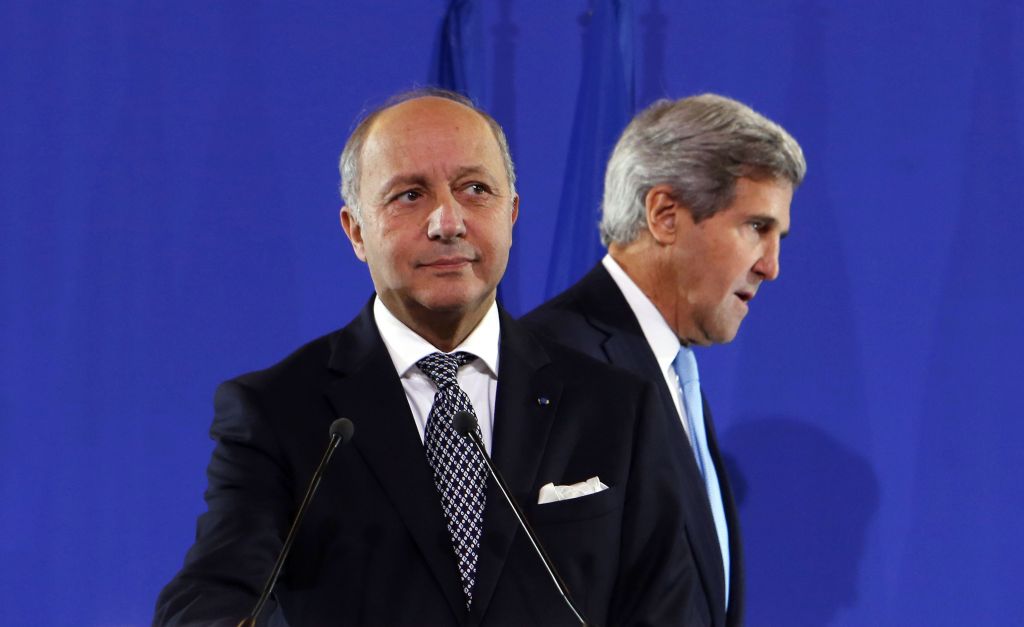
US President Barack Obama and French President Francois Hollande on Wednesday called on Iran to accept a proposed interim deal that would freeze Tehran’s nuclear program in exchange for limited sanctions relief.
According to France’s ambassador in Israel, the P5+1 world powers adopted the French position on a possible agreement with Tehran, which required more far-reaching concession by the Iranians.
“The two heads of state expressed their shared determination to obtain from Iran every guarantee that it will finally give up its military nuclear program,” according to a statement released by the French government after Hollande and Obama had spoken on the phone.
The two leaders said they fully endorsed the draft of the proposal that the US and France, together with Russia, China, Britain and Germany – the so-called P5+1 — had presented Iran with over the weekend in Geneva. This text “constitutes the base for an serious, solid and credible agreement,” the statement read. “Now it is up to Iran to give a positive answer.”
Paris and Washington “are in full agreement regarding the P5+1’s unified proposal to Iran and the approach to negotiations,” the White House said in a statement. Both countries consider the current proposal “a sound step toward assuring the international community that Iran’s nuclear program is exclusively peaceful.”
Iran and the the six world powers came close to signing an interim agreement with Iran that would offer limited sanctions relief in exchange for halting uranium enrichment to 20 percent purity, while enrichment to the level of 3.5% would continue. The P5+1 and Iran are scheduled to reconvene on November 20 in Geneva.
Israel vehemently opposes the deal currently on the table. On Wednesday, Prime Minister Benjamin Netanyahu signing this agreement could lead to war. “There are not just two possibilities on the Iranian issue: A bad deal — or war. This is incorrect. There is a third possibility — and that is continuing the pressure of sanctions,” Netanyahu said in the Knesset. “I would even say that a bad deal is liable to lead to the second, undesired, result.”
France’s ambassador to Israel, Patrick Maisonnave, said Wednesday in Tel Aviv that the other five nations negotiation with Iran in Geneva accepted the position of French Foreign Minister Laurent Fabius, who had more reservations than his colleagues. All six nations agreed that Iran must not acquire nuclear weapons, but it was Paris that demanded more guarantees, Maisonnave said. France’s position was then adopted by the US and the other world powers.
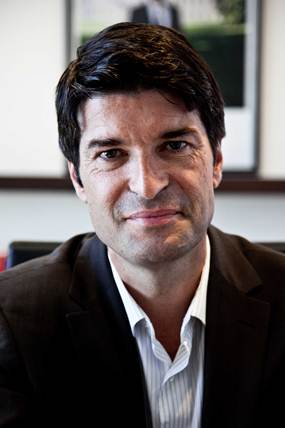
Maisonnave said the P5+1 came close to an agreement the last round of talks in Geneva, but that Fabius felt that “France’s conditions were not met” in the draft that was presented to him, according to Haaretz.
The French ambassador said Paris demanded additional Iranian guarantees in three areas, the paper reported. Fabius was worried about the Iranian’s heavy water reactor in Arak, fearing it could produce plutonium, and thus required guarantees prohibiting them from using it to advance their nuclear capabilities. Secondly, Fabius argued that Tehran continuously increases its stockpile of enriched uranium and therefore asked for guarantees in this ear as well.
While France supports Iran’s right to use nuclear energy for peaceful purposes, the country does not need to operate uranium enrichment facilities, Haaretz quoted Maisonnave as saying. Speaking to Israeli reporters, the ambassador said the question of Iran’s right to enriching uranium on its own soil was a source of disagreement within the P5+1 during the Geneva talks last week and necessitated another round of negotiations.
Earlier this week, Fabius told France-Inter radio that “we want a deal… but not a sucker’s deal.” The fact that the talks did not yield an agreement was widely attributed to France’s position. Iran’s Supreme Leader Ayatollah Ali Khamenei slammed Paris for blocking the agreement in Geneva. “This is an imprudent and inept move,” he tweeted in Persian and English.
Hollande is due to land in Israel on Sunday for a three-day visit.






The Times of Israel Community.