

Assad tells Red Cross he will support group if it remains impartial
Visit by ICRC head comes as Syrian violence hits zenith; 100,000 refugees in August
 Add ToI as a Preferred Source on Google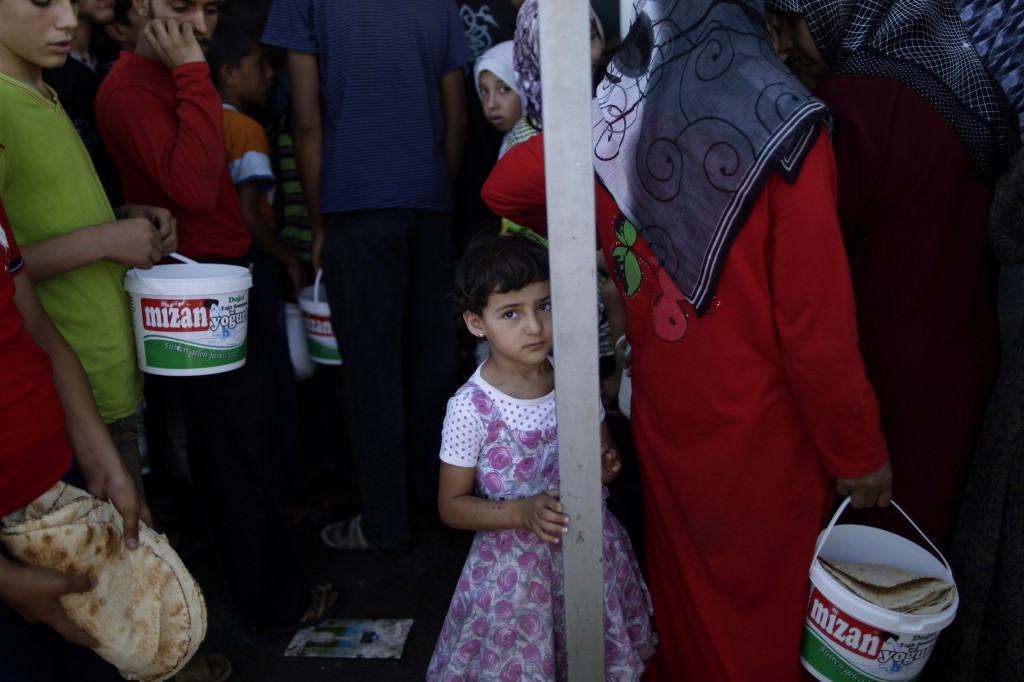
The head of the International Committee of the Red Cross met with Bashar Assad Tuesday, with the Syrian president promising to let the humanitarian group operate if it remains neutral.
ICRC president Peter Maurer is in Syria for a three-day visit. The two reportedly met for 45 minutes.
“President Assad assured the president of the International Committee of the Red Cross that he welcomed the humanitarian operations carried out by the committee on the ground in Syria, as long as it remains impartial and independent,” a report on Syrian state television stated.
The Red Cross said earlier that during his talks Maurer would address the “rapidly deteriorating humanitarian situation” and the difficulties which the ICRC and the Syrian Arab Red Crescent face in reaching people affected by the country’s civil war.
“At a time when more and more civilians are being exposed to extreme violence, it is of the utmost importance that we and the Syrian Arab Red Crescent succeed in significantly scaling up our humanitarian response,” Maurer said in comments made before his arrival in Syria. “An adequate humanitarian response is required to keep pace with needs, which have been growing exponentially.”
Maurer added that during his visit, he also intended to follow up on points agreed to in April, such as expanded access to persons detained in Syria and “the imperative necessity of helping civilians affected by hostilities.”
Syria’s violence has escalated in recent weeks. Activists say August was the bloodiest month since the uprising began in March 2011, with about 5,000 people killed.
On Tuesday, the UN said that 100,000 refugees fled Syria in August, the highest monthly total since crisis began.
Spokeswoman Melissa Fleming says the rise in people seeking asylum in neighboring countries brings the total of Syrian refugees registered or awaiting registration with her agency to 234,368 as of September 2.
Fleming told reporters Tuesday in Geneva that “when you do the math, it’s quite an astonishing number.”
Activists say some 5,000 people were killed in August, the highest toll in the 17-month-old uprising and more than three times the monthly average. The UN children’s agency says 1,600 were killed last week alone, also the highest figure for the entire revolt.
Syria’s uprising began with largely peaceful protests against Assad’s regime, but has since morphed into a civil war in the face of a brutal government crackdown. Activists say at least 23,000 people have been killed so far.
The civil war witnessed a turning point in July when rebels carried out an audacious bombing in Damascus that killed four high-ranking security officials, including the defense minister and Assad’s brother-in-law. Since then, the regime has succeeded in largely quelling a rebel offensive in the capital, but has struggled to contain an opposition push into the northern city of Aleppo, the country’s commercial hub.
On Tuesday, Abdul-Qadir Saleh, the commander of the Tawhid Brigade that is spearheading the Aleppo offensive, said rebels now control most of the city, Syria’s largest.
“The regime only controls 30 percent of Aleppo,” Saleh told reporters in Istanbul. He added that regime forces are now attacking civilian areas in an attempt to “turn civilians against the rebels.”
Saleh’s claim could not be independently verified, and the government says its troops are advancing in the city.
Also Tuesday, activists reported scattered violence across the country, including in Aleppo and Idlib in the north, Daraa in the south as well as the Damascus suburbs.





The Times of Israel Community.