

Reflecting the Torah portion, joyous rebellion as women march
Spirituality and tikkun olam are strong themes among Jews simultaneously protesting and celebrating Shabbat in Washington
 Add ToI as a Preferred Source on Google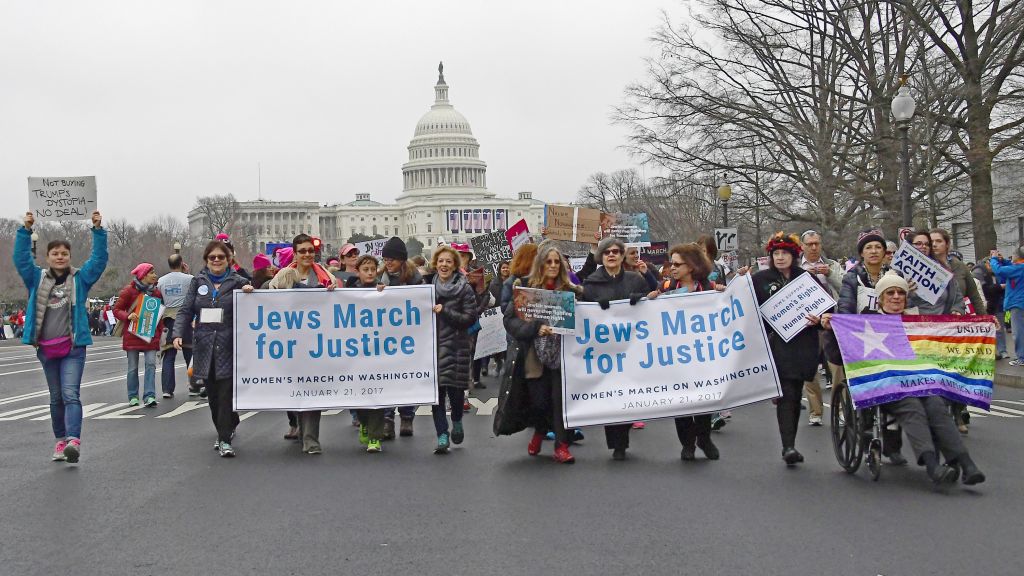
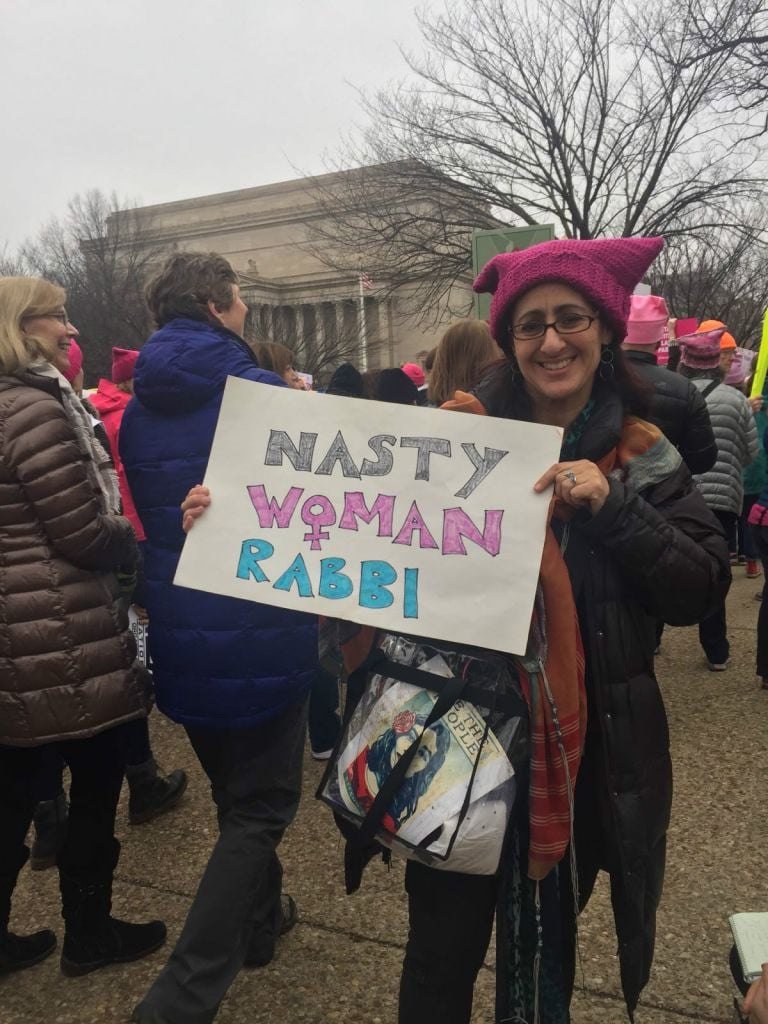
WASHINGTON — Wrapped in a tallit, Rabbi Riqi Kosovske looked out onto a sea of pink-hatted marchers and hoisted her “Nasty Woman Rabbi” sign high.
“I’ve never felt more challenged as a Jew, a woman, a mother or a spiritual leader than during this election. I felt it was really important to be with these people, and I was emboldened by Rabbi Joshua Heschel, who said he felt like he was praying with his feet when he marched with Martin Luther King in Selma,” said Kosovske, 48.
The female cleric had traveled almost 400 miles to the Women’s March on Washington from Northampton, Massachusetts with her partner and 12-year-old son.
At first when contemplating the journey, she had hesitated, reluctant to leave the Reform synagogue she leads on the weekend of the president’s inauguration.
“But I feel close to my congregants because almost all of them are at a march somewhere,” she said.
Just minutes later she shouted out in delight to a woman walking by in the march. They rushed to hug one another. It was one of her congregants, Alisa Greenbacher.
Above the chants of the crowd, Greenbacher shared, “I’m here first as a woman, then as a Jewish woman and then as a Jewish American woman.”
An estimated half a million people gathered for the Women’s March on Washington, with the crowd exceeding expectations to such an extent that the planned march to the White House had to be rerouted. People clogged the city’s broad avenues and streets, spilling across the National Mall in thick crowds, and stood for hours straining to hear the speeches.
On the first day of President Donald Trump’s new administration people had come to rally for a variety of reasons, but they stood together as a unified front for women’s rights and equal rights for others in America.
Gloria Steinem, the 82-year-old feminist icon, told the gathering, “This is the upside of the downside, this is an outpouring of democracy like I’ve never seen in my very long life.”
Lorraine Coffey, 62, an editor from Silver Spring, Maryland, looked at her “Women’s Rights are Human Rights” sign and shook her head. “I cannot believe we have to say this again,” she said.
Coffey, who is Jewish, grew up in the Washington area attending civil rights marches and, later, anti-Vietnam War demonstrations here.
“In times of despair this sense of solidarity is just utterly necessary. Otherwise you can feel alone with no hope,” she said.
Debra Young, a 40-year-old mother of two, came to the march on a bus with her synagogue from Rockville, a Maryland suburb of Washington. She was one of about 1,000 Reform Jews who came together for the Religious Action Center of Reform Judaism’s event, “Nosh, Pray, March,” which started the day’s activities early, offering up blessings like “shehechiyanu”, traditionally said to mark the first time an event occurs.
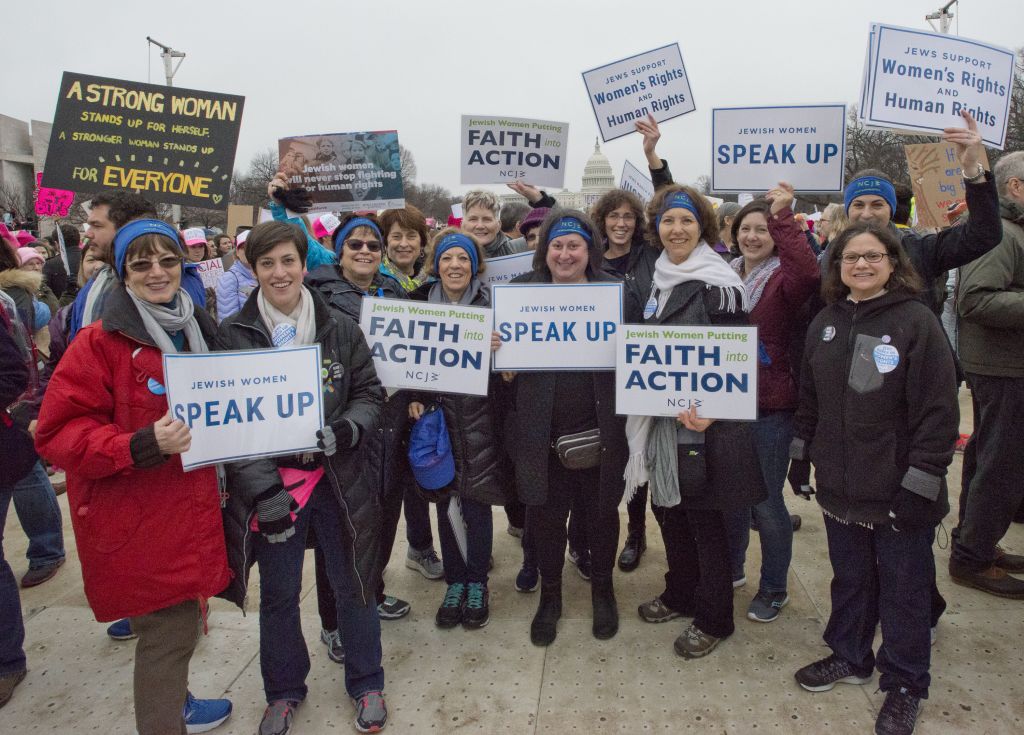
“It was a nice way to bring us all together,” said Young. “This is tikun olam, trying to leave the world better than it started.”
About 2,000 Jews marched together as a bloc, setting out after Shabbat morning services at Sixth & I Synagogue, singing a mix of Hebrew songs like “Oseh Shalom” and American folk songs, and hoisting signs in both Hebrew and English.
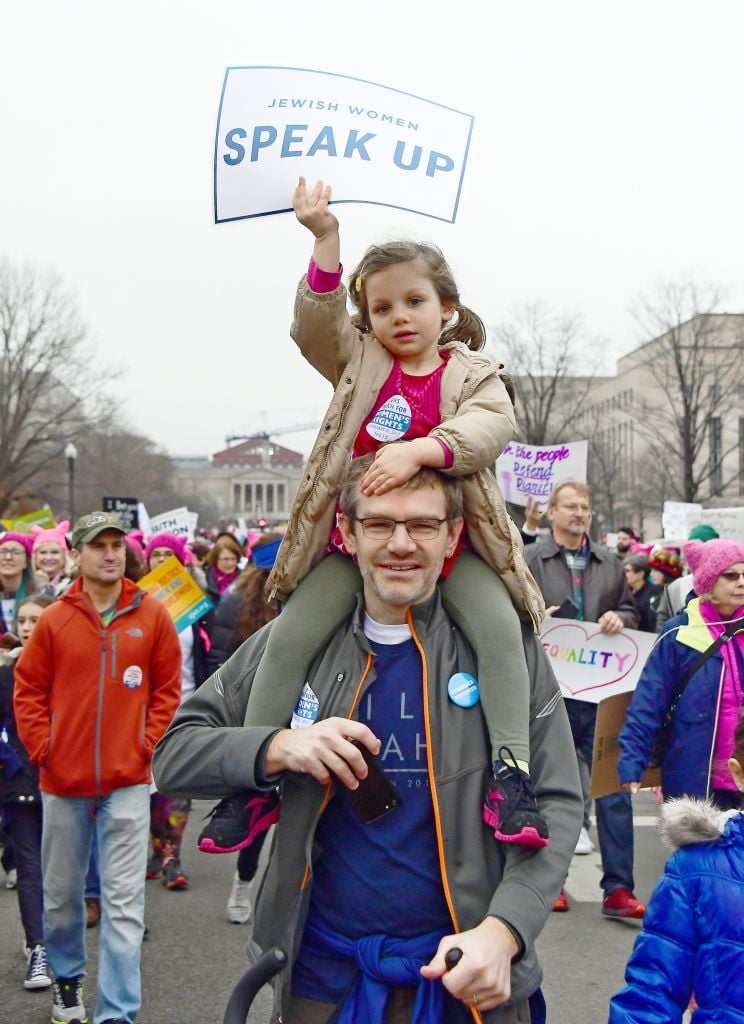
“It was an impressive show from the Jewish community. We did not come as several different groups or organizations, we came as one Jewish community. It was really, really moving to see, and it was fun and uplifting and spirited. I honestly cannot remember a time that I felt that much togetherness with the community,” said Amanda Lang, director of marketing and communications for the National Council of Jewish Women.
Adrienne Mandel, 80, a Jewish former Maryland state delegate said, “I’m here because you can never stop being active and caring and believing, as long as you can walk, talk, and breathe. I know America is great and we have to keep it that way and to resist anything that erodes our issues, because women’s issues are human issues.”
Kosovske said this week’s Torah portion was especially apt for the march, which fell on Shabbat. The selection tells about the midwives who stood up to Pharaoh, delivering Jewish babies despite instructions to kill them. It was due to their courage that Moses was saved and the nation redeemed.
“We are finding that same sense of power now,” said Kosovske.










The Times of Israel Community.