

Reform Jewry waits for answers as Knesset reboots
With a new coalition deal, will Israel’s non-Orthodox Jews see further reversals of newly granted ‘reforms’?
 Add ToI as a Preferred Source on Google
Deputy Editor Amanda Borschel-Dan is the host of The Times of Israel's Daily Briefing, What Matters Now and The Reel Schmooze podcasts, and heads up The Times of Israel's features.
On the face of it, 2016 looked to be a banner year for Reform Jewry. On January 31, the government passed a much-celebrated “historic” decision promoting egalitarian prayer at the Western Wall. A mere few weeks later in mid-February, the Supreme Court gave Israel’s Reform and Conservative movements blanket use of state mikvehs (ritual baths), heralded as a “significant step on the road to full recognition.”
But after the champagne glasses were emptied, Reform Jewry found itself in a familiar situation: while one hand of the government gives, another attempts to take away.
“There’s no question: You win one and then you have to hold your breath to see whether it’s going to go back to the Knesset to see if someone will try to cancel your success by passing a law to try to stop it,” said Nicole Maor, a leading lawyer at the Reform movement’s Israel Religious Action Center.
Maor, who largely deals with legal aid for immigrants, told The Times of Israel on Monday that it is not uncommon for a “reform” to be followed by ploys for delays in implementation or legislation which would negate a ruling.
“It’s very much a cat-and-mouse situation,” said Maor.
Case in point: After an uproar from the ultra-Orthodox factions in the tenuous coalition, Prime Minister Benjamin Netanyahu’s chief of staff, David Sharan, was tasked with forming a committee to review the Western Wall compromise. The deal, a labor of love, sweat and tears masterminded by Jewish Agency head Natan Sharansky, calls for a new permanent prayer pavilion to be erected in the Davidson Archeological park, which abuts the southern end of the Western Wall.
Sharan, who was appointed cabinet secretary on May 23, was given 60 days to review the plan and meet with the various players involved in drafting the deal. His time runs out on June 1. According to The Forward, only one or two such meetings have been held.
This week, as the government reboots with the addition of new Defense Minister Avigdor Liberman’s Yisrael Beytenu to the coalition, there is much speculation over how, if at all, pending issues of religion and state will be affected.
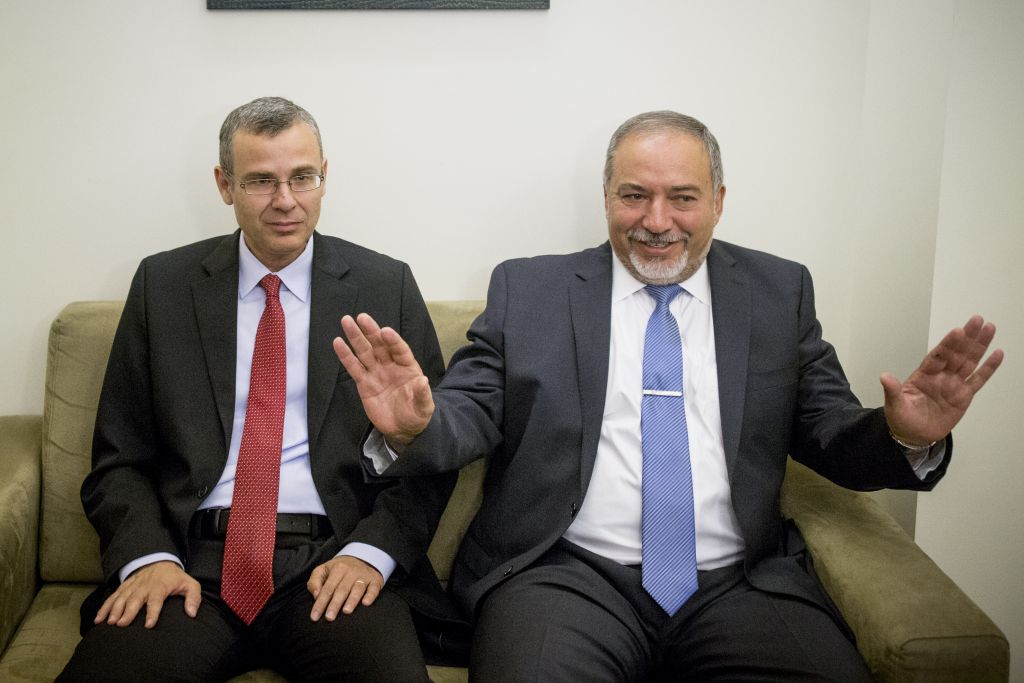
According to section 36 of the coalition agreement, a committee headed by Tourism Minister Yariv Levin (Likud) will be created to discuss issues of religion and state, made up of representatives of the coalition parties. (Levin, one may recall, was “boycotted” by Reform leadership after stating in mid-February that the movement represents a “dying world” that has succumbed to assimilation.)
One could see the Levin committee as a forum in which Liberman’s party would be able to stymie ultra-Orthodox-proposed legislation, as no religion-state bill can progress without the unanimous support of the committee’s members.
On the flip side, the coalition is expected to vote as a bloc if such bills do reach the Knesset floor, a provision that will soon be tested as a bill rejecting the Supreme Court decision opening state mikvehs to non-Orthodox conversions is made ready.
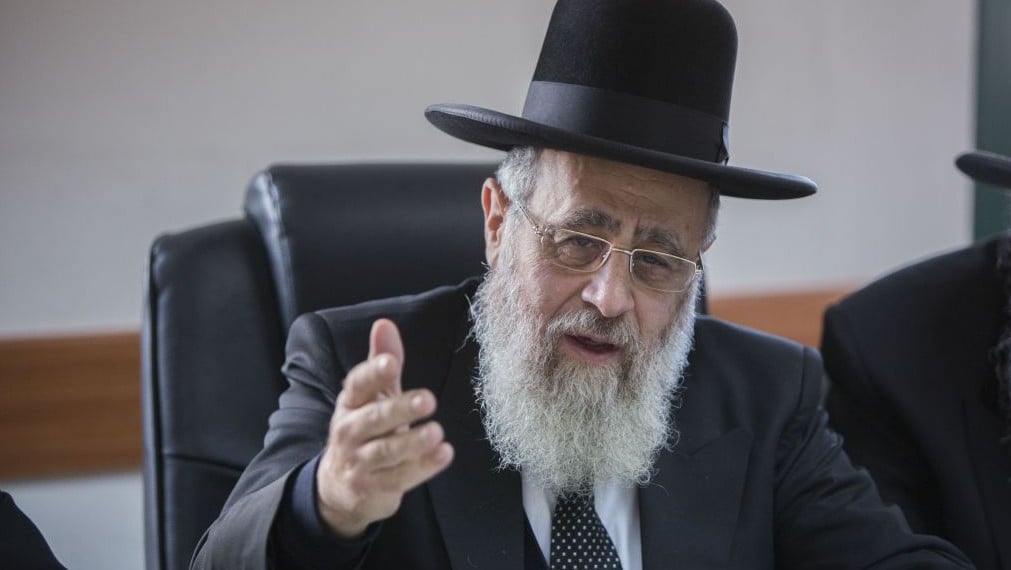
The court decision was decried instantly upon its announcement by Chief Sephardic Rabbi Yitzhak Yosef, who said the court’s “miserable decision to allow Reform and Conservative Jews to immerse in mikveh baths intended to serve the entire public is outrageous.”
It is therefore unsurprising that a bill to bar non-Orthodox use was quickly proposed by members of the United Torah Judaism party and heavily supported by Shas, which was founded by Yosef’s father Rabbi Ovadia Yosef. It passed a preliminary law committee vote on March 14, and on June 6 there is a follow-up committee meeting before the law’s first reading in the Knesset.
Although there are indications that some state ritual baths have already begun to allow non-Orthodox conversions, as part of the newly inked coalition agreement, in the upcoming vote on a law rejecting non-Orthodox use of state ritual baths, Yisrael Beytenu must vote as part of the coalition bloc in support of the bill.
In conversation with The Times of Israel on Monday, IRAC’s Maor is still optimistic of progress for Reform and Conservative Jews in Israel.
Last week, on the heels of an April 1 sweeping court decision calling for the acceptance of independent Orthodox conversions in Israel, the High Court directed the attorney general’s office to explain why non-Orthodox converts whose conversions were performed in Israel are not eligible for citizenship under the Law of Return.
The new government has 60 days to respond.









The Times of Israel Community.