

Sandstorm plaguing Israel is worst in country’s history
Highest concentration of dust particles in air since creation of state in 1948, says Environment Ministry; weather expected to improve over weekend
 Add ToI as a Preferred Source on Google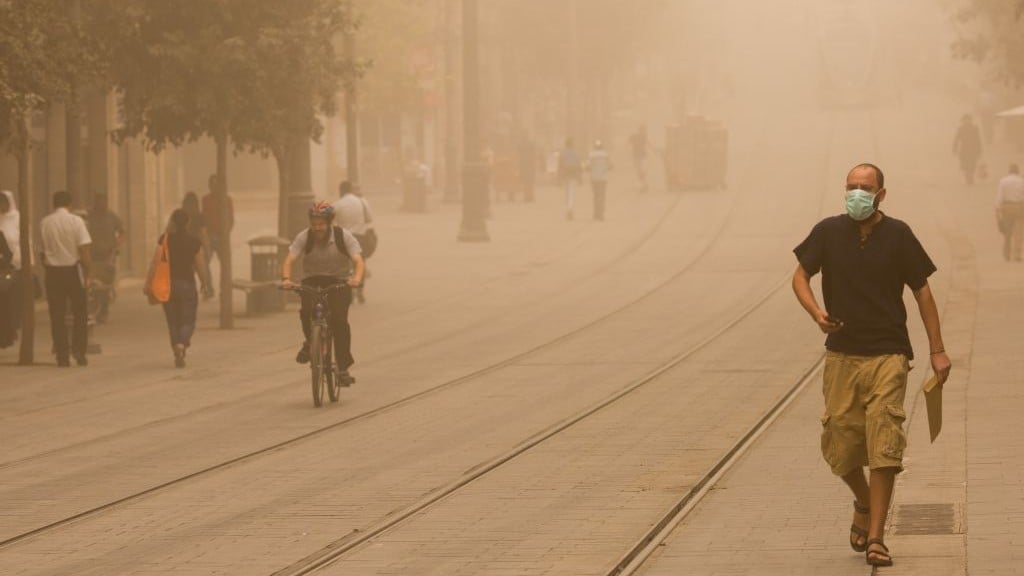
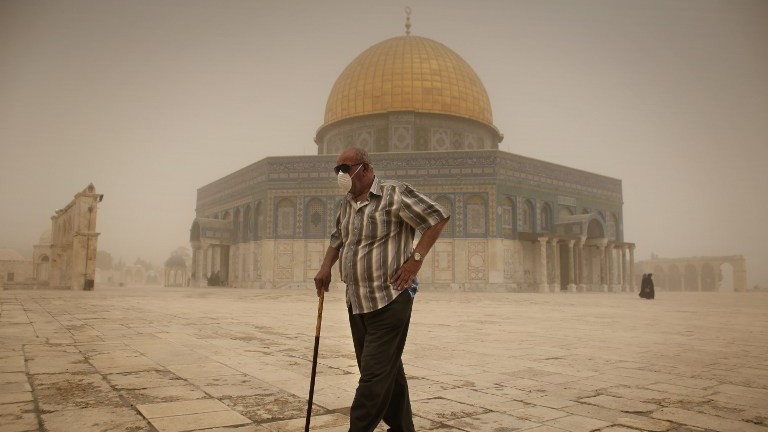
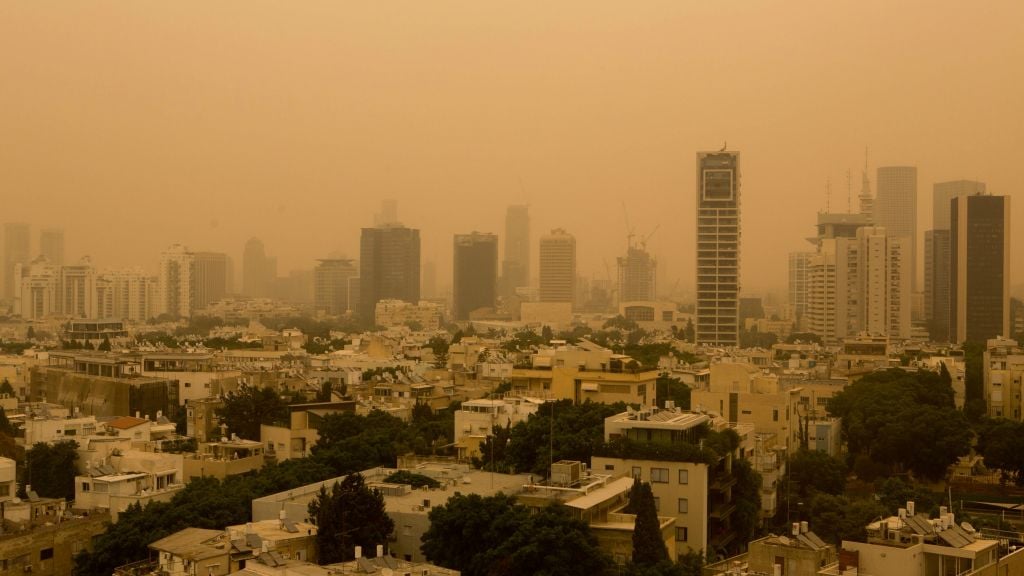
The dense sandstorm that has blanketed Israel with thick yellowish-brown dust in recent days is the worst that the Jewish state has ever endured, the Environmental Protection Ministry said Friday.
According to the ministry, the current storm, which began Tuesday, and the one experienced in February of this year have seen the highest concentration of dust particles in the air since the creation of the state in 1948, Channel 10 reported.
The storm is expected to continue throughout the weekend and begin dissipating Sunday.
A sharp rise in temperature on Wednesday added to the already difficult weather conditions, and forecasters on Thursday predicted that the dust, heatwave and high humidity would only taper off Saturday evening.
By its second day, the massive sandstorm broke both electricity usage and air pollution records across the country.
According to figures announced by the Israel Electric Corporation, power usage broke an all-time record as Israelis tried to keep cool — surpassing an earlier all-time high set during a heatwave last month.
By Wednesday afternoon, consumption was 12,867 megawatts, up from the 12,800-megawatt record set during a week of soaring temperatures in early August.
The Environmental Protection Ministry reported in several parts of the country that air pollution levels were at their worst in 75 years during the storm, which began on Tuesday morning.
On Tuesday, air pollution in Jerusalem was 173 times higher than average; in the Negev, 51 times higher than average; and in the Galilee, 32 times higher than average.
The ministry on Wednesday evening re-issued a warning advising Israelis against being outside for extended periods, and reminded people to avoid any excessive outdoor physical activity.









The Times of Israel Community.