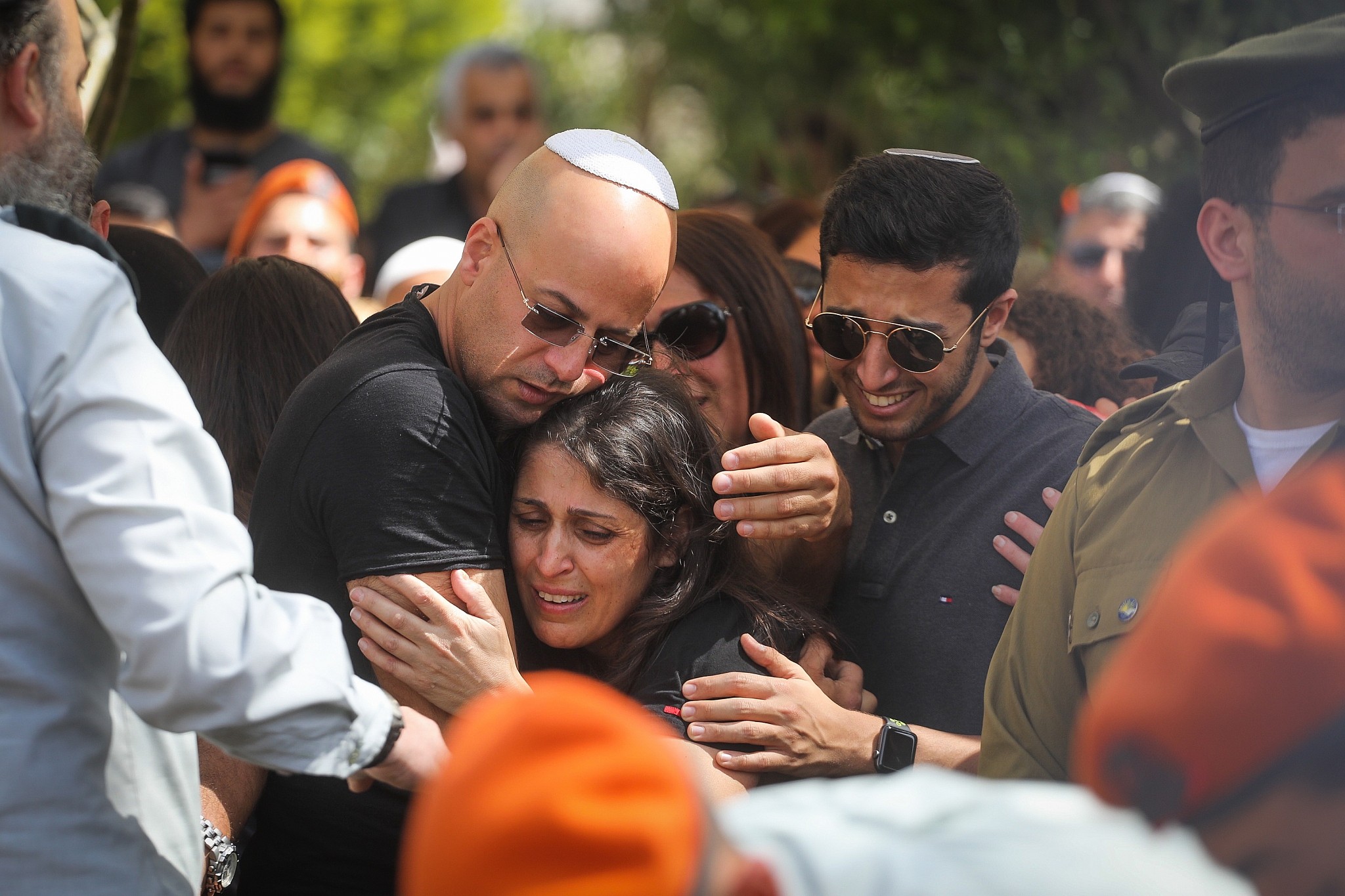
Family members of Cpt. Ziv Daos mourn near his coffin during his funeral in Holon on March 18, 2018. (Miriam Alster/Flash90)
Captain Ziv Daos, 21, who was killed Friday in a car ramming attack in the West Bank, was buried Sunday at the military cemetery in Holon, in central Israel.
“He should be saying Kaddish [the mourner’s prayer] for me,” his father said over the grave, weeping. “This is unnatural. He should bury me. Why do they take the good ones?”
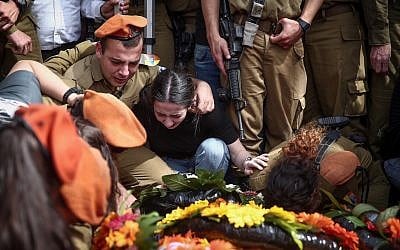
Soldiers mourn over the fresh grave of Cpt. Ziv Daos during his funeral in Holon on March 18, 2018. (Miriam Alster/Flash90)
Thousands attended the funeral for Daos, from the central town of Azor, including friends and comrades from his Homefront Command rescue battalion; two cabinet ministers representing the government, Yoav Galant and Ofir Akunis; and MK Moti Yogev.
His uncle Yoni eulogized the young officer. “Don’t talk to me about him in past tense. Don’t say, ‘He is gone and won’t be coming back.’ Ziv, you will be with us forever, your memory will never leave our hearts. Your quiet, shy smile that conquered us all. You left an empty space in the hearts of us all.”
Sgt. Netanel Kahalani, 20, the other soldier killed in the attack, was buried early on Sunday in the cemetery in his hometown of Elyakim in northern Israel, also with thousands in attendance.
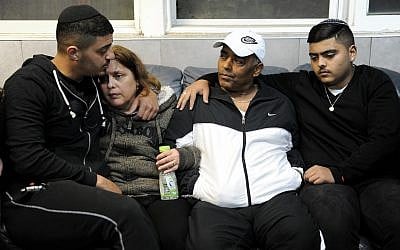
Family of terror car ramming victim, Netanel Kahalani, mourn his death at their home in Elyakim, on March 17, 2018. (Meir Vaknin/Flash90)
On Friday afternoon, 26-year-old Ala Qabha rammed his car into the group of soldiers outside a military post in the northern West Bank, near the Mevo Dotan settlement, killing Kahalani and Daos. The army later designated the car-ramming a terror attack.
On Saturday, the Shin Bet security service said Qabha confessed to carrying out the attack. It said Qabha initially claimed the ramming was an accident, but later changed his story, and said it was deliberate and that he had intended to kill soldiers.
Advertisement
Two other soldiers, who were seriously injured in the terror attack, remained in the hospital as of Sunday.
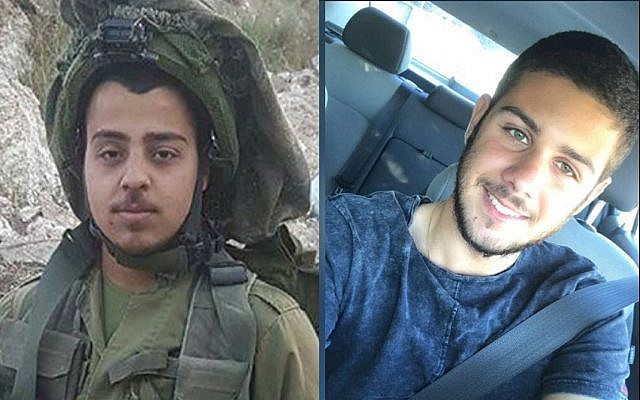
Sgt. Netanel Kahalani, left, and Cpt. Ziv Daos, right, are identified as the soldiers killed in an apparent car-ramming terror attack on March 16, 2018. (Courtesy)
Help us report truthfully on social media
As a multimedia journalist, my job is to take the quality, fact-based journalism produced by The Times of Israel newsroom and make it accessible across every platform — from Instagram posts to podcasts to short-form videos.
This is how many, especially young people, consume news these days. But misinformation is rampant on social media. Our team at ToI produces accurate, responsible short-form reporting on Israel and the Jewish world.
If you believe in the importance of factual social media journalism, please consider joining our reader support group, The Times of Israel Community. Your financial support is essential to sustain responsible multimedia reporting.
We’re really pleased that you’ve read X Times of Israel articles in the past month.
That’s why we started the Times of Israel - to provide discerning readers like you with must-read coverage of Israel and the Jewish world.
So now we have a request. Unlike other news outlets, we haven’t put up a paywall. But as the journalism we do is costly, we invite readers for whom The Times of Israel has become important to help support our work by joining The Times of Israel Community.
For as little as $6 a month you can help support our quality journalism while enjoying The Times of Israel AD-FREE, as well as accessing exclusive content available only to Times of Israel Community members.
Thank you, David Horovitz, Founding Editor of The Times of Israel


 Add ToI as a Preferred Source on Google