

Threatening news
Hebrew media looks back at the ramifications of Samir Kuntar’s assassination and forward to a potential general strike
- See more Times of Israel on Google - add us as a Preferred Source
Raoul Wootliff is a former Times of Israel political correspondent and Daily Briefing podcast producer.
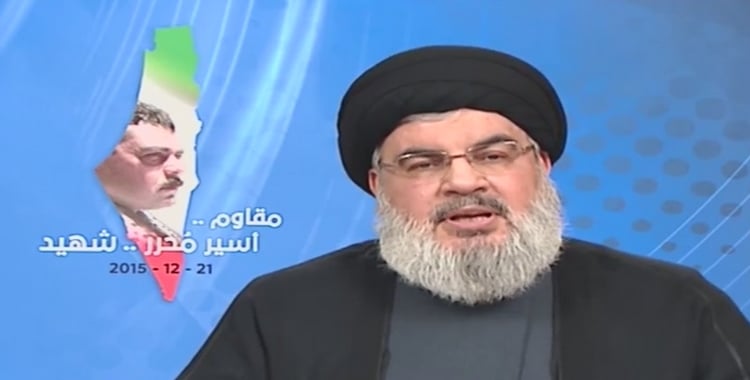
Nearly three days after Israel’s alleged takeout of renowned Hezbollah terrorist Samir Kuntar and with one day left until a union-threatened action over public-sector pay raises, Tuesday’s Hebrew papers – lacking a breaking headline to paint across the front pages – look at the ominous aftershocks on the northern border and the buildup to Wednesday’s general strike.
With no dominant story capturing the general coverage, the various news items filling the front pages of the dailies are united by a familiar theme — the threat of conflict. Whether it’s between Nasrallah and the Israel Air Force, the finance minister and the labor union head, or religious and secular Israelis, threats abound.
Israel Hayom and Haaretz both give prominence to the ongoing tension in the north, with the former featuring a photo of Israel’s David Sling missile defense system in action and the latter a shot of Kuntar’s funeral procession to accompany their coverage of Hassan Nasrallah’s vow to avenge the killing of the Hezbollah henchman.
Haaretz military correspondent Amos Harel says Hezbollah should not be taken for granted when it feels its “honor” has been attacked by Israel.
“Will it be revenge of a scope that could spark a new war with Israel?” Harel asks. “It is reasonable to assume not, but it is better to take his statements seriously. In most cases, when Nasrallah threatens Israel, in the end his organization provides a response, even if it is carried out with limited force.”
But Jack Khoury, another Haaretz correspondent, says Israel is expecting a more subdued response than on the previous occasions it has been accused of assassinating Hezbollah leaders.
“Nasrallah’s reaction to the killing of Kuntar differs from his reaction to the targeted killing of another Hezbollah operative by Israel earlier this year, Jihad Mughniyeh, when Hezbollah launched a retaliation attack against IDF vehicles within days. Lebanese sources explained that Nasrallah needs to take a different course of action due to the sensitivity of Kuntar being killed in Syria, a site of instability and international focus,” he writes.
Yedioth Ahronoth joins Israel Hayom in suggesting a link between Tuesday’s announcement that the David Sling missile defense system is ready for use and Nasrallah’s threats against Israel. Both run stories on the new medium-range missile interceptor, making a point of the fact that it will protect Israel from the type of missiles currently being polished and prepared for use by Hezbollah.
Yedioth’s two page spread reads on one side “Nasrallah’s warning,” and on the other, next to a picture of the David Sling in action, “Israel’s message.”
“Israel’s defense establishment did not wait for Nasrallah’s threat-filled speech to send a message of its own: hours before the Hezbollah leader said he would avenge the assassination of Samir Kuntar, Israel carried out a successful test of David’s Sling, the system that will protect Israel from what Hezbollah has in store,” the paper reported.
But with few actual developments beyond threats and messages, the front pages make room for some domestic tensions with headlines on efforts to prevent the general strike as well as a ministerial decision to support legislation banning business on the Sabbath.
Yisrael Hayom is taking the threats made by Israel largest labor union seriously. Under a long list of public services that won’t run if the strike goes ahead, the paper reports on the ongoing negotiations with the Finance Ministry.
Finance Minister Moshe Kahlon warned Monday that a general strike would cost Israel’s economy NIS 600 million ($154 million) per day, as treasury and Histadrut labor union officials battled against the clock to reach a new public-sector wage deal.
Israel Hayom Dan Margalit calls the union’s demand of an 11 percent wage hike “legitimate” and predicts the sides will reach an agreement before the deadline.
“Is history repeating itself?” he asks. “Will Tuesday evening see Moshe Kahlon and Avi Nissenkorn [head of the Histadrut labor union] with weak smiles and a handshake notify the public that the workers go to work as usual? That at the last minute a provisional agreement was reached allowing the two to shower each other with compliments? This has normally been the case when a strike has been avoided, and preferably this will happen again this time.”
Yedioth Aharonoth and Haaretz both seem more worried about a bill prohibiting and business activity on the Sabbath, which received government support from the Ministerial Committee for Legislation on Monday.
“The status quo is in danger,” shouts the headline from Yedioth’s coverage of the bill, referring to the “status quo agreement” reached by Israel’s first prime minister David Ben Gurion and the ultra-Orthodox leadership over the fraught issue.
“The bill is meant to replace the municipal bylaws prohibiting Shabbat openings, and it provides for substantial increases in the fines for violators,” reports Haaretz’s Barack Ravid.
Haaret’z contributer Uri Misgav pens an op-ed denouncing the move as a step “on the road to a theocracy.”
“We are facing a major assault on Israel’s democratic-secular identity. The attack on secularism is necessarily an attack on democracy,” he says. “The ultimate source of authority is no longer the state and its institutions. The sources of inspiration are not liberal humanism, human rights, the enlightenment movement and science. They are supplanted by a higher power, holy men, the metaphysics of an Eternal Israel, holy scriptures, rituals and prayer. As part of road safety lessons, children of Israel are learning the Traveler’s Prayer.”







The Times of Israel Community.