

Israel inaugurates first school for extremist so-called hilltop youth in West Bank
Beit El school, one of 4 set to be established, is part of government attempt to incorporate minors living in far-flung illegal farming outposts into education system
 Add ToI as a Preferred Source on Google
Jeremy Sharon is The Times of Israel’s legal affairs and settlements reporter
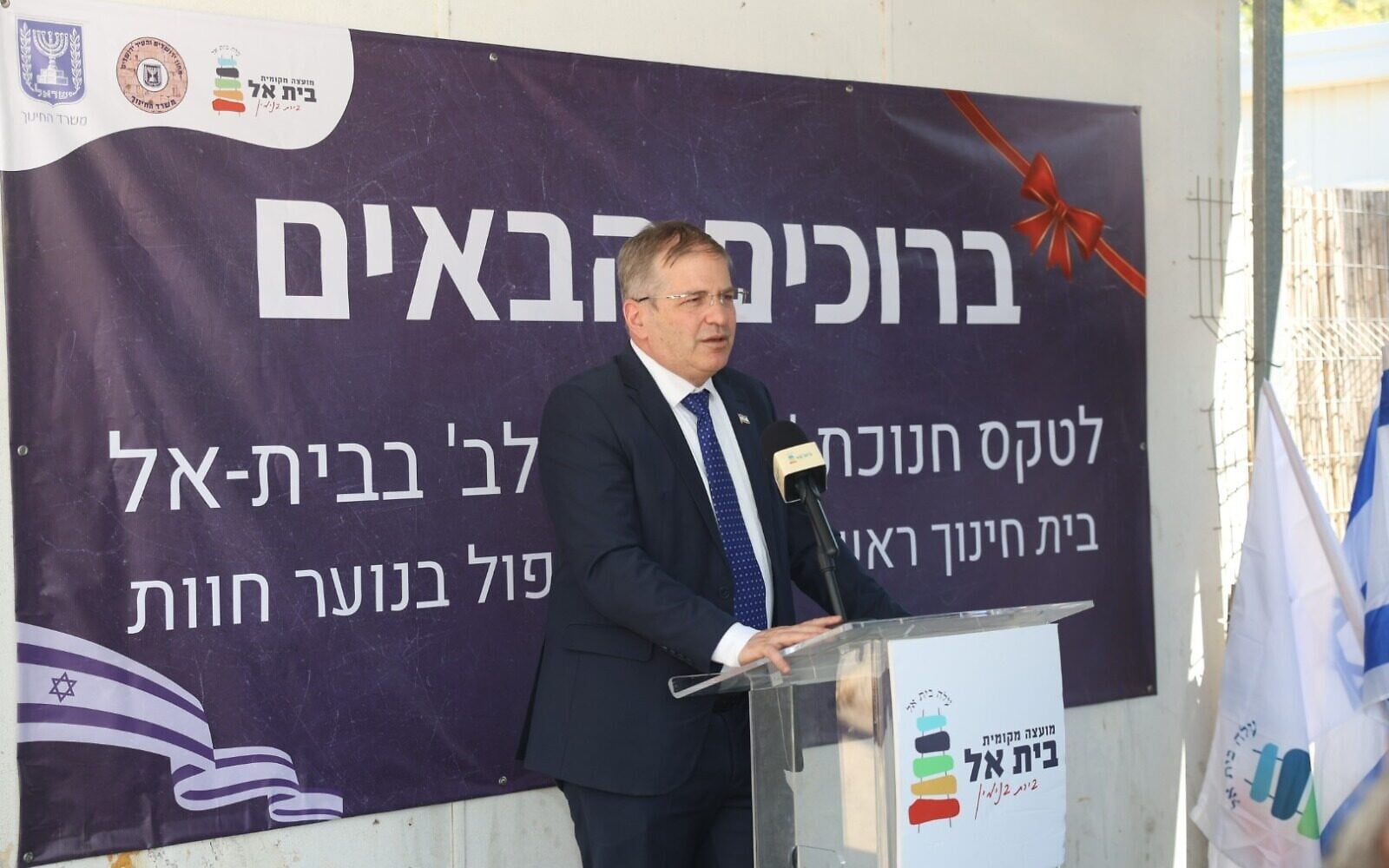
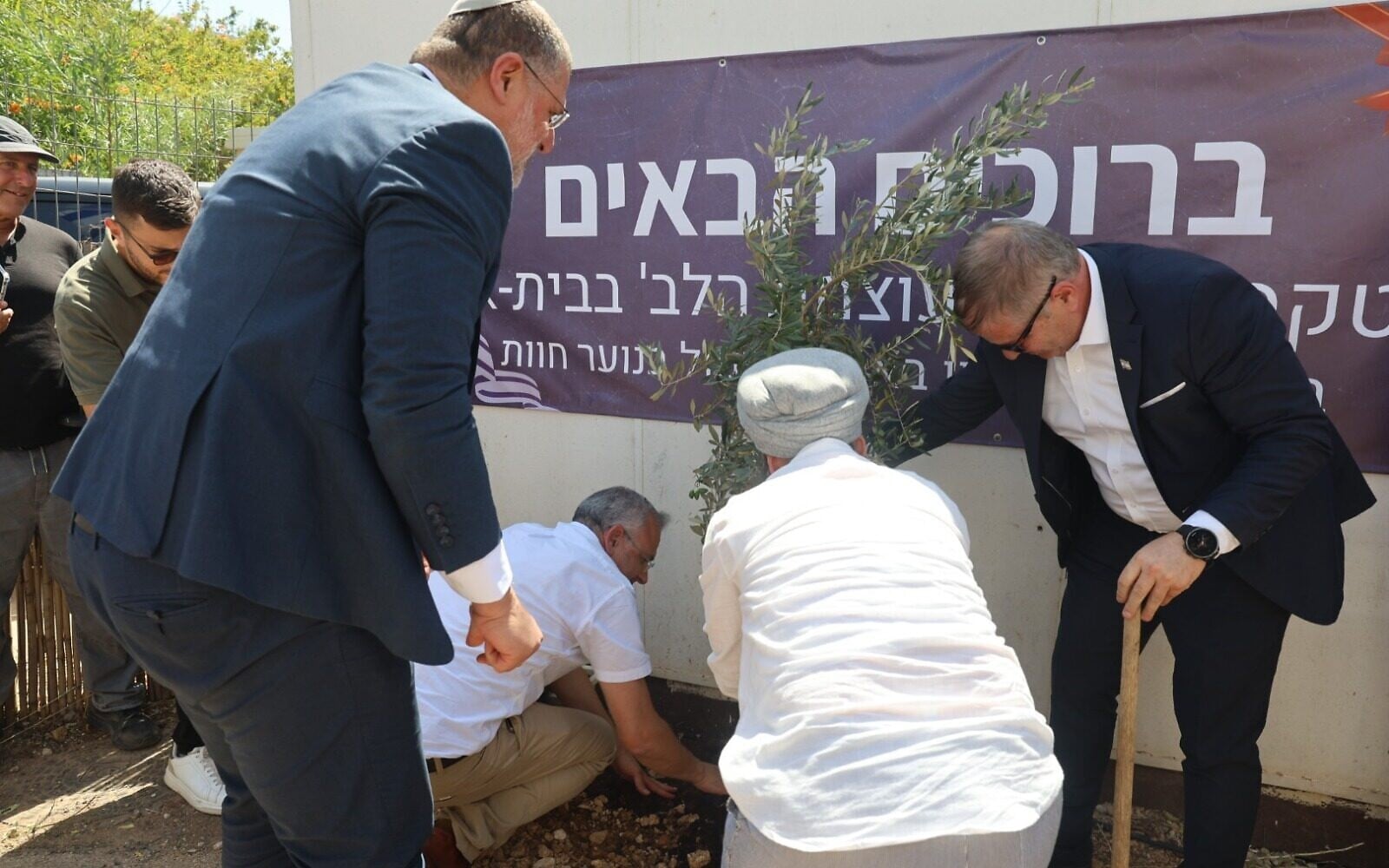
A new, first-of-its-kind school for youth living in illegal farming outposts in the West Bank — typically extremist so-called hilltop youth — was inaugurated in the settlement of Beit El on Tuesday, in the presence of Education Minister Yoav Kisch and other dignitaries.
Kisch said that the Otzmat HaLev school, one of four such schools established by the government and the first of them to open, would provide an “educational solution” for youths living in the illegal farming outposts and put them on the path of “action and contribution to the State of Israel.”
The schools are being established under the framework of a cabinet resolution designed to support minors living in the outposts, many of whom are school dropouts and at-risk youth.
Although the cabinet resolution’s programs are supposed to help integrate the youths back into educational frameworks, provide them with social welfare, reduce their involvement in violence, and prepare them for military service, the support has been strongly criticized since the youths remain at the illegal farming outposts, which are frequently the sources of violence against local Palestinians.
It was unclear who will ensure that such youths, who live in the outposts without their parents, will go to school, and how they will travel there given that they cannot drive.
According to the Israel Hayom daily, school staff will provide support to students at the farms where they live, in addition to the education they provide at the schools.
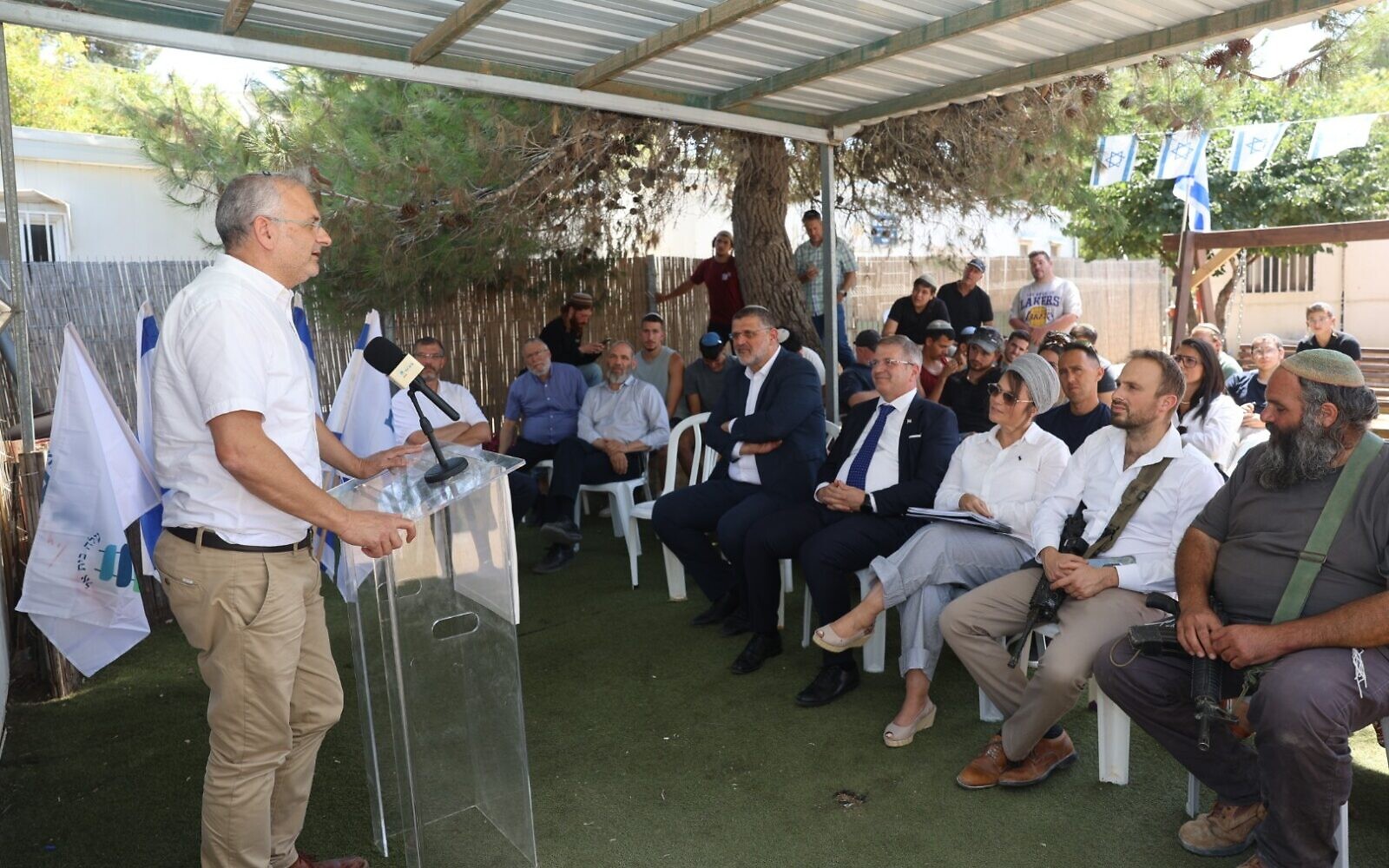
“For years, it was mostly the problems [with hilltop youth] that were discussed; today we are presenting the solution,” said Beit El Mayor Shai Alon, who was also in attendance at the inauguration.
“The establishment of the school is great news for the youths and their families, so instead of just making do with enforcement, the state is investing in educating, directing, and building a future for them.”
In a post on X, Likud MK Avichay Buaron described the schools as “an impressive display of responsibility by the state toward at-risk youth who have left the formal framework.”
It was unclear if the school had already begun courses for students and how many are to be enrolled.
Prime Minister Benjamin Netanyahu asserted in December 2025 that violent settlers numbered just some 70 youths who, he said, were not even from the West Bank. Earlier this month he revised that figure upward to 150 “juvenile delinquents,” who he said were “brought into the West Bank.”
Illegal farming outposts are established by hardline settler activists, very often with the cooperation of local municipal councils and the IDF, and are designed to assert control over large tracts of land in the West Bank. They are not approved by the cabinet, meaning they are technically illegal.
Farming outpost residents have been implicated in innumerable violent attacks on local Palestinians whom extremist settlers explicitly seek to expel from Area C, and increasingly Area B, of the West Bank.
The 1990s Oslo Accords split the West Bank into Area A, where the Palestinian Authority has security and civilian control; Area B, where Israel controls security and the PA controls civilian affairs, and Area C, where Israel controls both security and civilian matters.
The state subsidizes the outposts in various ways. Recently, the Settlements Ministry announced NIS 12 million ($4 million) in social support for the 650 youth it found to be living in the outposts around the West Bank, including NIS 5.5 million ($1.8 million) for food and clothing, leading to criticism that the funds are designed to ensure the presence of the youth in the outposts, not improve their social situation.
Extremist settlers, among them the hilltop youth, sometimes in mobs, have been recorded on a near-daily basis carrying out a variety of violent attacks, including assaulting Palestinians, torching cars and damaging property.
Arrests in such cases are rare, and convictions are even less common, and the IDF has also faced criticism for often standing by while attacks unfold — with troops sometimes actively participating — or failing to prosecute those responsible.
In contrast, the IDF frequently arrests Palestinians who are involved in violent confrontations with settlers.






The Times of Israel Community.