

Election committee bans polling station workers from telling parties who has voted
Likud and allies reportedly mulling court challenge against ruling, which says practice of tracking who needs prodding to cast ballot violates privacy protections, election secrecy
 Add ToI as a Preferred Source on Google
Sam Sokol is a former political correspondent at The Times of Israel. He was previously a reporter for the Jerusalem Post, Jewish Telegraphic Agency and Haaretz. He is the author of "Putin’s Hybrid War and the Jews"
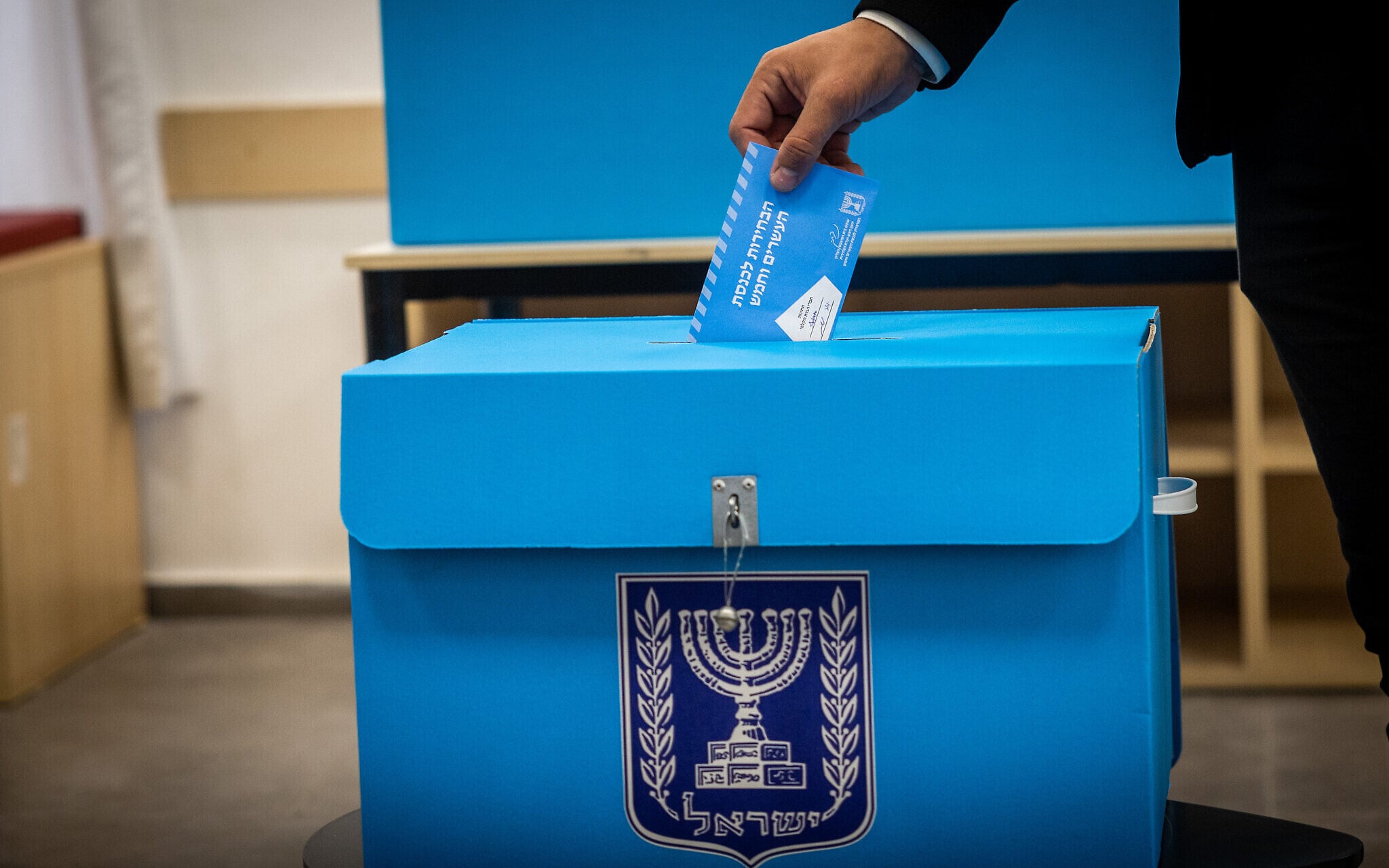
Deputy Supreme Court President Noam Sohlberg, who heads the Central Elections Committee, on Tuesday banned workers and party observers in the polls on October 27 from sharing information about who has voted, a longstanding practice that has been utilized mainly by right-wing and ultra-Orthodox parties to maximize voter turnout.
A senior Likud official told Channel 13 news that the ban, which Sohlberg based on privacy and election secrecy concerns, was a “targeted elimination of the right wing,” as the ruling party and allied factions have used dedicated apps to see which of their supporters voted and which needed prodding.
Likud and its coalition partners are now considering petitioning the High Court of Justice against the ruling, according to the network.
Sohlberg’s decision was in response to a petition by anti-corruption activist Shahar Ben Meir against parties’ use of apps to track who had come to the polls. The Central Elections Committee said the petition was opposed by Likud and the allied Shas, United Torah Torah and Religious Zionism parties, while other factions did not weigh in on the matter.
The deputy Supreme Court chief accepted the petition, saying in a statement that noting voters’ identities “constitutes a violation of privacy and is not permitted under the provisions of the Privacy Protection Law.”
“Election laws do not authorize party representatives to transfer this information for the purpose of party activity, and in the absence of express authorization the transfer of information is prohibited,” Sohlberg said.

The Central Elections Committee is an independent state body responsible for managing parliamentary elections and protecting their integrity. It is chaired by a Supreme Court justice and comprises representatives of the various factions in the Knesset.
The committee is in charge of tallying votes and has the power to disqualify parties ahead of elections.
Likud has a history of questioning the integrity of top Central Elections Committee officials and, by extension, the body itself — including over several recent appointments. Some legal experts have expressed concern that Likud and its leader, Prime Minister Benjamin Netanyahu, could be laying the groundwork to either dispute the results, or to pressure the body into more favorable rulings.
Times of Israel staff contributed to this report.








The Times of Israel Community.