

UAE’s ‘Hope’ probe sends back first image of Mars
Picture taken Wednesday shows sunlight coming across the surface of the planet, as well as its north pole and largest volcano
 Add ToI as a Preferred Source on Google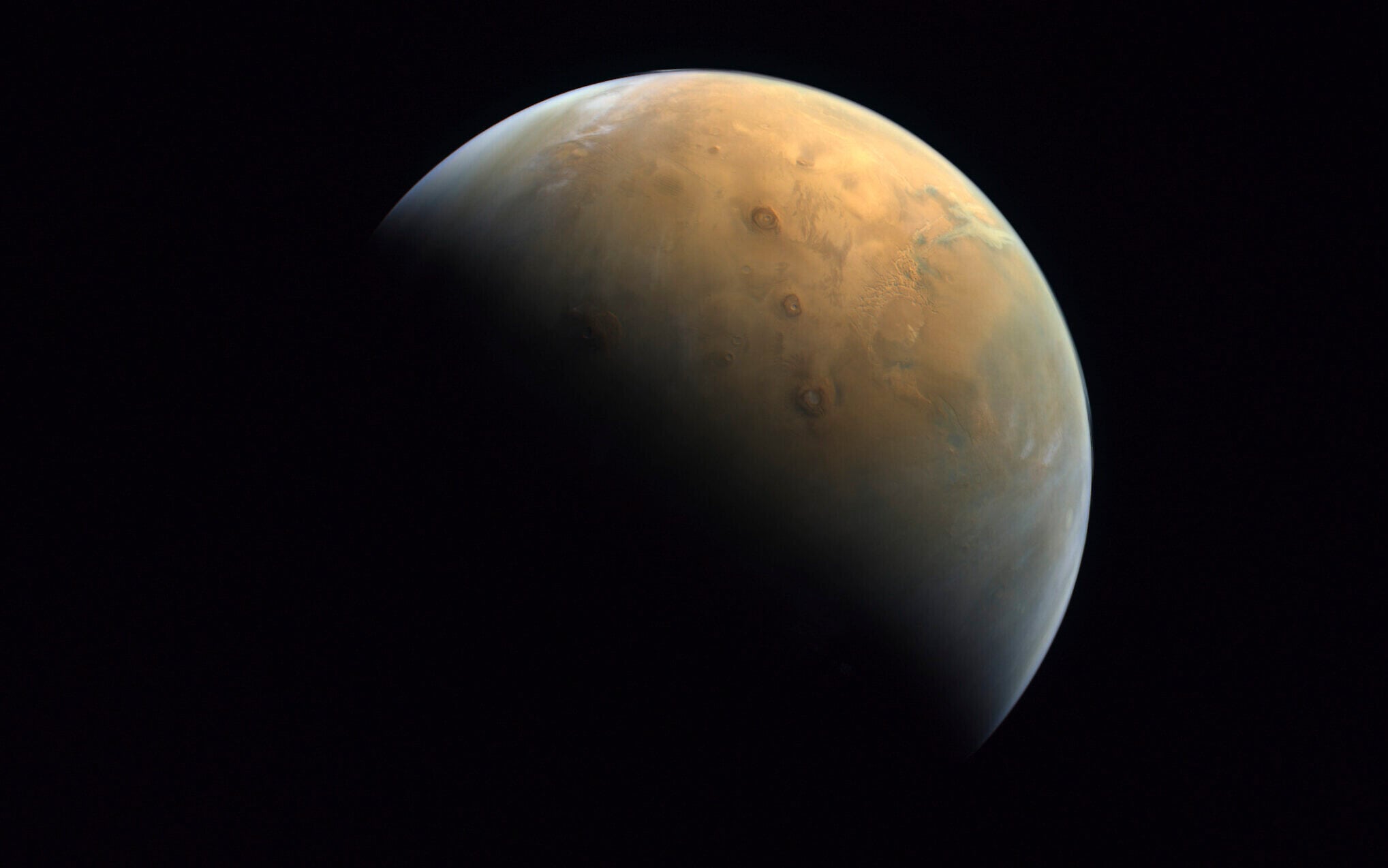
The United Arab Emirates on Sunday published the first image for its Mars probe now circling the Red Planet.
The picture, taken Wednesday, shows sunlight just coming across the surface of Mars. It shows Mars’ north pole, as well as its largest volcano, Olympus Mons.
The image comes from the UAE’s “Amal,” or “Hope,” space probe.
The probe swung into orbit around Mars on Tuesday in a triumph for the Arab world’s first interplanetary mission.
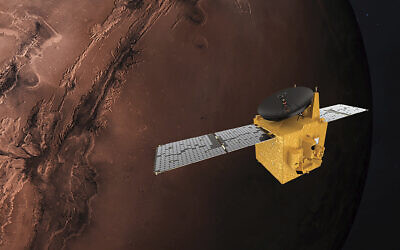
Amal’s arrival puts the UAE in a league of just five space agencies in history that have pulled off a functioning Mars mission. As the country’s first venture beyond Earth’s orbit, the flight is a point of intense pride for the oil-rich nation as it seeks a future in space.
About 60 percent of all Mars missions have ended in failure, crashing, burning up or otherwise falling short, in a testament to the complexity of interplanetary travel and the difficulty of making a descent through Mars’ thin atmosphere.
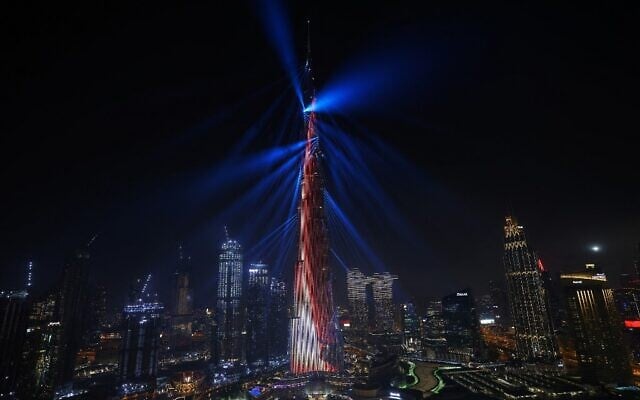
For months, Amal’s journey has been tracked by the UAE’s state-run media with rapturous enthusiasm. Landmarks across the UAE, including Burj Khalifa, the tallest tower on Earth, have glowed red to mark the spacecraft’s anticipated arrival. Billboards depicting Amal tower over Dubai’s highways. This year is the 50th anniversary of the country’s founding, and Amal is part of the celebrations.
If all goes as planned, Amal over the next two months will settle into an exceptionally high, elliptical orbit of 13,670 miles by 27,340 miles (22,000 kilometers by 44,000 kilometers), from which it will survey the mostly carbon dioxide atmosphere around the entire planet, at all times of day and in all seasons.
It joins six spacecraft already operating around Mars: three American, two European and one Indian.






The Times of Israel Community.