Woman found dead after apparent fall in Ramon crater in south
Rescuers say 29-year-old found with extensive injuries and no signs of life in area reported to contain 200-meter drop at popular hiking, rappelling spot in Negev Desert
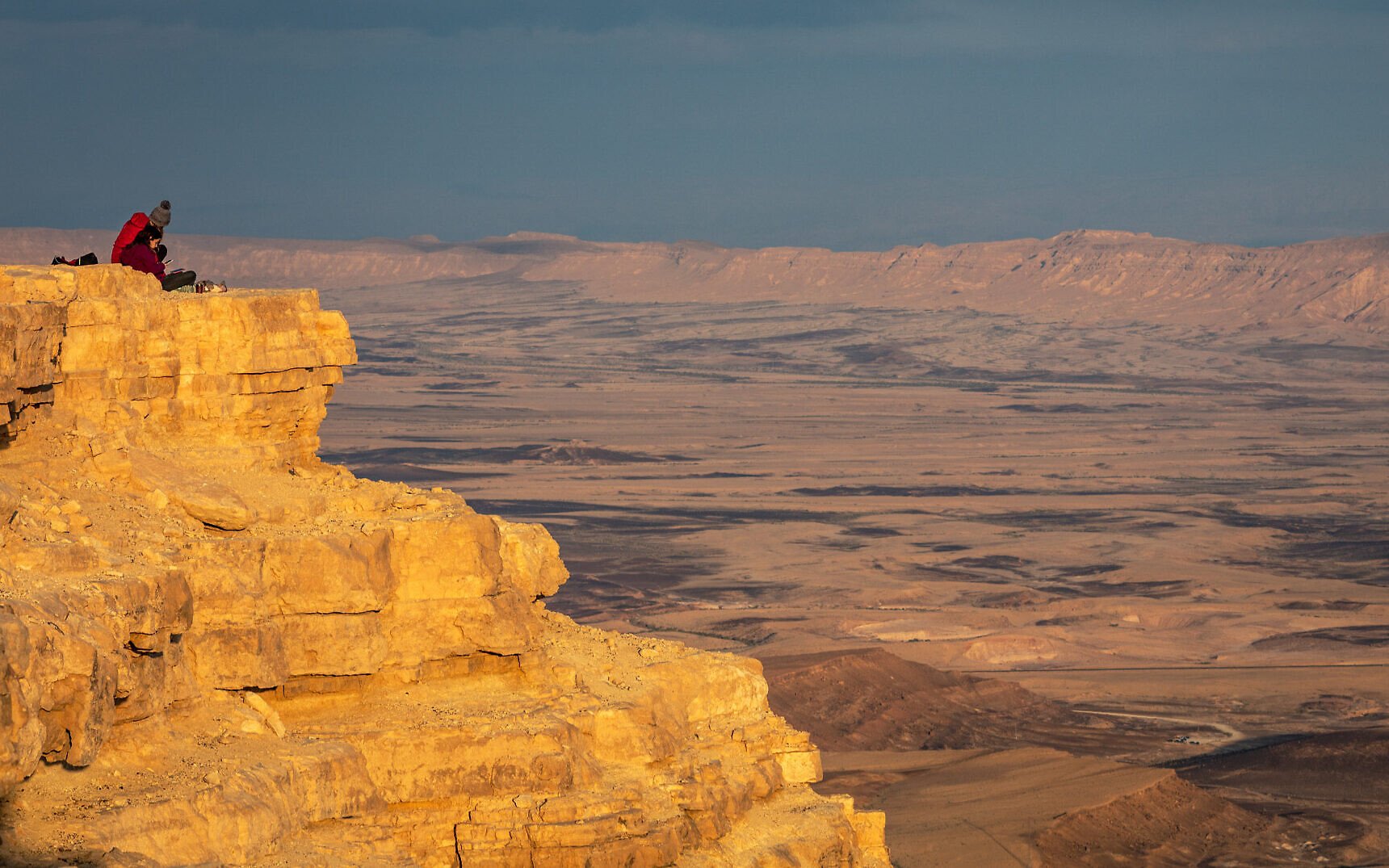
View of the Makhtesh Ramon, a crater in southern Israel, February 26, 2023. (Doron Horowitz/Flash90)
A 29-year-old woman died in the Ramon crater in southern Israel after apparently falling off a cliff, rescuers said Thursday morning.
Medics responding to a call just before 8 a.m. Thursday found the woman with extensive injuries and no signs of life “deep inside Ramon crater after she apparently fell from a height,” the Magen David Adom rescue service said.
She was declared dead at the scene.
No information about the woman was immediately available.
The local Beersheba Mynet news site reported that she was found in an area where there is an approximately 200-meter (650-foot) drop.
Get The Times of Israel's Daily Editionby email and never miss our top stories
No foul play is suspected, according to the report.
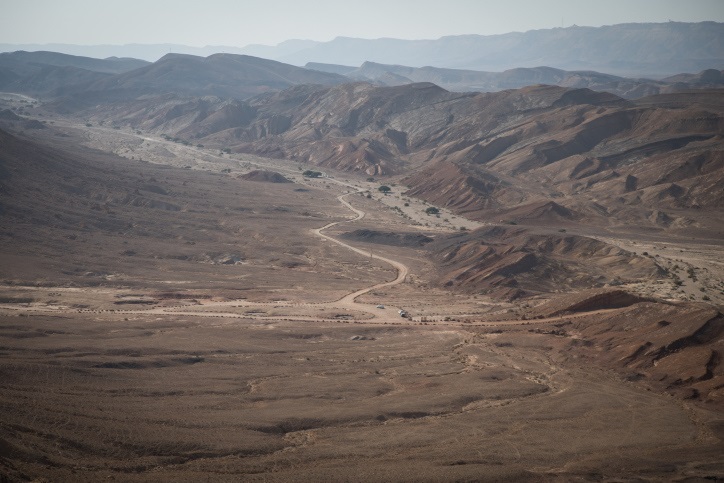
Popular with hikers, rock climbers, rappellers, tourists, geology enthusiasts and others, the Ramon crater is a large natural depression deep in the Negev desert, some 70 kilometers (43 miles) south of Beersheba.
View from a hiking trail in the Ramon Crater, in southern Israel, on November 3, 2018. (Hadas Parush/Flash90/File)
The crater is approximately 40 kilometers (25 miles) long and as much as 10 kilometers (6 miles) wide, reaching a a depth of as much as 500 meters (1,640 feet) in some places.
Advertisement
In 2017, a 22-year-old man died when he fell while preparing to rappel down a cliff in the Ramon crater, and in 2005, a 10-year-old boy died while hiking in the crater with his family when a wall of rocks fell, crushing him, according to contemporary news reports.
Help us report truthfully on social media
As a multimedia journalist, my job is to take the quality, fact-based journalism produced by The Times of Israel newsroom and make it accessible across every platform — from Instagram posts to podcasts to short-form videos.
This is how many, especially young people, consume news these days. But misinformation is rampant on social media. Our team at ToI produces accurate, responsible short-form reporting on Israel and the Jewish world.
If you believe in the importance of factual social media journalism, please consider joining our reader support group, The Times of Israel Community. Your financial support is essential to sustain responsible multimedia reporting.
We’re really pleased that you’ve read X Times of Israel articles in the past month.
That’s why we started the Times of Israel - to provide discerning readers like you with must-read coverage of Israel and the Jewish world.
So now we have a request. Unlike other news outlets, we haven’t put up a paywall. But as the journalism we do is costly, we invite readers for whom The Times of Israel has become important to help support our work by joining The Times of Israel Community.
For as little as $6 a month you can help support our quality journalism while enjoying The Times of Israel AD-FREE, as well as accessing exclusive content available only to Times of Israel Community members.
Thank you, David Horovitz, Founding Editor of The Times of Israel


 Add ToI as a Preferred Source on Google