

‘You Can See Everything’ shows Elizabeth Holmes through Nathan Fielder’s singular lens
3-hour documentary by Jewish comedian about disgraced and imprisoned Theranos founder is wildly entertaining, confounding and may leave you questioning your perception of reality
 Add ToI as a Preferred Source on Google

Thirty-four days before the disgraced Theranos founder Elizabeth Holmes was due in federal prison to serve an 11-year sentence for conspiracy and fraud, she and her partner, Billy Evans, welcomed a film crew into their beachside cottage.
The idea, Holmes and Evans said, was to help the public understand who Holmes really is. The narrative was incorrect. The journalists and the television shows, like the Hulu miniseries “The Dropout,” had gotten her wrong.
And so, in one of the many mysteries of this fascinating project, they turned to Nathan Fielder, a comedian known for blurring fiction and reality in absurdist shows like “Nathan for You” and “The Rehearsal.”
Fielder, a Jewish Canadian comedian, attended Jewish day school growing up in Vancouver and has long been active in promoting Holocaust education. Last year Fielder revealed that Paramount Plus pulled the episode of “Nathan For You” that focused on Holocaust awareness in the wake of the October 7 attack on Israel, citing “sensitivities.”
In “You Can See Everything,” Holmes and Evans welcome Fielder into their rented home in Del Mar, California, and document their life with their two young children in her final days before prison. They even invited Fielder to stay with them — an offer that he declines at first but later accepts, about 20 days in.
The resulting film, which hit theaters Friday defies categorization. In some ways, it is a staggering piece of performance art by everyone involved. It’s also wildly entertaining, confounding and wholly unique. I’m not even sure an interest in Holmes is any sort of prerequisite for enjoyment. Besides, even after this nearly three-hour exercise, which somehow flies by, she remains as enigmatic as ever.
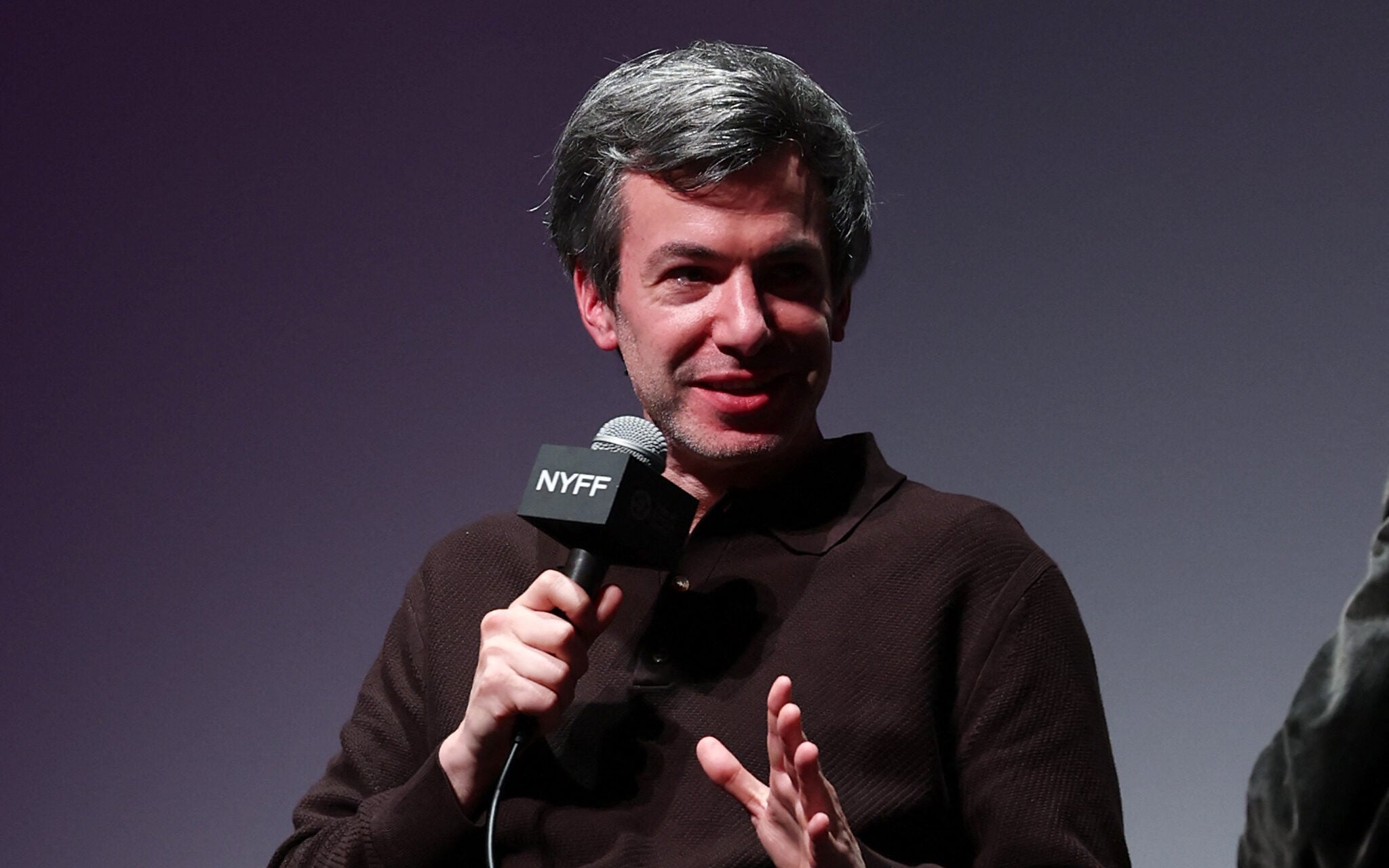
In its first weekend, “You Can See Everything” made an extraordinary $15 million from only 855 screens, with more than 2,000 sellout showings, according to A24. It also had the biggest opening for a film playing on under 1,000 screens since “Borat” opened to $26.5 million in 2006, and the biggest nonmusic documentary opening in two decades, since “Fahrenheit 9/11” made nearly $24 million from 868 theaters. Those numbers do not account for inflation.
Fielder shares directing credits with Lance Oppenheim, who also directed the recent Robert Pattinson-as-Chris Hansen drama “Primetime.” As in Fielder’s aforementioned television shows, he is as much a character in “You Can See Everything” as his subjects. At the beginning, he’s even shot somewhat ominously, a voyeuristic creeper lurking in the corners or in the distance with his headphones and portable monitor almost always affixed to his person. He is our portal into this world and we’re compelled to empathize with and trust him — what other choice do we have, really?
Though Fielder doesn’t pretend to be a journalist, or a science expert, his questions are direct and perceptive. In polite conversation, when someone is telling you how they fell in love at first sight, you might just nod and accept their story. Fielder asks why and follows up again and again and again, either until something starts to make sense to him, or until he gives up (to his credit, it’s usually due to some external interruption). He is never afraid to just let silence sit.
And these are not easy subjects. Holmes continues to maintain that she did nothing wrong, and that her invention — a device that was supposed to be able to detect a multitude of diseases and conditions from a few drops of blood — worked. At one point, she even tells Fielder that she’s never told a lie. That teaser for the film (you know, the one where their faces are awkwardly close and she asks Fielder without blinking, “Why would I deceive you?”) may not play out exactly how it was initially cut, but it feels spiritually true to the endeavor.
And then there is Evans, who emerges as perhaps the biggest puzzle. His early demeanor toward Fielder has a tinge of contention. Fielder homes in on oddities in the couple’s relationship. He interrogates their first meeting — in which Evans claims to have not known who Holmes was for the first hour of their conversation — and Evans’ tendency to step in and steamroll situations (even to correct the way Holmes is limply mixing raw eggs). This is a strange couple and observing them together is probably not the PR campaign they thought it would be.

One thing they are particularly obsessed with is a juicy quote that a 2023 New York Times profile attributes to Holmes: “They’re not playing me. They’re playing a character I created.” She’s ostensibly talking about fictionalized depictions, from Amanda Seyfried’s Emmy-winning performance to a scrapped Jennifer Lawrence movie.
Evans and Holmes say this doesn’t sound like her. They also say that they recorded the conversation as well and allege she was misquoted (though they don’t allow Fielder to listen). The New York Times stands by its reporting.
There are several disconnects like this in the film, some of which seem to come down to simple semantics, and others that can be spun out into elaborate metaphors for why we’re here in the first place. The totality of it may have you questioning your own perception of reality.










The Times of Israel Community.