

Syrian violence spills into Iraq
Scathing criticism of Iraqi PM’s sectarian politics; John Kerry meets Egyptian officials
 Add ToI as a Preferred Source on Google
Elhanan Miller is the former Arab affairs reporter for The Times of Israel
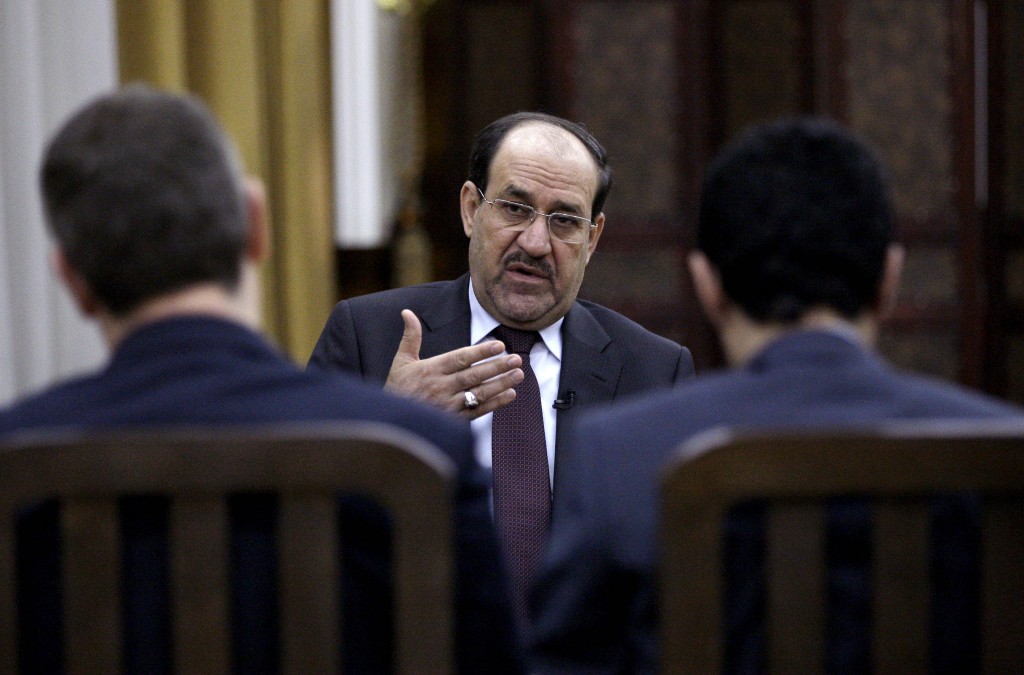
The visit of US Secretary of State John Kerry to the Middle East and the spillover of violence from Syria into Iraq lead the Arabic-language news on Sunday.
“The fire of war reaches Iraq and the opposition accuses Baghdad of collusion,” reads the headline of London-based daily Al-Hayat. According to the daily, four wounded Syrian soldiers were evacuated to a hospital in northern Iraq following clashes with members of the Free Syrian Army at the Yaarabiya border crossing, in northeastern Syria.
A spokesman for the Iraqi army said that Iraq would show restrain and not retaliate with cross-border fire.
But Saudi-owned daily A-Sharq Al-Awsat reports that Iraqi soldiers did cross the border into Iraq “for the first time since Saddam Hussein.”
Columnist Abdul Rahman Rashed claims that the fighting took place at the town of Yaarabiya, on Syrian soil, in an area where “Iraq smuggles its exports and Iranian exports to help the Syrian forces.”
“The entry of Maliki’s forces has widened the war in Syria from a proxy war to a direct one in assisting the forces of the Assad regime, which has been experiencing severe tribulations for the past 20 months,” writes Rashed. “Like Hassan Nasrallah, today Maliki cannot say no to requests from the Iranian Revolutionary Guards, which wield much influence and do not hesitate to perpetrate crimes to implement their threats.”
Rashed’s colleague, former editor-in-chief Tareq Homayed, claims that Iraq’s intervention in the Syrian conflict merits calling Prime Minister Nouri Maliki “the Shiite Saddam,” repeating a pejorative associated by him with the Iraqi leader in December 2011.
“Today, in 2013, we find that not only is Maliki defending Bashar Assad, but his forces are bombing the Free Syrian Army on the Yaarabiya border crossing!” writes Homayed.
“Maliki is doing all of that while he continues to persecute the Sunnis in Iraq and oppress them, as is happening in the Anbar [province] and other cities and provinces revolting against his sectarian regime. We have seen how the Iraqi finance minister has resigned in the face of the angry masses in Iraq last Friday.”
The Saudi press isn’t the only one attacking Maiki over the weekend. In an interview with Al-Jazeera on Saturday, former prime minister and coalition member Iyad Allawi claimed that 40 men were assassinated in Baghdad during the last two weeks, but did not reveal their political affiliation. He also claimed that weapons and explosives are being smuggled into Iraq from Iran.
Allawi praised the resignation of finance minster Rafi Issawi and called on the remaining government ministers to resign as well.
In response, a parliament member in Maliki’s State of Law coalition told the channel that Allawi “did not know what he was talking about, since he does not live in Iraq.”
Meanwhile, Al-Jazeera also reports that the Assad army has launched a massive ground attack against the town of Darayya, southwest of the capital Damascus. According to the Qatar-based channel, the city has almost been reduced to rubble, with 90% of the population having fled.
John Kerry’s Middle East tour
“It has become clear that Kerry’s choice of the Middle East and its issues for his first international trip means the revival of American policy towards this part of the world, following negligence which lasted the entire first term of President Barack Obama,” writes Al-Hayat columnist Abdullah Iskandar on Sunday.
The lead article in A-Sharq Al-Awsat is dedicated to Kerry’s visit to Egypt.
“Kerry encourages the Egyptian presidency to establish a unity government,” reads the headline, adding that Kerry is attempting to persuade opposition officials to take part in the upcoming parliamentary elections, which they have so far decided to boycott.
The daily reports, however, that the opposition has refused to meet Kerry due to his “bias” towards the Morsi regime.
According to independent daily Al-Masry Al-Youm, the police has intensified its presence around the presidential palace in Cairo on Sunday amid reports that opposition protesters are planning to pelt Kerry with eggs and tomatoes as he arrives to meet President Mohammed Morsi.
In a meeting with Egyptian businessmen on Monday, Kerry stressed the importance of a strong Egyptian economy, adding his hope that Egypt take “the right decisions in order to guarantee a loan from the International Monetary Fund (IMF).





The Times of Israel Community.