

A treble of trouble
It’s hard to see how Monday’s papers could be any worse for Netanyahu, whose legal and ethical troubles seem to be multiplying daily. If only he had an editor’s phone number
 Add ToI as a Preferred Source on Google
Joshua Davidovich is The Times of Israel's Deputy Editor
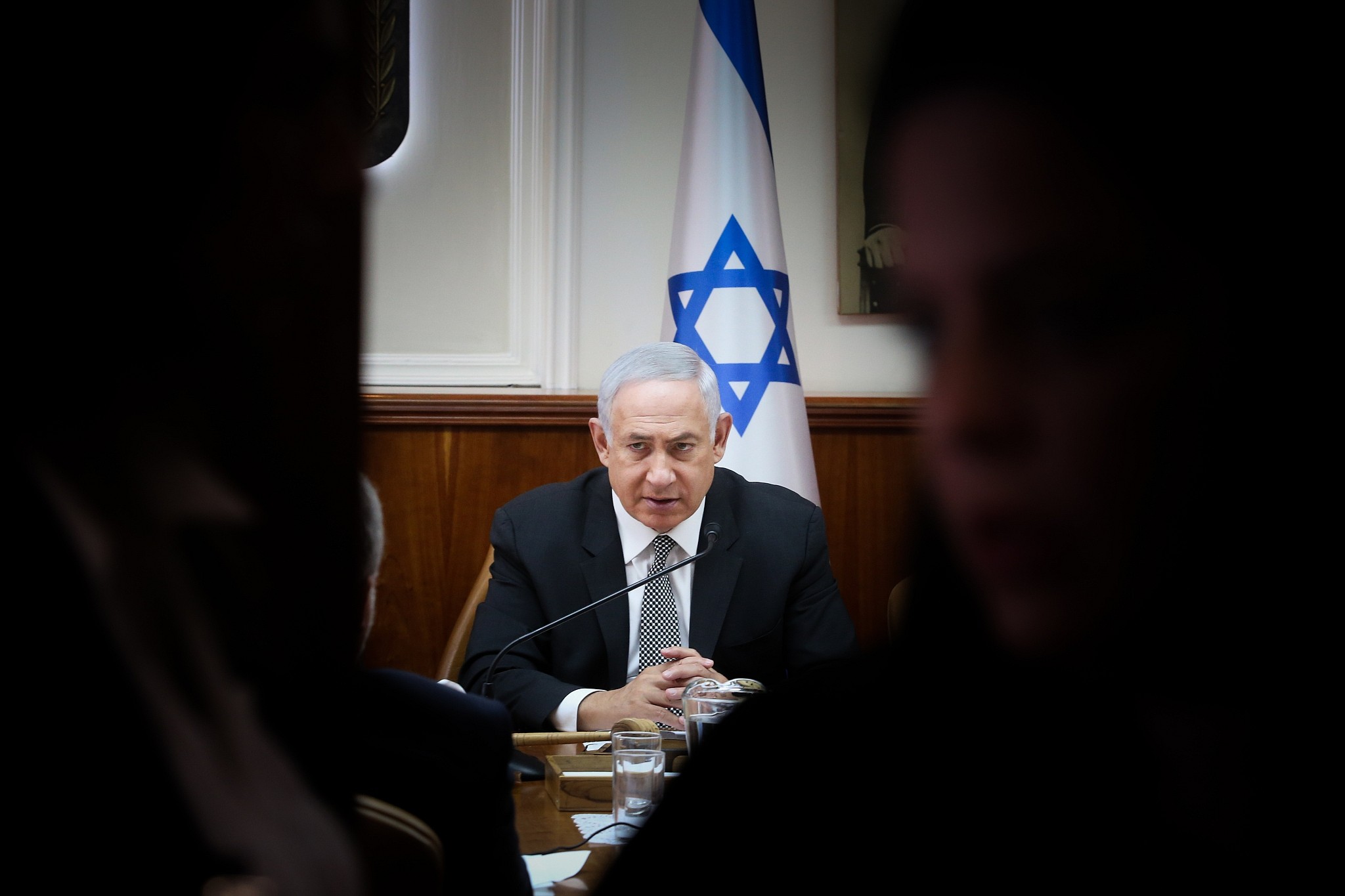
Sometimes luck means being able to avoid an uncomfortable situation thanks to distractions courtesy of some other terrible news. That’s the case with Israel Hayom Monday morning, which is able to bury in the gossip section revelations of its close ties to Prime Minister Benjamin Netanyahu, instead playing up the no less newsworthy North Korean nuclear test and the arrest of a former senior aide to Netanyahu in the submarine affair.
Israel Hayom’s ignoring of the story (which it likely would have done even if there were no other big news) is as unsurprising as the fact that Netanyahu and the paper are closely linked, as has been suspected and accepted pretty much as fact for years. And it’s not even the most damning thing against the prime minister and his family in the major dailies Monday morning.
Nonetheless, the frequency of calls between the prime minister and Israel Hayom’s publisher and editor, especially around election season, are the smoking gun proving that the paper is actually a propaganda outlet, according to Yedioth Ahronoth (the paper whose publisher tried to make a deal with Netanyahu to soften its harsh coverage of him in exchange for favors, but that’s another story).
The paper headlines its main story on the subject, “The actual editor,” dotting its i (or vav) with Israel Hayom’s trademark exclamation point, as a snide little cherry on top. The paper does the work of matching up times of Netanyahu’s phone calls to Israel Hayom editor Amos Regev to top headlines that appeared the next day, which were usually just Likud or Netanyahu talking points or attacks on the party’s enemies: Israeli leftists, right-wing challengers and then-US president Barack Obama. “The conversations reveal how they acted when the paper was sent to the printer and how top headlines were chosen,” the paper reports, turning circumstantial evidence into just evidence.
Giving some context on why this might be problematic, columnist Nahum Barnea writes that Netanyahu was the real editor of the free tabloid, which makes it less of a newspaper and more of an undeclared propaganda outfit.
“Israel Hayom is not a newspaper and not a business. It’s a gift for someone whom a casino mogul from Las Vegas holds dear. Everyone understood that and nobody cared,” he writes. “Until the elections came. The tabloid put all its propaganda power into getting Netanyahu elected. It’s like a campaign donation, a donation that breaks every campaign finance law.”
Haaretz doesn’t lead off with the Israel Hayom story or the submarine affair, but that doesn’t mean it’s also in Netanyahu’s pocket. The broadsheet instead drops a bombshell that Sara Netanyahu will soon be indicted for NIS 400,000 worth of fraud, citing a senior police source who says the prime minister’s wife ordered a whole lot of fancy feasts.
“Sara Netanyahu is suspected of ordering meals from chefs to the Prime Minister’s Residence, which is against regulations, and hiding it,” the paper reports, adding that Netanyahu has blamed former caretaker and now-Netanyahu gadfly Menny Naftali for the misdeeds.
Israel Hayom, though, runs a column by lawyer Zion Amir (perhaps best known for defending crooked prime minister Ehud Olmert) trying to poke holes in Naftali’s testimony to police against the Netanyahus.
“Naftali’s testimony is not born of clean and pure intentions, like a desire to repent for his sins or the understanding that he did wrong, but rather from a view with much special interests,” he writes, going off the assumption that Naftali is a state’s witness (even though he made no such deal with the state to avoid prosecution and is not a suspect).
Israel Hayom may have buried the story of its “secret editor” to protect itself, but news that a former top aide to Netanyahu has been arrested in an investigation into possible bribery surrounding submarine purchases still makes the paper’s front page, either because it’s too big a deal to ignore, or they know a sinking ship when they see one.
But while the paper indeed highlights the arrest of David Sharan, it doesn’t place any special significance on the fact or signal that the move brings the affair a step closer to Netanyahu, pointing out the different roles he held besides being in Netanyahu’s office.
Yedioth, which leads off with the story of Sharan’s arrest, reports that he was brought in thanks to testimony from state’s witness Mickey Ganor — a middleman in the sub deal — and was “part of the bribe machinery that Ganor ran to make sure his client ThyssenKrupp won tenders to sell ships and submarines to Israel.”
Haaretz columnists Amos Harel and Barak Ravid are both careful to tiptoe around the fact that Netanyahu is not a suspect, but they both point out that he’s either complicit in all the scandals surrounding officials close to him, like personal lawyer David Shimron and national security adviser pick Avriel Bar Yosef, or he’s clueless and a terrible judge of character unfit to lead.
Harel sarcastically goes with the second option and calls it a “reverse Midas touch,” while Ravid leaves both possibilities open.
“If Netanyahu knew about Shimron’s involvement in the submarine deals, or the alleged connections between Bar-Yosef and Michael Ganor – the middleman in the submarine affair – then this is a case of suspected offenses that violate ethical standards,” Ravid writes. “On the other hand, if this whole affair took place behind Netanyahu’s back, then the prime minister doesn’t know what’s going on around him, and surrounded himself unknowingly with a bunch of allegedly corrupt people, appointing them to the highest and most sensitive positions in government. It’s hard to decide which of these possibilities is worse.”
It’s even harder to decide what to do about North Korea. Tensions with Pyongyang over its H-bomb mischief are also front and center, particularly in Israel Hayom, which covers much of its front page with a column by former National Security adviser Yaakov Amidror. Amidror says if the US is going to make good on its threats to hit North Korea militarily, it’s now or never.
Amidror draws from Israel’s own experiences with similar dilemmas in which it bombed Syria’s reactor, and predicts Iran may be a few steps behind North Korea going down the same path, but he concludes that the examples are not that apt after all.
“There’s three big differences: Because of South Korea’s fears of retaliation, it is against any military action; Iran’s neighbors are the opposite. Along with that, Iran is a large developed country, much more so than North Korea, and thus has a greater ability to recover, and keeping [Iran] from returning to Syria will take more work than if it were North Korea,” he writes. “The third difference is that North Korea’s neighbor is China, and one cannot act in that theater without taking into account its reaction. Iran doesn’t have a neighbor like that, so there’s more freedom to act against it.”
North Korea may be a backwards hermit kingdom, but Haaretz columnist Chemi Shalev still gives it the upper hand in what he describes as a game of chicken with US President Donald Trump.
“The prospect of North Korea demolishing an American city, even if it is destroyed in the process itself, is a risk that no US president – including, presumably, Donald Trump – would be willing to take. If he doesn’t persuade Kim to choose another path, Trump will soon be faced with two unbearable choices: Expose the US to unacceptable risk or plunge East Asia into an intolerable war,” he writes. “The crisis with North Korea literally threatens the peace and wellbeing of the entire world. It requires judicious, sober and responsible leadership, but American voters chose Trump instead.





The Times of Israel Community.