

AG threatens criminal probe after journalist given access to cabinet meeting
Kan reporter listens in and reports in real-time as ministers debate lockdown measures; Justice Ministry in February laid out new rules for prosecuting leakers
 Add ToI as a Preferred Source on Google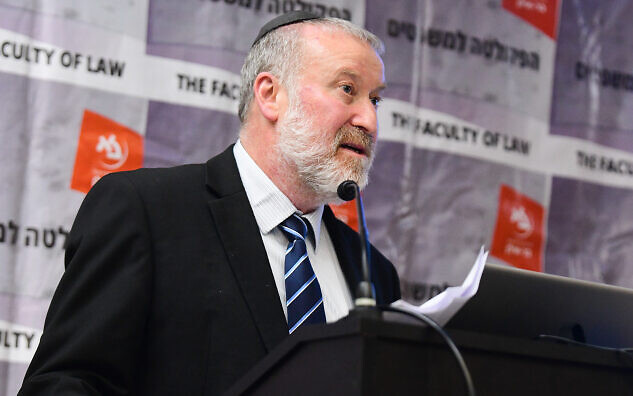
Attorney General Avichai Mandelblit has threatened to open a criminal investigation if a journalist is again given unauthorized access to a cabinet meeting.
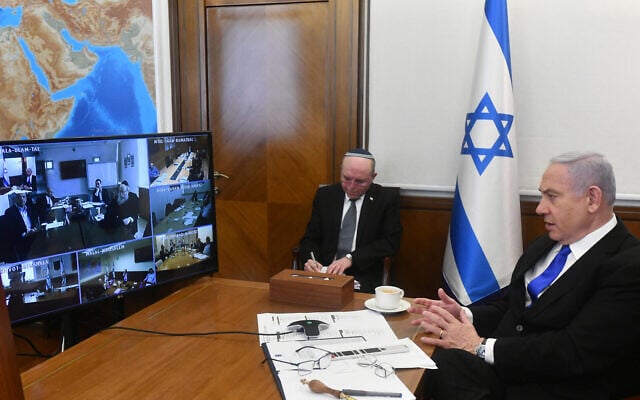
During teleconferenced cabinet meetings on Sunday and Wednesday, Kan reporter Michael Shemesh managed to report quotes in real time, after a participant gave him full access to listen in on the conference call.
“A member of the government or civil servant authorized to participate in a cabinet meeting, through the trust placed in them, who allows another actor not authorized to take part in the cabinet meeting to listen in, essentially allowing them to be present, is in violation of their authority and is breaking their duties according to the law,” Mandelblit wrote in an official letter late Wednesday.
He said it is not known who put Shemesh on the call.

In both cases, Shemesh was seemingly able to listen in on meetings held by ministers to discuss rollbacks of restrictions put in place to stop the spread of the novel coronavirus.
Since the pandemic erupted and new rules gradually introduced, Israelis were on several occasions not updated on the changing guidelines until after the cabinet voted on the regulations.
While leaks from meetings are common, it is rare for a journalist to be given nearly unfettered access to discussions held behind closed doors.
Minutes from Israeli cabinet meetings are considered top secret and any leak from them is technically illegal.
Reacting to Mandelblit’s announcement, Shemesh wrote on Twitter that “the fact that the attorney general wants to open a criminal investigation against ministers and journalists to stop them from leaking from cabinet meetings should worry any media person and every citizen in a democratic state.”
The Justice Ministry in February drew up new guidelines for launching criminal investigations into leakers. Israel’s top prosecutors are ordered under the guidelines to take care to balance the importance of the public’s right to know and journalistic confidentiality, with the needs of an investigation and the damage to national security. It said only serious cases should yield a criminal probe.
It was not immediately clear how reporting on lockdown measures affecting Israeli businesses would impinge on national security. Most of Shemesh’s reporting dealt with squabbling between ministers over various measures being considered to either ease restrictions or snap them back in place, as well as enforcement of social distancing orders.
“The question of whether to open an investigation is the product of a delicate and complex balancing act between considerations. Obviously, every incident should be treated separately, according to its circumstances. Therefore, when the possible harm to essential interests, like state security and human life, is higher as a result of the revelation of information, and its probability increases, then the weight given to the other aforementioned considerations [freedom of the press, public right to know] will be lower.”

If the information is deemed damaging, “as a rule, a criminal investigation will be opened, even if there is public interest in the revelation of the information.”
Since the issue is “sensitive and complex,” only the attorney general or state attorney may open an investigation, according to the document.
On journalistic confidentiality, the guidelines noted: “The most effective way to find the source of the leak to a journalist is by taking testimony from the one who in most cases known the identity of the leaker — the journalist. However, this step naturally harms journalistic confidentiality.”
“However, journalistic confidentiality is relative and a court may remove it in appropriate cases,” it goes on.
The guidelines also state that in some cases, people exposed to the source of the information could be forced to undergo a polygraph test under court order. Acknowledging the privacy violation, the guidelines say this course of action should be used with prudence.
Polygraph tests, discredited as junk science by most Western countries, are still widely used in Israeli criminal proceedings.
Mandelblit announced his office was drawing up new guidelines on the issue in August 2019, amid criticism of police leaks to media from Prime Minister Benjamin Netanyahu’s criminal investigations.
Netanyahu had railed at the steady stream of leaks to the media from police interrogations in his three corruption cases, including near-verbatim quotes from questioning of Netanyahu himself, that have been broadcast on primetime evening television news programs over the past several years.
In November, Mandelblit said he views the leaks from the investigations “severely” but said “there is no room to check or investigate the incidents.”
The attorney general in late January indicted Netanyahu on bribery, fraud and breach of trust charges. His trial is set to begin next month.









The Times of Israel Community.