

As Israel reopens, economically battered restaurants hunger for own comeback
Backed by the mayor, and arguing that they can serve patrons safely, owners and managers say Tel Aviv is not the same without its eateries and bars
 Add ToI as a Preferred Source on Google
Simona Weinglass is an investigative reporter at The Times of Israel.
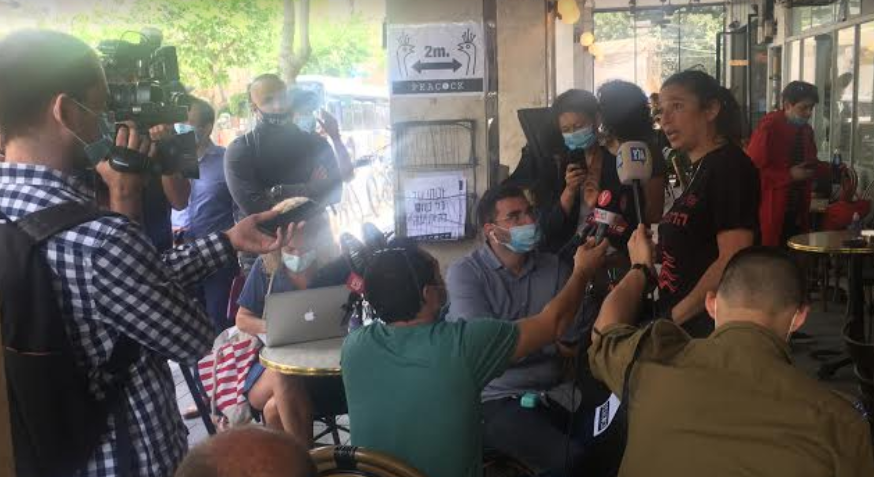
On Wednesday morning a crowd of about 20 reporters gathered outside the Peacock Bar in central Tel Aviv for a press conference organized by the Tel Aviv Municipality and the Israel Restaurants Association.
The scene was unusual only because as Israel’s economy gradually reopens after more than a month of coronavirus lockdown, this was the first live press conference many reporters had attended in a couple of months. The purpose of the event was to present a plan for reopening the city’s restaurants as soon as May 15, “and bring back life to the streets,” as the city’s mayor, Ron Huldai, declared.
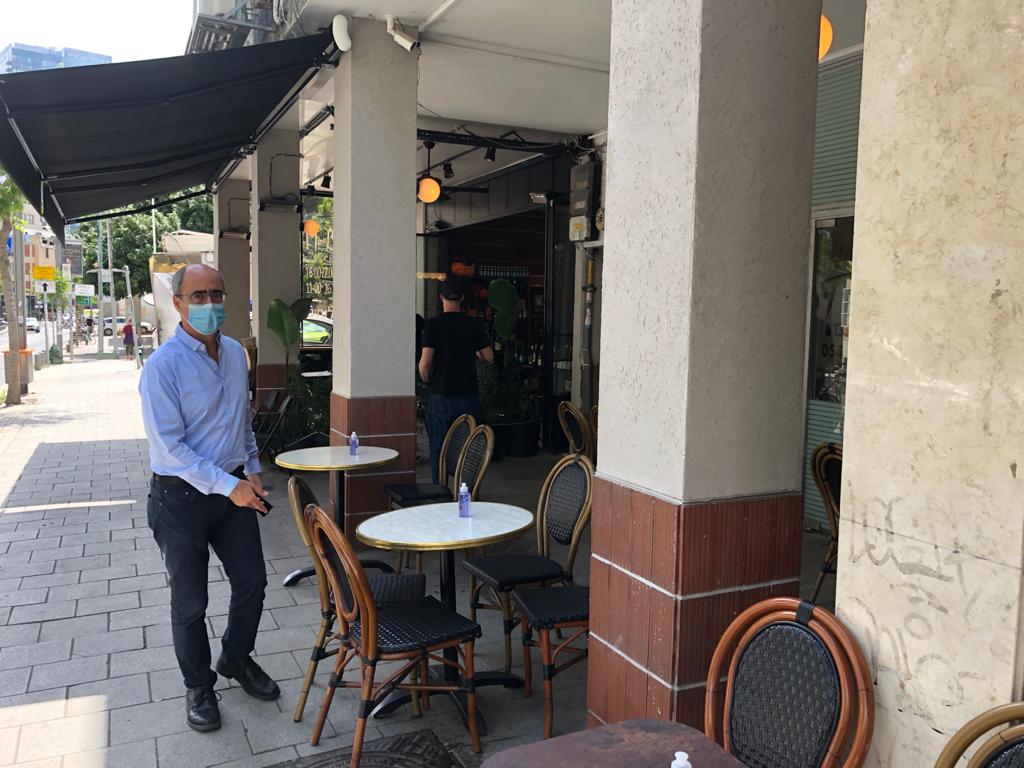
Accordingly, the owner of the Peacock Bar, Lilach Sapir, had created a “simulation” of how restaurants could reopen. Tables and chairs were neatly set out 1.5 meters apart, with hand sanitizer on each table.
Nearby, Sapir had filled a bin with disposable paper menus, and large plants had been placed on some of the stools near the bar.
“We put plants on the barstools so patrons can still have the bar experience, but safely,” said Sapir. “Only families will be allowed to dine together, and waiters will disinfect tables and chairs after each customer.”
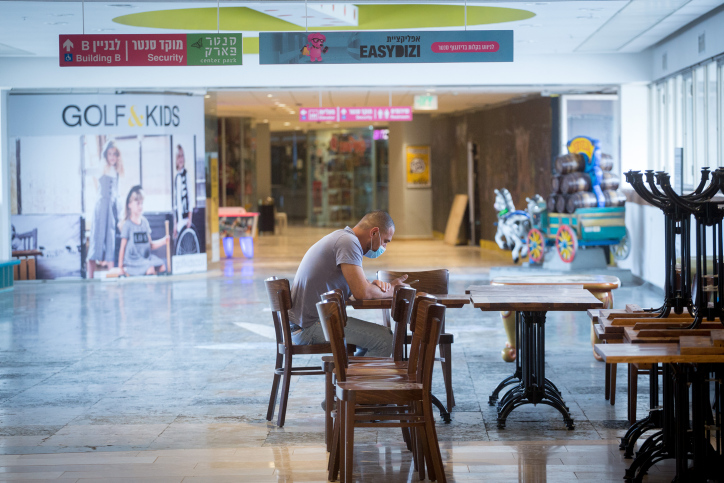
Sapir said restaurateurs had wholeheartedly embraced the public health restrictions, but now that the coronavirus is “under control,” she said, she urged the government to allow them to reopen.
“The last two months have been very hard for the restaurant business.” Amid bureaucratic complications that have slowed the distribution of grants, she said, “We haven’t gotten any money from the government yet. Most of our workers are young, and their unemployment benefits will run out in two days. We can bring 50,000 people back to work in Tel Aviv today if we reopen the restaurants.”
Israel has begun reopening large sectors of the economy, and restaurants are now allowed to both deliver takeaway food and have customers pick it up, but the government has yet to give a projected date for when restaurants can resume normal functioning beyond the mid-June date named as a target for the economy to be fully reopened.
According to the Tel Aviv proposal, which would still require the government’s sign-off, restaurants will be able to open on May 15 if they ensure that the necessary social distancing is maintained between tables. The municipality has already told owners of eateries that they can apply for a permit to extend seating areas onto sidewalks and even into nearby parks and plazas if it will help them meet the regulations.
Easing restrictions earlier this week, including allowing a resumption of customer takeaways from restaurants and food shops, Prime Minister Benjamin Netanyahu warned that Israel could have to reimpose stricter measures if there are more than 100 new coronavirus cases a day, a doubling of cases within 10 days, or over 250 people with serious symptoms in hospitals.
Unemployment figures have leaped from a record low of below 4 percent at the beginning of March to over 25% at the beginning of April, as many businesses were forced to close their doors while the public was ordered off the streets.
As a result, the number of unemployed surpassed 1 million for the first time in Israel’s history, with many employees put on unpaid leave.
‘We’re drowning’
In normal times, Israelis spend about NIS 20 billion ($5.7 billion) a year on restaurants and cafes. Many of these restaurants, particularly in Tel Aviv, are small, family-run businesses.
The Israel Restaurants Association said recently that 10% of restaurants in Israel are unlikely to reopen when the coronavirus crisis is over, due to cash flow problems.
Ron Bazak, a laid-off restaurant manager, sat outside the Peacock Bar wearing a t-shirt that said “Independent businesspeople: most are drowning.”
Bazak was formerly the manager of Sahki Sahki, a fine dining restaurant on Tchernichovsky Street, but was laid off soon after the government ordered all restaurants closed on March 15.
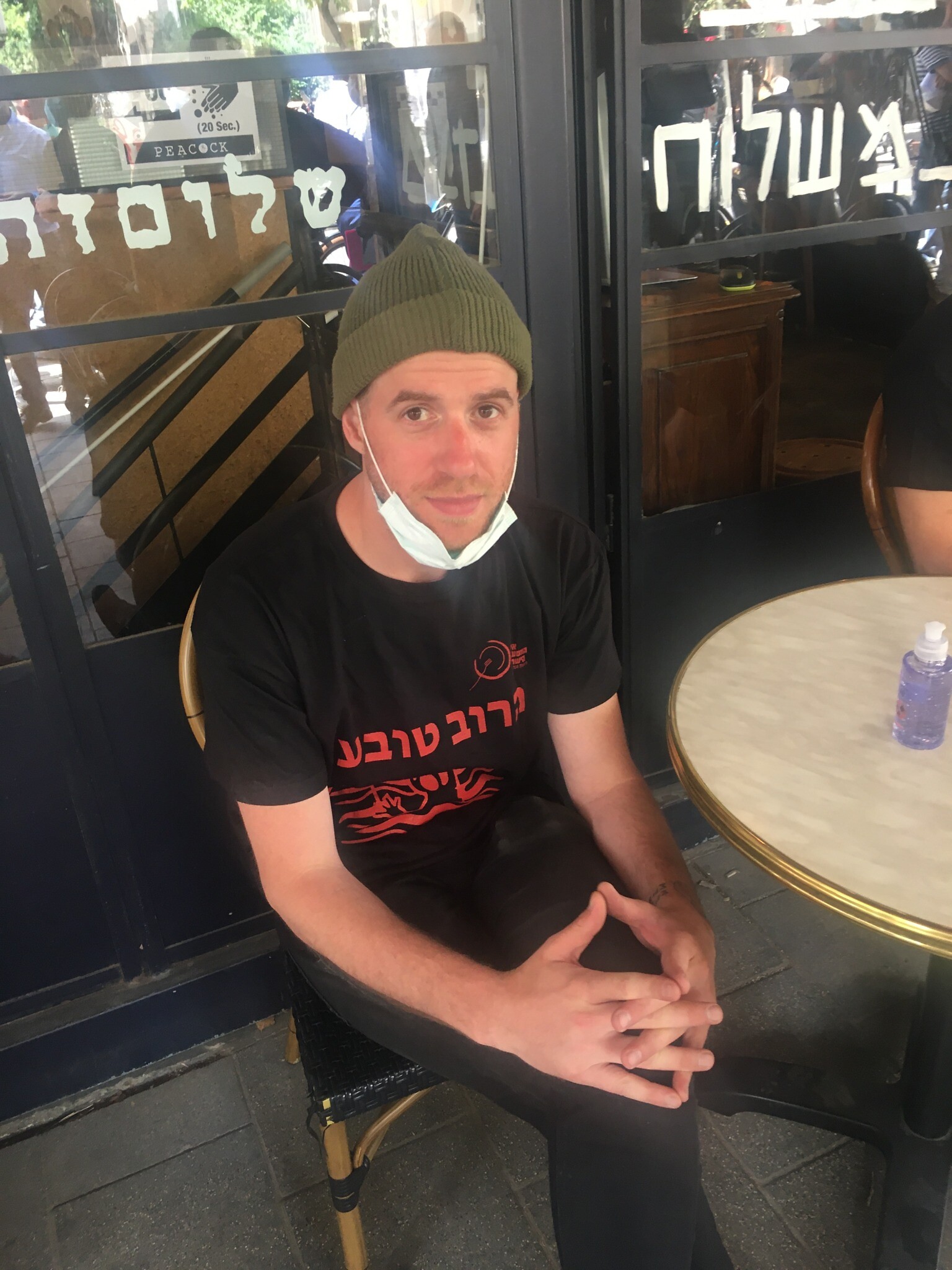
“The last two months have been hard,” he said. “We’re waiting, waiting to see what the new government guidelines are. In the meantime, restaurants have to pay bills and rent. I don’t know what kind of work there will be out there for me and what the salaries will be.”
Bazak’s sister, Maayan Bazak, runs a wine bar that is adjacent to, and affiliated with, the Peacock Bar.
“We opened the wine bar in late December and then on March 15 we were told we can’t serve wine,” she said. “So we turned this into a wine store.”
Bazak said she has no idea when restaurants will be allowed to reopen but said that Tel Aviv is not the same without them.
“We choose to live in a city like Tel Aviv because of its spirit — because of its nightlife and its culture. Once those are closed, you take the spirit out of the place; it could be any generic city.”
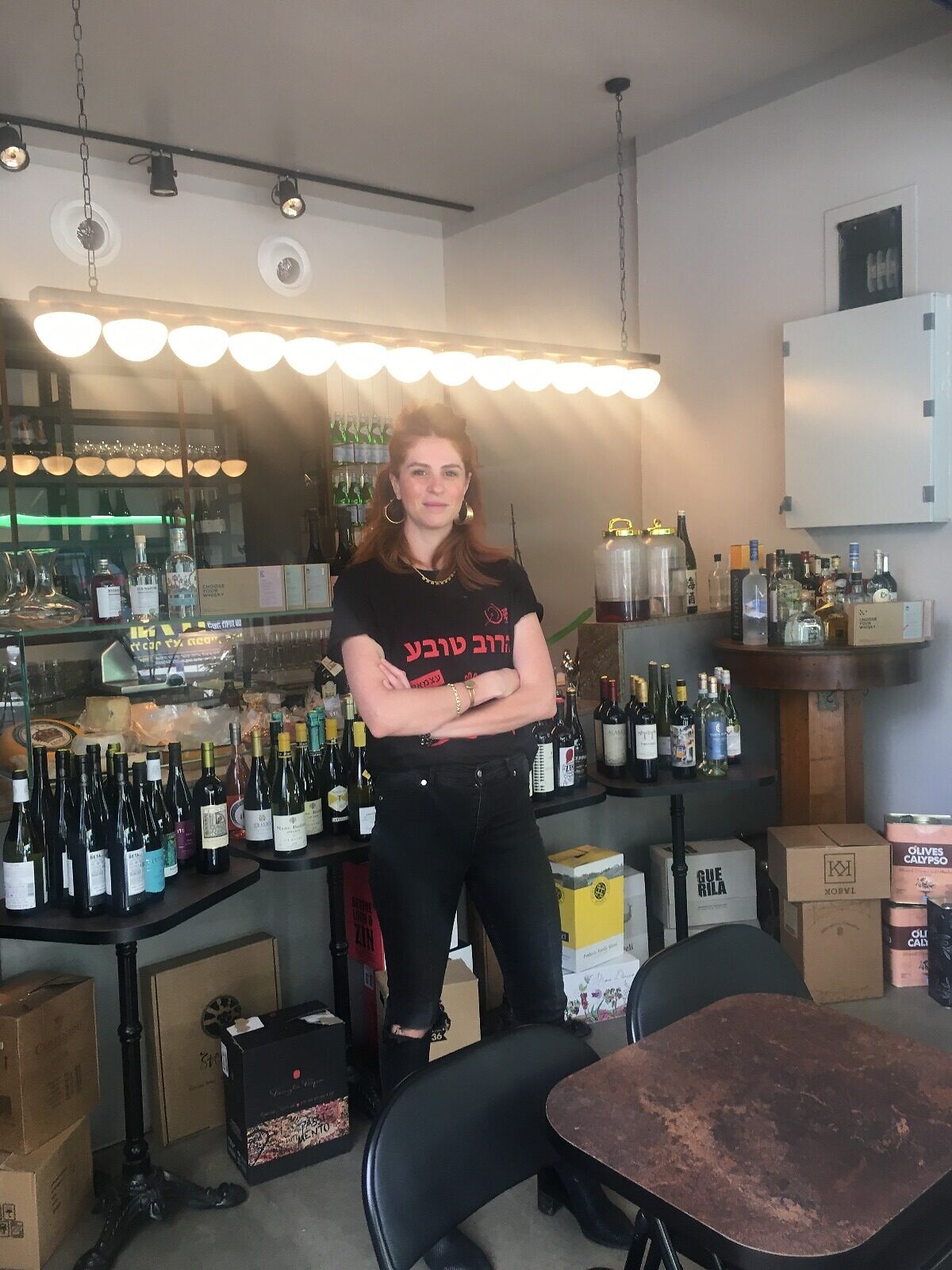
Her establishment, she said, caters to families in the early evening, theater and classical music patrons at the nearby Habima Theater as the evening progresses, and socializers later at night. She described the city’s restaurants and bars as an “oasis.”
“We’re a refuge, a place where you rest your mind, where you celebrate, say thank you for the day to the last moment. I think people now realize how valuable we are to social life. We are in charge of your soul and spirit and well-being.”
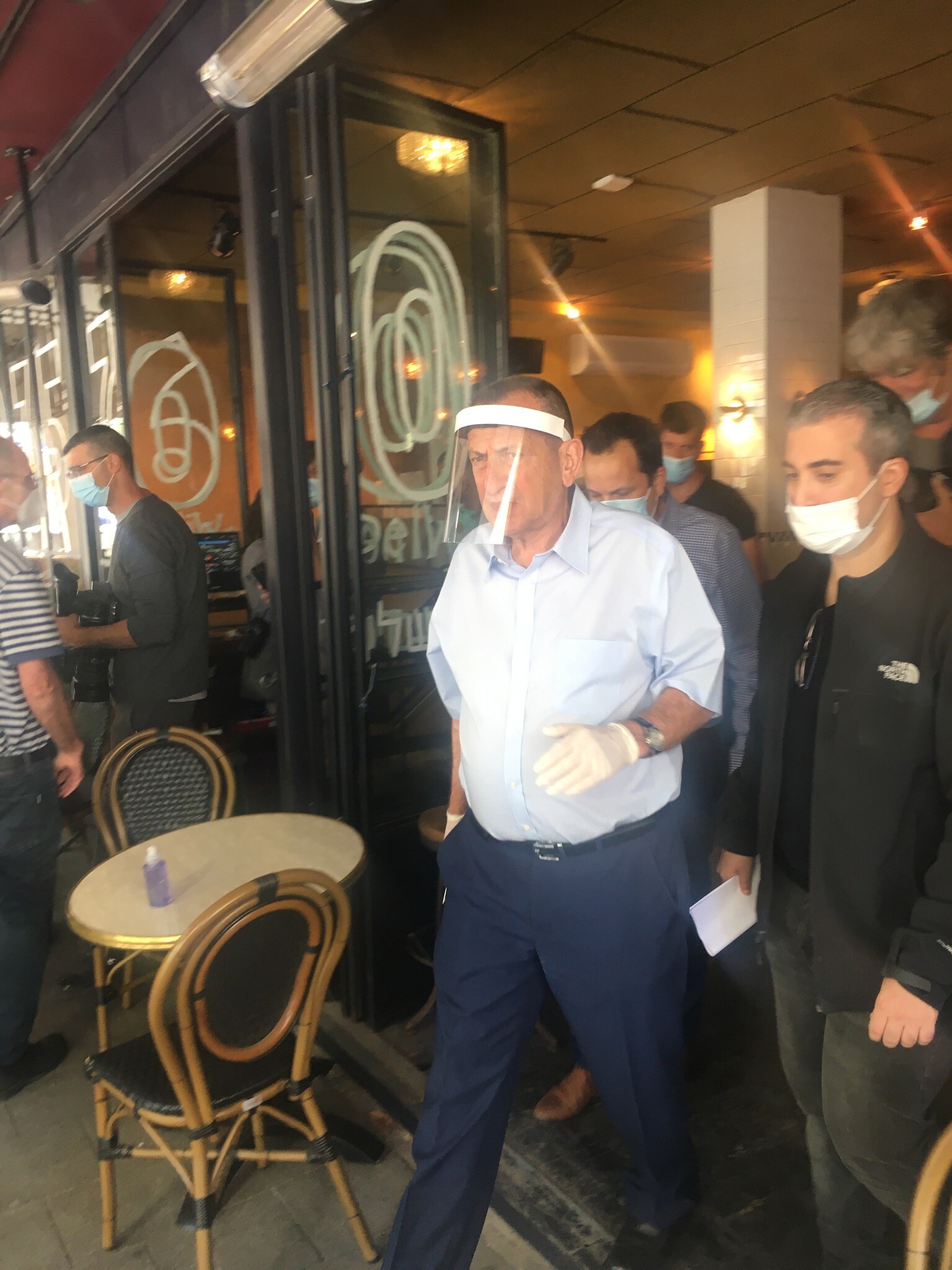
Tel Aviv mayor Huldai spoke to reporters while wearing a plastic face shield and maintaining a distance of two meters.
“There are 60,000 people who work in restaurants in Tel Aviv,” he said. “We would like to see them go back to work.”
Huldai said that once restaurants are open, he will address the thornier issues of how to reopen beaches and night clubs.
“We want to show it can be done and build confidence,” he explained.
“When will we be able to dance?” one reporter asked, presumably referring to the opening of night clubs.
“We can dance right now,” Huldai said, and began singing an old-fashioned Israeli song. Huldai also drank an alcoholic beverage at the bar.
In a letter he has sent to Netanyahu, Huldai wrote that restaurants are “important partners” in the city’s economic and social life.
“We’re doing everything in our power to help, by means of exemptions from fees and other tools, but these aren’t enough. Rescuing the [restaurant] industry of hundreds of thousands of workers is in the hands of the government,” Channel 13 news quoted the letter as saying.
Yoav David, the chief architect of Tel Aviv, told The Times of Israel that according to the city’s plan, in the initial stages only people from the same household will be allowed to dine together.
Asked how that would be enforced, he acknowledged that it would be difficult, but possible.
“Nightclubs and bars are the next stage,” he said, “as well as beaches and restaurants at the beach,” David said, noting that nightclubs would be more problematic since many people do not attend such venues with their families.
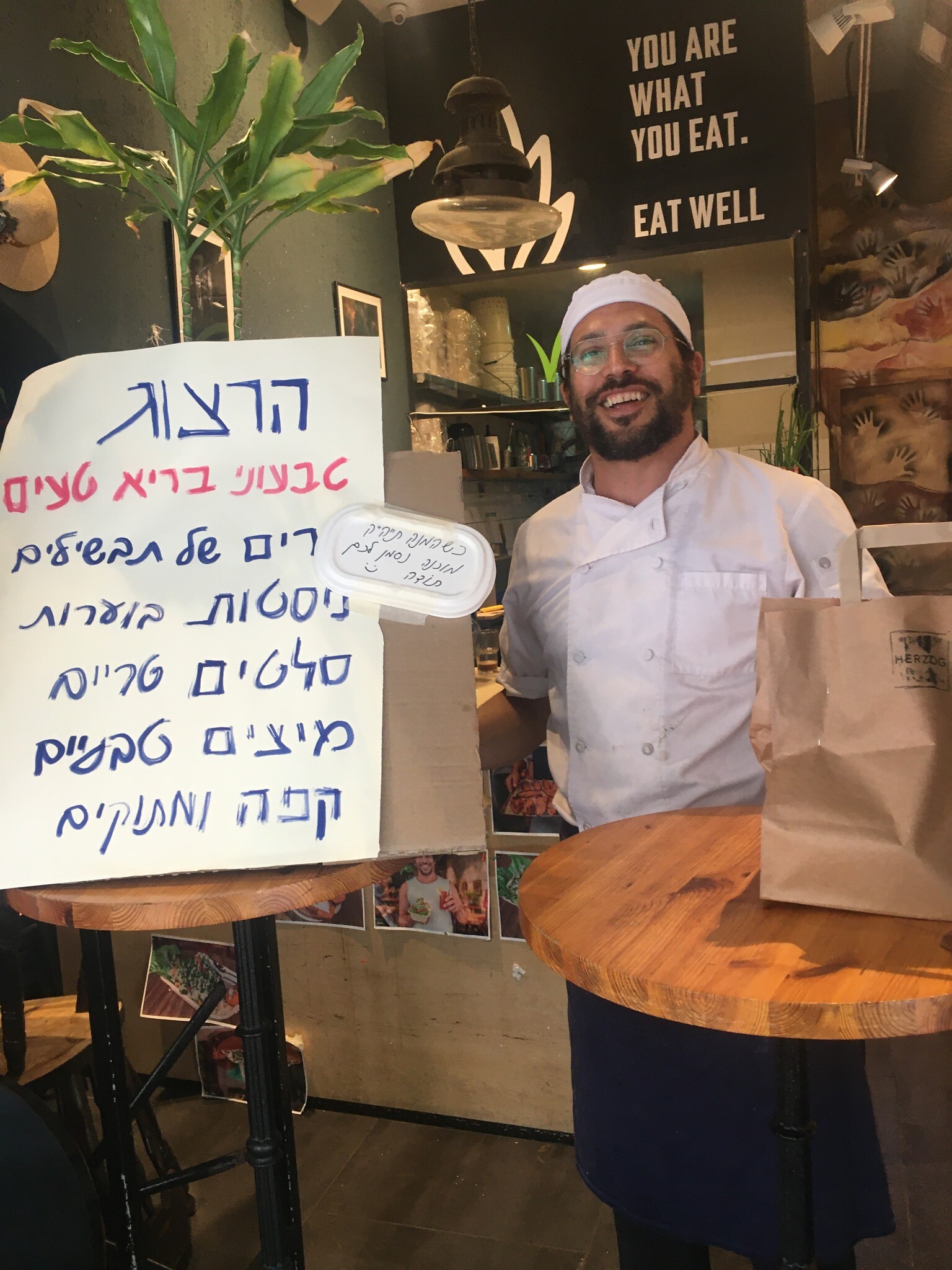
Nearby, at the Herzog vegan restaurant on Ibn Gavirol Street, proprietor Roey Herzog was selling takeout and taking orders for deliveries but lamented to The Times of Israel that business is down about 90%.
Asked if he got money from the government, Herzog said “I got a total of 3,000 shekels ($853).”
He said he was excited that the municipality might allow tables to be placed further out onto the sidewalk if its proposal is accepted. “I can put tables outside?” he said enthusiastically. “How soon do you think they’ll allow it?”







The Times of Israel Community.