

Defying US, Rouhani vows continued missile development
President says Iran’s missiles violate no international agreements, attacks Trump for decertifying nuclear pact
 Add ToI as a Preferred Source on Google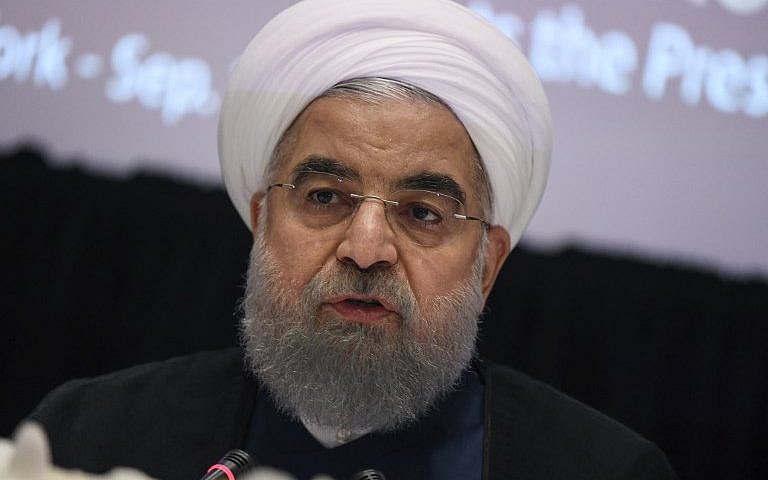
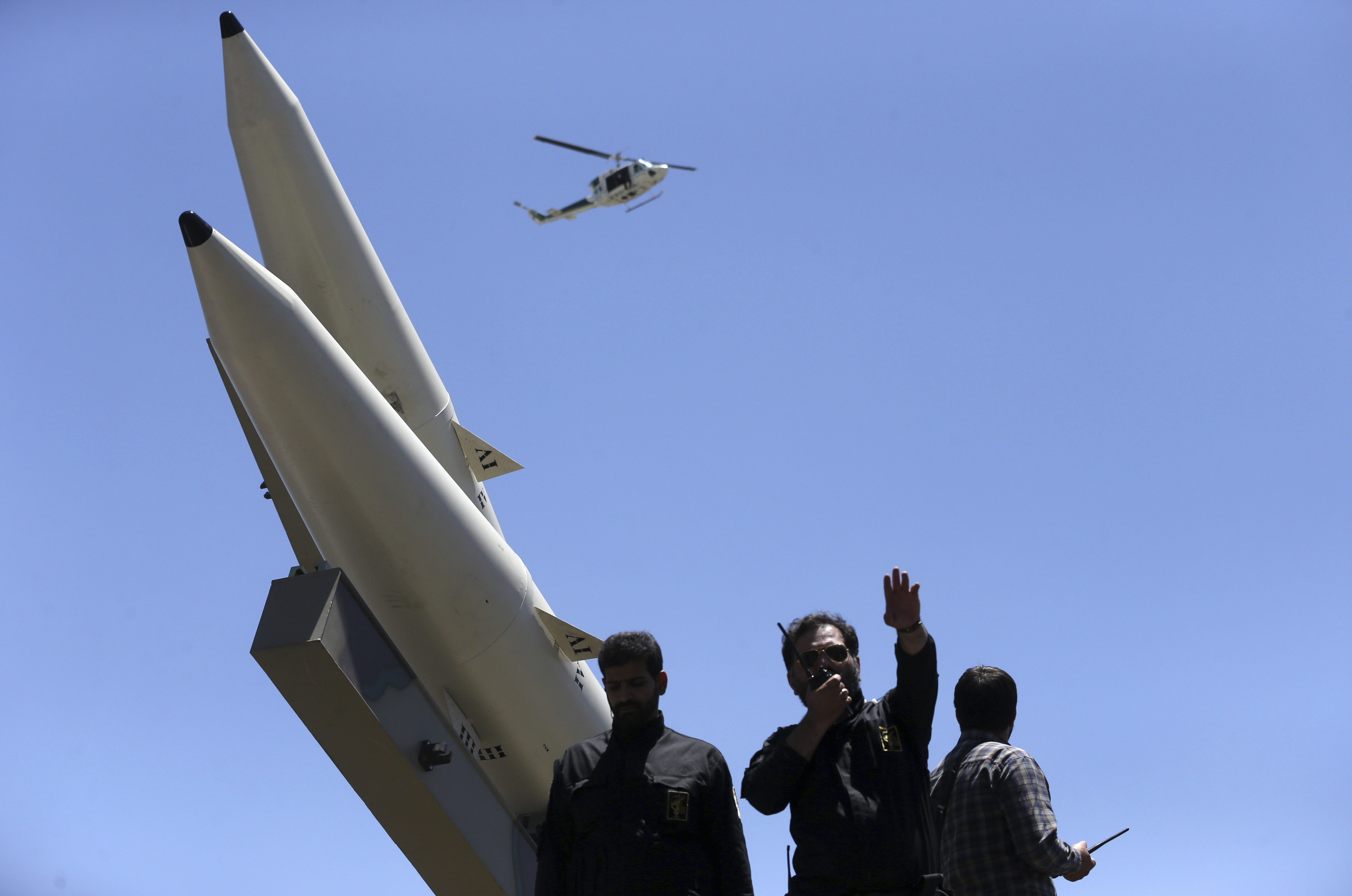
Iranian President Hassan Rouhani on Sunday said Iran will continue to develop ballistic missiles despite US criticism of its program, insisting the weapons are defensive and do not violate international agreements.
“We have built, are building and will continue to build missiles, and this violates no international agreement,” said Rouhani in a speech to parliament, according to Reuters.
“We will produce any weapons of any kind that we need and stockpile it and use it at anytime to defend ourselves,” he added.
Rouhani’s vow to push ahead came after the US House of Representatives voted in favor of legislation last week that would hit individuals and entities assisting Iran’s missile development with fresh sanctions.
The bill was prompted by US President Donald Trump’s decision earlier this month to not recertify the 2015 deal meant to limit Iran’s nuclear program, saying the agreement had failed to curb Iran’s missile program and destabilizing activities in the Middle East.
In his speech, Rouhani attacked Trump for decertifying the accord, despite the United Nation’s nuclear watchdog saying Iran was in compliance with the deal.
“You are disregarding past negotiations and agreements approved by the UN Security Council and expect others to negotiate with you,” he said.
“Because of the behavior it has adopted, America should forget any future talks and agreement with other countries,” he added, in apparent reference to North Korea and its nuclear program.
While the other parties to the nuclear deal have said they will uphold the accord despite the US decision, French President Emmanuel Macron said last month more needed to be done to address Iran’s missile program in order to reassure “states in the region, and the United States.”





The Times of Israel Community.