

Live updates (closed)
 Add ToI as a Preferred Source on Google
The Times of Israel liveblogged Thursday’s events as they unfolded.
UK maritime agency receives report of tanker being struck in Red Sea near Saudi coastal city
The United Kingdom Maritime Trade Operations says it has received a report of an incident 70 nautical miles southwest of Saudi Arabia’s Red Sea coastal city of Al Shuqaiq, adding no casualties or environmental impact have been reported.
“The master of a tanker reports being struck by an unknown projectile which has caused a fire onboard that the crew are currently fighting,” UKMTO says.
Times of Israel staff contributed to this report.
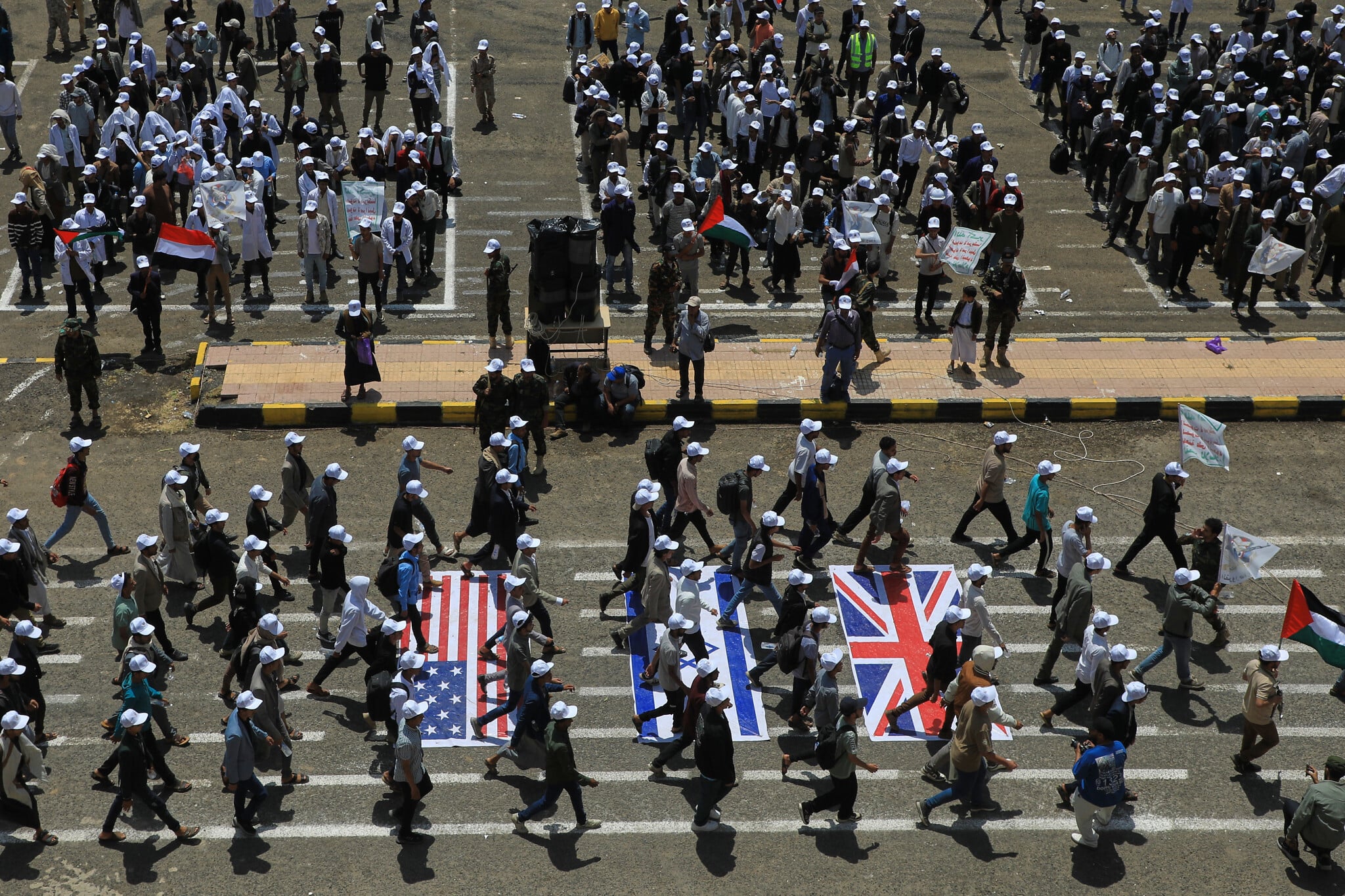
Yemen’s Houthis say they targeted pair of Saudi oil tankers
Yemen’s Houthis says they carried out a military operation targeting two Saudi oil tankers, identified as ENCELA and LAYLIA, saying the vessels violated a naval blockade imposed by the group.
The Iran-aligned Houthis said on Monday they were imposing a naval blockade on Saudi Arabia, drawing a warning from the Saudi-led coalition that it would respond “firmly,” in a move that threatens to disrupt global energy supplies beyond the Gulf.
US launches another night of strikes ‘to further degrade Iran’s ability to threaten civilian mariners, commercial vessels’
The US military says it has launched a new round of strikes on Iran at President Donald Trump’s direction, marking the 12th successive night of American attacks.
“The mission will continue to further degrade Iran’s ability to threaten civilian mariners and commercial vessels transiting regional waters,” the US Central Command says in a statement.
Kuwait says it’s working to intercept ‘hostile drone threats’
Kuwait’s army says it’s intercepting hostile drones, following several days of Iranian strikes on the country.
“Kuwaiti air defenses are currently responding to hostile drone threats,” the army says in an overnight message on X. “Any explosions that may be heard are the result of air defense systems intercepting hostile targets.”
US House approves $1 trillion defense bill that would boost security ties with Israel
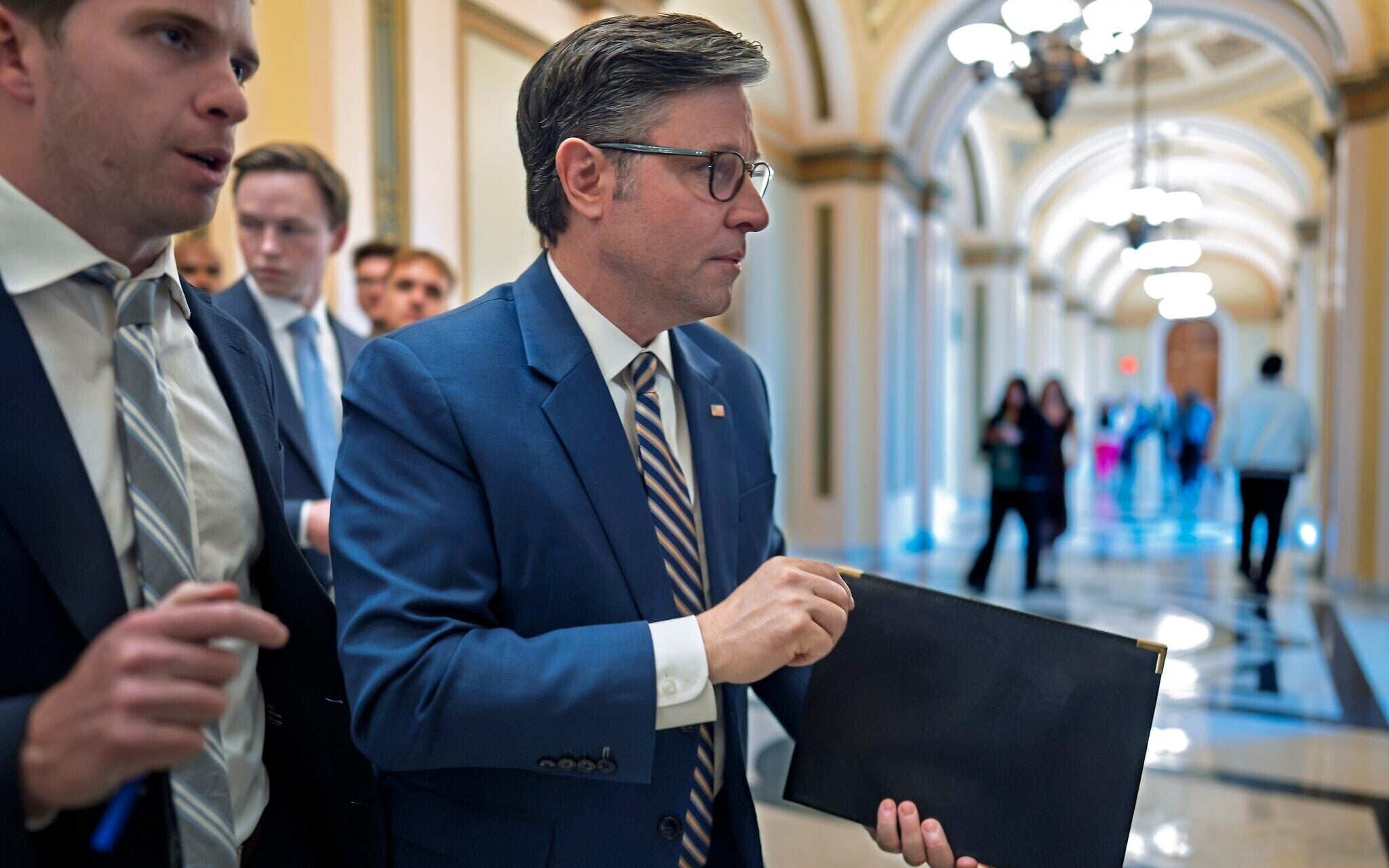
US House Speaker Mike Johnson leaves the chamber as members debate a series of measures including a continuing resolution to fund the government and a spending package for the Iran war, at the Capitol in July 21, 2026. (AP Photo/J. Scott Applewhite)
The US House of Representatives narrowly passes its version of a massive defense policy bill, despite Democrats’ concerns about its huge price tag, the Iran war and a provision that would boost Pentagon ties to Israel.
The fiscal 2027 National Defense Authorization Act, or NDAA, which authorizes an unprecedented $1.15 trillion in spending for the military, passes the House by 216 to 212.
The vote is largely along party lines, as all but seven Republicans vote in favor of the measure and all but six Democrats vote against.
The NDAA includes several provisions that allocate hundreds of million of dollars to US-Israel joint military projects.
Progressive Democrats sought to rally against a provision that boosted Israeli-US security cooperation, falsely claiming that it would integrate the countries’ intelligence services.
However, the effort ultimately failed.
Democrats object to the huge amount of money being authorized for the Pentagon, at a time when President Donald Trump and his fellow Republicans are slashing spending on social programs.
They also object to the ongoing and deeply unpopular war with Iran, which the Pentagon said has cost the US $37.5 billion so far.
Saudi Arabia reports crew safe after tanker struck in Red Sea, causing fire
A Saudi-owned vessel, the ENCELIA, was targeted while sailing in the Red Sea, causing a fire at the front of the ship, Saudi state news agency SPA reports, citing an official source at the General Transport Authority.
The source says all crew members are safe and that authorities have taken necessary measures to secure the vessel and crew and protect the marine environment.
CENTCOM says it has completed latest wave of strikes on Iran
The US military says it has completed its latest round of strikes on Iran at President Donald Trump’s direction, marking the 12th successive night of American attacks.
According to a CENTCOM state,emt, the strikes hit Iranian “maritime capabilities, missile and drone storage facilities, coastal surveillance sites, and air defense assets.”
“This month, American forces have targeted dozens of Iranian military sites on land while resuming a blockade against Iran at sea,” the statement adds. “As of today, CENTCOM has redirected nine commercial vessels and disabled one to prevent ships from entering or departing Iranian ports.”
IRGC says it stopped ships from sailing through Hormuz
Iran’s Revolutionary Guards says Thursday they stopped three oil tankers from transiting the Strait of Hormuz, as the United States and Iran vie for control over the route through which around one fifth of the world’s oil passed before the war.
“The Strait of Hormuz is under our control… and any ship that is deceived by the US and intends to pass without coordination with the Islamic Republic of Iran will suffer the same fate,” the IRGC says in a statement.
The statement comes after Yemen’s Iran-backed Houthi rebels reported hitting tankers in the Red Sea, after threatening to target Saudi ships transiting the similarly important Bab el-Mandeb Strait.
Two Chinese very large crude carriers carrying a combined 4 million barrels of Saudi Arabian oil are heading toward the Bab el-Mandeb Strait on Thursday, shipping data shows.
Millions of barrels per day of Saudi oil have been heading to the kingdom’s Red Sea port of Yanbu to avoid the Strait of Hormuz. If shipments cannot pass through the Red Sea’s southern strait, they have only the northern route through the Suez Canal, adding weeks and costs to the journey.
The Houthi threat to impose a naval blockade against Saudi Arabia could significantly widen the war and strain the US military, current and former US officials say.
Iran says it targeted bases in Kuwait with drones
Iran’s army says it carried out drone attacks on bases in Kuwait hosting US military assets.
In a statement carried by state media, the military says it hit warehouses, fuel tankers and an ammunition depot at the al-Doha, al-Salem and Arijfan bases in the Gulf country.
Meanwhile, Iranian state media reports that two US missiles hit Bushehr, home to the country’s only civilian nuclear plant and a frequent target of Washington, in overnight airstrikes.
It also claims the US attacked Shalamcheh on the Islamic Republic’s border with Iraq, killing two people.
Hillel backtracks after siding with Harvard in federal funding fight — report

Protestors gather outside the Moakley Federal Courthouse, where Harvard University appeared to challenge $2.6 billion in funding cuts by the Trump administration, July 21, 2025, in Boston. (AP Photo/Charles Krupa)
Hillel International reportedly says it will withdraw a court filing backing Harvard University’s fight against the federal government seeking to keep billions in funding that were frozen by the Trump administration due to what it said was the school’s inadequate response to campus antisemitism.
A spokesperson for Hillel tells the Harvard Crimson that the 22-page amicus brief was filed with the First Circuit Court of Appeals last night “without having gone through our internal review process.”
“As soon as the court opens in the morning, we will move to withdraw it,” the spokesperson says.
The filing had argued that though antisemitism remains an issue on campus, cutting $2.7 billion in federal grants was a “draconian one-size-fits-all” response that would not help the matter.
Harvard discriminates against Jews (among others). It is thus shocking to see this brief by @HillelIntl filed defending Harvard in the civil rights lawsuit. Genuinely shocking that Hillel is abandoning its students to defend one of the highest profile antisemitic universities pic.twitter.com/V3qGDqgACX
— Eric W. (@EWess92) July 22, 2026
The federal government is challenging a ruling in September that ordered the funding restored despite Harvard refusing to comply with Washington’s demands for reforms and oversight, saying the freeze had violated the school’s First Amendment rights.
According to the Crimson, Hillel’s amicus brief had sparked an angry backlash. Shabbos Kestenbaum, a former Harvard student who sued the school over antisemitism, called for donors to pull funding for the Jewish campus group, and made claims against the local Harvard Hillel, which said it was not involved in the filing.
I am shocked that Hillel International has just filed an Amicus Curiae in SUPPORT of Harvard University against the Trump Administration.
Rather than take responsibility for their failure to respond to the explosion of antisemitism on American campuses post October 7th, Hillel…
— Shabbos Kestenbaum (@ShabbosK) July 22, 2026
Rubio meets with Russian counterpart for talks on Ukraine
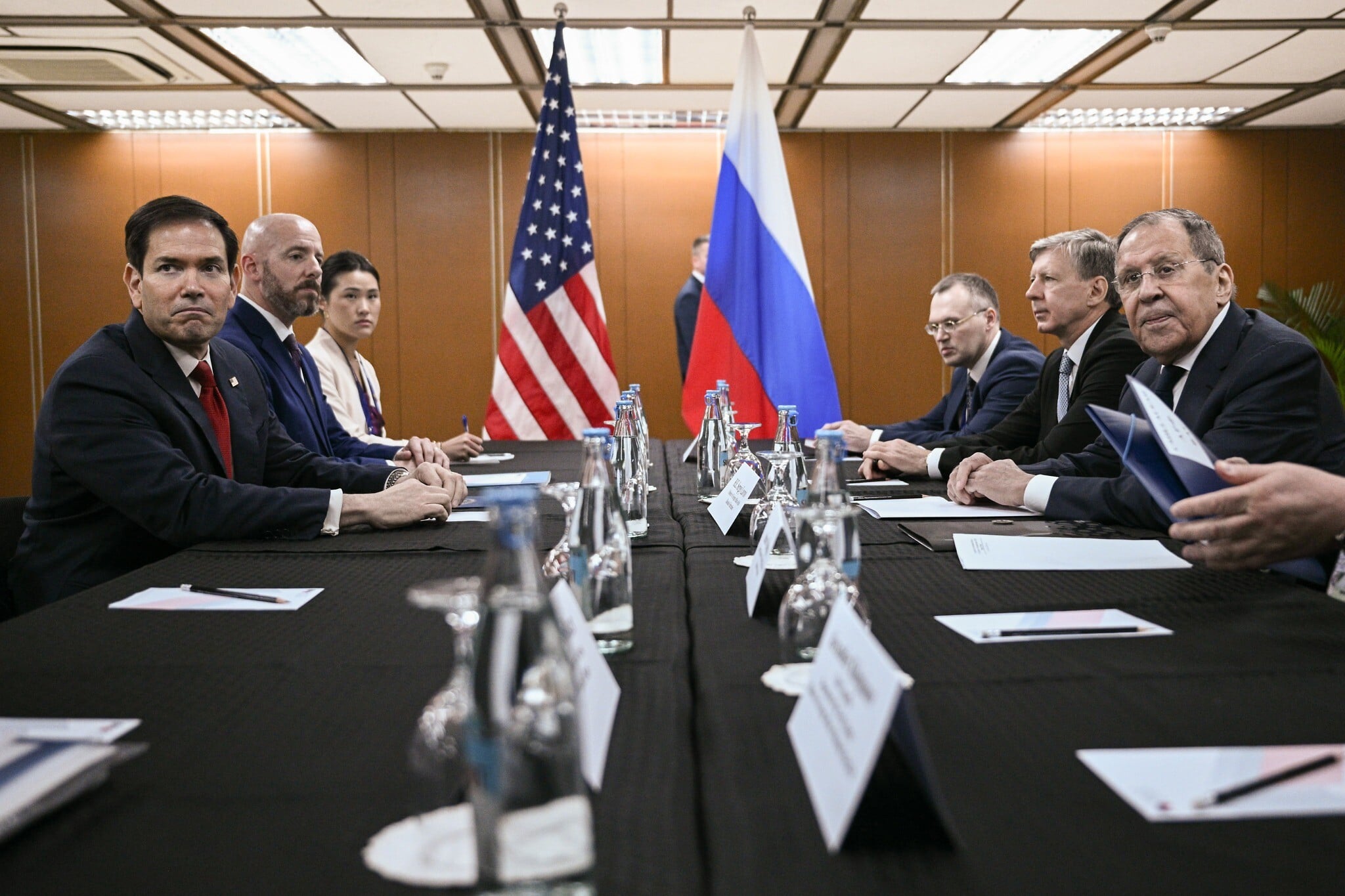
US Secretary of State Marco Rubio, left, attends a meeting with Russia’s Foreign Minister Sergey Lavrov, right, on the sidelines of the Association of Southeast Asian Nations (ASEAN) Foreign Ministers Meeting in Pasay, Metro Manila on July 23, 2026. (Brendan Smialowski/Pool via AP)
Russian Foreign Minister Sergei Lavrov and US Secretary of State Marco Rubio discussed the Ukraine conflict and the normalization of US-Russia relations in a meeting in Manila on Thursday, the Russian Foreign Ministry says.
Lavrov “reaffirmed Russia’s readiness for a political and diplomatic settlement of the conflict,” the ministry’s statement says, and told Rubio that Moscow remained committed to proposals put forward by Presidents Donald Trump and Vladimir Putin at their August 2025 meeting in Alaska.
The two men, who met on the sidelines of the ASEAN Regional Forum, agreed to continue contacts, the Russian statement says.
Asking about ceding to Eisenkot, Bennett says he’ll ‘do anything needed to win’

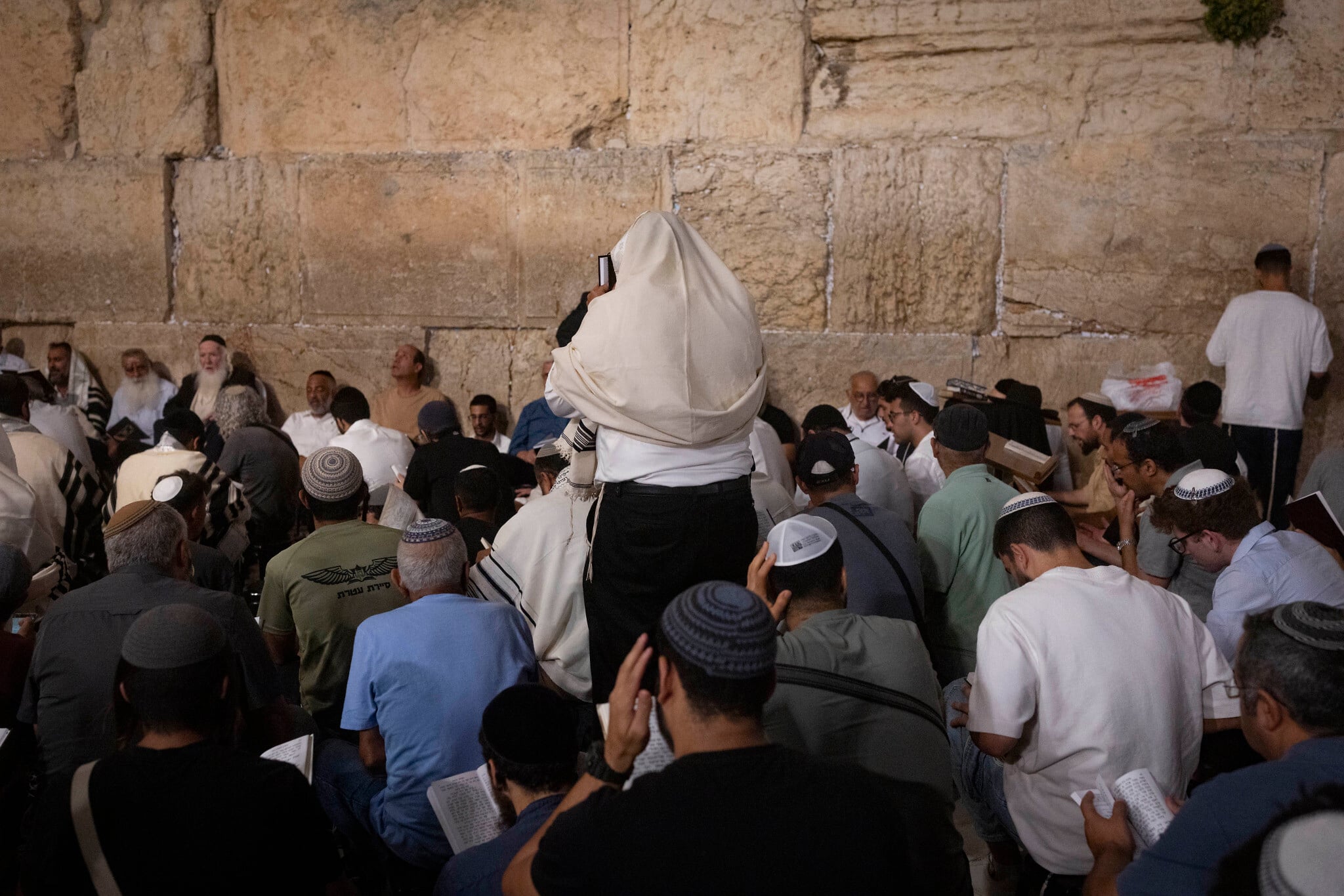
Together party head Naftali Bennett visits the Western Wall in Jerusalem’s Old City, during Tisha B’Av, July 22, 2026. (Yonatan Sindel/Flash90)
Former prime minister Naftali Bennett, campaigning to retake the office, coyly avoids explicitly answering whether he will be willing to get in line behind Yashar party leader Gadi Eisenkot, who many see as the strongest challenger for the position.
“I’ll do anything needed in order to win and fix Israel,” the Together party head tells Army Radio.
Expounding on his bona fides and past experience, Bennett says simply “changing the driver” to anyone aside from Prime Minister Benjamin Netanyahu is not enough to deal with the country’s various issues.
Pressed on the question, however, he allows that “I’ll do whatever is needed in any job.”
“My obsession is not the job… the country is falling apart and we need to fix it,” he says, before rattling off various reasons he is most fit to be premier.
With polls showing both the pro-Netanyahu and anti-Netanyahu blocs struggling to reach a majority without help from Arab parties, Bennett says avoiding another stalemate and repeated election cycles — as occurred from 2019 to 2021 — is the responsibility of voters, rather than politicians being willing to compromise in coalition talks.
“More rounds of elections would be terrible, so the public this time can’t stand on the sidelines,” he says. “You can’t say, ‘let the politicians deal with it, I’m going to the beach or abroad.’ That’s not a thing.”
Greece expected to okay $4 billion deal for Israeli air defense shield
Greece’s security council, KYSEA, is expected to give its final approval today for the purchase of a multi-layer air defense system from Israel worth up to $4 billion, and several types of drones, two sources tell Reuters.
KYSEA gave its initial approval earlier this year and is expected to approve the procurement contracts, an official with knowledge of the deal says.
Greece wants to build a multi-layer anti-ballistic, anti-aircraft and anti-drone system, called “Achilles Shield.” Israeli radars and missiles from Rafael and IAI will form the core of the system.
“KYSEA will also approve the purchase of drones from US and Israel,” says the official.
A second official confirms the information on the defense system from Israel and the purchase of drones.
Greece currently uses US Patriot and old Russian S-300 systems to protect its airspace.
Iran fighting sends French oil giant soaring, puts EasyJet in nosedive
French oil and gas giant TotalEnergies says net profit doubled in the second quarter as conflict in the Middle East pushed up fuel prices.
TotalEnergies reports net profit of $5.4 billion in the period from April to June, up from $2.7 billion in the same period a year earlier.
“In a high-price environment related to the conflict in the Middle East, TotalEnergies is capitalizing on its integrated model and diversification,” says chief executive Patrick Pouyanne.
Meanwhile, British no-frills airline EasyJet says its profit tumbled in the third quarter as the Middle East war sent jet fuel prices soaring and dampened customer demand.
Profit before tax fell 70% to $114 million from April to June, compared to a year earlier, EasyJet said in a statement.
The carrier says it was impacted by “elevated fuel prices and a reduction in consumer demand following the onset of the Middle East conflict.”
EasyJet’s fuel costs increased by $140 million compared with last year.
“We have continued to manage the impact of the Middle East conflict,” during the quarter, says chief executive Kenton Jarvis.
Over 1,000 Jews visit Temple Mount, pray openly to mark fast day
Over 1,000 Jewish worshipers visited the Temple Mount this morning, according to reports, openly holding mass prayers under police protection, including on parts of the site where such activities were previously prohibited.
The visits coincide with the fast of Tisha B’Av, when Jews commemorate the destruction of both holy Temples that once stood on the site, which is now home to the al-Aqsa Mosque and Dome of the Rock shrine, making it a major flashpoint of religious tensions.
מתפללים ישראלים קיימו תפילה המונית ברחבה שמחוץ למסגדים בהר-הבית, שטח שבו אסורה תפילת יהודים. במשטרה אומרים: מדובר באתר הכלול במסלול הביקורים, בסרטונים שהופצו נראים שוטרים מנחים את המתפללים להמשיך ולהתקדם@HGoldich @VeredPelman
צילום: חוזרים להר pic.twitter.com/uSaHtRjodY
— כאן חדשות (@kann_news) July 23, 2026
Videos show large numbers of Jewish men and women walking around the esplanade, many of them singing from Jewish liturgy, as police look on.
In another video, men hold Israeli flags in front of the Dome of the Rock’s steps while singing Israel’s national anthem along with Knesset Member Amit Levy.
יהודים שעלו להר הבית הניפו דגלים במסגד אלאקצה. ושרו את התקווה.
שמתם לב אין איומים של חמאס על ירי רקטות. אין סבבים של רקטות. pic.twitter.com/fwylau9piH— Amram (@el_amram) July 23, 2026
National Security Minister Itamar Ben Gvir, who has sought to expand open Jewish prayer on the sensitive site, is also among those visiting.
“Look what’s happening here, Jews are praying, they feel like they are the owners. That’s never happened here,” he says.
A status quo agreement governing the administration of the site for decades forbade Jewish prayer on the site in deference to Muslim sensitivities. That arrangement has been chipped away steadily in the past two years, though before today, prayer was generally limited to only certain areas of the compound, according to Haaretz.
Jordan says it intercepted four Iranian missiles, six drones
The Jordanian military says four Iranian ballistic missiles and six drones launched from Iran at the kingdom were intercepted earlier today.
Iran has been carrying out near-daily attacks on Jordan in the past week amid an escalation in the conflict with the United States.
Iran’s Revolutionary Guards said earlier that it targeted a radar for the US THAAD missile defence system, a Patriot system, a C-RAM radar and a helicopter hangar in Jordan, according to a statement aired by state TV.
Thousands of Jewish worshipers ascending Temple Mount, handful arrested over prayer, group says

Jewish worshippers on the Temple Mount on July 23, 2026. (screen capture: Beyadenu)
A spokesman from Beyadenu, which advocates for Jewish worship on the Temple Mount, says that some 3,000 Jewish visitors have visited the site today, with hundreds currently waiting in line to enter.
Hundreds more are expected to ascend the flashpoint site in the afternoon, he tells The Times of Israel.
The spokesman estimates that a dozen have been arrested so far for praying on the western side of the Temple Mount, as opposed to the eastern side where Jewish prayer is de facto permitted by police.
Jewish worshipers ascend Temple Mount on Tisha B'Av, pray and seen here performing the priestly blessing in massive departure from the status quo w/ Jordan, which ostensibly administers the site pic.twitter.com/PkQkuUpkr9
— charlie summers (@cbsu03) July 23, 2026
The arrested comprise only a small number of those who have prayed at the site’s western half, he adds, due to the “sheer amount” of worshipers.
Police are permitting Jewish worshipers to bring Tisha B’Av liturgy up to the Temple Mount. National Security Minister Itamar Ben Gvir was seen with a prayer book and worshiped openly at the site, after having done the same on the fast day last year.
Under the terms of an unwritten arrangement established after Israel captured the Old City in the 1967 war, Muslims can pray at the site, known as the Haram al-Sharif, while Jews are allowed to visit but not pray there. Ben Gvir has repeatedly declared that he permits Jewish prayer at the site, while the Prime Minister’s Office has insisted that the arrangement remains in force.
Rubio: Iran paying price for breaking deal, maybe they’ll change their minds
US Secretary of State Marco Rubio says Washington has kept its end of a deal with Iran but Tehran keeps reneging on agreements while suffering tremendous losses.
“These people make deals and then they break it almost immediately, or they decide, ‘Oh, let’s change the deal.’ That’s not how deals work,” he says on the sidelines of a Southeast Asian summit in Manila.
“So now they’re paying the price for it. And maybe they’ll change their mind here over the next few days as they continue to suffer great losses,” he adds.
Rubio also says Yemen’s Houthi rebels were “suckered” into attacking Red Sea shipping by Iran.
“The Houthis largely were smart and stayed out of all this throughout the conflict, but they now apparently have gotten themselves suckered into this, going after Saudi Arabia and their ships,” Rubio says
“I hope they will de-escalate, because I think the Houthis, frankly, got snookered into this thing by the Iranians,” he tells reporters.
Iran says it will keep attacking region until US ends strikes
The Iranian army says it will continue its strikes around the region until the attacks on Iran stop, state television reports.
“The armed forces’ retaliatory attacks will continue as long as the US attacks on the country’s infrastructure and coastal areas continue,” says army spokesperson Mohammad Akraminia, according to state TV, adding that the country is ready for “every enemy scenario.”
Meanwhile, a senior official with the Houthis says a blockade on Saudi-linked shipping would remain in effect until a years-old Saudi blockade against the Iran-backed rebel group is lifted.
An Arab diplomat says Gulf states are increasingly pessimistic about finding an off-ramp for escalating hostilities in the region and are particularly concerned about the latest round of threats.
The diplomat says countries in the region, in addition to Pakistan and Turkey, are continuing to push for de-escalation but that chances for improvement currently appear bleak.
Ramat Gan opens shelters as Iran missile fears mount
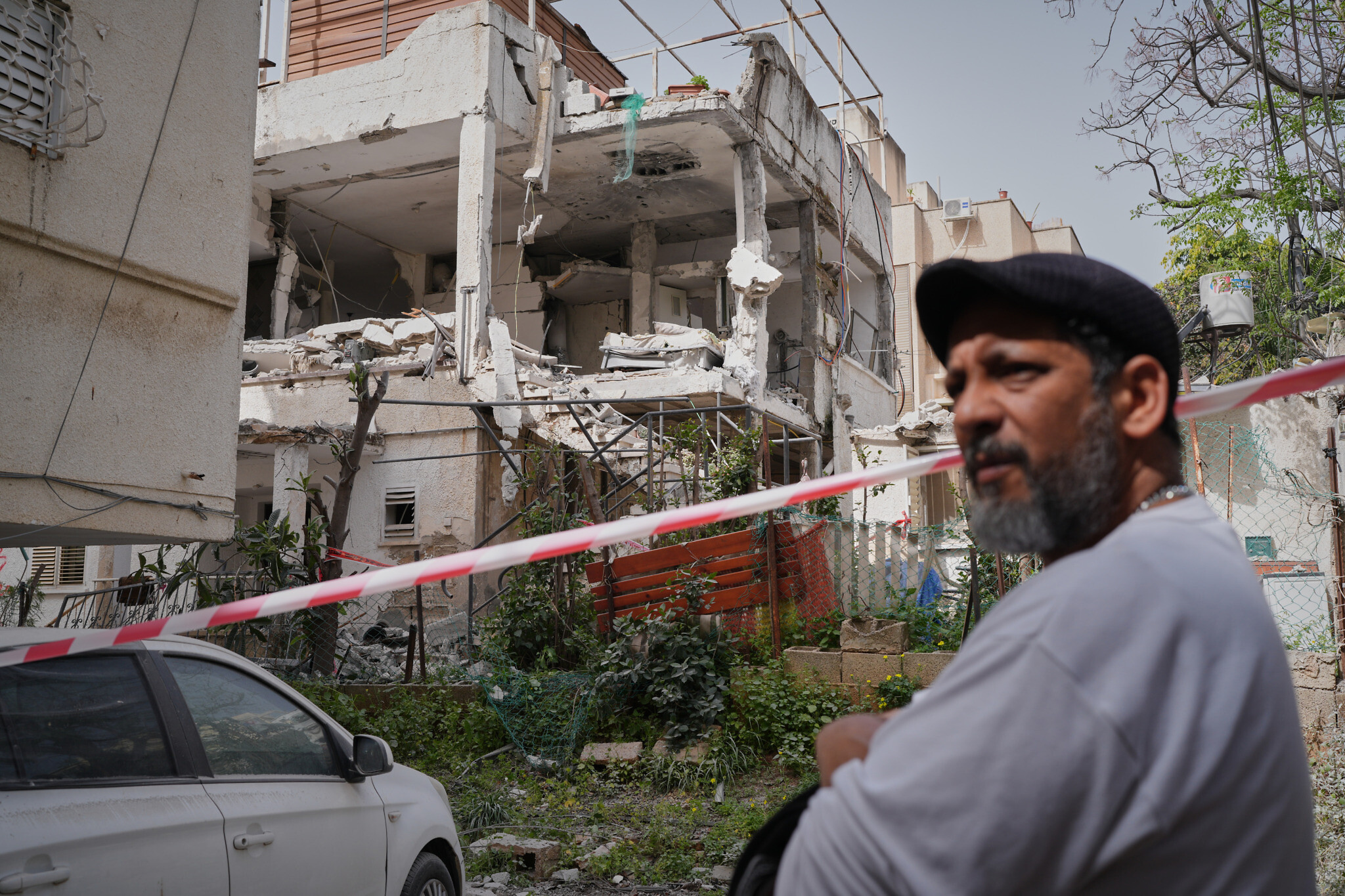
A man stands outside a house hit by an Iranian cluster missile in Ramat Gan, April 4, 2026. (AP Photo/Maya Levin)
The mayor of Ramat Gan says he is reopening municipal shelters in the Tel Aviv suburb out of growing fears that Iran may renew attacks on Israel.
“The assessment is that threat of missiles from Iran over the weekend has grown and is no longer negligible,” Carmel Shama-Hacohen writes on Facebook. He calls on apartment building supers to similarly open shared shelters.
Nonetheless, he says the move is being undertaken “out of an abundance of caution,” and notes that its not based on any special warning from the military.
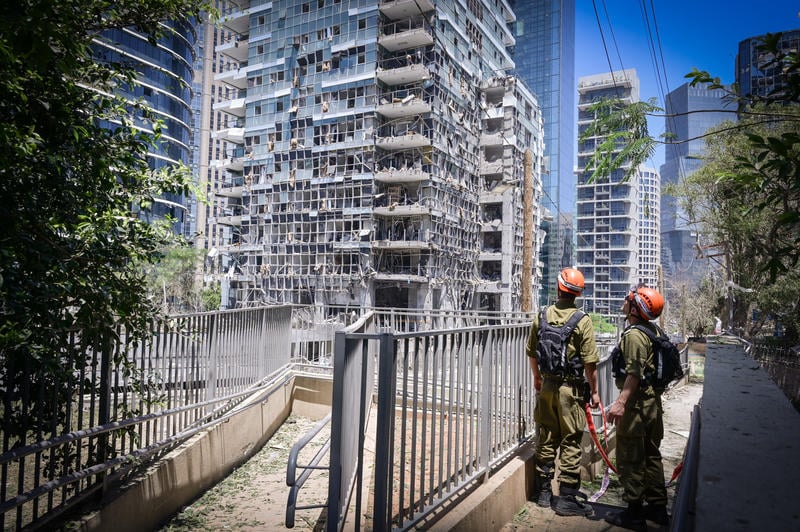
Home Front Command guidelines nationwide remain unchanged, with Iran so far limiting its attacks to Arab countries around the region.
Municipalities often decide to reopen public bomb shelters at their own initiative, while other have kept theirs open year-round regardless of security tensions.
Ramat Gan has been among the worst hit cities in previous rounds of fighting.
Bahrainis warned of incoming attack
Sirens have sounded in Bahrain, the interior ministry says, with AFP correspondents hearing the alerts in the capital Manama, as the country comes under daily Iranian attacks.
“The siren has been sounded… Citizens and residents are urged to remain calm and head to the nearest safe place,” the ministry says in a statement.
Oman says it is working to broker calm between Saudis and Houthis
Oman says it is coordinating with Saudi Arabia, Yemeni parties and the UN special envoy for Yemen to resume the political track aimed at achieving security and stability in the region, according to a foreign ministry statement.
Yemen’s Houthi rebels recently began attacking Saudi tankers, in a move largely seen as tied to US fighting with Iran.
The ministry stresses the need to avoid escalation and any threats that could worsen the situation in the Red Sea and endanger freedom of navigation.
Rubio says Saudi nuclear pact will include safeguards
US Secretary of State Marco Rubio says a landmark nuclear cooperation pact with Saudi Arabia would result only in a peaceful, civilian atomic program.
“Suffice it to say that any agreement that we’re going to make with any country in the world on civil nuclear energy is going to be one that will have safeguards in place to ensure that it can’t be turned into a weapons program,” Rubio says on the sidelines of a Southeast Asian summit in Manila.
“Saudi Arabia seeks to have a peaceful, civil nuclear program,” he tells reporters, noting a similar deal was in place with the United Arab Emirates.
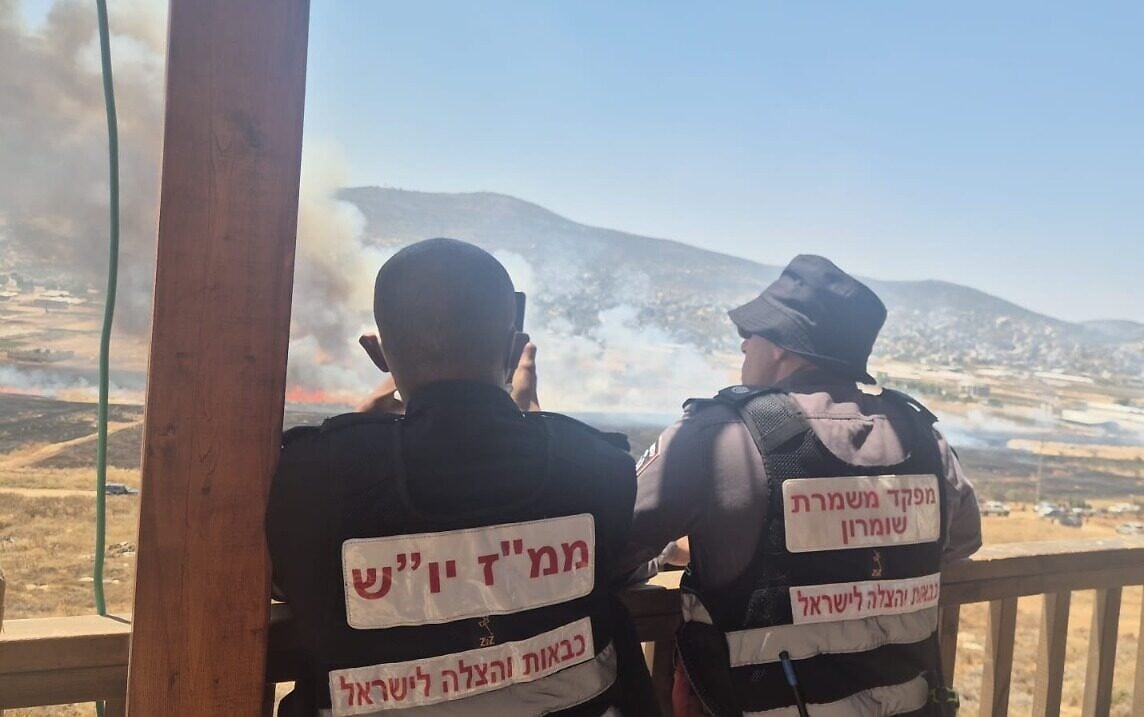
Man seriously injured in knifing at West Bank outpost
An Israeli man was severely wounded in a stabbing at a farming outpost near the West Bank settlement of Elon Moreh, medics say.
The stabbing occurred at the Derech Avraham outpost, amid a fire in the area.
The Magen David Adom ambulance service says it is treating a 51-year-old who was stabbed and seriously wounded.
Two Palestinian assailants were shot at the scene, MDA adds.
The IDF says it received a report of a stabbing in the area, and further details are under review.
שריפה פרצה בחוות דרך אברהם שסמוכה ליישוב אלון מורה בשומרון, צוותי כיבוי הוזעקו למקום@HGoldich pic.twitter.com/q6SaJbliwy
— כאן חדשות (@kann_news) July 23, 2026
Palestinian suspects killed, stabbing victim had been trying to put out fire — army
Two Palestinians who allegedly carried out a stabbing attack at the Derech Avraham outpost in the West Bank were shot dead, according to the military.
It is not immediately clear who fired the shots, either security forces or armed civilians.
According to the IDF, an Israeli man was stabbed and seriously wounded while trying to extinguish a fire in the area that Palestinians had set from the nearby town of Beit Furik.
פיגוע דקירה במרחב אלון מורה: הוזנק מסוק לטובת פינוי הפצוע. עפ"י מידע מהזירה מדובר באזרח ישראלי שהגיע לאזור ע"מ לסייע בפעולות כיבוי האש. pic.twitter.com/STd1jBdX95
— זירת החדשות (@ZiratNews) July 23, 2026
The man was stabbed in the chest and taken to a hospital for further treatment.
The army says it has placed a cordon around Beit Furik following the incident.
Two more teens arrested in connection with Jerusalem slaying
Police say they have arrested two teens suspected in the lethal stabbing of 19-year-old Benayahu Razi in a Jerusalem vacation rental earlier this month.
The suspects are a 16-year-old girl and an 18-year-old boy. They were apprehended last night as police continue to investigate the alleged murder, which took place July 11 in the capital’s Nachlaot neighborhood.
Razi was found with critical stab wounds and died soon after. A companion, who called police to the scene, sustained light injuries.
Six suspects were arrested in the incident’s wake, including three minors suspected of ambushing the pair and three women who police believe arranged the killing. Hebrew outlets reported that one of the women, a 19-year-old soldier, had a prior acquaintance with Razi.
Meanwhile, officers are continuing a manhunt for Avior Sasson, another suspect in the killing who is now on the run.
It is unclear what role the two teenagers are suspected of having in the killing. Police say they are scheduled to appear before a judge today.
MK testifies lawmakers were told to video their votes for Likud’s choice as state comptroller, show Netanyahu they’d done so
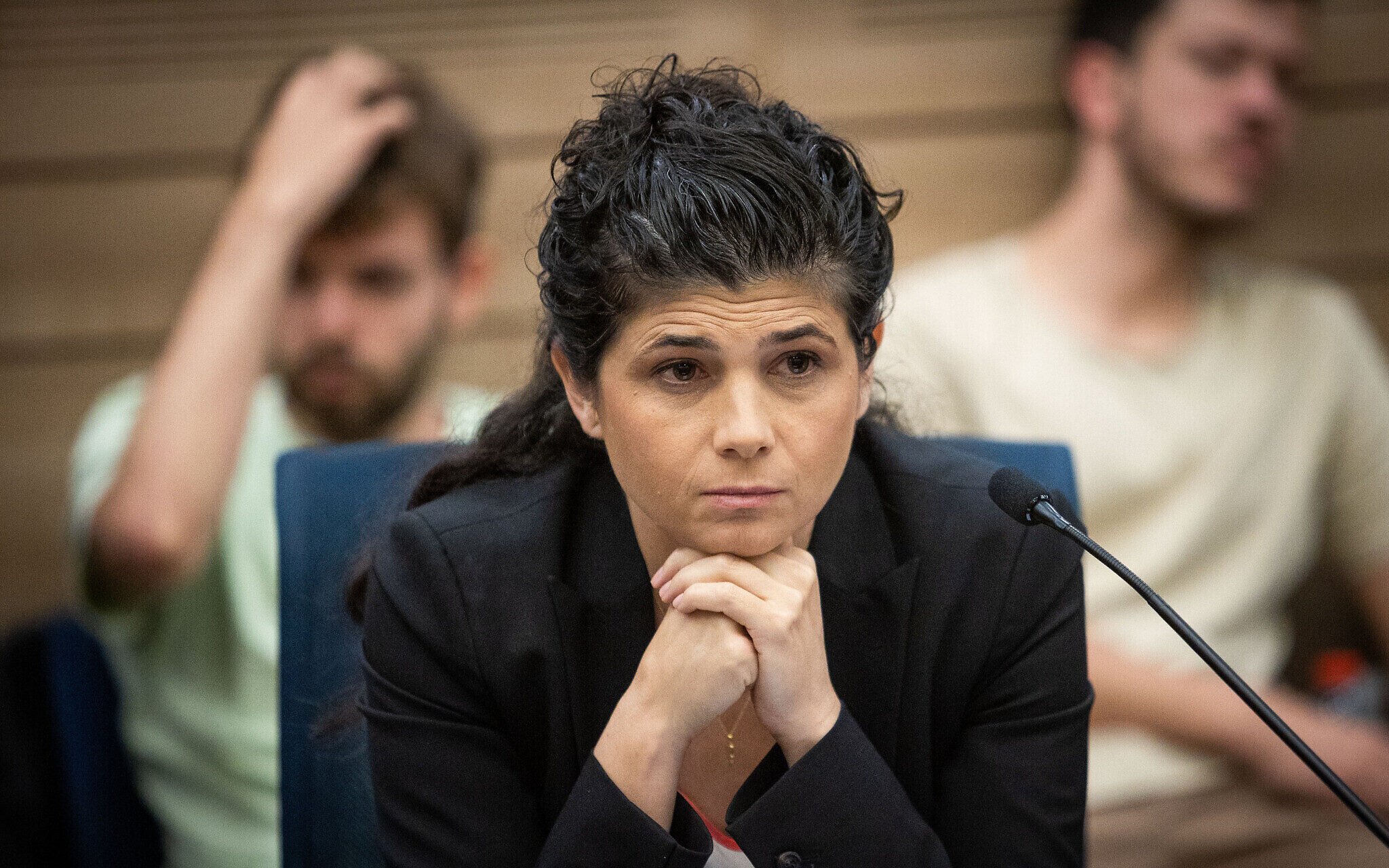
MK Sharren Haskel attends a meeting at the Knesset in Jerusalem, on June 28, 2023. (Oren Ben Hakoon/Flash90)
New Hope MK Sharren Haskel tells the High Court of Justice that Knesset members from her party were instructed to video themselves voting for the Likud’s state comptroller candidate Michael Rabello in the Knesset election for the position that was held at the beginning of June.
In an affidavit to the High Court, Haskel says that MKs were also instructed to show the video of their vote to Prime Minister Benjamin Netanyahu, who had insisted that the coalition candidate for the position be Rabello, his longtime lawyer and adviser.
She does not say who issued the instructions. Nonetheless, the testimony appears to contradict previous affidavits filed at the court by Likud director David Sharan and several Likud MKs that there had been no instructions from Likud officials for coalition MKs to record their votes.
Haskel’s statement was made as part of her legal efforts to become independent of New Hope, headed by Foreign Minister Gideon Sa’ar.
The Movement for Quality Government in Israel watchdog group calls for the attorney general to open up a perjury investigation in light of the apparently contradictory testimonies.
The High Court has ruled that a new election must be held because six coalition MKs recorded their votes in what is required to be a secret ballot, regardless of whether they did so at the instruction of others.
Senior cabinet ministers, including Justice Minister Yariv Levin, said that the Knesset and government should ignore the ruling, but Rabello himself has refused to take up the position in light of the High Court decision.
Knesset Speaker Amir Ohana has yet to schedule a new vote for the state comptroller position.
Armed civilian shot stabbing suspects, IDF says as officials probe how blaze ignited
An armed Israeli civilian shot dead the two Palestinian terrorists who stabbed an Israeli man in the West Bank earlier, the military says.
Settlers from the Derech Avraham outpost had been working to extinguish a fire allegedly set by Palestinians in the area.
“During the firefighting efforts, two terrorists stabbed an Israeli citizen. Another civilian who was at the scene identified the attack and eliminated the two terrorists,” the IDF says.
The IDF says the man who was seriously wounded in the attack was airlifted to a hospital by the Israeli Air Force’s elite Unit 669.
The Palestinian Red Crescent says the two men, aged 40 and 43, were struck by bullets in the abdomen, in a statement carried by the Palestinian Authority’s Wafa news agency. It does not confirm that they were killed.
Troops have encircled Beit Furik following the incident and are carrying out searches in the area, the army adds.
Meanwhile, police officers and firefighters are investigating the circumstances of the fire, which the army had blamed on Palestinians from the nearby town of Beit Furik.
According to Wafa, the fire was started by Israeli settlers from the area.
Mobileye founder Shashua to step down as CEO
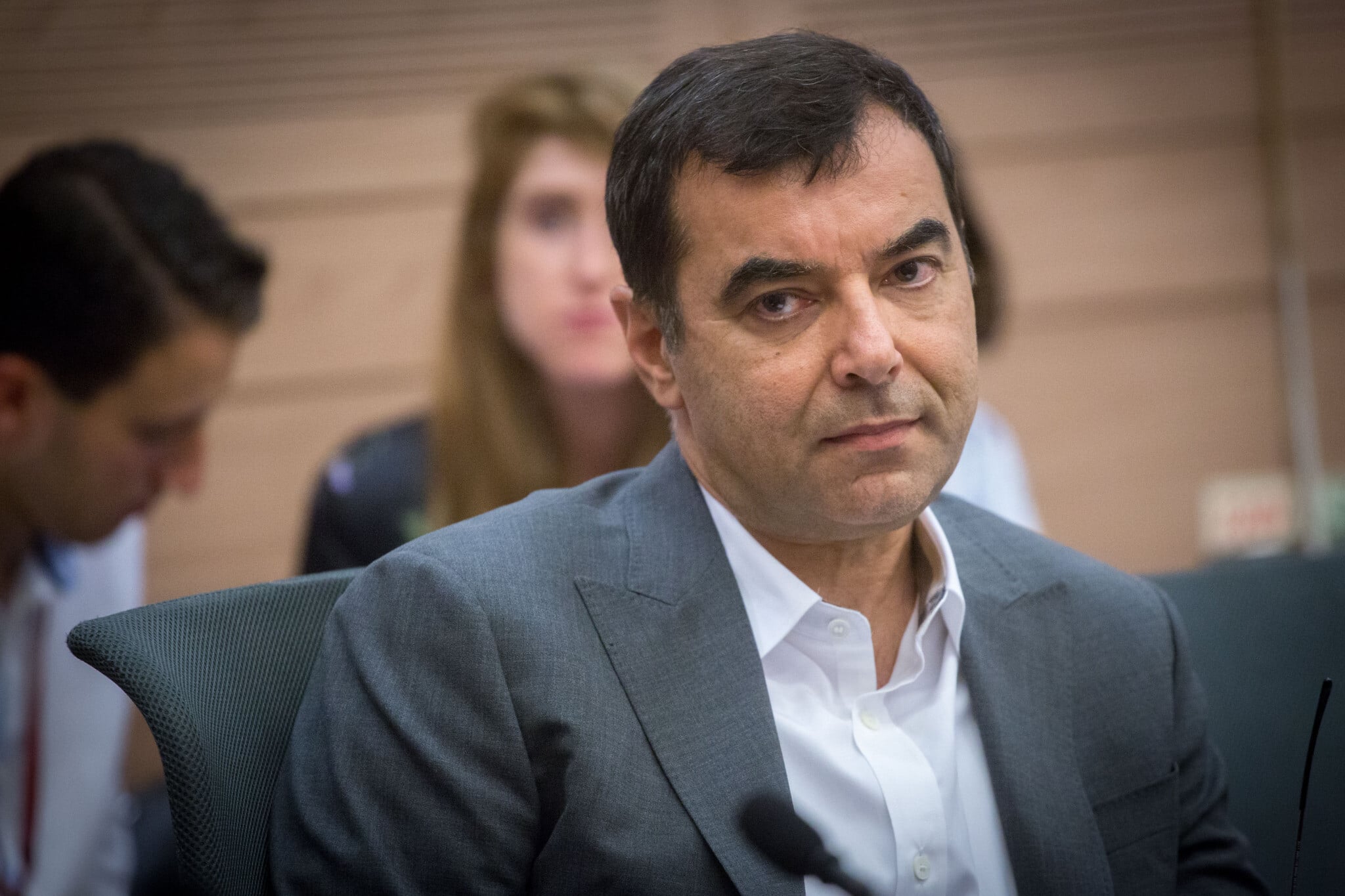
Amnon Shashua, co-founder and chairman of Mobileye, is seen at a Science Committee meeting in the Knesset, June 04, 2018. (Miriam Alster/Flash90)
Mobileye Global says founder Amnon Shashua plans to step down as chief executive officer of the pioneering Israeli firm once a successor is appointed, as the autonomous driving technology maker launches a search for its next leader.
The board will hire an executive search firm to select a new CEO, Mobileye says. Shashua will remain a director and has been offered the chairman role once a successor is in place.
Shares were up 8 percent in premarket trading.
Mobileye reports second-quarter revenue of $508 million, beating LSEG estimates of $481.24 million, helped by what Shashua describes as “strong momentum” in the company’s core business as it prepares for several advanced product launches in late 2026 and throughout 2027.
Jordan fumes over ‘flagrant violation’ as thousands of Jews visit Temple Mount
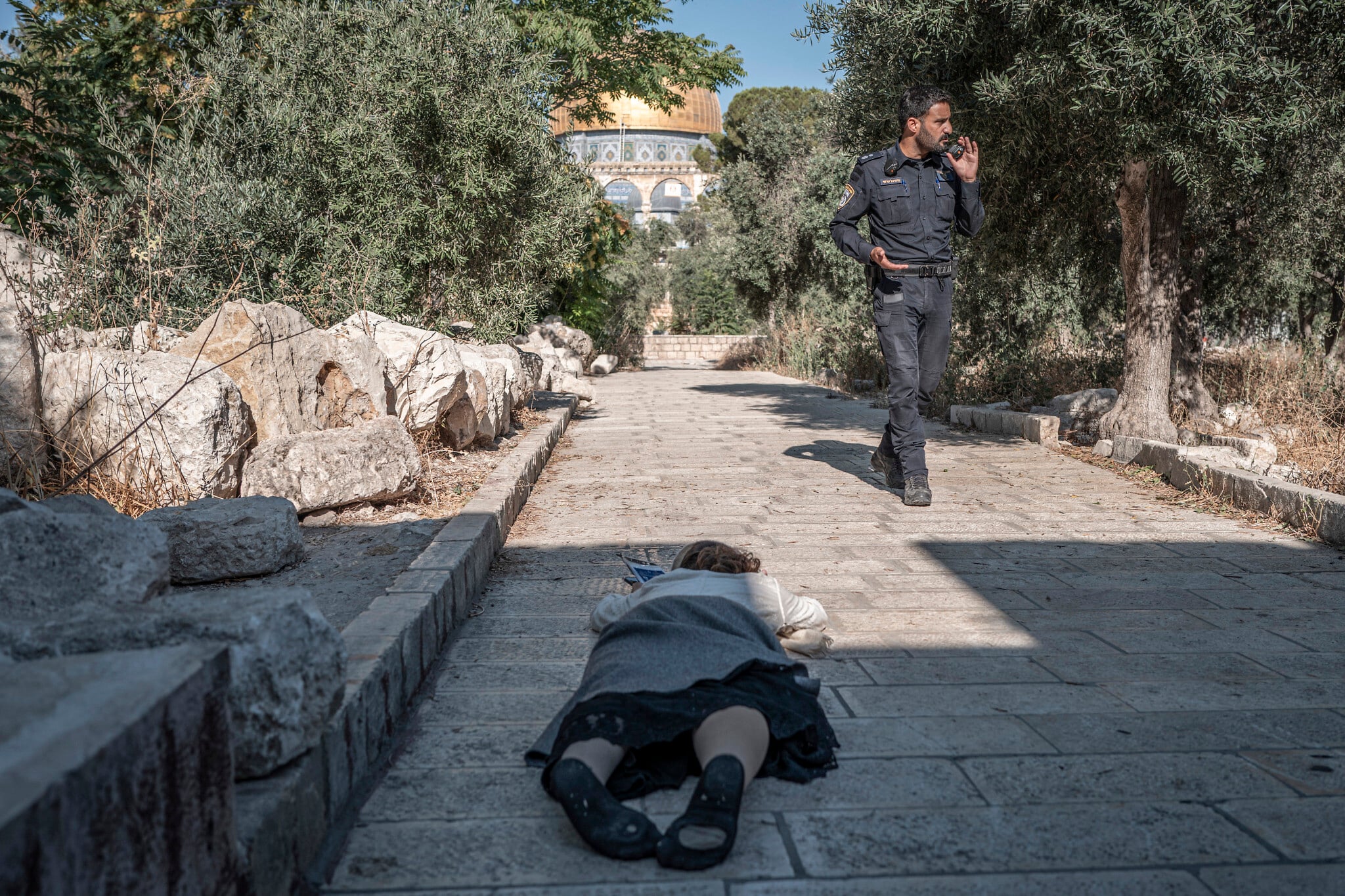
Illustrative: An Israeli Jewish woman prostrates herself on the Temple Mount in Jerusalem on July 23, 2026. (Ilia YEFIMOVICH/AFP)
Jordan strongly condemns the visit by far-right National Security Minister Itamar Ben Gvir and thousands of other Jews to the Temple Mount for Tisha B’Av prayers today.
A spokesman for Amman’s foreign ministry calls the visit “a flagrant violation of the historical and legal status quo” at the flashpoint site, condemning “continued, unacceptable incursions by ministers, Knesset members, and extremist settlers,” and also slamming Israeli police for “facilitating these actions.”
The ministry calls the compound “a place of worship exclusively for Muslims” and urges the international community “to adopt a firm position” compelling Israel to halt such activities.
The office of Palestinian Authority President Mahmoud Abbas issues a similarly worded condemnation.
Police have so far permitted some 3,000 Jewish worshipers to visit the site, with many bringing Tisha B’Av liturgy materials with them.
National Security Minister Itamar Ben Gvir was seen with a prayer book and worshiped openly at the site, along with hundreds of others, after having done the same on the fast day last year.
The Temple Mount is the holiest place in Judaism, where two biblical Temples once stood, and Al-Aqsa Mosque is the third-holiest shrine in Islam, making the site a central flashpoint of the Israeli-Palestinian conflict.
Israel captured the Temple Mount and Jerusalem’s Old City from Jordan in the 1967 Six Day War. However, it allowed the Jordanian Waqf to continue to maintain religious authority atop the mount. Under their 1994 peace treaty, Israel recognized Amman’s “special role… in Muslim holy shrines in Jerusalem.”
Hamas terrorist who took part in October 7 attack among 3 operatives killed in Gaza, IDF says
A Hamas terrorist who invaded Israel during the October 7 onslaught and two other members of the terror group were killed in an Israeli strike in the Gaza Strip this week, the IDF and Shin Bet announce.
The strike on Tuesday in the Strip’s north targeted Abdallah Jahja, a member of Hamas’s naval force.
The IDF says that Jahja invaded Israel on October 7 and during the war and recently advanced attacks “in the maritime domain” against Israeli troops and civilians.
Alongside Jahja, the army says that two other Hamas operatives were killed in the strike: Mohammed Al-Hawari and Sabhi Saqallah, both members of the Zeitoun Battalion.
In the past week, the IDF says it has killed at least five terrorists who were involved in the October 7, 2023, onslaught or who helped hold hostages in the Gaza Strip during the war, amid an ongoing revenge operation for the massacre.
A Times of Israel analysis published last week found the IDF had stepped up the large-scale retribution campaign in the past few months with the avowed aim of hunting down and eliminating every terrorist who took part in the October 7 massacre. Some of those strikes, which have come despite a ceasefire prohibiting offensive action, have also come with civilian casualties.
According to the IDF, of the estimated 5,000 terrorists who entered Israel on October 7, more than 1,200 were killed in southern Israel during the onslaught. Of the thousands who managed to return to Gaza, over 1,500 have been targeted and killed in Gaza during the past three years of war.
So far in July, the military has reported killing at least 10 October 7 terrorists, another eight terror commanders, and 29 more operatives working to restore Hamas infrastructure or advance attacks.
Iranian foreign minister says talks stalled over US’s ‘domineering’ approach
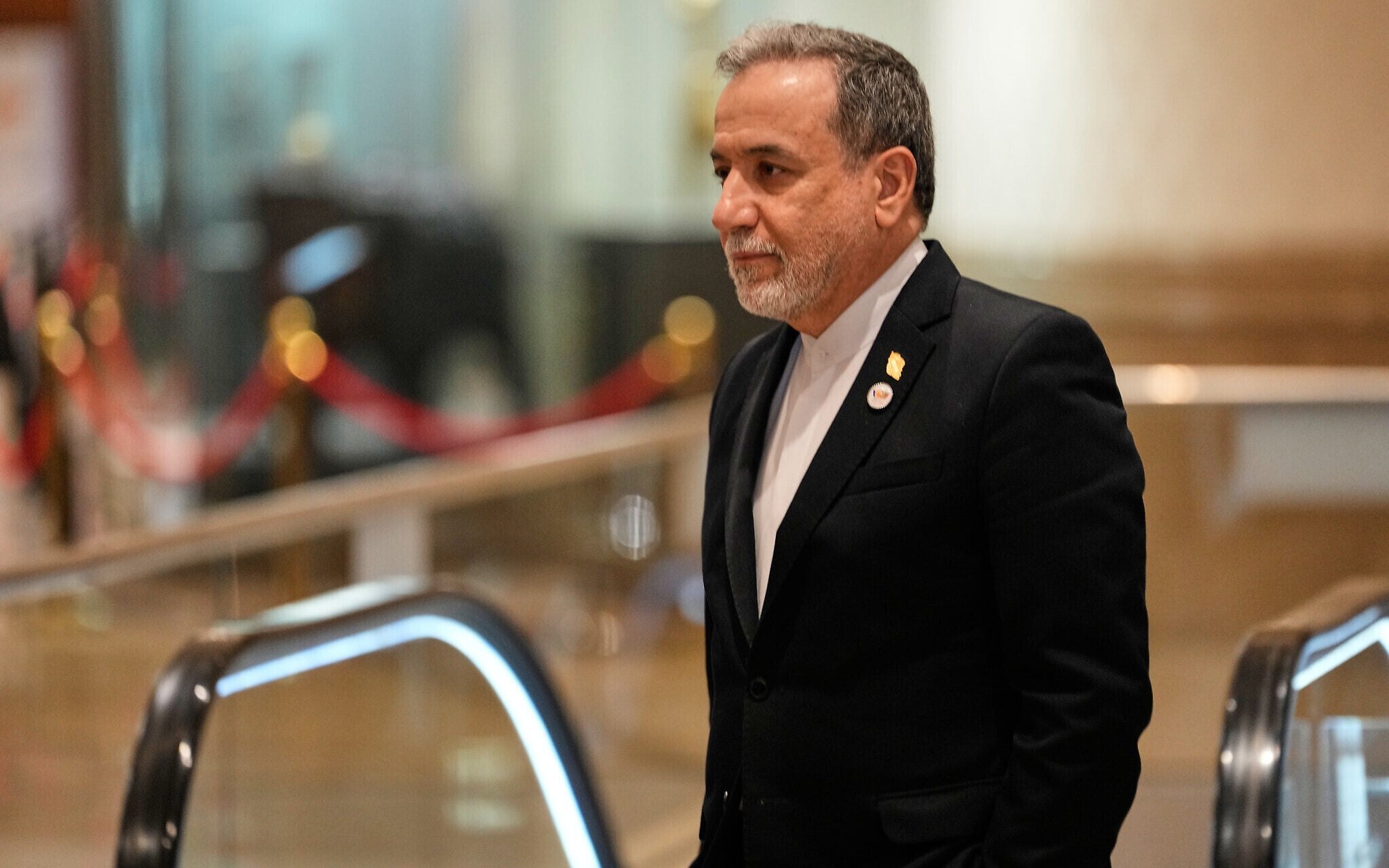
Iranian Foreign Minister Abbas Araghchi arrives for a meeting during the two-day BRICS summit in New Delhi, India, on May 14, 2026. (AP Photo/Manish Swarup)
Iranian Foreign Minister Abbas Araghchi says talks with the US cannot progress due to Washington’s “domineering” stance in negotiations.
“The problem is the American approach, which is irrational, excessive, and domineering,” he tells state media in the sideline of talks between Iranian President Mahmoud Pezeshkian and Iraqi Prime Minister Ali al-Zaidi.
“Until they understand that there is no alternative to respecting Iran’s people and their interests, there will not be the conditions for progress,” he adds.
He indicates there is no point in negotiating or exchanging messages until then. “They simply need to reconsider their policies,” Araghchi says.
After nuke deal already signed, Trump insists it’s conditioned on Saudi Arabia joining Abraham Accords
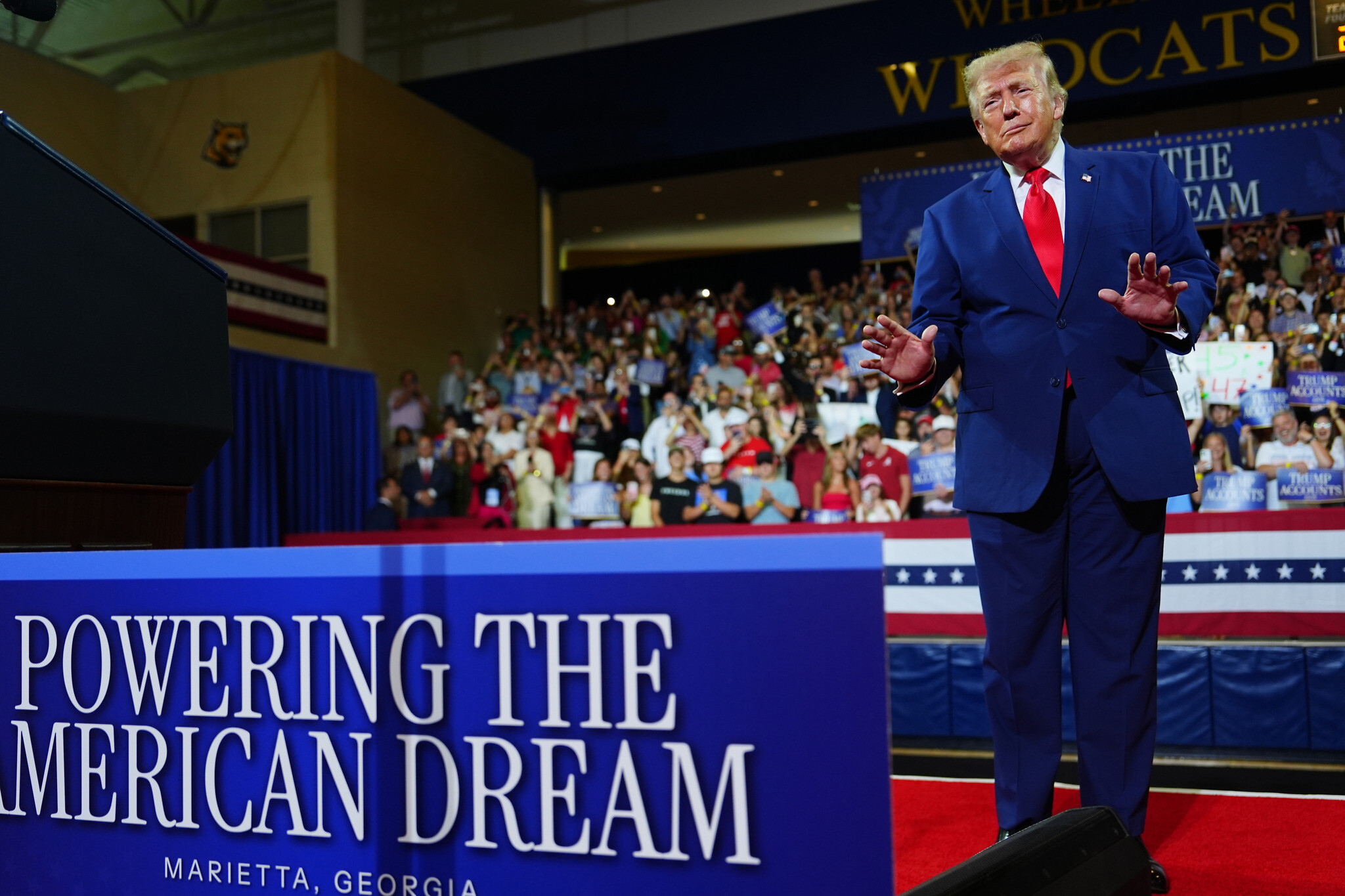
US President Donald Trump appears on stage at Wheeler High School, July 22, 2026, in Marietta, Ga. (AP/Julia Demaree Nikhinson)
A day after the United States and Saudi Arabia signed a nuclear cooperation agreement, US President Donald Trump says that the deal is “totally subject” to Riyadh normalizing ties with Israel.
Writing on Truth Social, he stresses that “there will be no enrichment of material,” indicating that no enrichment of uranium will take place on Saudi soil.
“The Civil Nuclear Deal… being made between the United States Department of Energy and Saudi Arabia, which pertains only to non-military use such as the ones that Iran and UAE (and others) already have, will be approved, but is totally subject to Saudi Arabia joining the very respected and successful Abraham Accords,” Trump says.
Former US president Joe Biden’s administration had conditioned nuclear cooperation with Saudi Arabia on the kingdom recognizing Israel, but reports on the deal had suggested that Trump had dropped the condition, along with requirements for strict safeguards on enrichment.
The US Energy Department’s announcement of the deal on Wednesday also made no mention of the Abraham Accords, in an indication that it is not part of the documents signed by both sides.
Trump’s post comes after pro-Israel advocates had expressed alarm over his administration’s decision to proceed with the civilian nuclear deal without conditioning it on Riyadh joining the Abraham Accords
Kuwait says drones hit Iraq border crossing, causing damage
Kuwait’s army says the Abdali border crossing with Iraq was hit by a drone attack on Thursday, causing material damage but no casualties.
Located in Kuwait’s northern Al-Jahra Province, Abdali is the country’s main land border crossing with Iraq and a key route for passenger and commercial traffic between the two countries.
Iran said this morning it carried out drone attacks on bases in Kuwait hosting US military assets, saying it hit warehouses, fuel tankers and an ammunition depot at three bases in the Gulf country.
It said US strikes hit a border crossing between Iran and Iraq, killing two people.
Trump says Iran will be punished for Houthi attacks on Saudi ships
US President Donald Trump warns Iran that it will be held responsible if the Houthis in Yemen continue to target Saudi shipping.
“A year ago the United States of America attacked, very powerfully, the Houthis, for their interference with commerce and trade, by shooting at ships,” writes Trump on Truth Social. “Since that time, and during our conflict with Iran, they have acted very responsibly.”
“Unfortunately, now they are starting up again, shooting at two Saudi Arabian ships last night,” he continues. “Please let this TRUTH serve to represent that if they do this again, the US will hold Iran responsible, in that the Houthis are a Surrogate and/or Proxy of Iran, and major military punishment will be inflicted upon Iran and, of course, the Houthis, themselves.”
The Iran-aligned Houthis said on Monday they were imposing a naval blockade on Saudi Arabia, and fired on two Saudi oil tankers overnight.
IDF says it’s responding to reported stabbing in northern West Bank; attacker ‘neutralized’
The IDF says it is responding to reports of a stabbing attack near the formerly evacuated West Bank settlement of Ganim, near Jenin.
“The terrorist was neutralized,” the army says, adding that further details are under review.
Palestinian Authority raises alarm as Israeli banks plan to cut ties

A street money changer exchanges currency in Ramallah, in the West Bank, on July 23, 2026. (Zain JAAFAR/AFP)
Israeli banks have informed their Palestinian counterparts that they intend to end critical banking services within weeks, Palestinian and Israeli officials say, raising fears of an economic crisis in the West Bank.
These banking links are essential for financing exports from Israel to the Palestinian Authority, including electricity, water, fuel and food, as well as for transferring wages earned by Palestinians working in Israel.
“This is not simply a technical banking matter. These channels are a cornerstone of the infrastructure that underpins our trade, our commerce, and the daily life of millions of people,” PA Monetary Authority governor Yahya Shunnar tells journalists at a briefing in Ramallah.
Five Palestinian banks that rely on Israel’s Bank Hapoalim for correspondent banking services will lose access on October 1, Shunnar says.
Palestinian banks working through Discount Bank face a September 1 cutoff.
Together, the two Israeli banks process NIS 51 billion ($ 16.5 billion) in Palestinian transactions annually, including for the 90 percent of Palestinian exports that go through Israel, Shunnar says.
Should correspondent payments end, Shunnar warns, the entire financial system would come to a halt, dragging with it trade and prices for consumer items.
“This is not a slope, it’s a cliff,” Shunnar says.
The chairman of the Association of Banks in Palestine, Maher al-Masri, warns that severing these banking ties could force more transactions into cash, increasing the risk of a banking crisis and expanding the informal economy.
Central Bank of Jordan governor Adel al-Sharkas says that his country’s banks, which conduct business in the Palestinian territories, are also exposed.
“If this link (between Israeli and Palestinian banks) is stopped… our banks find themselves holding a large shekel balance that cannot be transferred or sold,” he says.
Price of benchmark international oil contract reaches $100 a barrel amid Mideast escalation
The price of the benchmark international oil contract, Brent North Sea, has reached $100 a barrel in trading after Yemen’s Houthi rebels struck oil tankers in the Red Sea.
Brent soared more than six percent to hit the $100 level, as the attacks potentially opened a new front in the Middle East war with US President Donald Trump threatening the rebels with “major military punishment.”
The main US oil contract, West Texas Intermediate, rallied 5.0 percent to $91.19 a barrel.
French Jewish DJ sues after activists disrupt gig

French DJ and artistic director Barbara Butch poses during a photo session in Paris on March 5, 2026. (Joel Saget/AFP)
A French Jewish DJ who has become embroiled in the latest cultural boycott campaign linked to the Gaza war has filed a complaint against campaigners who disrupted one of her appearances last weekend, her lawyer says.
Barbara Butch, previously best known for her appearance at the opening ceremony of the 2024 Paris Olympics, was forced off stage during a set in the eastern city of Grenoble on Saturday.
Butch filed criminal complaints in Grenoble and Paris alleging incitement to hatred and violence, assault, and obstruction of artistic freedom among other complaints, her lawyer Audrey Msellati says.
“I wouldn’t wish on anyone — not even on my worst enemy — to feel or go through what I went through last Saturday,” the 45-year-old tells Franceinfo radio.

Campaigners and local elected figures from the hard-left France Unbowed political party had targeted her over her decision to sign a petition in support of an abandoned attempt to widen the criminal definition of antisemitism in France.
Critics saw the proposed law as seeking to muzzle campaigners who speak out in favor of Palestinian rights and against Israel’s war in Gaza, which was sparked by Hamas’s October 7 onslaught.
Butch was also falsely accused of appearing at an LGBTQ Pride event in Tel Aviv last year.
The campaign against her has caused unease even among supporters of a cultural boycott of Israel and has raised questions about who is a legitimate target for such action.
“Defending the rights of the Palestinian people is an urgent, legitimate, and necessary struggle,” a petition signed by 300 leading cultural figures in support of Butch said this week.
“But it cannot justify spreading unfounded accusations against a person because of their identity or supposed affiliations, or even because of their opinions.”
Kiryat Gat, Carmiel and Eilat join Ramat Gan in reopening public shelters amid Iran tensions
The towns of Kiryat Gat, Carmiel and Eilat have joined Ramat Gan in opening up public shelters amid escalating tensions with Iran, Channel 12 reports.
Home Front Command guidelines nationwide remain unchanged.
Municipalities often decide to reopen public bomb shelters at their own initiative, while others have kept theirs open year-round regardless of security tensions.
PM says Saudi normalization would be ‘historic leap,’ after Trump appeared to retroactively tie nuke deal to Abraham Accords
After US President Donald Trump declared that the civilian nuclear deal his administration already signed with Saudi Arabia is actually conditioned on Riyadh joining the Abraham Accords, Prime Minister Benjamin Netanyahu remarks that Saudi normalization would be “an historic leap forward” for peace.
“The joint American and Israeli military action against the genocidal regime in Teheran and Israel’s crushing of Iran’s terror axis have created the possibility to expand the circle of peace,” claims the Prime Minister’s Office.
“As President Trump has said, Saudi Arabia’s joining of the Abraham Accords would be an historic leap forward for peace in the Middle East.”
“Peace through Strength,” the PMO concludes.
Food security in Gaza improves but remains fragile — WFP
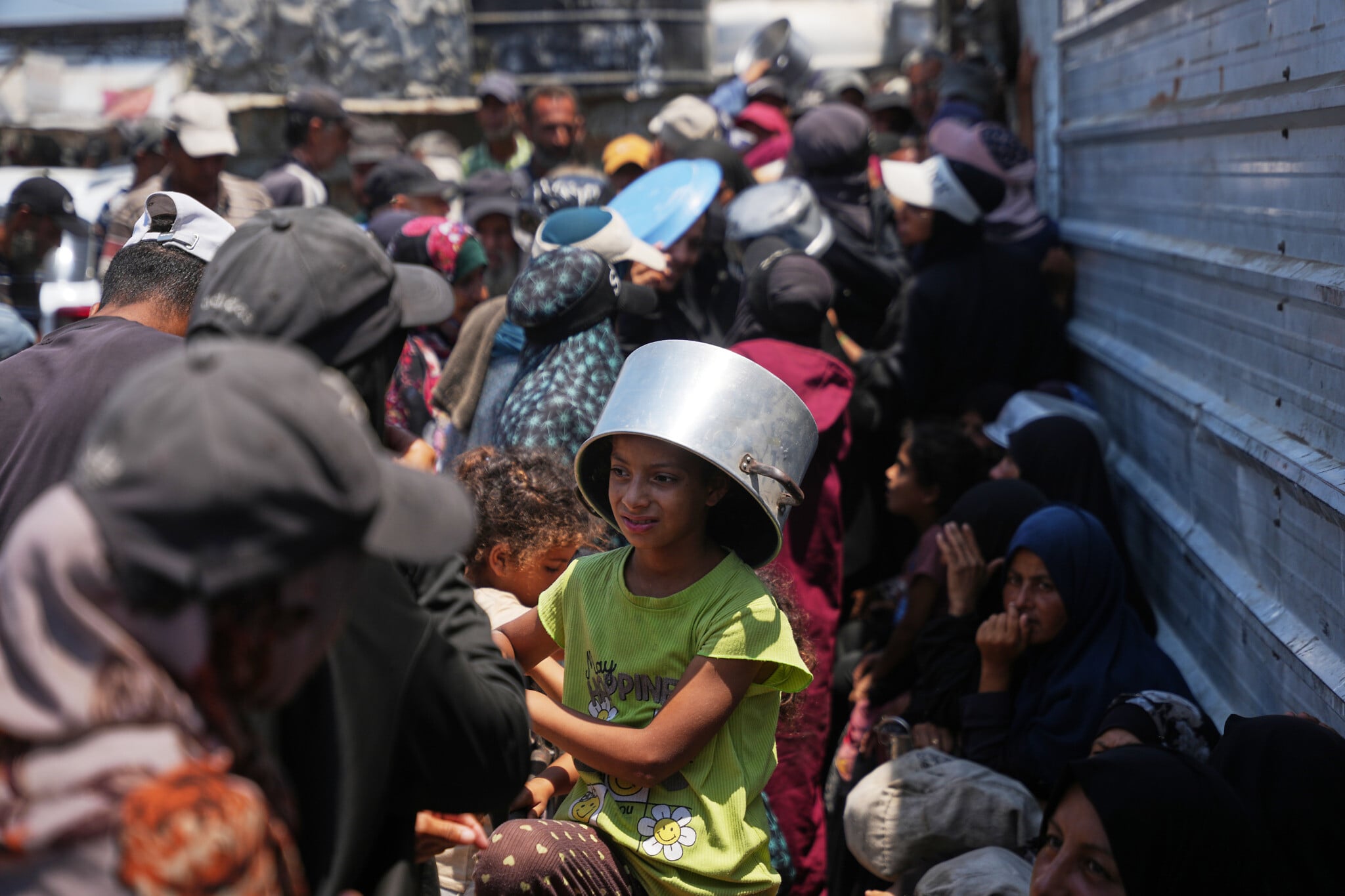
Displaced Palestinians line up to receive donated food at a community kitchen in Khan Younis, southern Gaza Strip, July 23, 2026. (AP Photo/Abdel Kareem Hana)
Food security and child nutrition have improved across the Gaza Strip, but remain fragile because only one aid crossing point is open, the UN’s World Food Programme says.
The Rome-based organization noted “an improvement in food security and child nutrition across the Gaza Strip,” but “cautioned that the progress, driven largely by expanded access to humanitarian food, nutrition, agricultural and health assistance, remains fragile.”
“While access into Gaza has improved, only one crossing – Kerem Shalom/ Abu Salem – in the south of Gaza remains open, limiting the flow of essential goods,” the World Food Program (WFP) says in a statement.
There has been a “significant” increase in food and nutritional aid since the ceasefire agreement was reached in October 2025, it says.
Food parcels were delivered to around 1.5 million people in May, while some 700,000 people received cash assistance and 60 percent of children under-5 were given nutritional support.
WFP says that there were early signs in the Strip that local food production “can be restored where farmers and herders are able to access cropland, agricultural inputs, productive assets, veterinary support and other essential services such as energy for irrigation.”
The agency points to evidence in the livestock sector, “where sheep inventories have increased by 33 percent in areas where support has been sustained”.
But it warns “this can only go so far without the removal of restrictions on what enters the Strip.”
The two-year war between Israel and Hamas severely damaged Gaza’s agricultural sector, with more than 70 percent of Gaza’s cropland not accessible and only three percent currently usable, the WFP says.
In rarity, charges filed against Israeli filmed attacking CNN crew in West Bank
Police prosecutors file charges against a young man from Jerusalem accused of attacking journalists, including a CNN media crew, while they were driving in the West Bank.
The reporters were traveling to Sinjil, a village north of Ramallah, to cover the anniversary of the killing of US-Palestinian citizen Sayfollah Musallet, 20, who was allegedly beaten to death by a group of settlers last summer.
According to a CNN report from the day of the July 11 attack, the journalists had just arrived when four settlers, wielding wooden and metal rods, approached their vehicles and tried to block the route.
The defendant, a man in his 20s, is accused of slashing the tires of one of the vehicles with a knife, then jumping atop the second car’s hood and hitting its windshield with a pole.
Israeli settlers armed with clubs, rocks and a knife blocked our way and attacked us & another group of journalists today in the occupied West Bank.
At the same location where settlers beat US citizen Saif Musallet to death, exactly one year ago today.
Our full report will air on… pic.twitter.com/EyvG15AsSo— Jeremy Diamond (@JDiamond1) July 11, 2026
Police arrested the defendant and three other suspected assailants at the scene shortly after the attack.
The defendant is charged with making threats, unlawful possession of a knife and causing damage to a car, Haaretz reports.
According to the Hebrew daily, police are continuing to probe the other three suspects, who have not yet been indicted.
Such indictments for settler attacks on Palestinians are highly rare, with convictions even less common.
Hezbollah calls Lebanon president’s US visit ‘submission’ to foreign power
The Iran-backed Hezbollah terror group brands Lebanese President Joseph Aoun’s recent visit to Washington a failure and says it showed the government’s submission to a foreign power.
In a statement, the group’s lawmakers say the visit revealed “the extent of subservience and submission to foreign tutelage,” adding that it “failed to achieve… an American commitment to the withdrawal of the enemy from our land,” referring to Israel.
Israeli authorities issue nationwide ban on lighting fires until end of August
The Fire and Rescue Service issues a nationwide ban on the lighting of fires until the end of August, amid increasingly frequent wildfires in the dry season.
The ban, signed by Fire and Rescue Service chief Eyal Caspi, enters into force today and lasts until midnight on August 31.
Israelis are still permitted to light fires in barbecue grills and other vessels that are “designed for food preparation or heating,” the agency says.
The order also allows for fires to be lit in open areas that have been approved for that purpose by local government, the Nature and Parks Authority, or the Fire and Rescue Service.
Iran reportedly flew IRGC commanders, missile gear to Yemen’s Houthis
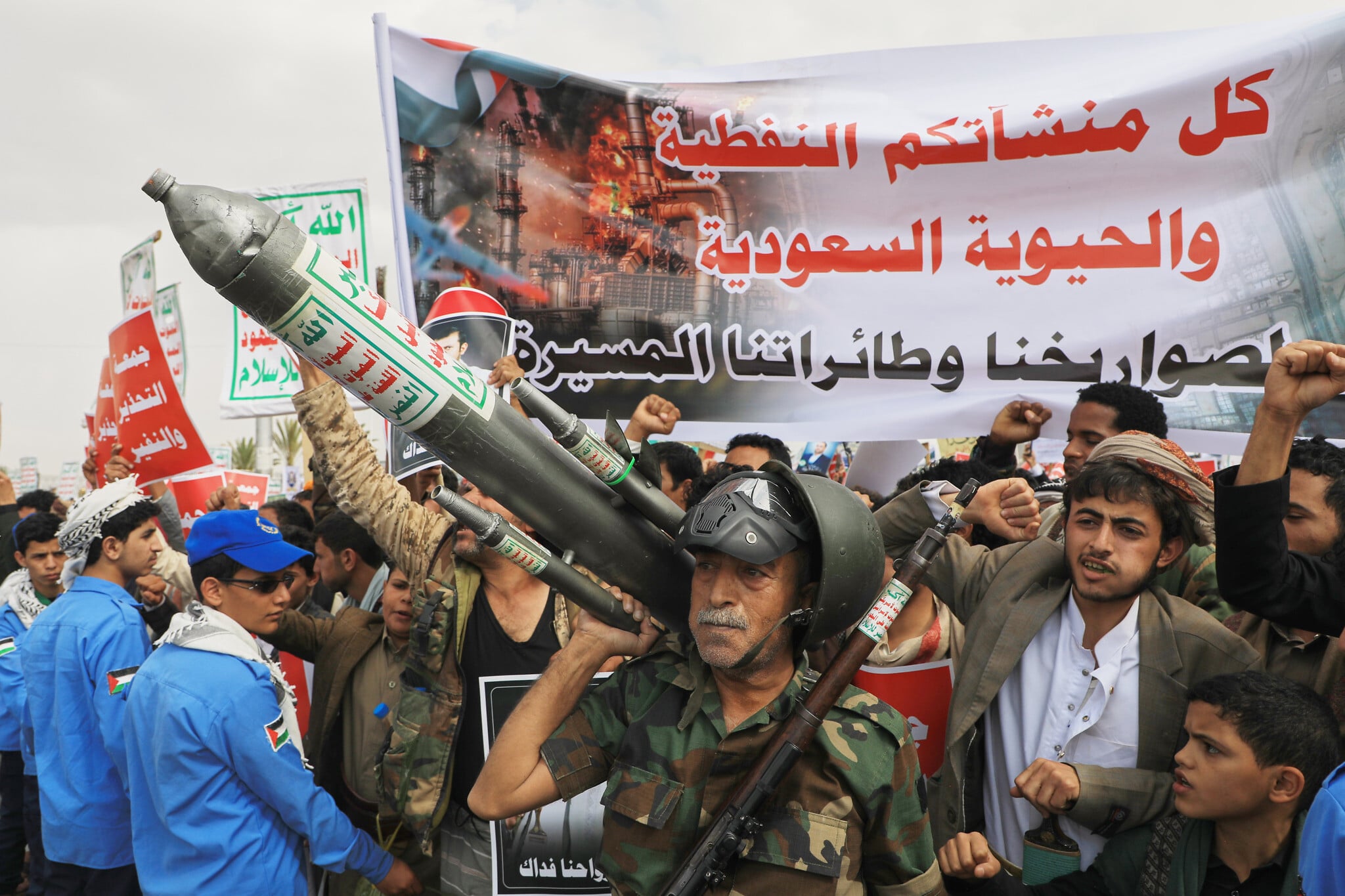
Houthi supporters hold a rally in Sanaa, Yemen, July 17, 2026, against the Saudi-led coalition. (AP Photo/Osamah Abdulrahman)
Iran flew Islamic Revolutionary Guard Corps (IRGC) commanders, military advisers and missile- and drone-related equipment into Yemen this month, according to four sources, in a move that suggests Tehran is seeking to strengthen the ability of its Houthi allies to threaten Red Sea shipping.
Four sources familiar with the matter, including two Iranian sources, Yemen’s information minister and a regional security analyst, say Iran transferred the IRGC personnel and military-related equipment on a flight from Tehran to Yemen on July 13 — a development that has not been previously reported.
The two Iranian sources tell Reuters that between 10 and 21 IRGC personnel, including senior commanders, were on the Mahan Air flight.
The plane was originally bound for the Houthi-controlled capital Sanaa, but diverted to the Red Sea port city of Hodeidah after the airport came under attack by the Saudi-backed Yemeni government.
“The IRGC commanders traveled there to support Houthi operations and provide training on new missile systems,” one of the sources says, adding that Iran also sent gold on the aircraft to fund Houthi activities.
The deployment offers fresh evidence of Iran’s efforts to bolster the Houthis, who have been in a civil war against the Saudi-backed, internationally recognized Yemeni government for more than a decade and have attacked Gulf neighbors, and Israel, with missiles and drones.
Times of Israel staff contributed to this report.
UN chief: Mideast situation on ‘edge of the unimaginable’
Ongoing conflict in the Middle East has pushed the region to the “edge of the unimaginable,” UN Secretary-General Antonio Guterres warns.
“The situation is getting out of control. It is teetering on the edge of the unimaginable. The region is being pulled into an ever-widening circle of confrontation. One crisis feeds another. One escalation triggers the next,” Guterres tells a Security Council meeting.
“As this dynamic spreads, the political objectives are becoming increasingly obscured by the confrontation itself.”
Indian worker found dead in Jerusalem apartment; police detain suspect from Eilat
A foreign worker from India was found dead in an apartment in Jerusalem’s Katamon neighborhood today, in what police are probing as murder.
Police saw the victim “stretched out in a house with a lot of blood surrounding him,” says Cdr. Yuval Reuven, the chief of the Moriah station. The exact cause of death remains unclear.
Police arrested a 31-year-old man from Eilat on suspicion of involvement in the killing and have transferred him for interrogation.
US warns against destabilizing Palestinian banking sector after Israeli banks move to cut ties
A street money changer exchanges currency in Ramallah, in the West Bank, on July 23, 2026. (Zain JAAFAR/AFP)
The US State Department warns against destabilizing the banking sector in the West Bank following a decision by two Israeli financial institutions to cease providing correspondent banking services for Palestinian banks in the coming weeks.
“The United States recognizes the importance of stable correspondent relationships to the implementation of President Trump’s Peace Plan,” a State Department spokesperson says in a statement to The Times of Israel.
Without specifically noting the Discount and Hapoalim decisions to end correspondent services in the coming weeks, the spokesperson welcomed Finance Minister Bezalel Smotrich’s recent decision to sign a waiver granting the banks indemnity to continue providing those services through the end of the year.
“Destabilizing the banking sector and driving people towards cash and other unregulated payment systems is the antithesis of anti-money laundering best practices,” the spokesperson says.
“We expect Palestinian banks and the Palestinian Monetary Authority to enact and enforce strict reforms that conform to international anti-illicit financing standards and safeguards Israel has placed on the use of its currency,” the statement notes, adding that Washington would continue to hold the PA accountable for pledged reforms.
PMO said to fume after Likud MK claims Iran attack could take place this weekend
Channel 13 reports that Prime Minister Benjamin Netanyahu’s office is fuming after Likud backbencher Moshe Saada suggested that a major attack on Iran could well take place this weekend.
“Everyone knows that we’re on the verge of an attack in Iran — perhaps even this weekend. Those are the estimates,” Saada told Channel 14 earlier today.
Saada later clarifies that he was referring to a US attack on Iran — not an Israeli one. It’s unclear whether the backbencher is privy to such intelligence though.
לשכת נתניהו זועמת על הדברים האלה שאמר ח״כ סעדה בראיון לערוץ 14 ״אנחנו לקראת תקיפה באיראן – אולי אפי׳ בסופ״ש״ pic.twitter.com/qSohMmF230
— מיכאל שמש Michael Shemesh (@shemeshmicha) July 23, 2026
ToI poll: Eisenkot’s party reaches highest-yet total of 25 seats, building on lead over Likud
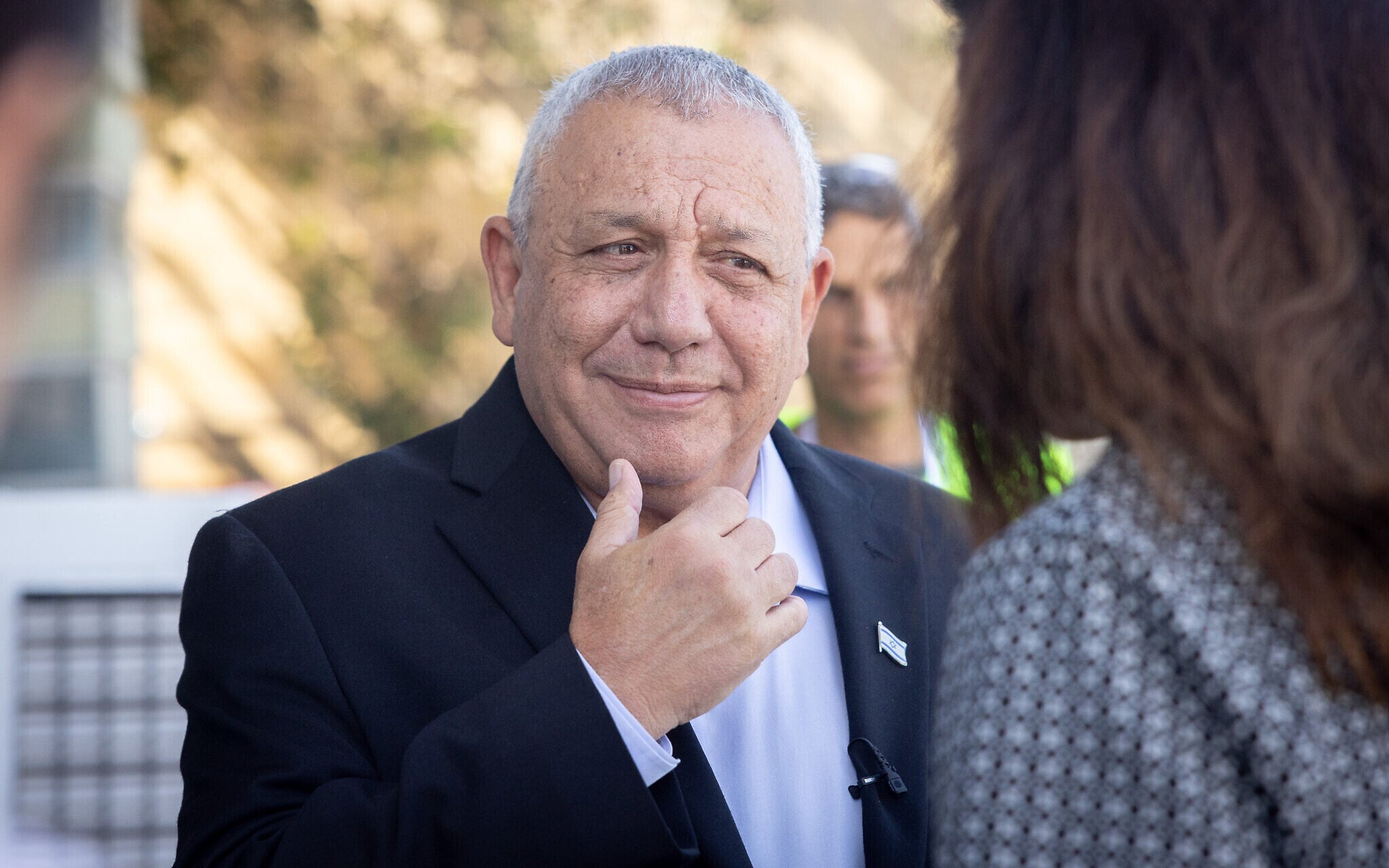
Yashar party leader Gadi Eisenkot attends a conference in Tel Aviv on July 12, 2026. (Miriam Alster/Flash90)
Gadi Eisenkot’s Yashar Party has reached a record number of 25 seats in a new poll from The Times of Israel’s Zman Yisrael sister site.
The poll shows Yashar has expanded its lead on Prime Minister Benjamin Netanyahu’s Likud party from two seats in last week’s Zman poll to four seats this week.
Likud has plummeted by 10 seats since the February 28 start of the Iran war, when Zman had the party at 31 seats, compared to 21 seats today.
Naftali Bennett’s Together Party also continues to struggle, dropping two seats from last week’s poll to 13. The party polled at 30 seats after Bennett announced his merger with Yair Lapid in April.
Despite Yashar’s boost, the breakdown between the blocs remains largely unchanged, with Eisenkot likely unable to form a coalition without help from one of the majority-Arab parties.
Netanyahu’s current coalition would receive 51 seats, compared to the Jewish-majority opposition parties that would receive 58 seats, with the two Arab-majority parties netting 11 seats in total.
The new party headed by former ministers Chili Tropper and Yoaz Hendel does not cross the electoral threshold; nor does Benny Gantz’s party with Dedi Simhi.
The Zman survey was conducted online and over the phone today and yesterday, with a representative sample of 500 Jewish and Arab respondents participating and a 4.4% margin of error.
The results were as follows:
Yashar: 25 seats
Likud: 21 seats
Together: 13 seats
Yisrael Baytenu: 10 seats
Democrats: 10 seats
Shas: 9 seats
United Torah Judaism: 8 seats
Otzma Yehudit: 8 seats
Hadash-Ta’al: 6 seats
Religious Zionism: 5 seats
Ra’am: 5 seats
Mossad says it foiled Iranian plot to infiltrate Israel, attack senior officials
Working with foreign intelligence services, Israel foiled an Iranian plot to send operatives into Israel to harm senior Israeli officials, says the Mossad intelligence agency in a statement.
The effort, led by Iran’s Intelligence Ministry, involved turning to criminal organizations, who would in turn recruit people inside of Israel or who could enter Israel for gathering intelligence on a target, then carrying out an attack.
Two criminals living in Iran under the protection of the Intelligence Ministry — Baba Mahuzadeh Haji Jafan, also known as ‘Babak’; and Mehmet Nadim Ya’it, also known as ‘Nadim’ — recruited Turut Ozkor, a criminal living in France who went by the nickname ‘Philip.’
The handlers of Babak and Nadim in the Iranian Intelligence Ministry are named by the Mossad as Asadollah Behzad Oskhari, Vahid Matzoumi, Mohammad-Hossein Zoghi, and Hamid Qasemi.
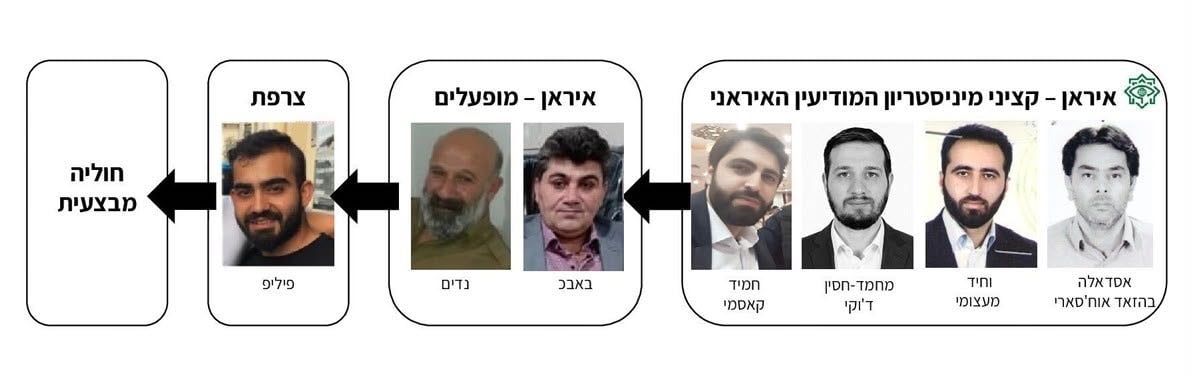
Oskhari was killed in Israel’s 12-day bombing campaign against Iran in 2025, and was a key figure in plots to attack Jewish and Israeli targets worldwide, says the Mossad.
Philip was tasked with recruiting a cell of foreign nationals who would enter Israel, says the Mossad.
He traveled to Iran on several occasions to meet handlers and be paid, according to the statement.
Philip was expelled by France, while Babak and Nadim remain in Iran.
“Despite the attempt to avoid an Iranian fingerprint, the proxy method repeatedly demonstrates the carelessness of the operatives on the ground, leading to the exposure of their handlers in Iran,” says the Mossad.
The Mossad worked with Shin Bet and foreign intelligence agencies to uncover the network, says the statement.
Numerous Iranian attempts to direct terror attacks inside Israel in the past two years have been foiled, according to the Mossad.
US House votes to halt Iran war, in another symbolic rebuke of Trump
The Republican-led US House of Representatives backed legislation on Thursday directing President Donald Trump to halt US military action against Iran, the latest symbolic rebuke of the Republican president from Congress.
The vote was 214-208 in favor of the war powers resolution as four Republicans joined Democrats in voting for it.
The resolution, introduced by Representative Pramila Jayapal, a Washington Democrat, directs Trump “to remove the use of United States Armed Forces from hostilities” against Iran unless Congress authorizes it. However, it was largely symbolic. Lawmakers have passed similar resolutions repeatedly in recent months, but they have not led to cessation of the war.
The four Republicans who voted in favor were Tom Barrett of Michigan, Brian Fitzpatrick of Pennsylvania, Warren Davidson of Ohio and Thomas Massie of Kentucky.
Trump’s Republicans hold slim majorities in the House and Senate.
The Senate was due to vote on a separate, but similar, resolution later on Thursday.
The vote comes after Trump announced a ramp-up in attacks on Iran, and the deaths of more US service members. Trump on Thursday promised “major military punishment” for Iran and its Houthi allies, after the Yemeni fighters struck two Saudi oil tankers in the Red Sea, extending the Middle East war to a second major shipping chokepoint.
Additionally, two weeks since the effective collapse of an interim truce meant to end the war, the US military launched another nightly round of airstrikes on Iran, prompting Iran to fire at US bases in neighboring countries.
Trump claims he’s close to deciding on largest-ever attack against Iran
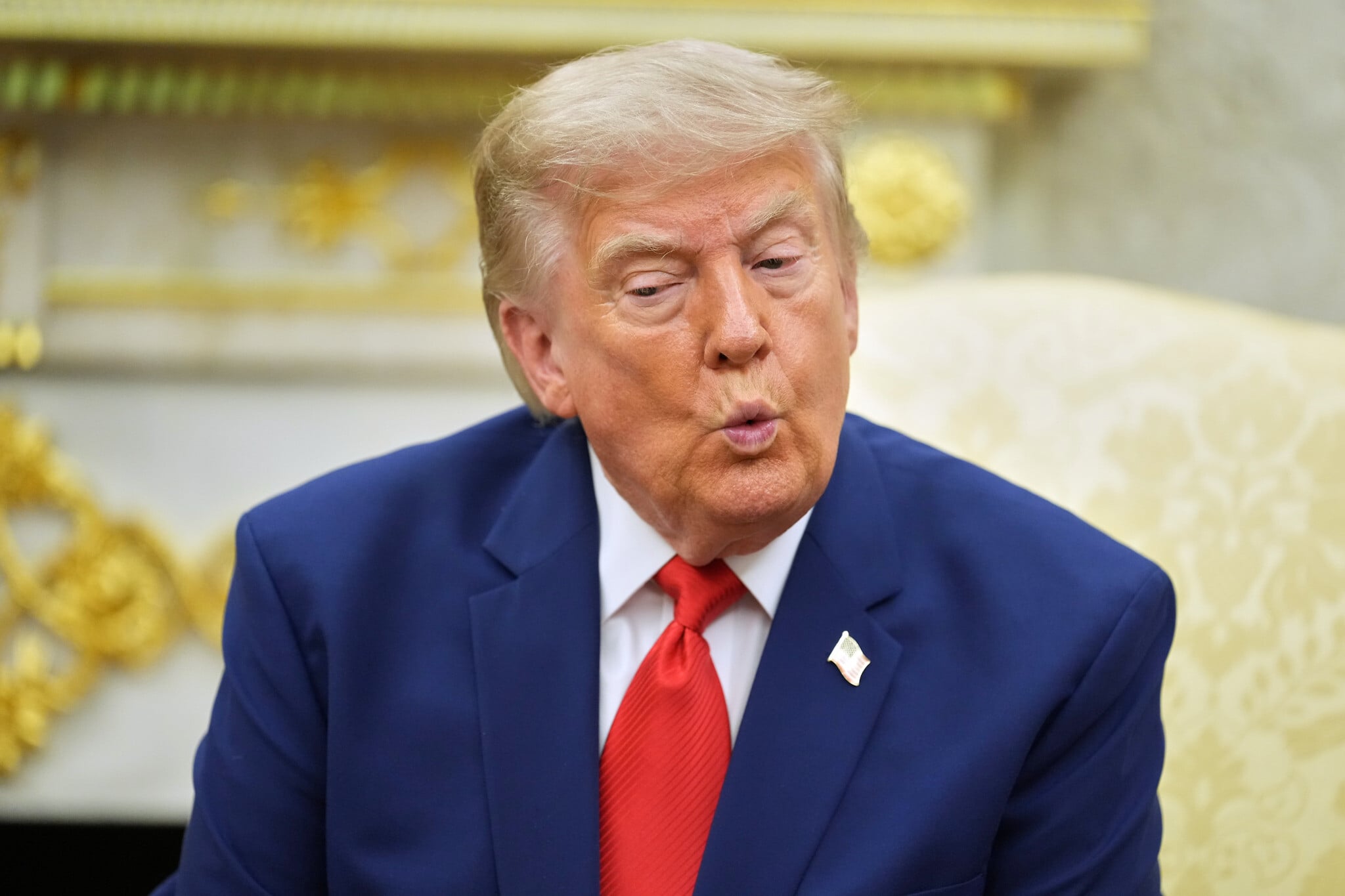
US President Donald Trump speaks during a meeting with Lebanese President Joseph Aoun in the Oval Office at the White House, July 21, 2026, in Washington. (AP/Mark Schiefelbein)
US President Donald Trump is close to making a decision on a major strike on Iran, one larger than Operation Epic Fury, he tells Axios.
“I am considering a massive attack. Bigger than ever before. I am close to making a decision. We are all set for it,” he says.
Trump regularly makes bombastic threats against Iran without carrying them out.
Israel “would join in two minutes if I asked them to,” Trump says, adding that “we don’t need anybody.” He also says there would be “consequences” if Israel joined in, likely referring to Iranian attacks on Israel.
Trump says that the Iranians need to be struck more before they’ll be ready to make a deal.
“They haven’t received enough pain yet,” he says.
Trump says he would meet Netanyahu if he flies to US
US President Donald Trump says that he would meet with Prime Minister Benjamin Netanyahu if he flies to the US next week for the funeral of late senator Lindsey Graham.
“Relations with Bibi are very good. I would meet with him if he is here,” he tells Axios.
Netanyahu has said he wants to attend the funeral, but no firm plans have been made.
IDF identifies lightly wounded target of northern West Bank stabbing as a soldier
A paratrooper was lightly injured in the stabbing attack in the northern West Bank earlier, according to the military.
The Palestinian attacker arrived near an army post located at the site of the formerly evacuated settlement of Ganim, where he stabbed a soldier of the Paratroopers Brigade.
Other soldiers returned fire, killing the Palestinian stabber, the army adds.
White House says Trump hasn’t spoken to MBS since adding Abraham Accords condition to already-signed nuke deal
White House Press Secretary Karoline Leavitt says US President Donald Trump has not spoken to Saudi Crown Prince Mohammed bin Salman since he announced earlier today that the civilian nuclear deal that the US already signed yesterday with Riyadh is conditioned on the Gulf country joining the Abraham Accords.
Leavitt says this has long been Trump’s position, even though it wasn’t mentioned in the US Energy Department’s announcement of the deal.
Kozo Okamoto, 1972 Israel airport attacker, dies

Kozo Okamoto (C) -- the only surviving member of the three-man “Japanese Red Army” (JRA) unit that killed 26 people in an attack on Israel’s Lod airport on May 30, 1972 -- attends a ceremony organized by members and supporters of the PFLP Palestinian terror group that planned the attack, to mark the 50th anniversary of the Lod terror attack in Lebanon’s capital Beirut on May 30, 2022. (JOSEPH EID/AFP)
Kozo Okamoto, who carried out a deadly terror attack on an Israeli airport on behalf of the Popular Front for the Liberation of Palestine, has died in Beirut aged 78, the group says.
In a statement, the PFLP mourns “militant comrade Kozo Okamoto… who passed away today” in Beirut’s southern suburbs, a stronghold of Iran-backed Hezbollah terror group.
He was part of a three-man terrorist squad from the Japanese Red Army that killed 26 people on May 30, 1972, at Lod airport — now known as Ben Gurion — near Tel Aviv in an attack planned by the PFLP.
The other two attackers died, but Okamoto was wounded and captured, and eventually sentenced to life in prison in Israel.
He was released in a 1985 prisoner exchange and had long lived in Lebanon.
Iran media reports US strike on island in Hormuz
The Iranian news outlet Tasnim reports that a US missile had hit a site near the town of Suza on Qeshm Island, in the disputed Strait of Hormuz.
“The relevant authorities are currently assessing the extent of the incident and the possible level of damage,” the agency says.
Saudi source on Trump’s normalization demand: Tweets don’t overturn signed deals
After US President Donald Trump claimed the civilian nuclear deal his administration signed yesterday with Saudi Arabia would actually be conditioned on Riyadh joining the Abraham Accords, American journalist Laura Rozen quotes an unnamed Saudi source who says Trump’s demand is too late.
“It was signed. So nothing to renegotiate,” the Saudi source says. “Tweets don’t overturn signed agreements.”
IAEA says awaiting US-Saudi request on nuclear deal verification
The UN nuclear watchdog is aware of a US-Saudi plan to ask it to carry out verification work in relation to the nuclear cooperation deal they are discussing, but has yet to receive a request from them, it says.
“We look forward to receiving the request for such verification and to working with the US and KSA (Kingdom of Saudi Arabia) in ensuring the implementation of those measures,” the International Atomic Energy Agency says in a statement.
Senate backs Trump after House votes to curb his Iran war powers
The Republican-controlled Senate votes down a resolution directing US President Donald Trump to halt military action against Iran unless he obtains Congress’ approval, hours after the GOP-led House passed a similar measure.
The Senate voted 49 to 47 to block its own war powers measure within hours of the House vote.
The House vote, the latest symbolic rebuke of Trump from Congress, was 214-208 in favor of the war powers resolution as four Republicans joined Democrats in voting for it.
In the Senate procedural vote, Republican Susan Collins of Maine voted with Democrats in favor of the resolution and Democrat John Fetterman of Pennsylvania voted with Republicans against it. Four Senators did not vote.
OPEC+ likely to raise oil output targets from September again, sources say
OPEC+ oil-producing countries will likely agree a further hike in their output targets from September when they meet on August 2, three sources say, even though the US war with Iran is again hindering some of the group’s members from pumping more.
Seven core OPEC+ members – Saudi Arabia, Russia, Iraq, Kuwait, Algeria, Kazakhstan and Oman – will likely increase their output target by about 188,000 barrels per day for September, the same as for June, July and August, the sources say.
OPEC and Russian authorities did not immediately respond to a request for comment.
Assailant who stabbed soldier in northern West Bank identified as PA police officer
The Palestinian assailant who stabbed a soldier in the northern West Bank earlier is identified by Palestinian media as a police officer in the Palestinian Authority.
Yazan Fakhri Sawafta, 25, from Tubas, lightly injured a soldier at the site of the formerly evacuated settlement of Ganim before being shot dead by troops.
عاجل | وزارة الصحة تعلن استشهاد الشاب يزن فخري صوافطة (25 عاما) من مدينة طوباس برصاص الاحتلال قرب دوار حداد شرق جنين، عصر اليوم. pic.twitter.com/JJEaK6I2Ae
— القسطل الإخباري (@AlQastalps) July 23, 2026
PA says public employees will only be able to receive 50% of salaries this month due to Israeli restrictions
The Palestinian Authority Finance Ministry announces that it will only be able to pay 50 percent of public sector salaries this month.
Paychecks are slated to be issued this week, with minimum salaries not to fall below NIS 2,000 ($650) after the cuts.
The PA is facing its more dire financial crisis in years amid Israel’s withholding of billions of dollars in funds that belong to Ramallah.
Katz claims Israel ‘prepared for every possibility’ after security assessment on Iran tensions
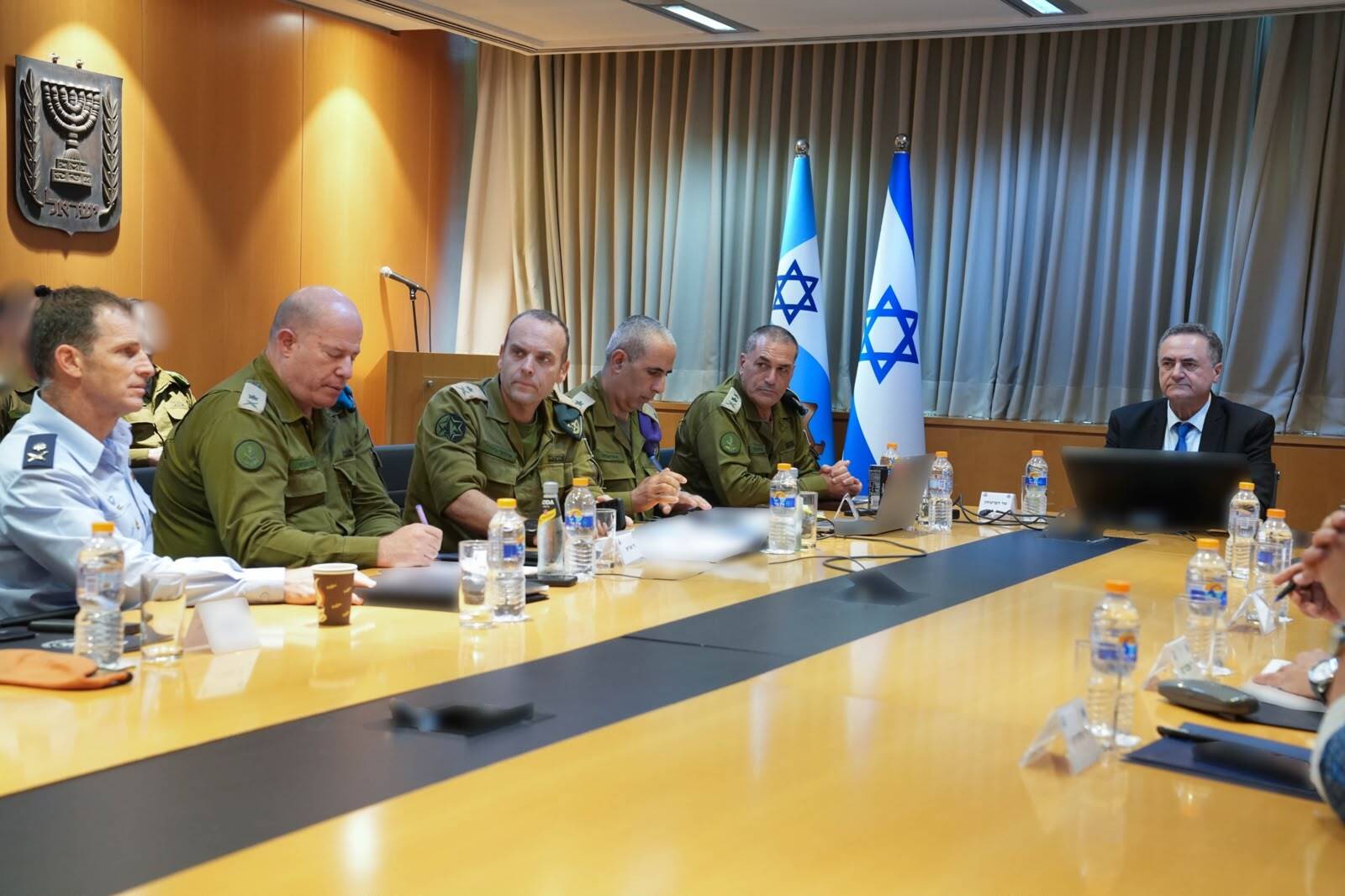
Katz met with IDF Chief of Staff Lt. Gen. Eyal Zamir and other top officers.Defense Minister Israel Katz (right) meets with the IDF's top brass in his office, July 23, 2026. (Ariel Hermoni/Defense Ministry)
Defense Minister Israel Katz, during a security assessment today, says Israel is “prepared for every possibility” amid the tensions with Iran.
“If Iran attacks Israel, it will suffer a crushing blow,” he adds, according to remarks published by his office.
IDF says settlers raided home abandoned by Palestinians after repeated harassment; no arrests made
The military says Israeli settlers entered the home of a Palestinian family in a West Bank village overnight, which had recently been abandoned following repeated harassment.
Earlier this week, Haaretz reported that the Tobasi family in Jalud, near Nablus, had been effectively trapped for the past two weeks after two settler outposts were established nearby. A family member said the settlers had threatened to cut off their electricity.
On Wednesday, Raad Nasser, head of the Jalud village council, told The Times of Israel that the Tobasi family left their home, seemingly acceding to the days of settler harassment aimed at forcing the family to abandon their home.
The IDF says that overnight, troops and Border Police officers were dispatched to the outskirts of Jalud “following a report that Israeli civilians had entered a Palestinian home in the village.”
ניסינו להגיע היום לבית משפחת טובאסי, שהייתה נצורה בביתה למעלה משבועיים. כלואה בין שני מאחזים.
לכשעברנו ליד המאחז הראשון בליווי כח מג״ב, היוצרות התהפכו – והליווי הפך לחסימתנו עבור ״מניעת חיכוך״, תוך שהמתנחלים משוטטים בחופשיות לצד הכח.
כעבור כשעתיים צו שטח צבאי סגור לישראלים… https://t.co/tCIMPYSpJt pic.twitter.com/4kDA5KI0a4
— Matan Golan (@MatanGolanPhoto) July 22, 2026
“Upon the forces’ arrival, the house was empty, and it appeared that the Palestinian family had left the premises,” the military says in response to a query.
The military says that before the family left their home, it had been declared a closed military zone, claiming the move was aimed at “preventing harm to the family and their property and preventing the development of clashes in the area.”
“The forces continue to operate in the area at this time to enable the family to return to their home safely,” the IDF claims.
There have been multiple “incidents of home intrusions and provocations by Israeli civilians against local residents” in this part of the village, the military says, adding that recently the severity of such incidents has increased.
In light of the settler attacks, the military says Israeli forces “increased their activity in the area to prevent incidents of this kind.”
“Upon receiving any report or allegation of an attack or the arrival of Israeli civilians in the area, the forces are dispatched to the scene to restore order,” the army adds.
Despite being aware of the repeated harassment of Palestinians in the area by settlers, the army has not made any arrests and no enforcement measures have been taken against the nearby illegal outposts.
Netanyahu to hold Friday security consult, as Israel unsure what Trump will do against Iran
Prime Minister Benjamin Netanyahu will convene top ministers and aides for a national security meeting tomorrow, the office of one of the ministers tells The Times of Israel.
The meeting comes amid new threats from US President Donald Trump against Iran.
But Israeli officials are uncertain where things are heading. “Everything depends on Trump,” a senior official tells Channel 12. “We don’t know where he is heading. He is maneuvering between a major escalation, and a gradual escalation.”
Israeli security officials assess that if certain sites within Iran are hit by US strikes, the Islamic Republic could attack Israel.
If that happens, “Israel will respond, and will respond with force,” says an official.
IDF launches raids of West Bank villages after soldier stabbed
The IDF says troops have launched raids in the West Bank towns of Beit Furik and Tubas, following stabbings carried out by Palestinian residents earlier.
In the first incident, a civilian was stabbed and seriously wounded near the settlement of Elon Moreh by two Palestinians from Beit Furik, who were then shot dead.
Later in the day, an IDF paratrooper was lightly injured in a stabbing attack in the northern West Bank. The attacker, from Tubas, was shot dead.
The military says troops raided Beit Furik and entered the home of one of the two attackers, as well as questioned several suspects in the area.
Soldiers also raided Tubas and entered the attacker’s home, the army adds.
UK says armed forces ready to defend country after Iran warning over US bombers
Britain says that its armed forces were ready to protect the country from any attack after Iran’s Revolutionary Guards issued a warning over allowing US bombers to fly from UK bases.
“Our Armed Forces are ready to keep the United Kingdom safe from any kind of attacks, whether it’s on our soil or from abroad. The UK stands ready 24/7 to defend itself,” a government spokesperson says.
“This includes through operating a layered approach to air and missile defence, provided by Royal Navy, British Army and Royal Air Force assets equipped with a range of advanced capabilities, working closely with our NATO allies,” they add.
Manchester police admit having prior access to synagogue attacker’s phone, which went unchecked for extremist content
Police had access to the phone of the British-Syrian national before he carried out a deadly ramming and stabbing attack on a Manchester synagogue last year. However, officers did not analyze the phone for radical content, which they later learned was on it.
The admission was made by Greater Manchester Police Chief Constable Sir Stephen Watson in an apology statement.
Jihad al-Shamie had been previously arrested for alleged rape, at which point his devices were seized by police. Shamie was out on bail in October 2025 when he rammed his car into the gates of Heaton Park Hebrew Congregation as congregants gathered for Yom Kippur morning prayer services. He stabbed Melvin Cravitz, 66, to death after disembarking, then tried to storm the synagogue before police shot him dead. Adrian Daulby, 53, died from a single gunshot wound to the chest fired by a police officer responding to the situation.
“In conducting an internal review, it became apparent that GMP had seized Al-Shamie’s mobile devices, at the point of each arrest. The significance of the data contents of these devices was substantial in respect of evidencing an extremist mindset,” Watson says.
“I am disappointed at the prospect of adding to the distress of all of those affected by the terrible events last October. For this, I am deeply sorry,” he adds.
Report: PM decides to leave state comptroller post vacant after coalition’s selection annulled due to illicit vote
Prime Minister Benjamin Netanyahu has decided against filling the post of state comptroller for now, after the High Court annulled the coalition’s selection due to the vote being conducted illicitly, the Kan public broadcaster reports.
Coalition members were instructed to film themselves voting for Netanyahu’s personal lawyer and preferred candidate for state comptroller, Michael Rabello, amid concerns that some lawmakers would vote differently in what was supposed to be a secret ballot.
The High Court of Justice ordered that a new vote be conducted, but Knesset Speaker Amir Ohana is refusing to hold one.
Report: Israel lobbied White House to add back normalization condition after Saudi nuke deal was signed
There was a concerted Israeli effort over the past 24 hours to ensure that US President Donald Trump would condition the nuclear deal already signed with Saudi Arabia on the kingdom normalizing ties with Israel, Channel 12 reports.
Prime Minister Benjamin Netanyahu discussed the matter in his recent phone conversation with US Secretary of State Marco Rubio, according to the report, who assured him that the deal would only come amid normalization.
US feds drop demand that UPenn provide list of Jews for antisemitism probe

University of Pennsylvania signage is seen in Philadelphia, May 15, 2019. (AP Photo/Matt Rourke, File)
The federal US Equal Opportunity Employment Commission (EEOC) drops a demand that the University of Pennsylvania provide federal investigators with a list of Jews on the campus.
The EEOC, during an investigation into alleged antisemitism on the Ivy League campus, had demanded a list of Jewish faculty, staff and students, along with personal identifying information.
The investigators said they needed the information to contact Jews and investigate antisemitism on the campus.
Jewish groups on the campus said that, while they supported efforts to rein in antisemitism, the “compelled cataloging of Jews” has historically been dangerous.
UPenn and free speech groups opposed the move, saying it raised privacy concerns and First Amendment concerns.
In a court filing, the EEOC and the university announce that the federal body had dropped the demand.
The EEOC said in the agreement that it will “not take any further measures” to enforce the demand and will not seek the material from the university.
In exchange, the university agrees to dismiss an appeal against the order.
The agreement does not give a reason for the dropped demand, and does not end the federal investigation into the university.
Israeli strike kills 2 in Gaza; IDF says it targeted terror operatives
An Israeli airstrike killed two Palestinians in northern Gaza earlier today, medics there say.
Israel’s military says it targeted terror operatives in Gaza.
Israel is launching nearly daily strikes on Gaza, in what it says are attacks on Hamas militants, more than nine months after a US-backed ceasefire in the enclave.
More than 1,160 Palestinians and four Israeli soldiers have been reported killed since the fragile truce began in October, according to Palestinian and Israeli tallies, respectively. Palestinian medics claim most of the dead are civilians.
Two Chinese supertankers with Saudi oil exit Red Sea
Two Chinese supertankers carrying a combined 4 million barrels of Saudi Arabian oil exited the Red Sea via the Bab el-Mandeb strait earlier today, shipping data shows, apparently escaping a blockade on shipments of Saudi oil by Yemen’s Houthi militias even as other Saudi vessels came under attack.
The Red Sea blockade by the Iran-aligned Houthis is worsening global energy supply disruption, coming at the same time the key Strait of Hormuz has practically shut due to the resumption of fighting between the US and Iran.
The Singaporean-flagged VLCC Xin Long Yang, which made a U-turn and paused in the middle of the Red Sea on Tuesday, resumed its journey southward late on Wednesday, LSEG shipping data showed.
The Chinese-flagged VLCC Cosnew Lake followed and both tankers exited the Red Sea later on Thursday, the data shows.
The Xin Long Yang was heading to the port of Qinzhou in southern Guangxi province,while Cosnew Lake is expected to discharge its cargo at the port of Huizhou, in the southern Chinese province of Guangdong, the data shows.
Both vessels indicated through their automatic identification system transmitters that there were Chinese crew onboard, the data showed. The vessels are chartered by Unipec, the trading arm of Asia’s largest refiner Sinopec 600028.SS, and loaded crude at Saudi Arabia’s port of Yanbu earlier this week.
At least two other VLCCs chartered by Unipec and scheduled to enter the Red Sea and load Saudi crude at the Yanbu port later this month slowed their advance towards Bab el-Mandeb and were making small circles in the Gulf of Aden, LSEG data showed.
Report: Netanyahu unlikely to make trip to US next week after all
The Ynet news site reports that Prime Minister Benjamin Netanyahu is unlikely to make the trip to Washington next week.
The news site cites an unnamed source who says plans may change but that a trip to the US looks unlikely at the moment. Accordingly, preparations for Netanyahu’s plane to depart next week have been put on hold.
US President Donald Trump said earlier today that he’d meet with Netanyahu if he came to Washington next week for the funeral of late Republican senator Lindsey Graham.
Netanyahu had been slated to travel to the US earlier this month, but reportedly couldn’t secure a meeting with Trump.
It’s unclear whether the latest development has to do with White House mistrust of Netanyahu or with the premier’s desire to remain in Israel in the event of a major escalation with Iran.
UAE, Saudi Arabia join other Muslim countries in blasting Israeli visits to Temple Mount
Eight Muslim countries — some close allies and some that don’t recognize Israel — issue a joint statement condemning visits by Israelis to the Temple Mount today, calling it an illegal escalation.
The United Arab Emirates, Turkey, Egypt, Jordan, Indonesia, Pakistan, Saudi Arabia and Qatar condemn “in the strongest terms…the continuation of mass incursions by settlers led by extremist Israeli ministers to the blessed Al-Aqsa Mosque/Al-Haram Al-Sharif, under the protection of Israeli police forces, raising the Israeli flag inside its courtyards, erecting two Israeli police tents, and other provocative acts.”
Far-right National Security Minister Itamar Ben Gvir was among those visiting the site to make Tisha B’Av, the Jewish day of mourning for the two temples that stood there.
The statement calls the visit “a flagrant violation of international law, relevant United Nations resolutions and the historical and legal status quo in the holy places in Occupied East Jerusalem.”
No written or formal status quo agreement exists for the Temple Mount. Instead, Israel since 1967 has maintained an understanding with the Jordan-backed Waqf that Jews could visit the site but would refrain from organized prayer.
The countries say restrictions on access to the Old City of Jerusalem and its places of worship “constitute a flagrant violation of international law” and are attempts to change the status quo.
They claim that Israel doesn’t have sovereignty over “Occupied Jerusalem” or its Islamic and Christian holy sites.
They say the entirety of the Temple Mount site “is a place of pure worship for Muslims,” and that only the Waqf can manage access to it.
US prosecutors to drop New York Times subpoenas over Trump plane reporting
Donald Trump’s Justice Department will withdraw subpoenas issued to New York Times journalists who reported on security concerns about the US president flying on a Qatari-donated Air Force One, a prosecutor says at a court hearing.
The subpoenas issued by Manhattan US Attorney Jay Clayton on July 10 are the latest instance of the Trump administration seeking to force journalists to divulge their sources, part of what critics describe as the president’s broader pressure campaign against the media.
Prosecutors have asked Subramanian to put the subpoenas on hold for two weeks because next steps in the investigation could factor into his decision, while the Times has asked the judge to throw them out.
Clayton, Trump’s pick to be the next US director of national intelligence, issued the subpoenas after the Times reported that Trump left Turkey on the old Air Force One because a new plane donated by Qatar lacked antimissile and other defensive features.
The reports cited anonymous sources and came as a ceasefire collapsed in the US-Israeli war on Iran.
The Times said in a court filing that the subpoenas are aimed at harassing and intimidating journalists, in violation of free press protections under the First Amendment of the Constitution.
The company also accused the Justice Department of violating internal policies on the use of subpoenas against journalists, which is supposed to be a rare step requiring top-level approval.
Prosecutors denied improperly issuing the subpoenas and said in a Tuesday court filing that the First Amendment does not shield reporters from having to divulge essential information in criminal investigations.
The government also said the Times’ coverage posed a “substantial national security concern” about leaks of classified national defense information when the president was flying amid hostilities with a foreign adversary intent on harming him, an apparent reference to Iran.
Both Republican and Democratic administrations have sought to compel journalists to reveal sources in leak probes, but press groups say Trump’s Republican administration has used subpoenas and search warrants too freely, including against the Washington Post and the Wall Street Journal. They also accuse Trump of using government power and private lawsuits to bully and harass the news media.
The Trump administration has said it is pursuing criminal charges against leakers, not targeting journalists, and Trump’s private lawyers say they are seeking to hold the media accountable for false coverage.
Saying they acted suspiciously, cops shoot Palestinian in leg, arrest another man found to have knife in separate incidents at checkpoints
Border Police say that officers shot a Palestinian man in the leg at the Shuafat checkpoint in East Jerusalem after he allegedly behaved suspiciously and failed to comply with orders to stop.
Earlier Thursday evening, police said that forces at the Tunnels checkpoint between the West Bank and southern Jerusalem stopped a resident of Hebron who arrived at the checkpoint on a motorcycle. He was acting suspiciously, according to the police statement.
The man did not follow the troops’ instructions, according to the statement, and they arrested him. A knife was found on his body, and he has been taken for further questioning. No Israeli forces were injured.
Kuwaiti army says it intercepted Iranian drone that triggered sirens in Gulf country
The Kuwaiti army says in a statement that it intercepted “hostile” Iranian drones that had triggered sirens in the small Gulf country.
Two men stabbed with screwdriver on NYC street in suspected antisemitic attack

The scene of a stabbing in New York City, July 23, 2026. (Luke Tress/Times of Israel)
Two men are stabbed on a New York City street, at least one of whom is visibly Jewish.
New York Assemblymember Micah Lasher, a Jewish representative of the area, is at the scene and says one of the victims was wearing a kippah.
New York City Council Speaker Julie Menin says the incident appears to be antisemitic, although there is not yet confirmation from police.
The incident takes place on the Tisha B’av holiday.
The Manhattan Shomrim neighborhood watch group says one of the victims was stabbed at 84th street and Central Park West, the second at 86th street and Amsterdam avenue, and that the perpetrator was apprehended several blocks north of the second attack.
The site of each stabbing is roped off with police tape, officers are at the scene and a police helicopter hovers overhead.
The NYPD says two males, aged 57 and 50, were stabbed in the torso and transported to Mount Sinai Medical Center in stable condition.
The police have a person of interest in custody.
One victim’s rabbi says he spoke to the victim, who was “pierced in his right chest,” heard screams and then “everything went blank for him.”
The victim is in stable condition, the rabbi tells The Times of ISrael.
“He’ll be home before Shabbos,” he says.
NYPD says attacker who stabbed Jewish man in Manhattan shouted ‘Allahu Akbar’
The scene of a stabbing in New York City, July 23, 2026. (Luke Tress/Times of Israel)
NYPD Commissioner Jessica Tisch says the attacker who stabbed two men in Manhattan shouted “Allahu Akbar” during the attack.
Tisch says one victim is Jewish and the other is “an Asian male.”
Both victims are expected to survive, Tisch says.
Sa’ar blames Mamdani’s ‘incitement’ for apparent antisemitic stabbing in NYC

The scene of a stabbing on the Upper West Side of Manhattan, New York City, July 23, 2026. (Luke Tress/Times of Israel)
Foreign Minister Gideon Sa’ar says he is appalled by an apparent antisemitic stabbing attack in New York City, and blames New York City Mayor Zohran Mamdani for inciting the incident.
“I am appalled by the horrific antisemitic stabbing attack in New York,” says Sa’ar in a statement. “Appalled but sadly not surprised.”
Sa’ar says “this violence did not happen in a vacuum. Months of incitement against the Jewish state from Mamdani have helped create a climate in which Jews are targeted. Words have consequences. Mamdani must end the incitement, confront antisemitism with resolve, and act now to protect the city’s Jewish community.”


read more: