

Thousands of Jews visit Temple Mount for Tisha B’Av; some pray openly
Advocacy group says over 3,000 people visited holy site on day marking destruction of Temples; Ben Gvir among the worshipers; Jordan blasts ‘flagrant violation’ of status quo
 Add ToI as a Preferred Source on Google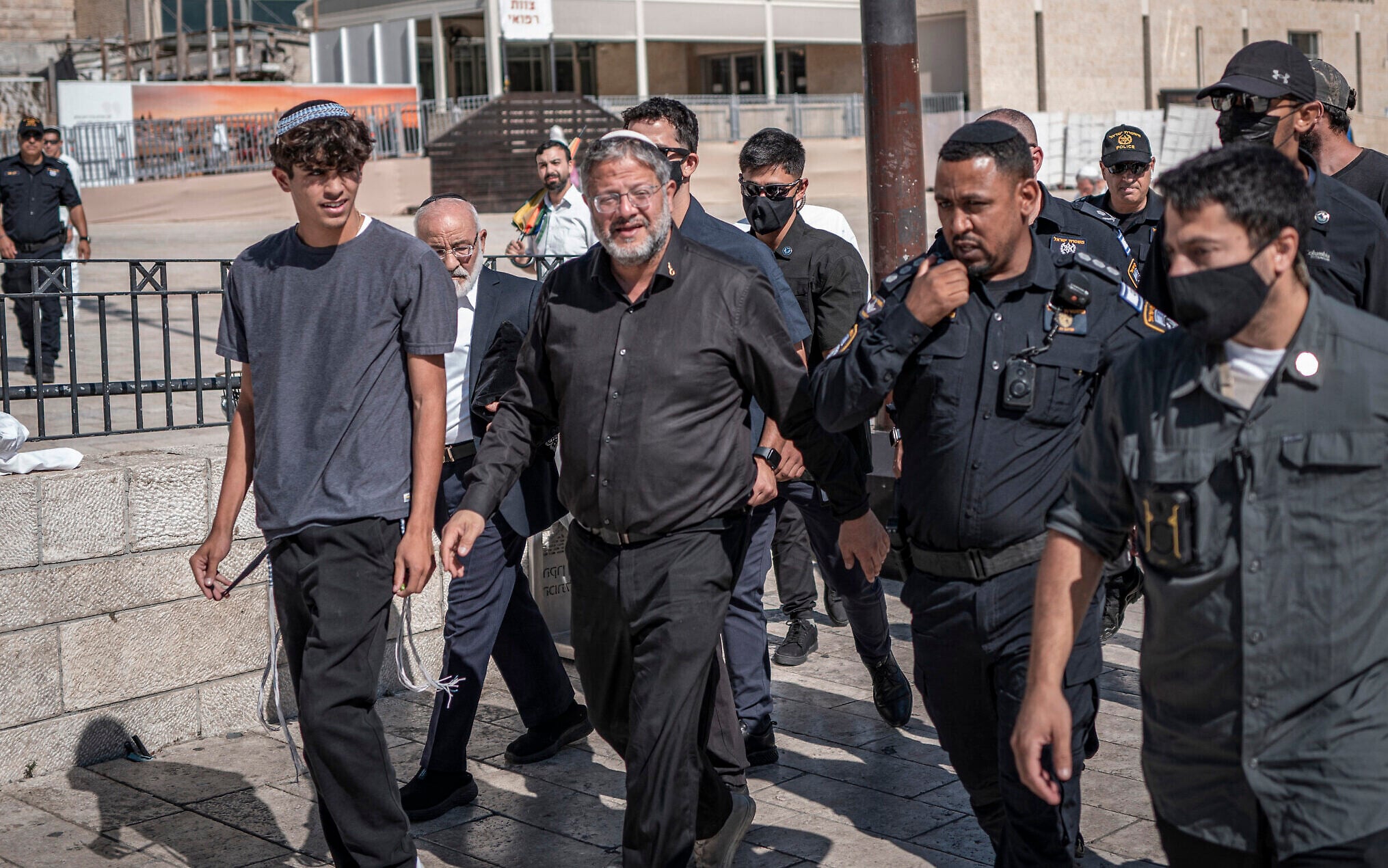
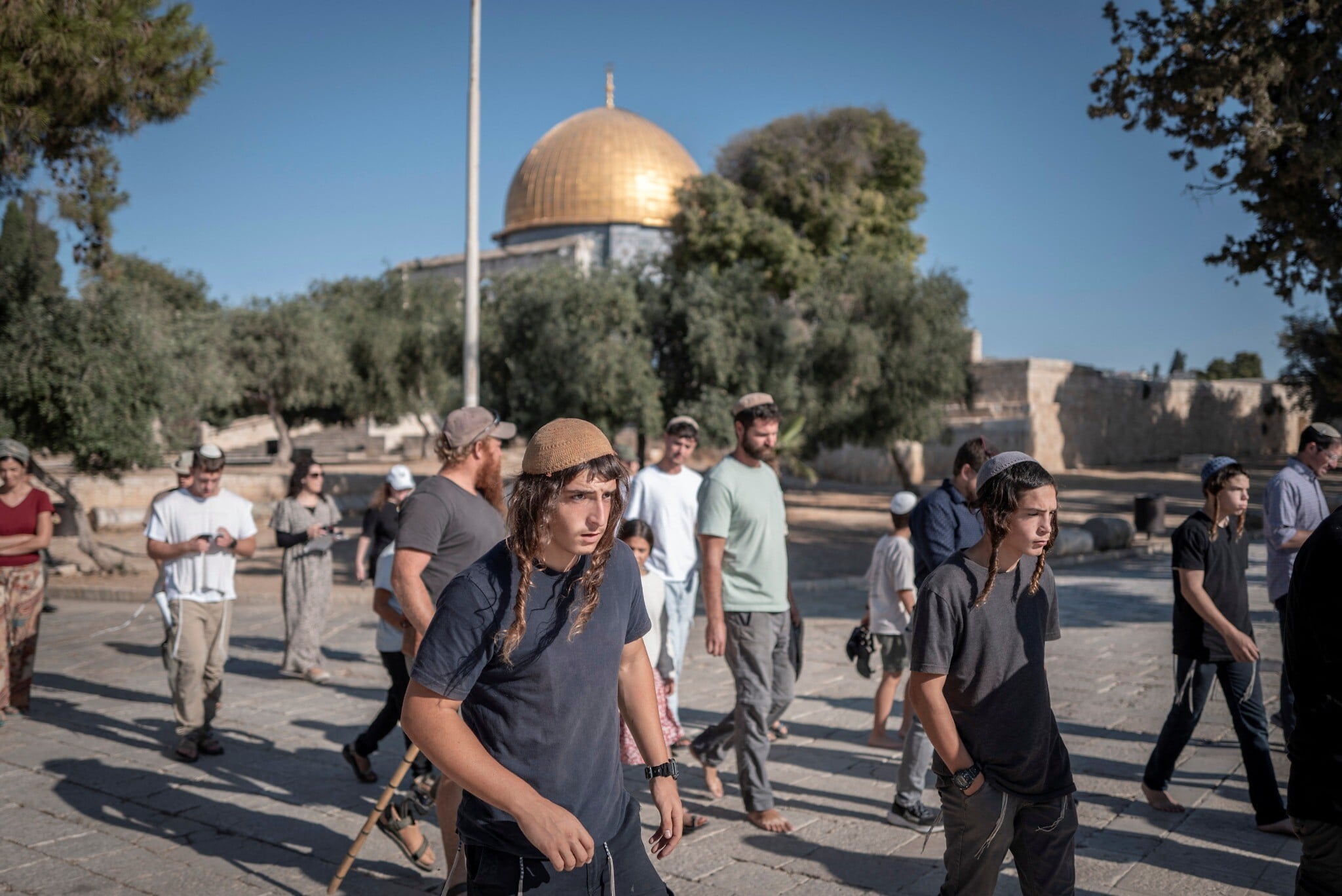
Thousands of Jews, National Security Minister Itamar Ben Gvir among them, entered the Temple Mount holy site in Jerusalem to mark the Tisha B’Av fast on Thursday. Some of them openly prayed, in a continued erosion of what until the past few years had been a longstanding status quo at the site.
A spokesman from Beyadenu, which advocates for Jewish worship on the Temple Mount, said that some 3,000 Jews had come to the site by midday, while hundreds were waiting in line to enter.
Hundreds more were expected to ascend the flashpoint site in the afternoon, he told The Times of Israel.
The spokesman estimated that a dozen people had been arrested for praying on the western side of the Temple Mount, as opposed to the eastern side where Jewish prayer is now de facto permitted by police.
The arrested comprise only a small number of those who have prayed at the site’s western half, he added, due to the “sheer amount” of worshipers.
Police were permitting Jewish worshipers to bring Tisha B’Av liturgical material up to the Temple Mount. Ben Gvir was seen with a prayer book and worshiped openly at the site, after having done the same on the fast day last year and on other occasions.
Jewish worshipers ascend Temple Mount on Tisha B'Av, pray and seen here performing the priestly blessing in massive departure from the status quo w/ Jordan, which ostensibly administers the site pic.twitter.com/PkQkuUpkr9
— charlie summers (@cbsu03) July 23, 2026
“Look at what’s happening here — Jews are praying and feel that they are the rightful owners here,” Ben Gvir said in a video filmed at the compound and posted on his Telegram channel.
“Everywhere, people understand that the State of Israel is the sovereign authority. There is still more to do, and with God’s help, we will continue to move forward.”
יום תשעה באב מציינים את החורבן. אבל אנחנו רואים התקדמות ענקית גם בהר הבית. תראו מה קורה כאן – יהודים שמתפללים, מרגישים כאן בעלי הבית. זה לא היה כאן אף פעם. ככה בעוד ועוד מקומות. הורדנו ב-85% את הפיגועים. בכל המקומות מבינים שמדינת ישראל היא בעלת הבית. יש עוד מה לעשות, ואנחנו,… pic.twitter.com/P15jWbEpvQ
— איתמר בן גביר (@itamarbengvir) July 23, 2026
The Temple Mount is the holiest place in Judaism, where the two biblical Temples once stood. The Al-Aqsa Mosque on the mount is the third-holiest shrine in Islam, making the site, known to Muslims also as the Noble Sanctuary, a central flashpoint of the Israeli-Palestinian conflict.
Tisha B’Av, observed this year from Wednesday evening through Thursday night, is a solemn day of mourning and fasting that marks the destruction of the first and second Temples.
Israel captured the Temple Mount and Jerusalem’s Old City from Jordan in the 1967 Six Day War. However, it allowed the Jordanian Waqf, a religious foundation, to continue to maintain religious authority atop the mount. Under their 1994 peace treaty, Israel recognized Amman’s “special role… in Muslim holy shrines in Jerusalem.”
A vague, unwritten status quo governing the site allows Muslims to pray and enter the compound in Jerusalem’s Old City with few restrictions, while non-Muslims, including Jews, can visit only during limited time slots via a single gate, and cannot pray there. Visibly religious Jews are only allowed to walk on a predetermined route, closely accompanied by police, long drawing accusations of discrimination and violation of freedom of worship from right-wing activists.
Palestinians have for many decades claimed Israel wishes to assert greater control over the Mount, and the issue is seen as a particularly sensitive one, with explosive potential for the region. Jordan and the Palestinians generally view visits by religious Jews as a violation in itself of the status quo, and many Muslim leaders deny that the site is holy to Jews.
The Temple Mount has been the scene of frequent clashes between Palestinian protesters and Israeli security forces, and tensions at the disputed compound have fueled past rounds of violence.
Ben Gvir, who as national security minister is in charge of the Israel Police, has repeatedly declared over the past four years that he permits Jewish prayer at the site, though police continue to arrest Jews for breaking the rules at the site. Meanwhile, Prime Minister Benjamin Netanyahu’s office has repeatedly insisted that the status quo remains in force.
There was no immediate comment on Thursday’s visits from Netanyahu’s office.
Jordan strongly condemned the visits, with a spokesman for Amman’s foreign ministry calling them “a flagrant violation of the historical and legal status quo” at the flashpoint site.
It slammed the “continued, unacceptable incursions by ministers, Knesset members and extremist settlers,” and also blasted Israeli police for “facilitating these actions.”
The ministry called the compound “a place of worship exclusively for Muslims” and urged the international community “to adopt a firm position” compelling Israel to halt such activities.
The office of Palestinian Authority President Mahmoud Abbas issued a similarly worded condemnation.
Since taking office, Ben Gvir has ascended the site more than a dozen times, and has previously used Tisha B’Av gatherings to call for tougher action against Palestinians in Gaza and the West Bank.
Beyond marking the Temples’ destruction, the day of fasting is traditionally tied to a string of calamities said to have befallen the Jewish people on or near the same date throughout history.







The Times of Israel Community.