EU agrees to sanction Turkey over gas drilling off Cypriot coast
European bloc will cut off high-level talks with Ankara, freeze aviation deal negotiations and slash funds as punishment for its pushing ahead with ‘illegal’ drilling
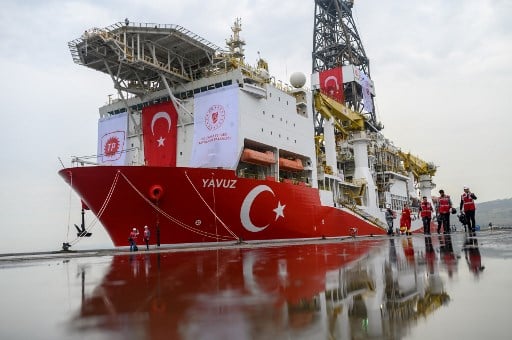
Journalists walk next to the drilling ship 'Yavuz' scheduled to search for oil and gas off Cyprus, at the port of Dilovasi, outside Istanbul, on June 20, 2019. (Bulent Kilic/AFP)
BRUSSELS, Belgium — The European Union on Monday agreed on measures to punish Turkey for pursuing drilling operations off Cyprus despite repeated warnings.
The EU will halt high-level dialogue with Turkey, suspend talks over an aviation agreement and cut 145.8 million euros ($164 million) in pre-accession financial funds allocated for 2020.
Foreign ministers from the bloc also told the European Commission, the bloc’s executive, to keep working on possible financial sanctions targeting those involved in the drilling operations.
And the European Investment Bank has been asked to revisit the conditions set out for providing financial support to Ankara.
The EU last month warned Turkey it could face sanctions if it did not cease what the bloc called “illegal” drilling in Cyprus’s exclusive economic zone.
Get The Times of Israel's Daily Editionby email and never miss our top stories
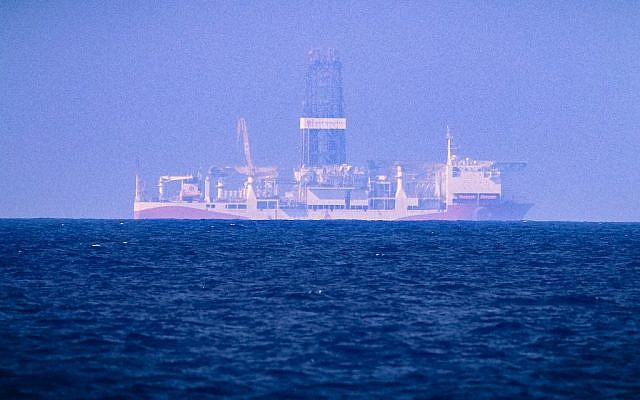
The drilling vessel Fatih, which was deployed by Turkey to search for gas and oil in waters considered part of the Cyprus’s exclusive economic zone, seen on June 24, 2019. (AFP)
Last week, diplomats began discussing what measures to impose.
It was the discovery of huge gas reserves in the eastern Mediterranean that sparked the dispute between EU member Cyprus and Turkey.
Ankara sent two ships to carry out drilling off the Cypriot coast despite the warnings from the EU.
Advertisement
Cyprus has been divided between the Republic of Cyprus and a northern third under Turkish military control since 1974 when Turkey invaded in response to a coup by a Greek military junta.
The tensions over gas drilling are also likely related to the collapse of peace talks in 2017, experts say.
While negotiations to reunify the island have not restarted, Cyprus has moved to start gas and oil exploration by issuing licences.

We can't do this work alone.
The war with Iran has been draining for all of us in Israel. But when I heard about a high casualty incident – ballistic missile impacts in Arad and Dimona that left nearly 200 people wounded – I drank a cup of coffee, packed a bag, and headed south.
There, I spoke with Shilgit, the head of an after-school program for underprivileged youth. Standing outside her destroyed center, Shilgit said it was a miracle that no children were hurt and spoke about the community coming together in the hours since.
As a Times of Israel reporter, I’m committed to telling stories of resilience like Shilgit’s. But my colleagues and I can't do this alone. If you value work like this,please consider joining our reader support group, The Times of Israel Community. Your financial support is essential to keep real human reporting like this going.
We’re really pleased that you’ve read X Times of Israel articles in the past month.
That’s why we started the Times of Israel - to provide discerning readers like you with must-read coverage of Israel and the Jewish world.
So now we have a request. Unlike other news outlets, we haven’t put up a paywall. But as the journalism we do is costly, we invite readers for whom The Times of Israel has become important to help support our work by joining The Times of Israel Community.
For as little as $6 a month you can help support our quality journalism while enjoying The Times of Israel AD-FREE, as well as accessing exclusive content available only to Times of Israel Community members.
Thank you, David Horovitz, Founding Editor of The Times of Israel