

Former Joint List MK says party met with Likud reps before Knesset dissolved
Duped by prank call from radio station, Abd al-Hakim Hajj Yahya reveals that Arab politicians met with Netanyahu associates Miki Zohar and Natan Eshel
 Add ToI as a Preferred Source on Google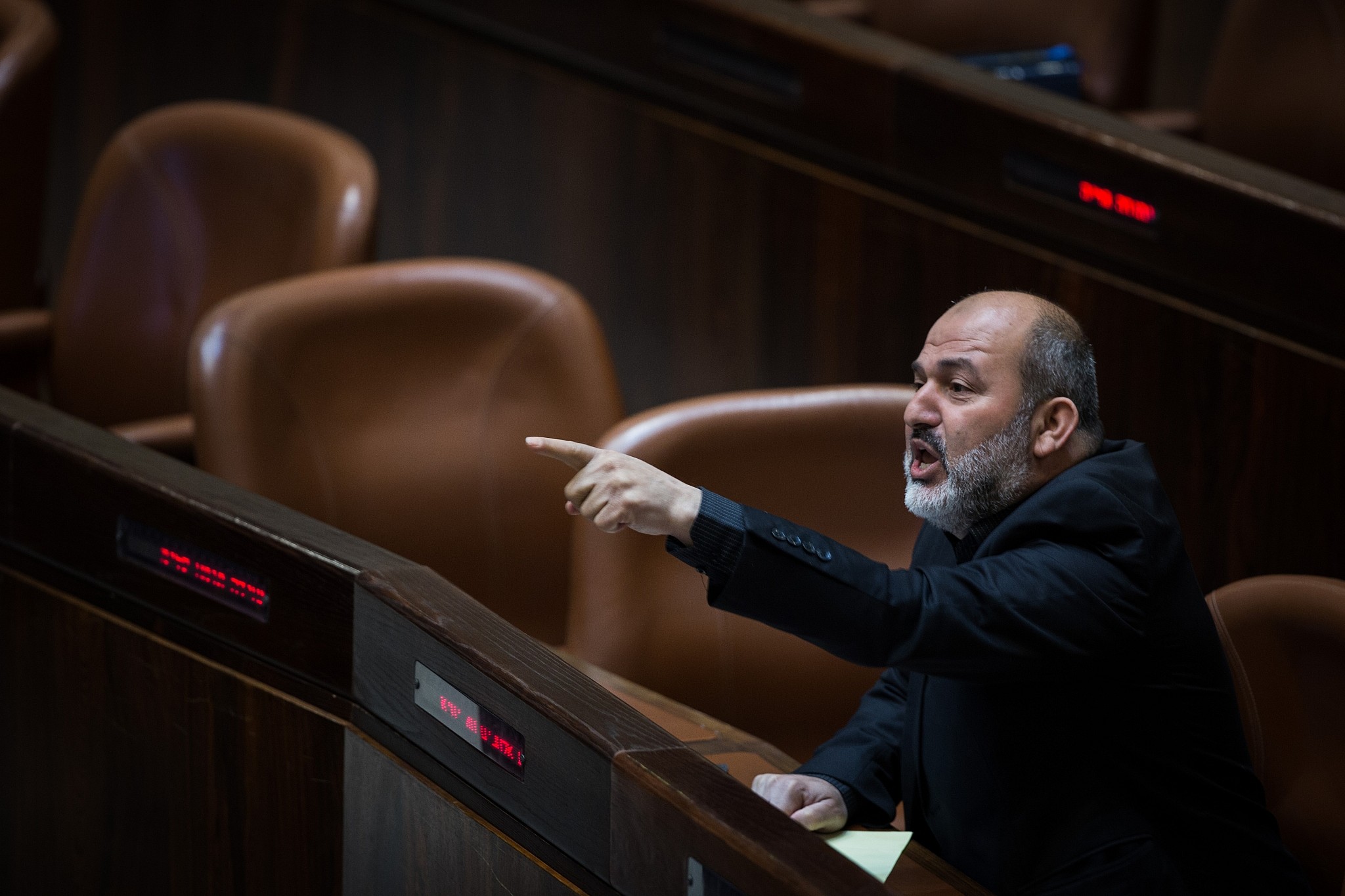
A former lawmaker of the Arab Ra’am party on Tuesday revealed that members of his faction met with representatives of Prime Minister Benjamin Netanyahu’s Likud faction prior to the Knesset’s dissolution in May.
Abd al-Hakim Hajj Yahya represented the Ra’am party in the 20th Knesset and previously served on the Joint List alliance of Arab-majority parties. During a prank call with the ultra-Orthodox Kol Chai radio station, the former MK was led to believe he was speaking with Netanyahu. He then mentioned that the Joint List’s Mansour Abbas had previously met with Likud officials Miki Zohar and Natan Eshel.
On the station’s “Airtime” program, host Menahem Tuker called Yahya and identified himself as “Roy” from the Prime Minister’s Office and had another host, Yehuda Shukron, pretend to be Netanyahu.
Tuker and Shukron wrongly identified Yahya as a current Knesset member for the Balad party and proposed reforms for Arab communities, in exchange for the Joint List withdrawing support from Blue and White leader Benny Gantz. Yahya corrected them, saying he was no longer in the Knesset. They then asked for his help influencing his friends in the Arab-majority party.
Yahya suggested they speak to Abbas, also of the Ra’am party, since he had previous contacts with Likud officials.
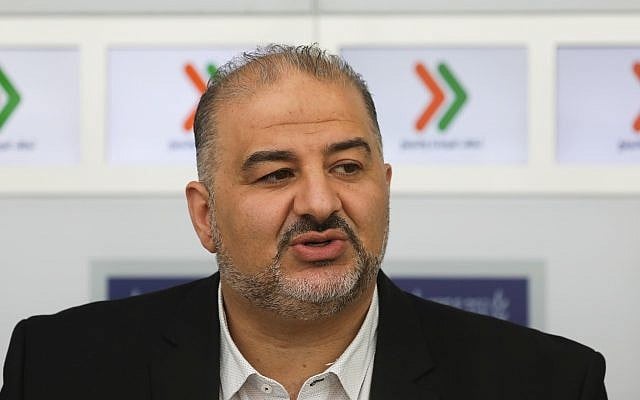
“Eshel can talk with Mansour Abbas. He was in a meeting with Mansour Abbas,” he said. “We were there together.”
“I think that with Mansour Abbas, maybe Eshel, also Miki Zohar, they had a lot of talks together before the Knesset’s dissolution,” Yahya said, without elaborating.
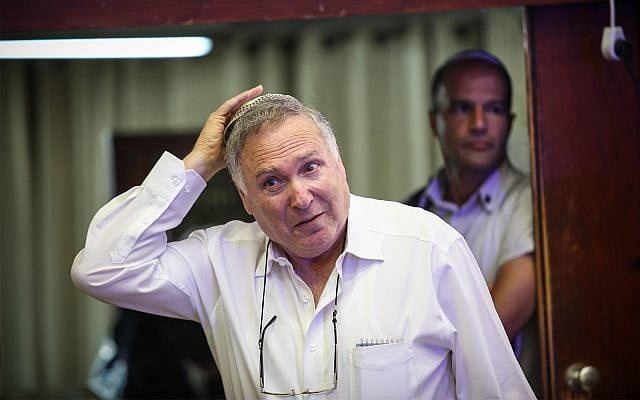
Eshel is a close political adviser of Netanyahu and his coalition negotiator, and Likud MK Zohar is a Netanyahu loyalist and MK who earlier this month told an Arab MK that the Jewish people are a “special race.”
It was unclear why the meetings were held.
Yahya also said the Joint List “didn’t have a preference for Gantz over Netanyahu, what was important to them was the interests of the Arab sector.” The Joint List earlier this week broke with Arab parties’ longstanding policy not to recommend any candidate for prime minister and nominated Gantz for the post.
The callers did not identify themselves at the end of the call, a recording of which was posted online on Tuesday.
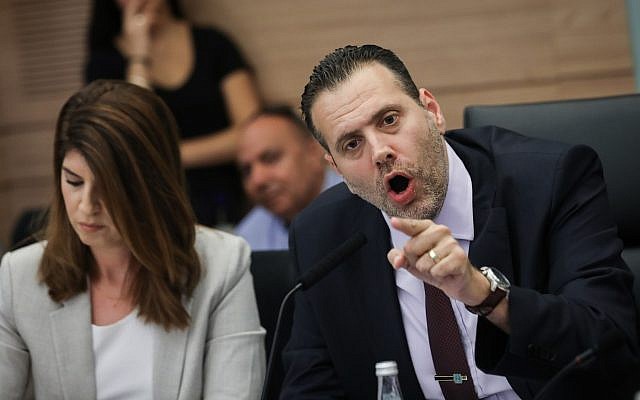
In response to the call, Zohar said he met with Arab representatives at their request and subsequently rejected all their demands, apparently for reforms benefiting Israel’s Arab minority.
“Great prank. It’s a shame that they didn’t make it longer, to understand from the former MK how angry they are at us that the prime minister rejected all their proposals. It’s all known already — I met with their representatives at their request. They brought us some requests which were all rejected outright by the prime minister,” he said.
In a dramatic shift, the Joint List on Sunday recommended Gantz for prime minister, minus the three-member Balad faction within the alliance, which did not recommend any candidate.
The decision marked the first time Arab parties — separately or together — have recommended a mainstream Zionist politician since 1992, when they supported Labor Party leader Yitzhak Rabin, who campaigned on peace with the Palestinians.
Despite the Joint List’s recommendations, Netanyahu edged out Gantz with 55 recommendations over 54, although neither a Netanyahu-led right wing bloc nor a Gantz-led left-wing bloc has a clear path to forming a coalition following last week’s elections.
The two sides met Tuesday as part of negotiations for a unity government in a long-shot effort to solve the political deadlock.
President Reuven Rivlin invited Gantz and Netanyahu for a private dinner on Wednesday after meeting with the two men on Monday, when they sat down together for the first time since the elections and agreed to begin talks aimed toward building a unity coalition.
Netanyahu and Gantz met for over two hours, first with Rivlin and then alone, with talks reportedly centering around who would head a possible joint government. Rivlin returned to speak with two again before the meeting ended.
Rivlin was expected to propose a rotation agreement that would see the two party chiefs share the premiership, though agreement over the order of such a deal remained elusive.
Rivlin told Gantz and Netanyahu that as neither had secured a majority of recommendations to form the next government, he had greater leeway in whom he would task to do so. His decision on who the potential next prime minister will be will come by next week.









The Times of Israel Community.