

Haredim weigh dissolving Knesset over failure to pass draft exemption bill
‘Netanyahu knows that there will be no evasion law, he is just stalling,’ Lapid warns senior ultra-Orthodox rabbis
 Add ToI as a Preferred Source on Google
Sam Sokol is a former political correspondent at The Times of Israel. He was previously a reporter for the Jerusalem Post, Jewish Telegraphic Agency and Haaretz. He is the author of "Putin’s Hybrid War and the Jews"
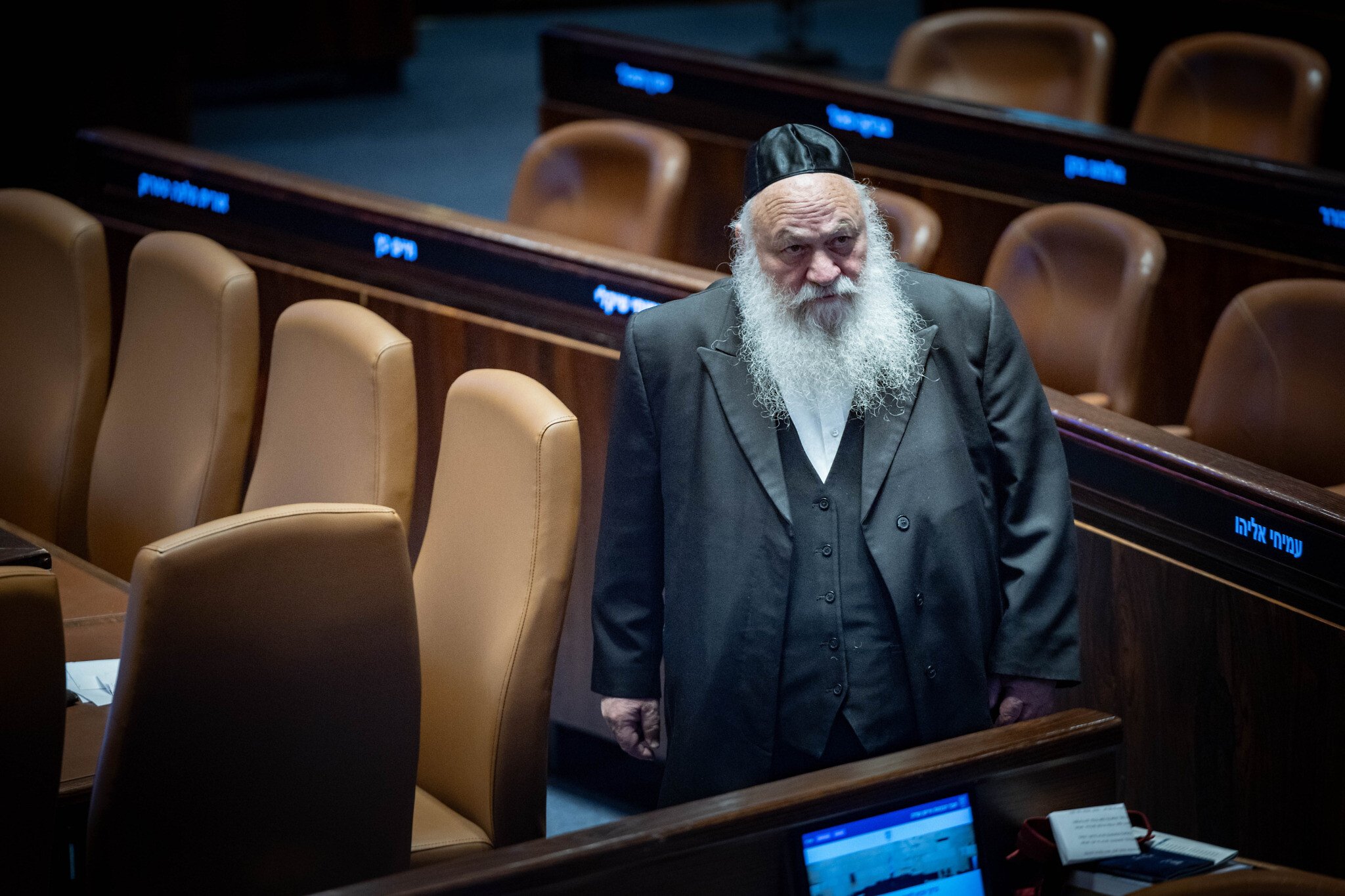
Following the government’s failure to pass legislation exempting yeshiva students from military service, the leaders of the the country’s two ultra-Orthodox parties are now actively discussing the possibility of withdrawing from the coalition, with United Torah Judaism chairman Yitzchak Goldknopf reportedly pushing to advance a bill to dissolve the Knesset and force new elections.
Both the Shas and United Torah Judaism (UTJ) parties had demanded the passage of the controversial military draft legislation by the Shavuot holiday, which this year began on June 1, warning that any delay would endanger the government’s continued existence.
While the ultra-Orthodox, also known as Haredim, have repeatedly backed down from previous ultimatums, recent developments — including IDF plans to increase the number of draft orders sent to young ultra-Orthodox men — have seen their relationship with Prime Minister Benjamin Netanyahu approaching a breaking point.
According to the ultra-Orthodox Behadrei Haredim news site, UTJ is weighing steps ranging from “completely paralyzing the coalition” to submitting a bill to dissolve the Knesset — a measure said favored by its leader, Goldknopf.
The party’s ruling Council of Torah Sages is expected to meet Wednesday to discuss the party’s next steps and update its MKs with “a dramatic ruling,” the site reported.
Last Tuesday, Rabbi Dov Lando, the senior leader of the so-called Lithuanian stream of non-Hasidic ultra-Orthodoxy, met with Rabbi Nehemiah Alter, the son of the Gur Hasidic sect’s leader, to discuss contingencies in case the government failed to meet UTJ’s deadline.
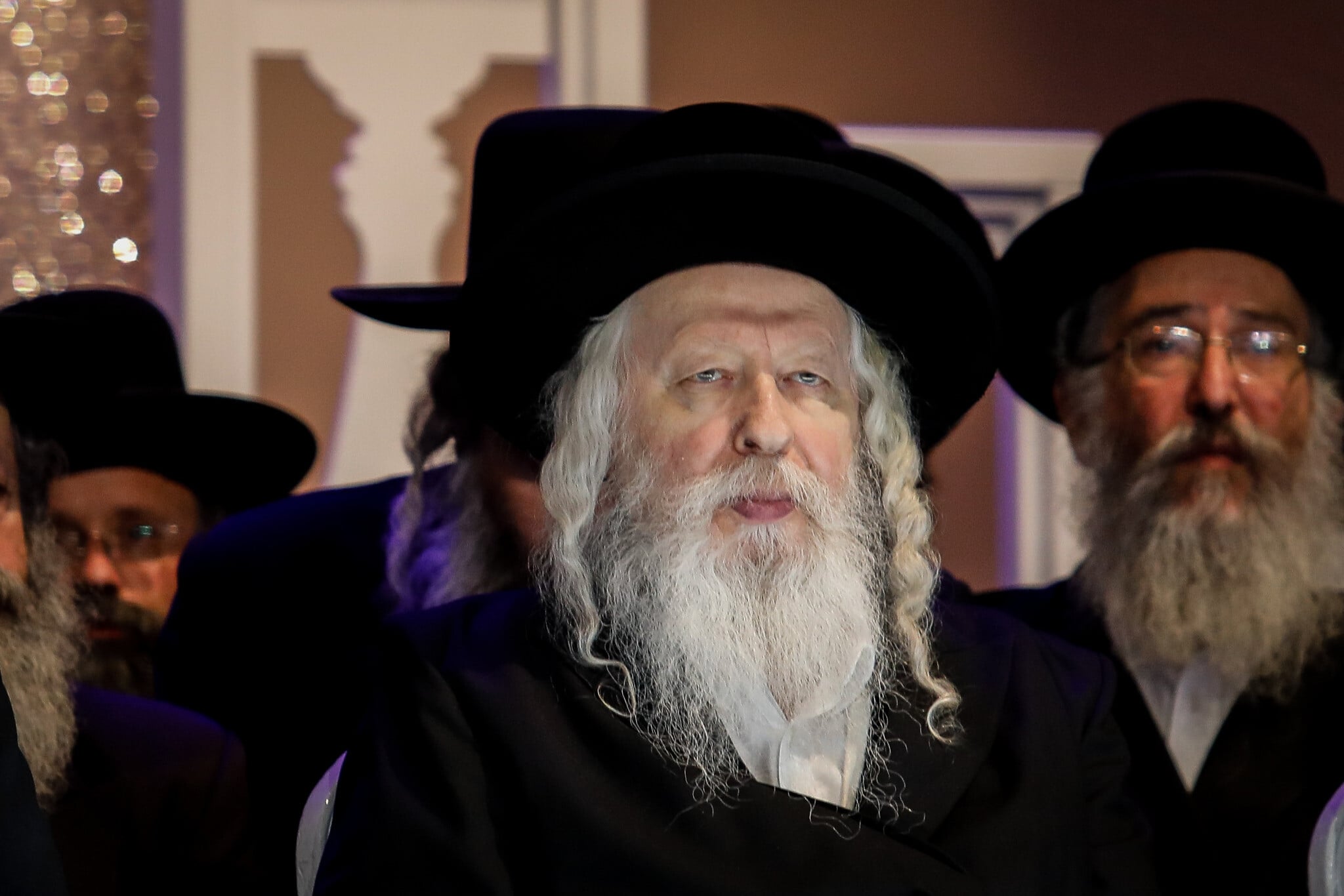
The admor, or grand rabbi, of Gur, Yaakov Aryeh Alter, is said to favor leaving the coalition, while Lando, in an open letter published last Tuesday, warned that if yeshiva students are “forcibly conscripted, we will not be able to stand by, and we will be forced to take actions that we do not desire.”
Both Kikar Hashabbat, another Haredi news site, and the Maariv daily reported that Goldknopf is seeking to advance legislation dissolving the Knesset and forcing new elections, and is actively working to convince the leadership of his party’s Degel HaTorah faction to back the move.
“The issue of the draft and dissolution of the government will be decided within a few days, not weeks… If there is no agreement on the principles of the law, we will withdraw from the government in the coming days,” Kikar Hashabbat quoted senior Shas and UTJ officials as warning.
In an article published on Tuesday, the Hamevaser newspaper, linked to Goldknopf’s Agudat Yisrael faction, warned that unless the government halted efforts to conscript yeshiva students, UTJ would be “forced to act” and take “unprecedented steps.”
The top leadership of the Sephardic Shas party is also expected to gather to discuss their future participation in the coalition.
Last Thursday, unnamed senior Shas officials cited in a front-page report in HaDerech, the party’s official newspaper, stated that “immediately after Shavuot, the question of deciding on Shas’s continuation in the government and coalition will be placed on the table of the rabbis of the Council of Torah Sages.”
“We hope the prime minister will take responsibility and expedite the negotiations without delay,” they said.
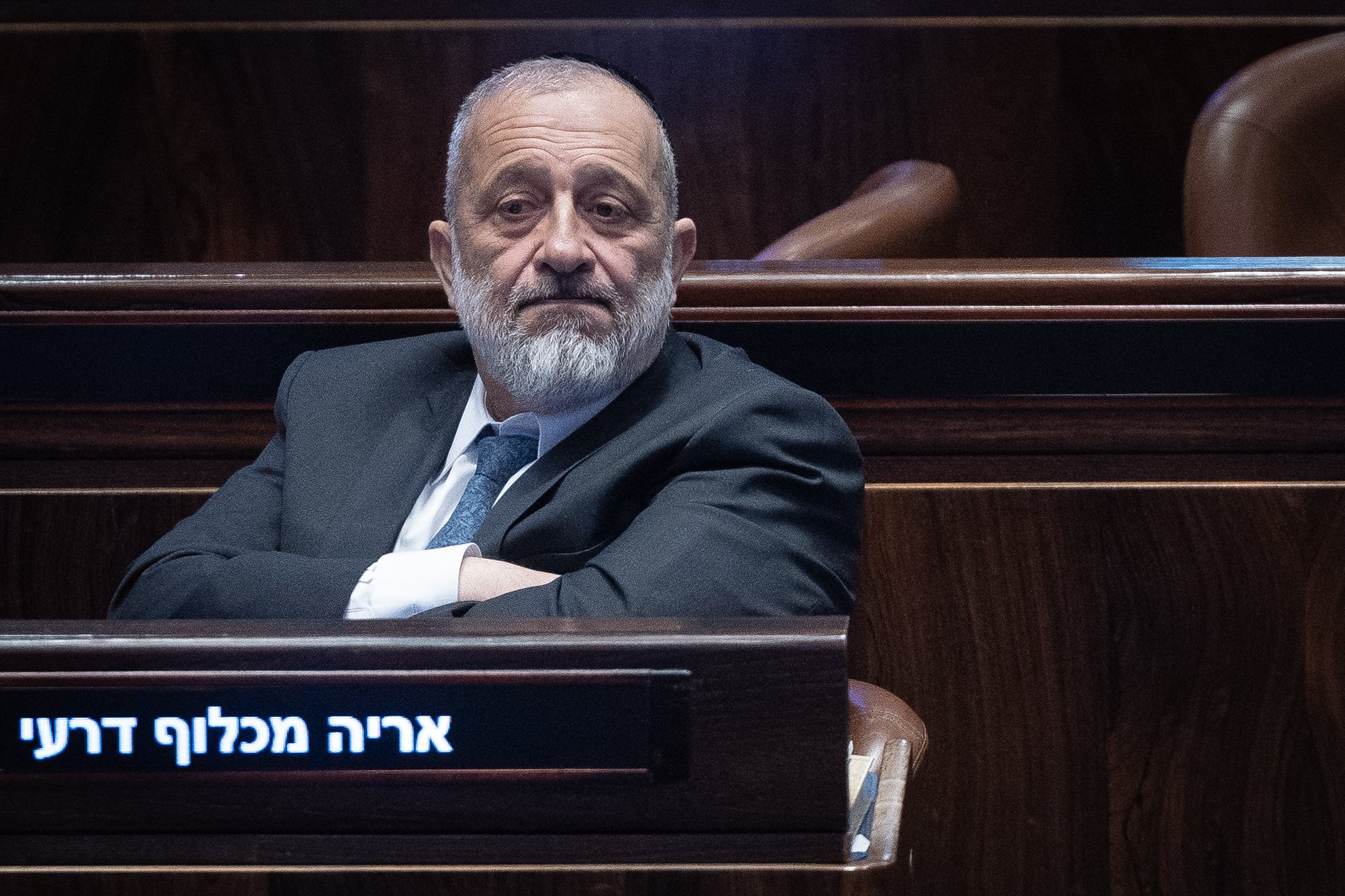
According to Channel 13 news, multiple senior Sephardic yeshiva deans last week accused Shas of folding in the face of pressure from Netanyahu, arguing that the party should have already left the coalition.
In an interview with the national-religious Makor Rishon weekly published on Monday evening, UTJ lawmaker Yitzhak Pindrus said that his party was fully coordinated with Shas “and we will do everything to ensure that this coordination continues.”
The government has “every chance of surviving” but “there is a possibility that it will not survive,” he asserted, adding that his party’s “red line is that this law must pass.”
Until the bill passes, Pindrus warned, the Haredi parties would continue their ongoing partial legislative boycott, blocking the advancement of private member bills sponsored by members of the coalition — a move that has generated intense resentment among members of Netanyahu’s ruling Likud party.
Under Likud MK Yuli Edelstein, the Knesset Foreign Affairs and Defense Committee is currently revising a government-backed bill to regulate Haredi enlistment.
Edelstein has pledged that any law on the issue of Haredi service coming out of his committee would contain individual sanctions and “significantly increase the IDF’s conscription base” while rejecting suggestions to significantly limit the rate and scale of Haredim enlistment.
There have been indications that the rewritten legislation will be unacceptable to the Haredim, with Edelstein reportedly stating last month that there was a chance that “in three weeks this whole business could explode.”

Responding to reports that Cabinet Secretary Yossi Fuchs and Edelstein are expected to meet on Tuesday evening to attempt to find common ground on the issue, Opposition Leader Yair Lapid on Tuesday warned the Haredim that they were “being deceived” by a prime minister who did not intend to pass what he called an “evasion law.”
Addressing reporters ahead of his Yesh Atid party’s weekly faction meeting in the Knesset, Lapid slammed Netanyahu for sending his people to meet with Haredi representatives in the Knesset and “begging them to give them another 10 days to arrange a mass draft evasion law for them, which would prevent the possibility of them enlisting in the IDF in time of war.”
“A prime minister with a shred of responsibility left in him should have told the Haredim [that] on October 7, everything changed. We are at war, we don’t have enough soldiers, your evasion [of military service]is over,” he said.
Asserting that enlisting in the IDF “does not harm the Torah world and does not contradict Judaism,” Lapid directly addressed rabbis Alter and Lando, as well as former Sephardic chief rabbi Yitzhak Yosef.
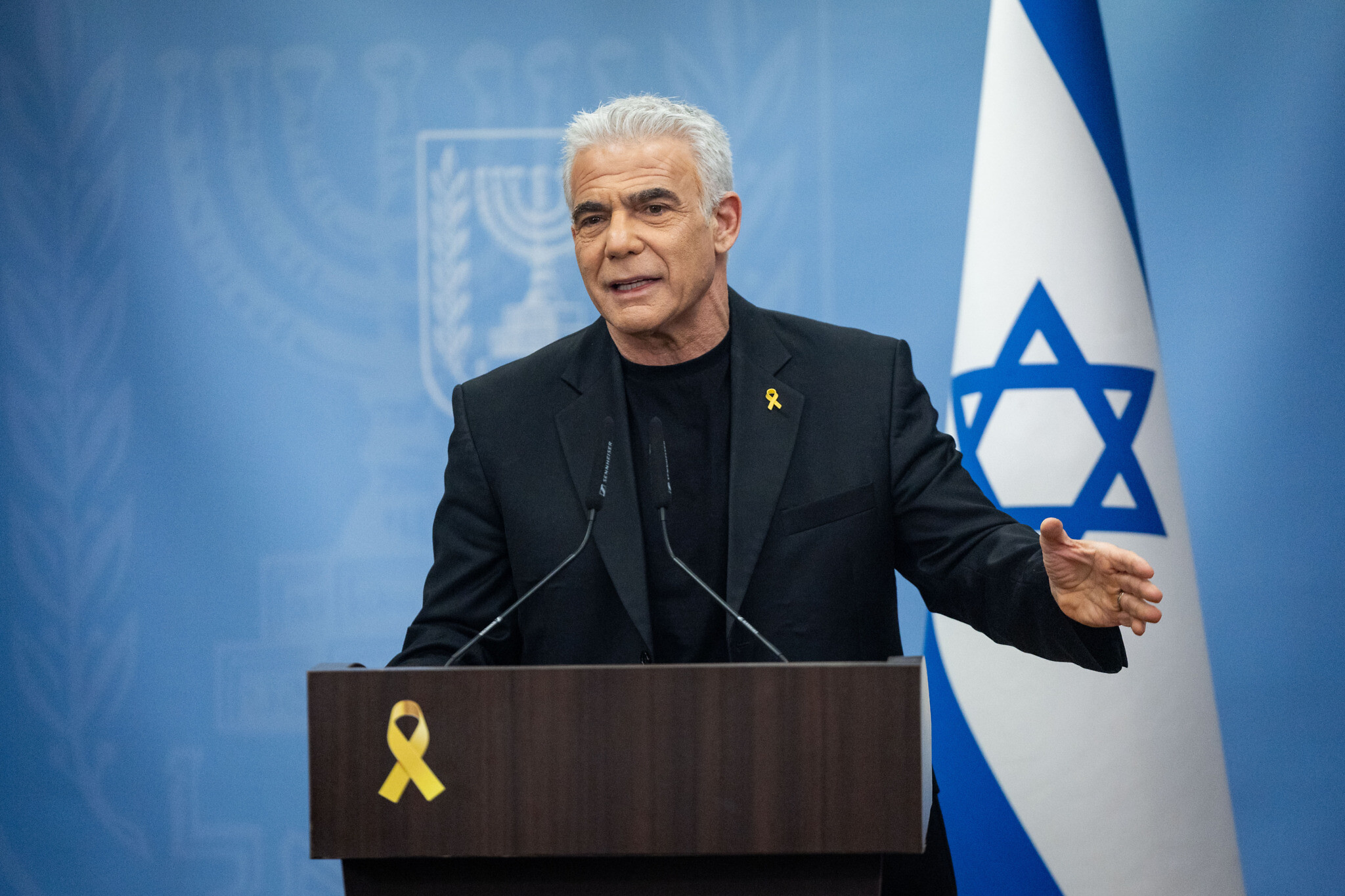
“Know that you are being deceived. Netanyahu knows that there will be no evasion law; he is just stalling to somehow get through the summer [Knesset legislative] session,” he declared.
“All he is interested in is being still in power during his cross-examination in court, so that he can continue to receive ‘important notes’ in the middle of his testimony. He is selling you fairytales and empty promises [and] cannot pass the law you want.”
Netanyahu is on trial for corruption.
Asked Tuesday about the chances of UTJ bringing down the government, the party’s MK Pindrus told The Times of Israel “we’ll see after the meeting” with Edelstein.
Last June, the High Court of Justice ruled that longstanding service exemptions for yeshiva students had no legal basis, leading the IDF to begin efforts to conscript tens of thousands of previously exempt men into the military, although few have joined. Since then, the ultra-Orthodox parties have been pushing hard for legislation reinstating their special status and preventing the mass conscription of Haredim.
Currently, approximately 80,000 Haredi men between the ages of 18 and 24 are eligible for military service and have not enlisted. The army has stated that it is facing a manpower shortage and currently needs some 12,000 new soldiers — 7,000 of whom would be combat troops.
Stav Levaton contributed to this report.






The Times of Israel Community.