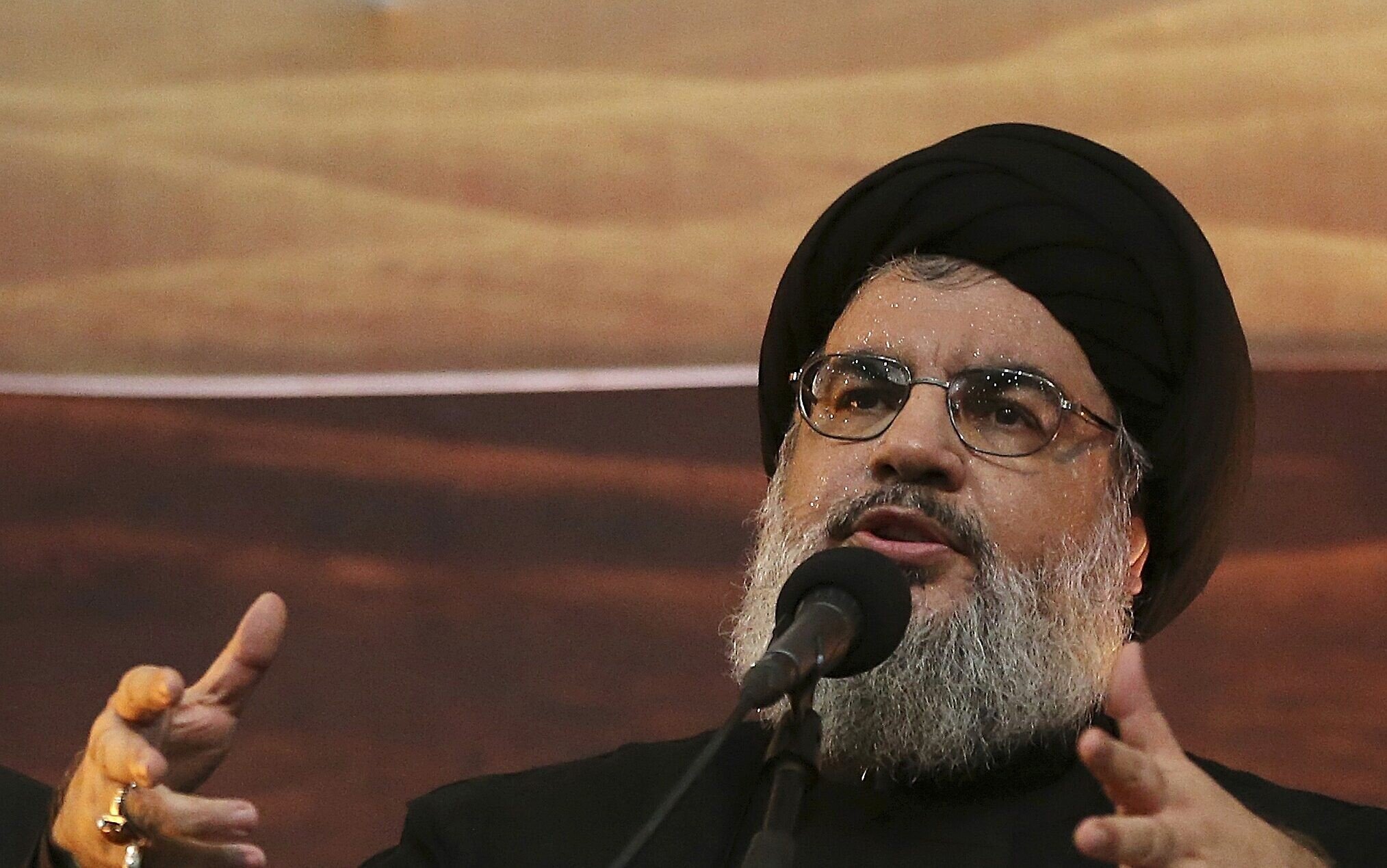
The head of Lebanon’s Hezbollah on Monday condemned Germany’s ban on his group as a capitulation to US pressure, and insisted it was not active in the country.
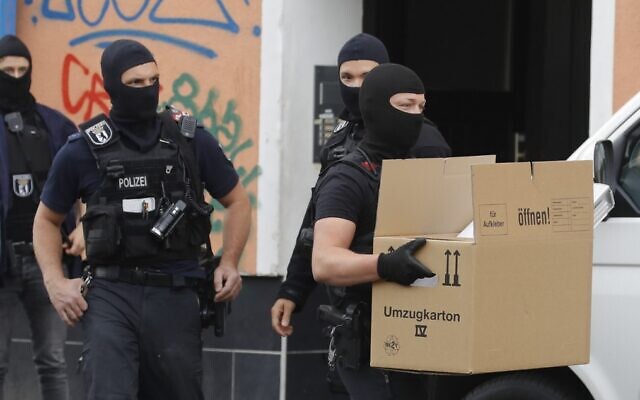
Germany designated Hezbollah a “Shiite terrorist organization” on Thursday as its security forces raided mosques and associations linked to the group.
In a televised speech, Hezbollah chief Hassan Nasrallah called it a “political decision that reflects Germany’s submission to America’s will and to pleasing Israel.”
“The decision is part of the Israeli-American war in the area. The only one to stand up to the American hegemony and Israeli occupation is the resistance movement,” he said, according to the Ynet news site.
“When we say we are not active in Germany, we are being 100 percent honest,” added the leader of the Iranian-backed group.
Get The Times of Israel's Daily Editionby email and never miss our top stories
Police officers carry boxes of evidence out of the Al-Irschad Mosque in Berlin during a raid on April 30, 2020, as dozens of police and special forces stormed mosques and associations in Germany linked to Hezbollah. (Odd Andersen/AFP)
Hezbollah was established in 1982 during the Lebanese civil war and fought a devastating 2006 war with Israel.
The United States and Israel have long designated it a terrorist group and urged allies to follow suit.
Like the European Union, Germany had until last week outlawed only Hezbollah’s military wing while tolerating its political arm, a major force in the Lebanese parliament.
Advertisement
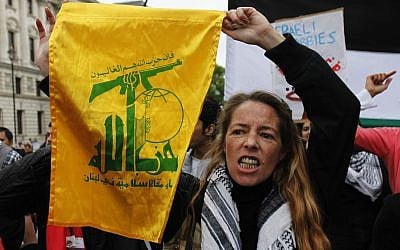
A pro-Palestinian supporter holds up a flag belonging to the Hezbollah group, during a march to protest against Israel in central London, May 31, 2010. (AP Photo/Lefteris Pitarakis)
Nasrallah on Monday said he expected more EU countries to follow Germany’s example, even though his movement had ceased activities “across the world, and in Europe especially,” several years ago.
He condemned German authorities for raiding mosques and associations linked to his group, saying “there was no need for these barbaric actions.”
He called on the Lebanese government to protect its nationals in Germany.
As a multimedia journalist, my job is to take the quality, fact-based journalism produced by The Times of Israel newsroom and make it accessible across every platform — from Instagram posts to podcasts to short-form videos.
This is how many, especially young people, consume news these days. But misinformation is rampant on social media. Our team at ToI produces accurate, responsible short-form reporting on Israel and the Jewish world.
If you believe in the importance of factual social media journalism, please consider joining our reader support group, The Times of Israel Community. Your financial support is essential to sustain responsible multimedia reporting.
We’re really pleased that you’ve read X Times of Israel articles in the past month.
That’s why we started the Times of Israel - to provide discerning readers like you with must-read coverage of Israel and the Jewish world.
So now we have a request. Unlike other news outlets, we haven’t put up a paywall. But as the journalism we do is costly, we invite readers for whom The Times of Israel has become important to help support our work by joining The Times of Israel Community.
For as little as $6 a month you can help support our quality journalism while enjoying The Times of Israel AD-FREE, as well as accessing exclusive content available only to Times of Israel Community members.
Thank you, David Horovitz, Founding Editor of The Times of Israel


 Add ToI as a Preferred Source on Google