

How a Facebook post got wartime rescuers recognized as Righteous Gentiles
A foster family that hid a Jewish baby during the Holocaust has been reunited with her after 50 years, and the parents posthumously honored by Yad Vashem
 Add ToI as a Preferred Source on Google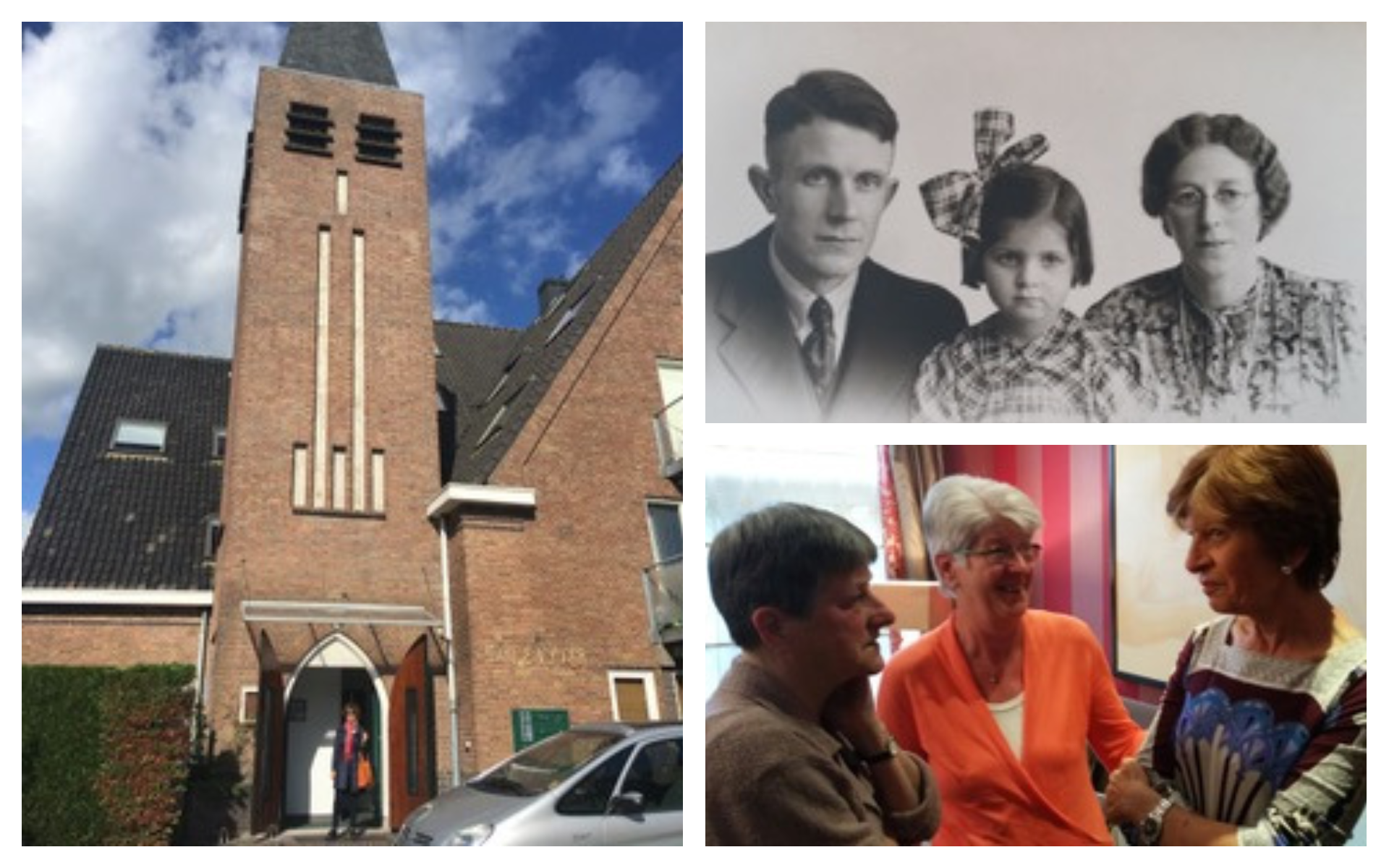
WORMERVEER, Netherlands — Seventy-five years and four days after my mother was sent into hiding as a baby in wartime Holland, her rescuers Aad and Fie Versnel were finally posthumously recognized by Yad Vashem as members of that select band, the Righteous Among The Nations.
It has been a long time coming, but had it not been for a Facebook post that miraculously traced the family within just four days, this story might never have been told.
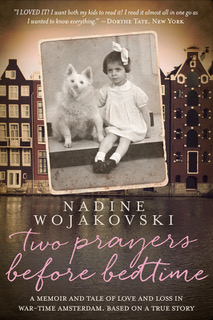
Three years ago I published “Two Prayers Before Bedtime,” a memoir about my grandmother Cilla Bitterman, who sent her daughter (my mother) Renate into hiding during the war.
Lacking documentary records, we estimated that she was forced into hiding at just 19 months old, in the middle of September 1942, exactly 75 years earlier.
The bravery of my grandparents in making the heart-wrenching decision to send their son and daughter to an unknown fate was only possible thanks to those people, living in Nazi-occupied Holland, who were willing to face the utmost risk and sacrifice, endangering their own lives to save another.
100,000 Dutch Jewish men, women and children were rounded up or herded off the streets of Holland into cattle trucks and deported to concentration camps — Auschwitz, Bergen-Belsen, Sobibor and Theresienstadt, where they were brutally and horrifically slaughtered. Only two-sevenths of the 140,000 Dutch Jewish population survived.
As the great 18th century Whig statesman Edmund Burke famously said: “The only thing necessary for the triumph of evil is for good men to do nothing.”
My grandparents, Cilla and Eugen Bitterman, had the unimaginable good fortune to find a selfless, childless couple in their 30s who were not prepared to stand by and do nothing.
Aad and Fie Versnel, who lived in the village of Wormerveer, just over 10 miles from Amsterdam, saved my mother’s life. My grandmother handed over her baby in 1942. In June 1945 she was reunited with a four-year-old daughter whom she no longer recognized.
For the Versnels, handing back Renate, the only child in their life, was so very painful. On receiving her daughter back, my grandmother Cilla promised that she would pray for them to be blessed with their very own child. Exactly one year later, in June 1946 a baby daughter — Els Renate — was born, followed by Cobi in 1948.
When I wrote the book, I dedicated it to Aad and Fie Versnel and the Dutch Resistance.
One of the last times my mother saw the Versnels was in 1962, at her wedding to my father Arthur in the Kraznapolski Hotel in Amsterdam, which was attended by the couple and their teenage daughters.
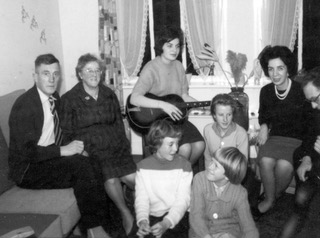
A black-and-white vintage picture of Fie, Aad, Els and Cobi greeting the bride Renate, 17 years after the end of the war, testifies to the imperishable bond of love between the Bittermans and the Versnels that time could not dim. Their wedding gift was a silver plate, on the back of which was engraved: “To our foster daughter.”
After my parents married, they left Amsterdam and eventually built a home and life in London. As the years went by, and my grandparents and the Versnels passed away, my mother lost touch with the family. Her attempts to find them were unsuccessful.
After my book was published, we redoubled our efforts to find the descendants of the Versnels.
A righteous use of social media
On December 29, 2014, my sister posted a single photo of the Versnels on Facebook, with the message: “Looking for children and grandchildren of Fie and Aad Versnel from Holland circa 1945. Please please share.”
Just four days later the post reached a certain Hans Versnel, who turned out to be the great nephew of Aad Versnel. We were elated.
Soon after, we applied to Yad Vashem to have the Versnels recognized as “Righteous Among the Nations.” The title, overseen by a special commission and chaired by a retired Justice of the Supreme Court, can be awarded only if sufficient survivor testimony has been collated.
In spite of being allocated a dedicated case worker, Ruth Joaquin, who efficiently handled the Dutch files, the process was lengthy. First and foremost was my mother’s testimony, the recollections of a small child’s impressions, thoughts and feelings.
“I do remember hiding behind a curtain when the Nazis were patrolling, and remember going to church and putting money in the collection box,” she said. “I was also very close to their dog Kesje. The Versnels were very good to me and treated me as if I belonged 100 percent to their family.”
The Versnel’s daughters, Els and Cobi, were also contacted and provided some fascinating and moving primary material. A document issued by the Claims Office on May 11, 1945 confirmed that Renate Bitterman had indeed been hidden at Weverstraat 3, Wormerveer.
Another, by the Food Distribution Office, stated that “due to special circumstances,” four-year-old Renate Bitterman wasn’t in possession of a basic food coupon and was thus entitled to receive 800g bread and 100g dried potatoes.
But most heart-rending was a letter sent by Cilla Bitterman to Fie Versnel on February 10 1948, just a few days after Renate’s seventh birthday. In it, 35-year-old Cilla wrote: “We have received your letter and we are very happy that you will come on Saturday. We miss you very much as well. Little Renee was dancing with excitement when she learned that you are coming.”
Finally, around a year after the investigation began, we received a letter notifying us that the Commission had approved the award, and that the Israeli Embassy in The Hague would duly organize the ceremony.
‘Family’ reunion
Last month, family members from Israel and England made the long-awaited trip to Holland. Our first stop was to the canal-lined village of Wormerveer, just over 10 miles from Amsterdam, where Els and Cobi and their husbands greeted us.
I couldn’t help but imagine how back in 1942, my one-year-old mother was probably taken from Amsterdam to Wormerveer by train. It chills me to the bone to think that just in the space of less than an hour she was separated from her birth parents and handed over to her foster parents, her life transformed forever.
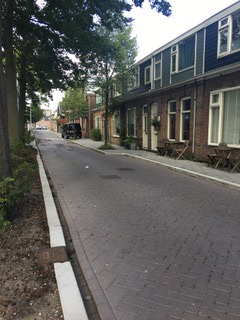
On Weverstraat, just a stone’s throw away from the train station, we stood in the exact spot where the Versnels had sheltered my mother in their home, now an empty space in a car park. Just around the corner was the church, now a block of flats, that was almost certainly the one my mother had attended on Sundays.
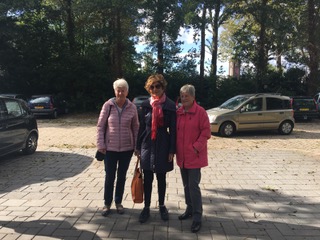
Els, who lives in Wormerveer, invited us all up to her home for coffee. Overlooking the serene canal, we reminisced about the past, recalling happy times such as Els and Cobi’s visit to my grandparents’ sukkah in their Amsterdam home.
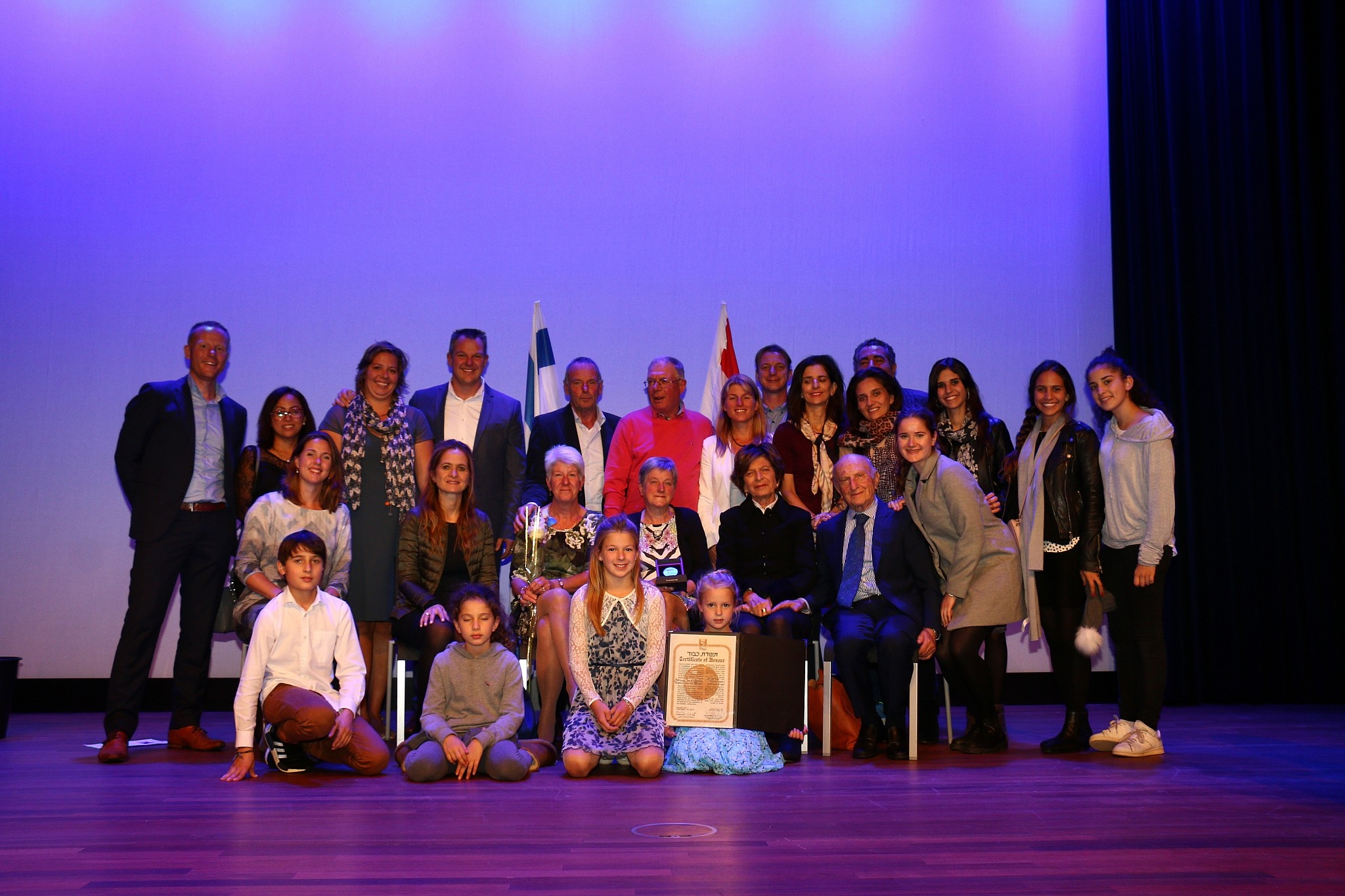
The next day, in the packed auditorium of Rotterdam library, six courageous families were recognized and honored. Invited to be the guest speaker, I was privileged to be given the opportunity to proudly share the story I now know so very well, and to do full justice to the immense courage of Aad’s brothers.
Aad hailed from an exceptional, religious Protestant family. He was the youngest of four brothers, the others being Johannes, Klaas and Leonardus.
Johannes, the eldest, also hid a Jewish child, a teenage girl, telling everyone that she had been adopted.
Hans’ grandfather Klaas worked for the Dutch Resistance. He owned a lithography studio, and forged identity cards and food stamps. He was arrested in 1944 for his courageous acts of resistance and tragically, died in a German prison, just a few weeks before the end of the war.
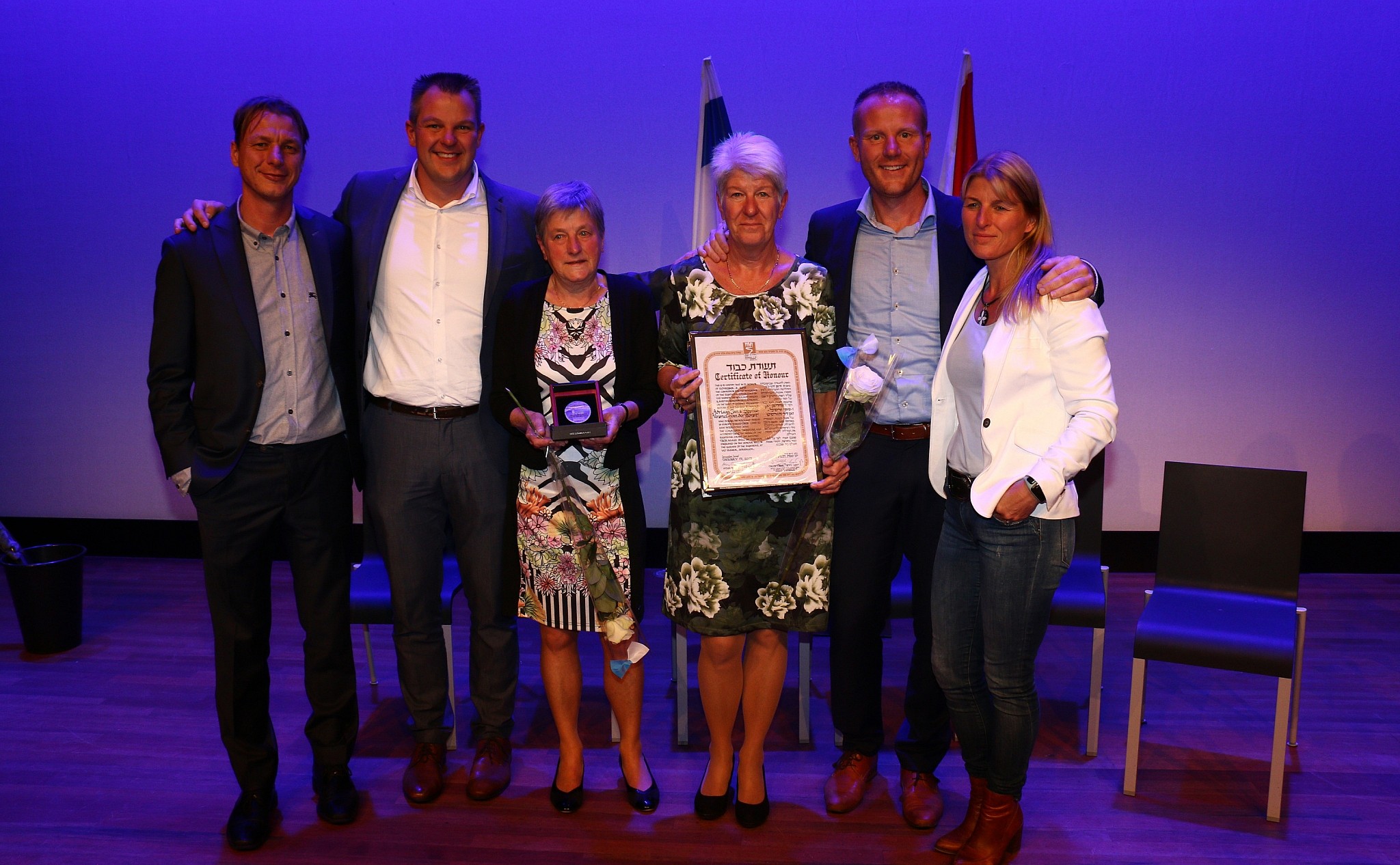
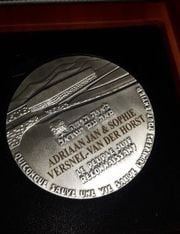
At the end of my speech I called my mother onto the stage to present Els and Cobi with her gift to them, a symbolic silver plate. The inscription, which she read out, said: “In memory of Aad and Fie Versnel, your beloved parents, my foster parents, Righteous Amongst the Nations. Eternally indebted to them for risking their lives to save my life during the Holocaust.”
The audience watched, many in tears as, with full hearts, Els and Cobi accepted their gift, before later receiving the medals honoring their beloved parents. And in Yad Vashem, Jerusalem, their parents’ names are finally engraved on a wall, honoring their courage, for all to see.
In a moving tribute to her parents, Cobi said: “We think that our parents would find it [the award] unnecessary because it was just the right thing to do. The few times we talked about it, they said to us, when they come to your doorstep with a little girl, you just do what is needed.”




The Times of Israel Community.