

In Jerusalem’s Old City, lantern maker lights up Ramadan
Issam Zughair learned the trade from his father. Now his business is being threatened by the security situation, as well as by cheap Chinese imports
 Add ToI as a Preferred Source on Google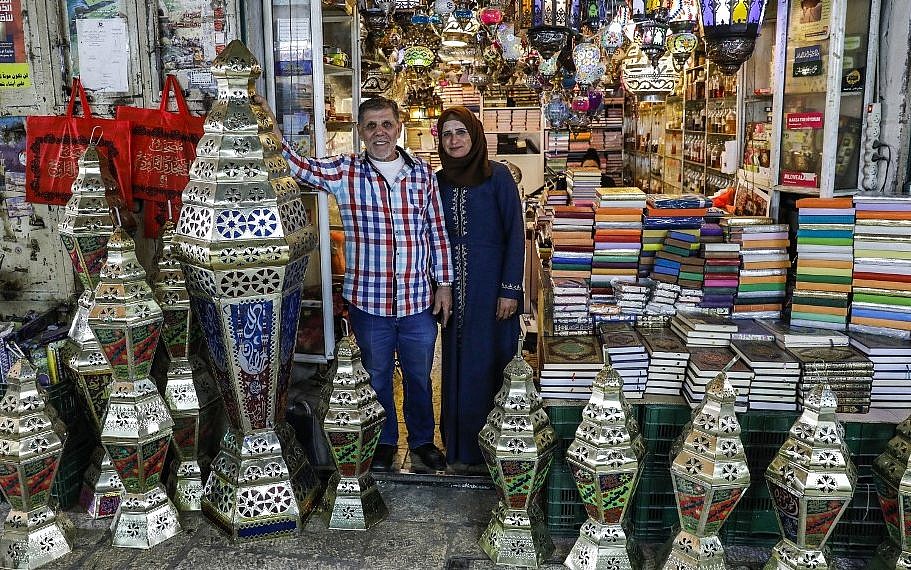
AFP — At his shop in Jerusalem’s Old City, Palestinian craftsman Issam Zughair makes traditional lanterns for Muslims marking the holy month of Ramadan, battling competition from cheap Chinese imports.
Zughair’s shop is decked out with lamps both large and small, some hanging from the ceiling and others displayed outside to draw the attention of passers-by during lively Ramadan evenings.
He learned the trade from his father, a carpenter who originally made lanterns out of wood.
“My father opened this shop in the 1950s — we want to protect that heritage,” Zughair said, sitting with his wife in their small home above the business.
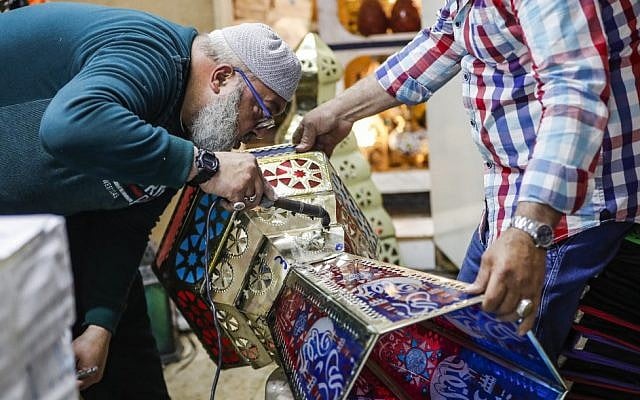
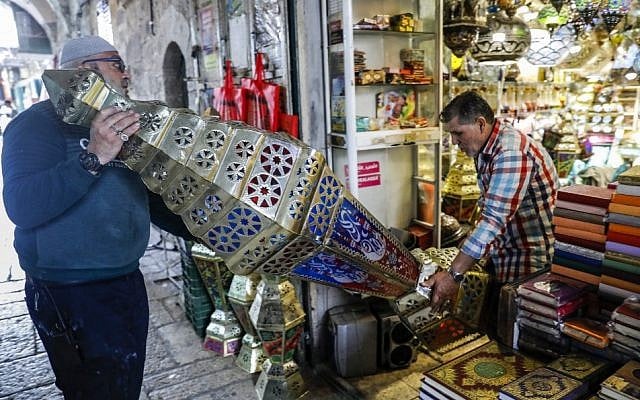
The largest lantern in the shop is two meters tall, shaped to resemble a mosque and created specially for Ramadan.
It was made from sheet metal and glass, using a technique that is believed to date back to the Fatimid caliphate in 10th century Egypt.
Zughair believes the lantern is the largest traditionally-made one in Jerusalem.
“There is no-one that rivals me in building them,” he said.
The 67-year-old imports materials from Egypt and Turkey and crafts the lanterns in his Old City shop.
He can add Koranic verses, religious phrases or names of God, according to the wishes of buyers.
Lanterns play a special role during Ramadan, which began on Monday.
As Muslims fast from sunrise to sunset, nocturnal life takes on added significance. Traditionally, lanterns light the way for religious events.
Najeh Bkerat, from the Al-Aqsa Academy for Science and Heritage in Jerusalem, said they are a symbol of Islamic culture and heritage, especially during the fasting month.
“People carry them as an expression of the light, the goodness and the joy of Ramadan,” he said.
Walls and China
Zughair said he starts to receive requests for personalized lamps a month before Ramadan.
Clients are Palestinians from Jerusalem and the West Bank, as well as Israeli Arabs.
The lanterns sell for between NIS 10 and NIS 1,000 ($3 to $280), depending on their size and the intricacy of their design.
But Zughair said he has seen a major slump in demand for the more ornate models since the outbreak of the second Palestinian uprising, or intifada, in 2000.
Israel began constructing a barrier in 2002, cutting off Jerusalem from much of the West Bank. Israeli authorities said it was necessary to curb the Second Intifada wave of Palestinian suicide bombings and other terrorist attacks; critics labelled it as collective punishment and a land grab.
“Before the intifada, all of Palestine used to come to buy from me, but today I have lost 70 percent of my customers as a result,” Zughair said.
The purchasing power of Palestinian residents of East Jerusalem has declined by 30% since 2000, said Ziyad Hamouri from the Jerusalem Center for Social and Economic Rights, citing the wall as a key barrier to trade.
Zughair also faces another threat — cheap Chinese knock-offs.
“I don’t have any competitors in the market except China,” he said.
Ramadan atmosphere
In a shop selling household appliances inside a gate of the walled Old City, Hamzeh Takish displayed a selection of small Chinese-made plastic lanterns, some of which play popular Arabic songs.
Their prices start from just NIS 15 ($4).
“I don’t sell the traditional lanterns, people here are looking for new — every year they introduce new designs,” he said.
Alaa Wael, 27, was buying six Ramadan lanterns, two for his home and the rest for relatives.
“They only cost 10 shekels, the type doesn’t matter to me,” he said.
“What is important is that it works and adds a Ramadan atmosphere.”
Ramadan in Jerusalem is not limited to lanterns.
The labyrinthine streets of the Old City are festooned with lights and decorations for the whole month.
Four committees, representing different neighborhoods including the Christian quarter, compete to have the most eye-catching displays as tens of thousands of Muslims flock to Al-Aqsa mosque for prayer.
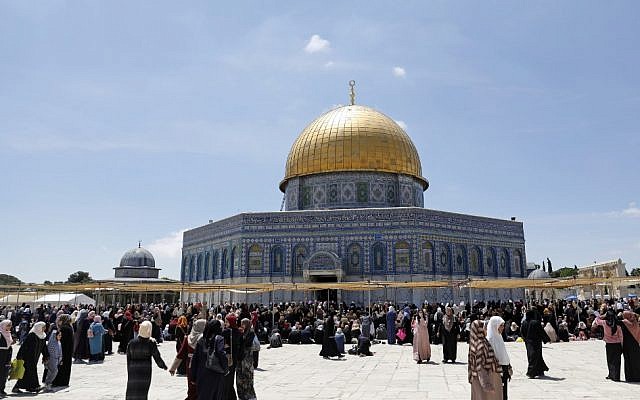
The committees provide food to the needy throughout the month.
One put up a 12-meter iron and nylon Ramadan lantern, with families gathering to watch.
“We start working a month before Ramadan,” said Ammar Sidr from the Bab Hata neighborhood committee.
“We’re experienced in decorating and coordinating colors and adding some personalized touches.”







The Times of Israel Community.