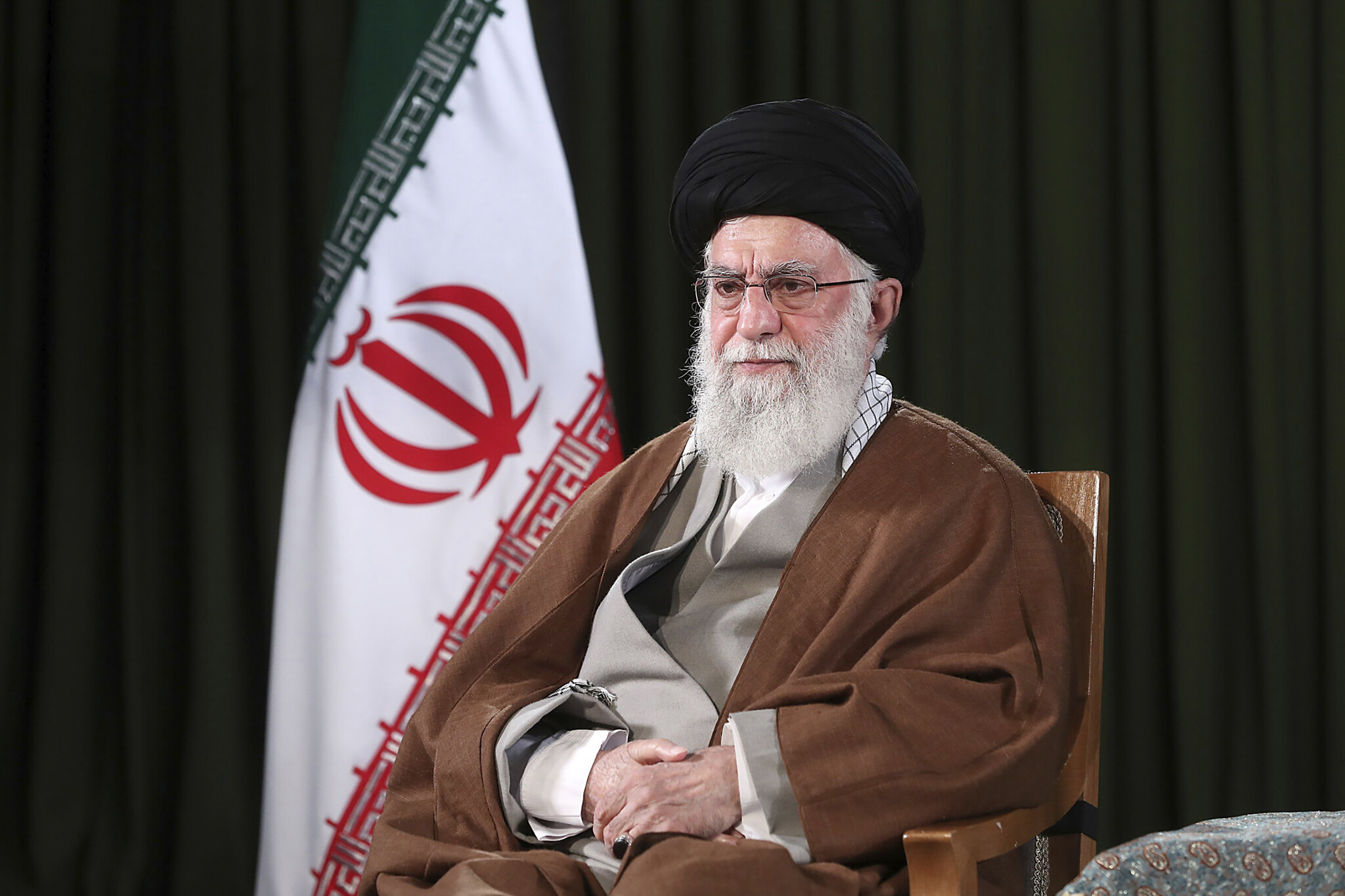
In this photo released on March 20, 2020 by the official website of the office of the Iranian supreme leader, Supreme Leader Ayatollah Ali Khamenei poses for a portrait prior to delivering his message for the Iranian New Year, or Nowruz, in Tehran, Iran (Office of the Iranian Supreme Leader via AP)
TEHRAN, Iran — Iran’s supreme leader suggested Thursday that mass gatherings in the Islamic Republic may be barred through the holy Muslim fasting month of Ramadan amid the coronavirus pandemic.
Supreme Leader Ayatollah Ali Khamenei made the comment in a televised address as Iran tries to restart its economic activity while suffering one of the world’s worst outbreaks.
“In the absence of public gatherings in the Ramadan month including praying, speeches and so on, that we are this year are deprived of them, we should create the same senses in our lonesomeness,” Khamenei said.
Ramadan is set to begin in late April and last through most of May. Public officials had not yet discussed plans for the holy month, which sees the Muslim faithful fast from dawn until sunset.
A woman wearing a face mask to protect against the new coronavirus carries her shopping in northern Tehran, Iran, Saturday, April 4, 2020. (AP Photo/Vahid Salemi)
The Islamic Republic is battling one of the world’s deadliest coronavirus outbreaks, which it says has killed 4,110 people and infected 66,220.
Get The Times of Israel's Daily Editionby email and never miss our top stories
There has been speculation abroad that the real number of deaths and infections could be higher.
Is our live election coverage important to you?
Are you relying on The Times of Israel for accurate and timely coverage of the 2026 Israeli election? If so, please join The Times of Israel Community. For as little as $6/month, you will:
Support our independent journalists who are working around the clock to report political developments as they unfold;
Read ToI with a clear, ads-free experience on our site, apps and podcasts; and
Gain access to exclusive content shared only with the ToI Community, including our DocuNationstreaming film series and weekly letters from founding editor David Horovitz.
We’re really pleased that you’ve read X Times of Israel articles in the past month.
That’s why we started the Times of Israel - to provide discerning readers like you with must-read coverage of Israel and the Jewish world.
So now we have a request. Unlike other news outlets, we haven’t put up a paywall. But as the journalism we do is costly, we invite readers for whom The Times of Israel has become important to help support our work by joining The Times of Israel Community.
For as little as $6 a month you can help support our quality journalism while enjoying The Times of Israel AD-FREE, as well as accessing exclusive content available only to Times of Israel Community members.
Thank you, David Horovitz, Founding Editor of The Times of Israel


 Add ToI as a Preferred Source on Google