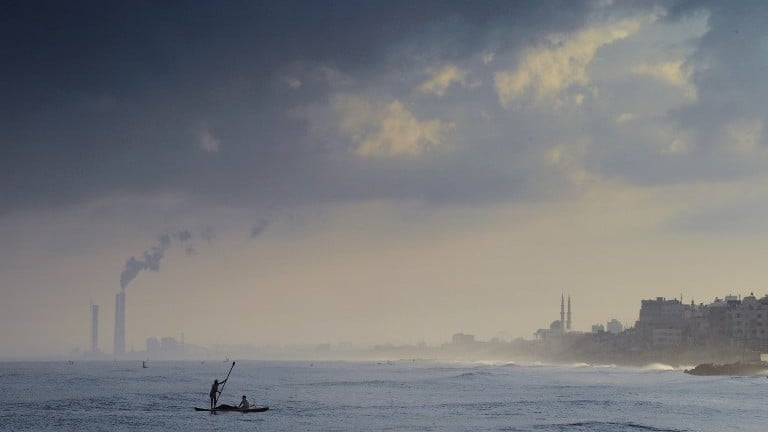
Illustrative photo of Palestinian fishermen paddling their small boat a few hundred meters off the beach of Gaza City while casting their nets in search of small fish on August 10, 2014. (AFP/Roberto Schmidt)
Israel’s transportation minister said that he is pushing for the construction of an “artificial island” off the coast of Hamas-ruled Gaza to alleviate hardship in the blockaded coastal strip.
Yisrael Katz said Monday his plan calls for an eight square kilometer (three square mile) island linked to Gaza by a five kilometer (three-mile) bridge. He said the island, estimated to cost $5 billion, would include a port and perhaps a future airport. Israel would supervise security checks but it would otherwise be run by Palestinians and the international community.
With Israel and Egypt maintaining a naval blockade of Gaza to prevent the Strip’s Hamas terrorist rulers importing weapons, the Palestinians have long been pleading for a port to connect them to the rest of the world.
Katz said Israel has no objection as long as its security needs are met.
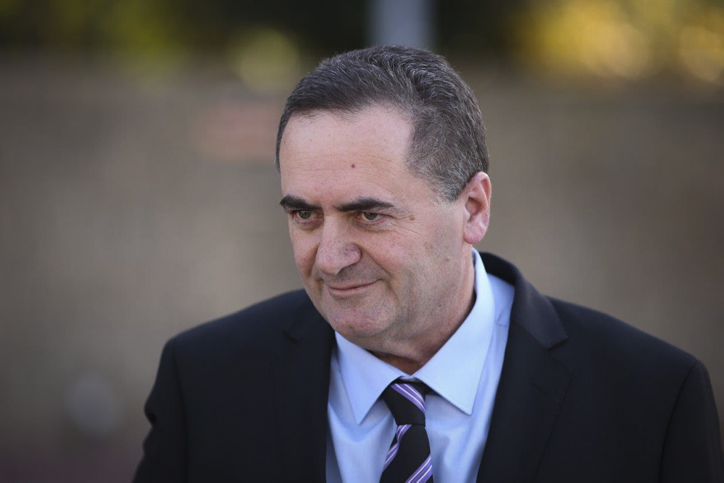
Transportation Minister Yisrael Katz arrives to cast his vote in the Likud primaries in Tel Aviv, December 29, 2015. (Flash90)
Katz expressed optimism that Israel’s security chiefs would back the plan, and that it would be put to a cabinet vote, Israel Radio reported. Afterwards, Israel would seek international funding for the project.
Get The Times of Israel's Daily Editionby email and never miss our top stories
The transportation minister, who also serves as Israel’s intelligence minister, said Saudi Arabia or China might foot the bill, or an unnamed Israeli, the Washington Post reported.
Katz said the Palestinian Authority signaled support for the idea, but PA officials refused to comment. Israel hasn’t discussed the project with Hamas or the PA, the Washington Post reported.
Advertisement
Help us report truthfully on social media
As a multimedia journalist, my job is to take the quality, fact-based journalism produced by The Times of Israel newsroom and make it accessible across every platform — from Instagram posts to podcasts to short-form videos.
This is how many, especially young people, consume news these days. But misinformation is rampant on social media. Our team at ToI produces accurate, responsible short-form reporting on Israel and the Jewish world.
If you believe in the importance of factual social media journalism, please consider joining our reader support group, The Times of Israel Community. Your financial support is essential to sustain responsible multimedia reporting.
We’re really pleased that you’ve read X Times of Israel articles in the past month.
That’s why we started the Times of Israel - to provide discerning readers like you with must-read coverage of Israel and the Jewish world.
So now we have a request. Unlike other news outlets, we haven’t put up a paywall. But as the journalism we do is costly, we invite readers for whom The Times of Israel has become important to help support our work by joining The Times of Israel Community.
For as little as $6 a month you can help support our quality journalism while enjoying The Times of Israel AD-FREE, as well as accessing exclusive content available only to Times of Israel Community members.
Thank you, David Horovitz, Founding Editor of The Times of Israel


 Add ToI as a Preferred Source on Google