

Israel’s Cellebrite to sell Georgia data extraction tech amid protester crackdown
Firm selling tool that gives police ‘lawful’ access to phones despite expressing concerns about sales being held up as Tbilisi fights off anti-government demonstrators
 Add ToI as a Preferred Source on Google
Reuters — Georgia has moved to renew contracts with Israeli technology firm Cellebrite DI Ltd for software used to extract data from mobile devices, procurement documents show, as the country grapples with ongoing anti-government street protests.
The documents, published on Tuesday on the website of Georgia’s state procurement agency, show the interior ministry has renewed licenses for Cellebrite’s digital forensics products and plans to buy new ones, to the tune of $2.4 million.
The software, called Inseyets, allows law enforcement to “access locked devices to lawfully extract critical information from a broad range of devices,” Cellebrite’s website says.
Cellebrite products are widely used by law enforcement, including the FBI, to unlock smartphones and scour them for evidence.
Georgia’s interior ministry plans to purchase six new licenses for Inseyets for a period of three years, an online invoice dated February 17 shows. It will also purchase an imaging software, allowing for “targeted data collection.”
The Georgian interior ministry did not immediately respond to a request for comment.
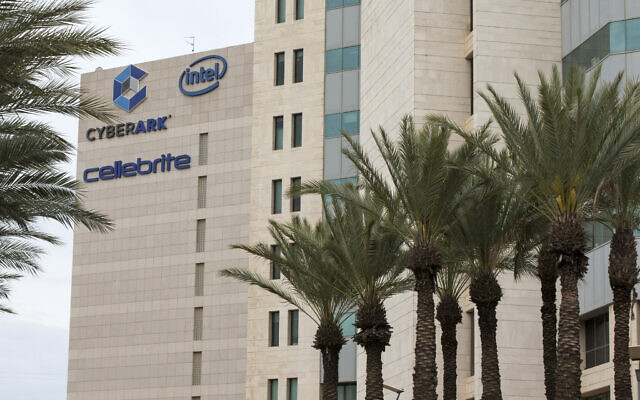
Cellebrite, responding to a request for comment from Reuters, said it “assesses countries we do business with both on an annual and ad hoc basis due to political and cultural shifts.”
“Our robust compliance and ethics program is designed so that democratized nations around the globe use our technology ethically and lawfully – all paramount to our mission of accelerating justice, safeguarding communities and helping to save lives,” a company spokesperson said.
Political crisis
Georgia was plunged into a political crisis in October when opposition parties charged the ruling Georgian Dream party with rigging a parliamentary election. GD, in power since 2012, denies any wrongdoing.
Georgians have been rallying nightly to demand the government’s resignation since GD said in November it was suspending European Union accession talks until 2028.
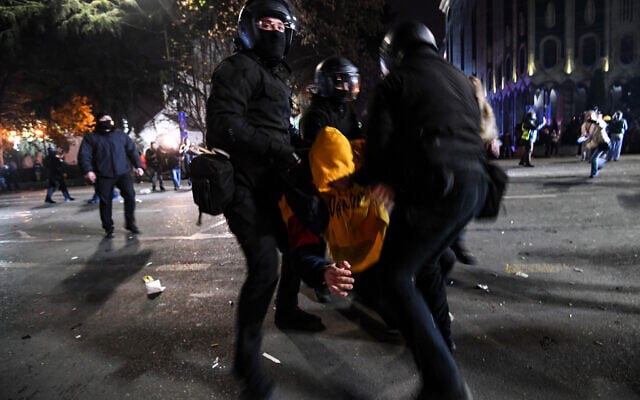
The demonstrations have drawn a swift crackdown by police, resulting in hundreds of arrests and beatings, rights groups say. The government has defended the police response to the protests.

Gangs of masked men in black have attacked opposition politicians, activists and some journalists in recent months, raising alarm in Western capitals. Georgian authorities have said they are not involved in the attacks, and condemn them.
A letter dated February 13 included among the documents on the state procurement website suggests Cellebrite was concerned about its sales to Georgia.
A Cellebrite sales director, writing to a Georgian interior ministry official on what he called a “sensitive issue,” warned Cellebrite’s local office “could be blocked from selling our equipment.”
“Therefore, I would like to advise you that if you are planning a purchase this year, please try to make it as early as possible,” the employee wrote, without specifying why sales might be halted.
The Cellebrite spokesperson did not comment on the exchange.
Sales to Serbia halted
In a separate move, Cellebrite announced on Tuesday that it was halting sales to Serbia after Amnesty International published a report showing that officials there had misused its software.
Serbian intelligence agency BIA used Cellebrite software on two occasions to unlock phones of journalists and activists before installing homegrown spyware, Amnesty’s report, published last December, found.
Chief Marketing Officer David Gee told Reuters in December that Cellebrite “absolutely” does not install surveillance software on devices and said the company was investigating the allegations.
Cellebrite said on Tuesday it would stop selling its products to Serbia, citing the Amnesty report.
“Cellebrite’s digital investigative software solutions support forensically sound, lawfully sanctioned investigations and are not spyware, surveillance or any other type of offensive cyber activity,” it said.










The Times of Israel Community.