

It’s the most terrorful time of the year
Like apples to honey and Eid sheep to slaughter, holiday fervor leads to violence according to the press, which declines to get overly excited over a major return to attacks while predicting yet more fighting to come
Joshua Davidovich is The Times of Israel's Deputy Editor
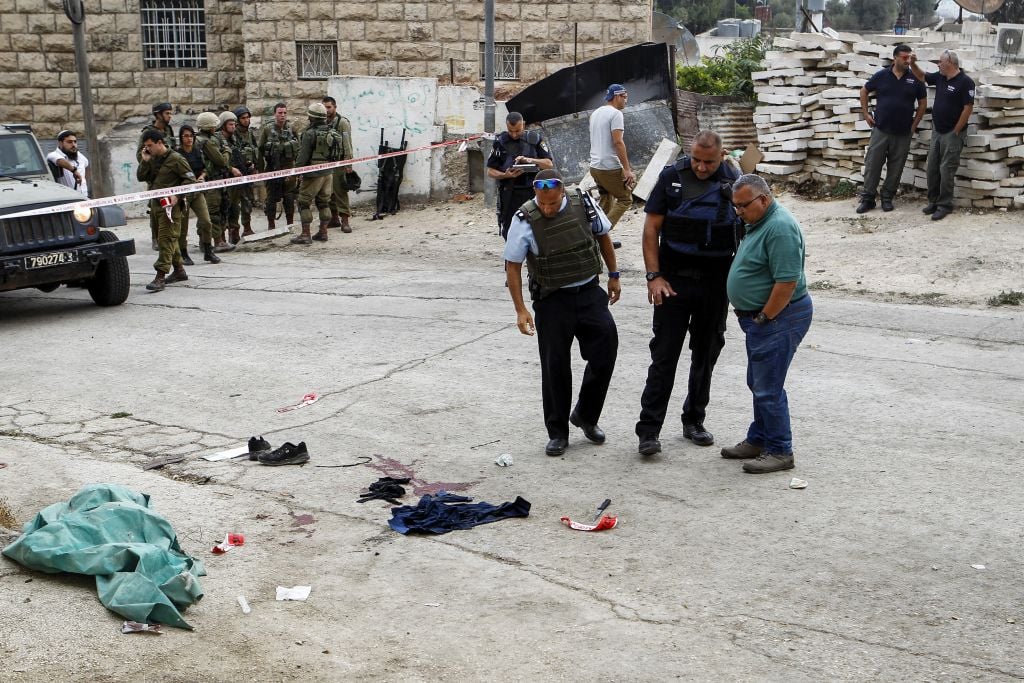
It wasn’t a question of whether terror would return to the streets of Jerusalem, the West Bank and the rest of Israel, but when. Less obvious, though, was the fact that it would come roaring back with such ferocity, during a weekend that saw five attacks (and a sixth Sunday morning).
Yet only one of three major dailies (kind of) leads with the spate of stabbings (and a car-ramming) Friday and Saturday, proving perhaps that despite the terror wave seeming to have subsided in recent months, Israelis see this more of a continuation of a process that never really ended – and only went into hibernation for a bit – and is thus no different from those nerve-wracking days nearly a year ago when four stabbing attacks in a day would barely make the front page.
The one paper to kick things off with the attack spree – Yedioth Ahronoth – still plays the story on the front page below a preview for a Friday story — yes that’s Friday, a full five (5) days away — about former boyband beefcake Amir Fryszer Guttman’s battle with cancer.
Showing that little has changed since the terror wave broke out about a year ago (and by some accounts exactly a year ago on the 17th), papers make like Satan’s groundhog and try to peer into the shadow of the weekend’s horrors to prognosticate if it means six more months of night soil hitting the fan.
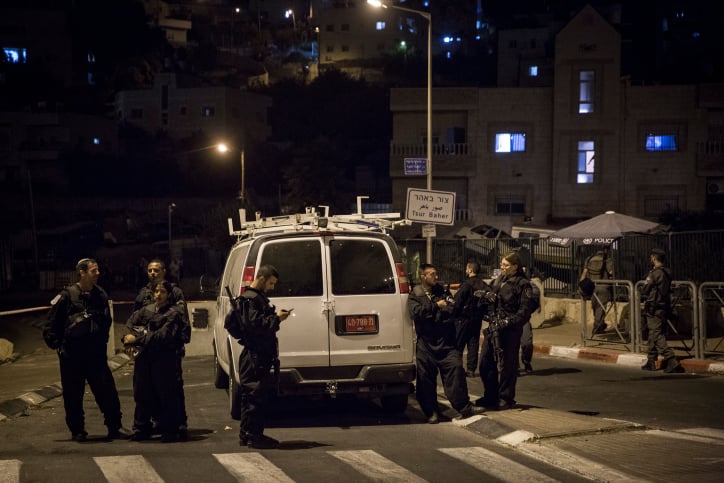
“Exactly a year ago, on Rosh Hashanah eve, the attack that in the eyes of many marked the start of the terror wave occurred: Terrorists threw stones at the car of Alexander Levlovitz in Jerusalem – and killed him. Since then, attack has followed attack, funeral has followed funeral, but recently it seemed like the wave had subsided. Until the weekend, in a string of incidents, terror again raised its head: In less than 24 hours there were five attacks, and along with the bloody pictures cam the great fear that as the holidays near, the terror will ramp up,” the paper writes.
That terror accompanies holidays like honey accompanies Rosh Hashanah apples or slaughter accompanies Eid al-Adha sheep seems obvious to all, but that doesn’t mean anyone knows what to do about it.
Yedioth military analyst Alex Fishman notes that an army meeting had just declared the terror wave all but over (with only four incidents in all of August) yet also noticed, by looking at the calendar, that there was a good chance things could heat up soon.
“At the same meeting, they even put an emphasis on IDF assessments that ahead of the fall holidays, from assessments based on past years, and especially last year, there was an increase in terror expected. At the discussion, they presented a plan to beef up forces in [the West Bank] – but still nobody thought that this weekend would see more incidents than in all of August.”
Israel Hayom’s Yoav Limor notes that despite the army’s best attempts to stem whatever terror may be coming, little has changed since last year, and thus they maybe shouldn’t expect different results this time around.
“One should hope that they will be able to calm tensions, but there’s room for doubt. The basic facts on the ground have not changed since the last wave of terror came and went, especially regarding the financial situation of West Bank residents, the moribund diplomatic process and continuing incitement in the Palestinian street,” he writes. “Given these, as the fraught holidays approach – there is a serious potential for an escalation – one which Israel and the PA both don’t want.”
In Haaretz, a front page reefer for an Amos Harel column also notes that there’s a fear that violence will ramp up ahead of the holidays, though that seems to have been the work of an overzealous editor, since the analysis contains nothing of the sort. “The reasons for the change are unclear. It may be connected to religious fervor around the Eid al-Adha holiday and ahead of the Jewish High Holy Days,” is all Harel will venture on the subject.
Most of his column is taken up with the goings on the north, where Israel is now using Iron Dome batteries to shoot down rockets coming over the Syrian frontier. Harel notes that the army believes the rockets were Katyushas fired not by regime forces but by rebels, and likely would not have even landed in Israel.
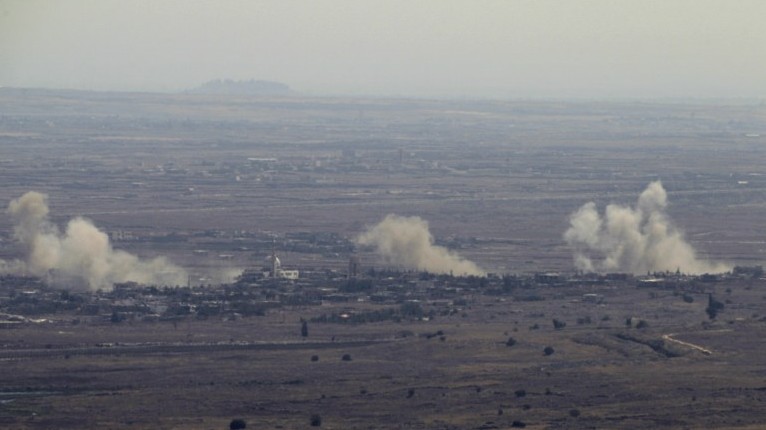
Israel Hayom leads off with the Syrian mess, and its front page headline plays up Russian anger at the US for killing dozens of Syrian soldiers by mistake, which could be part of its Press TV-esque campaign to make the hated US President Barack Obama look as bad as possible.
Inside the paper, though, most coverage surrounds the use of the Iron Dome. Despite the fact that the mortars shot down would likely not have even crossed the Israel-Syria ceasefire line, officials praise the army’s decision to activate the anti-missile battery.
“This is an important contribution to the security of the residents,” local politician Eli Malka is quoted saying. “We have seen from up close the intense fighting happening in recent days on the other side of the border, in Syria, causing the errant fire into the Golan… Golan residents and the many tourists visiting vacation sites here are continuing on with their normal lives fully.”
If Israel Hayom is still mad at Obama, despite the $38 billion gift Israel received just a few days ago, it seems the politician closest to the paper, Prime Minister Benjamin Netanyahu, is eager to be seen kissing and making up with the American leader, especially after the large military aid payday.
Haaretz reports that both leaders are in talks to hold a final meeting when Netanyahu is the US for the UN General Assembly this week.
“A week after the signing of the military aid package agreement, the two leaders will have the common goal of demonstrating warmth and friendship in front of the cameras. Both leaders will wish to strengthen the positive aspects of their joint legacy, expressed by an increase in U.S. military aid to Israel to its highest-ever level,” the paper reports.
Yet criticism has continued in the US and Israel over whether warmer relations between the two could have gotten a larger deal, or whether Congress should have been able to continue to grant Jerusalem bonuses.
Things got complicated over the weekend when Senator Lindsey Graham criticized his good buddy Netanyahu for taking the deal and “pulling the rug out” from Congressional efforts to broker an even better one.
Adding to the donnybrook, Yedioth reports on a letter signed by Netanyahu in which he promises to return any money that Congress sends to Israel, a vow termed by columnist and former IDF muckety-muck Amos Yadlin as “a bit absurd and humiliating.”
“The aid deal signed last week between Israel and the US isn’t a historic accomplishment but a strategic failure,” Yadlin writes of the whole $38 billion megillah. “The deal keeps the American support for Israel on the same level – or a bit smaller – as the aid from the last decade. Against long-term challenges and the strategic reality created by the Iran deal, he could have gotten much better aid.”






The Times of Israel Community.