

Live updates (closed)
 Add ToI as a Preferred Source on Google


The Times of Israel liveblogged Friday’s events as they happened.
Israeli TV airs footage of captive soldier being kidnapped, interrogated in Gaza

IDF soldier Matan Angrest seen being kidnapped by Hamas from an IDF tank on October 7, 2023. (Screenshot/Channel 12)
The “Uvda” news program airs footage of the kidnapping of IDF soldier and current hostage Matan Angrest on October 7, 2023, as well as previously unseen footage of him being interrogated in captivity.
The videos were collected by IDF forces and published with the permission of Angrest’s family.
In the kidnapping video, which appears to be taken from a Hamas bodycam, Angrest can be seen wounded and shirtless, being manhandled by a number of Hamas gunmen on top of the tank.
תיעוד רגעי החטיפה של החייל מתן אנגרסט pic.twitter.com/SO2fZmZ02P
— החדשות – N12 (@N12News) April 3, 2025
In video of the interrogation, Angrest, who appears to have facial wounds, recites his personal details in English, saying that he was a tank driver stationed at the Nahal Oz base.
Speaking to his family, Angrest says, “I hope to see you soon, I love you.” He calls on Prime Minister Benjamin Netanyahu to reach a hostage release deal, saying, “I want to see my family and my friends and I trust you.”
He is then questioned again and answers in Hebrew.
מתן אנגרסט בסרטון מהשבי שמשפחתו פרסמה: "אני רוצה לראות את המשפחה והחברים שלי – אני אוהב אתכם ומתגעגע"@yaelsharet_ pic.twitter.com/wa5bZFEJ1X
— גלצ (@GLZRadio) April 3, 2025
Earlier today, his mother, Anat, said their family felt they had no choice but to publish the videos and beg for his release: “There’s no time. We have medical reports from analyses of the videos that speak of long-term disabilities, abuse, facial fractures — serious injuries that get worse every day,” she adds. “My son is in a cage, in starving conditions, and without daylight.”
Energy minister says he discussed Saudi Arabia-Israel oil pipeline with US counterpart
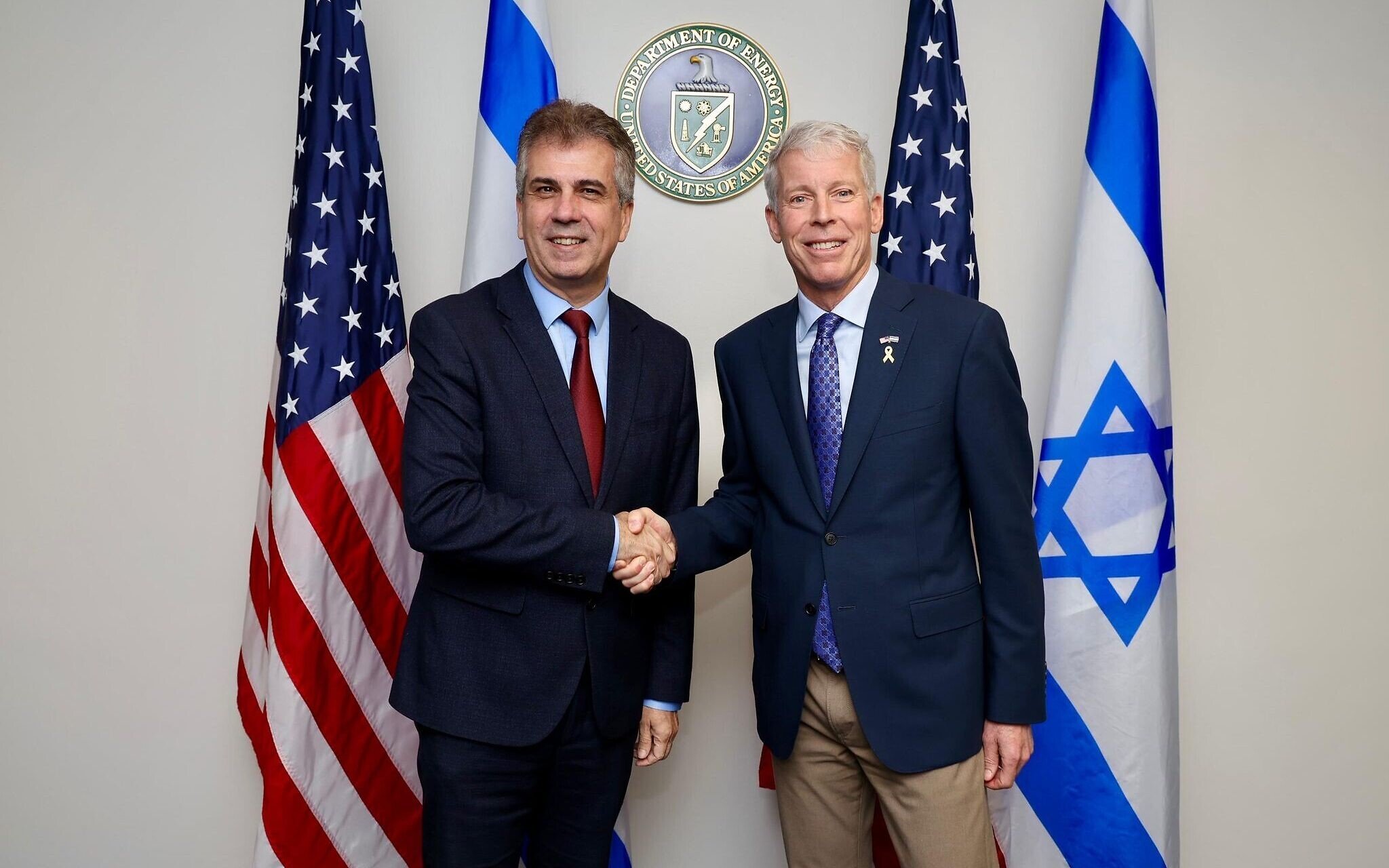
Energy Minister Eli Cohen meets his American counterpart Chris Wright in Washington on April 3, 2025. (Shmulik Almani)
Energy Minister Eli Cohen meets his American counterpart Chris Wright in Washington.
The pair discuss promoting energy cooperation between Abraham Accords countries in addition to Cohen’s plan to create an oil pipeline from Saudi Arabia to Israel, according to an Israeli readout.
Cohen also met separately with US Interior Secretary Doug Burgum, with the two discussing the creation of bilateral working groups in the fields of AI and energy.
Colombia announces purchase of Swedish fighter jets to replace aging Israeli aircraft

Colombian Air Force Kfir fighter jets fly in formation during the military parade to commemorate Colombia's Independence Day in Bogota on July 20, 2024. (Alejandro Martinez/AFP)
BOGOTA, Colombia — Colombia says it will buy up to 24 fighter jets from Swedish company Saab to replace aging Israeli aircraft whose maintenance has become complicated after the South American nation broke diplomatic ties with Israel over its war with Hamas.
Colombia’s Aerospace Force chief commander, Carlos Fernando Silva, says they are still working on the details of the contract with Saab, so in the end the number of planes could be less than 24.
Sweden’s Defense Minister Pal Jonson confirms on X that negotiations are under way.
Colombia has 22 Israeli-made Kfir fighter jets purchased in the late 1980s, and any maintenance can only be done by an Israeli firm. Those aircrafts were used in several attacks on remote guerrilla camps that debilitated the then-Revolutionary Armed Forces of Colombia. The offensives helped push the rebel group into peace talks that resulted in its disarmament in 2016.
Although the new purchase plans were announced amid a lack of diplomatic relations with Israel, the last three governments in Colombia already had cited intentions to replace the Kfir jets. The administration of current President Gustavo Petro started reviewing specific offers from countries like France, the United States and Sweden.
The Aerospace Force chief commander says that the Kfir planes will continue to operate for now. Once the new contract is finalized, the old planes will be replaced as the new ones arrive.
Palestinian hurling stones at West Bank highway shot dead by troops — IDF
IDF soldiers shot dead a Palestinian who hurled stones at an Israeli highway in the central West Bank, according to the military.
The Israel Defense Forces says troops from the 636th Combat Intelligence Collection Unit opened fire at a “number of terrorists throwing rocks toward Route 375” near the village of Husan, killing one and wounding another.
No soldiers were hurt.
GOP senator from Ohio calls Chuck Schumer ‘Fuhrer’
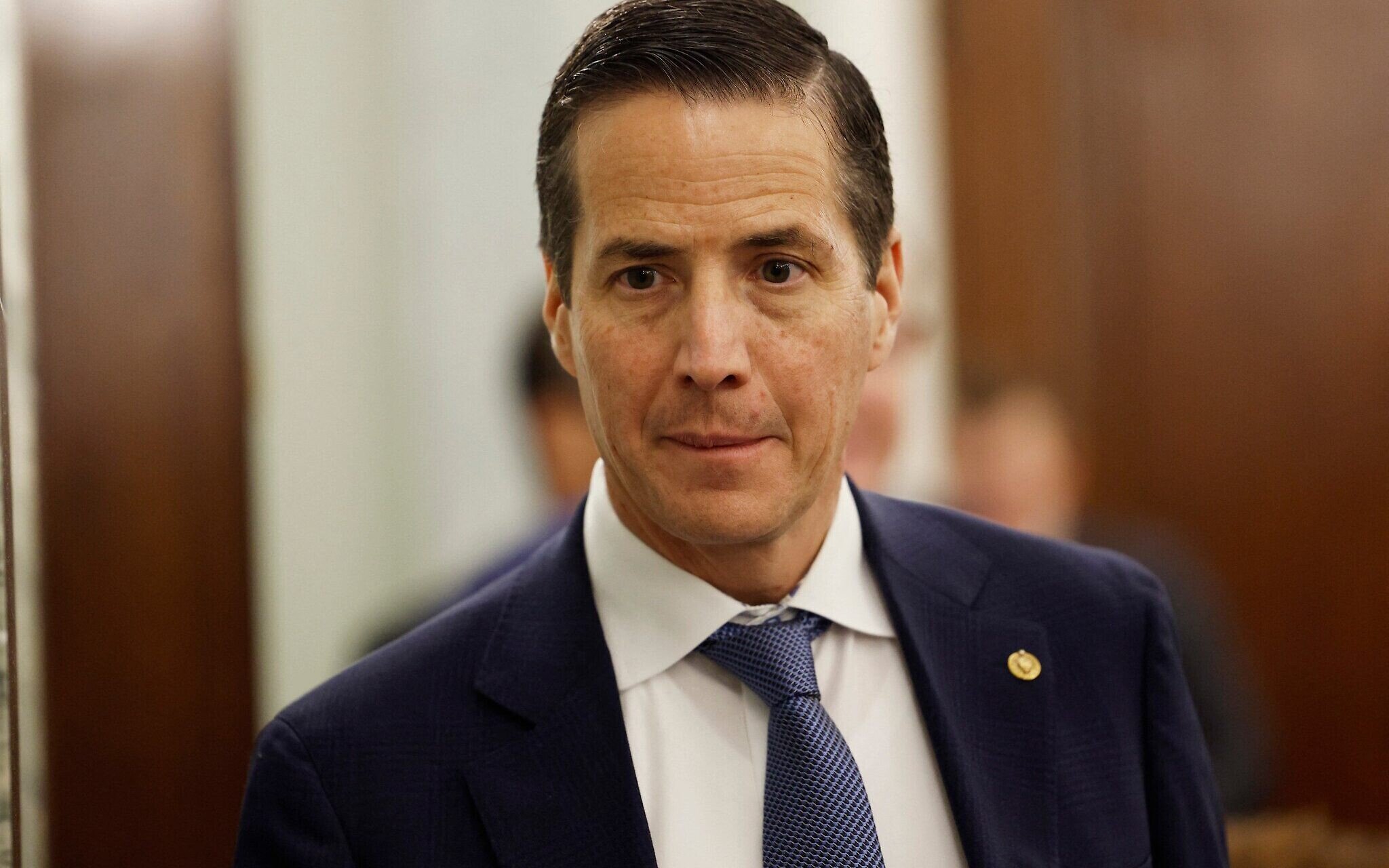
Republican Senator Bernie Moreno of Ohio departs from a US Senate Transportation Committee meeting on Capitol Hill on January 22, 2025, in Washington. (Anna Moneymaker/Getty Images/AFP)
WASHINGTON — A Republican member of the US Senate calls the chamber’s top Democrat Chuck Schumer — the highest-ranking Jewish US elected official — “Fuhrer,” a reference to the title used by Adolf Hitler.
Ohio Republican Bernie Moreno, who was elected in November, makes the comment to reporters outside the Senate chamber as members of his caucus struggle to agree on a path forward to try to pass US President Donald Trump’s sweeping tax-cut agenda.
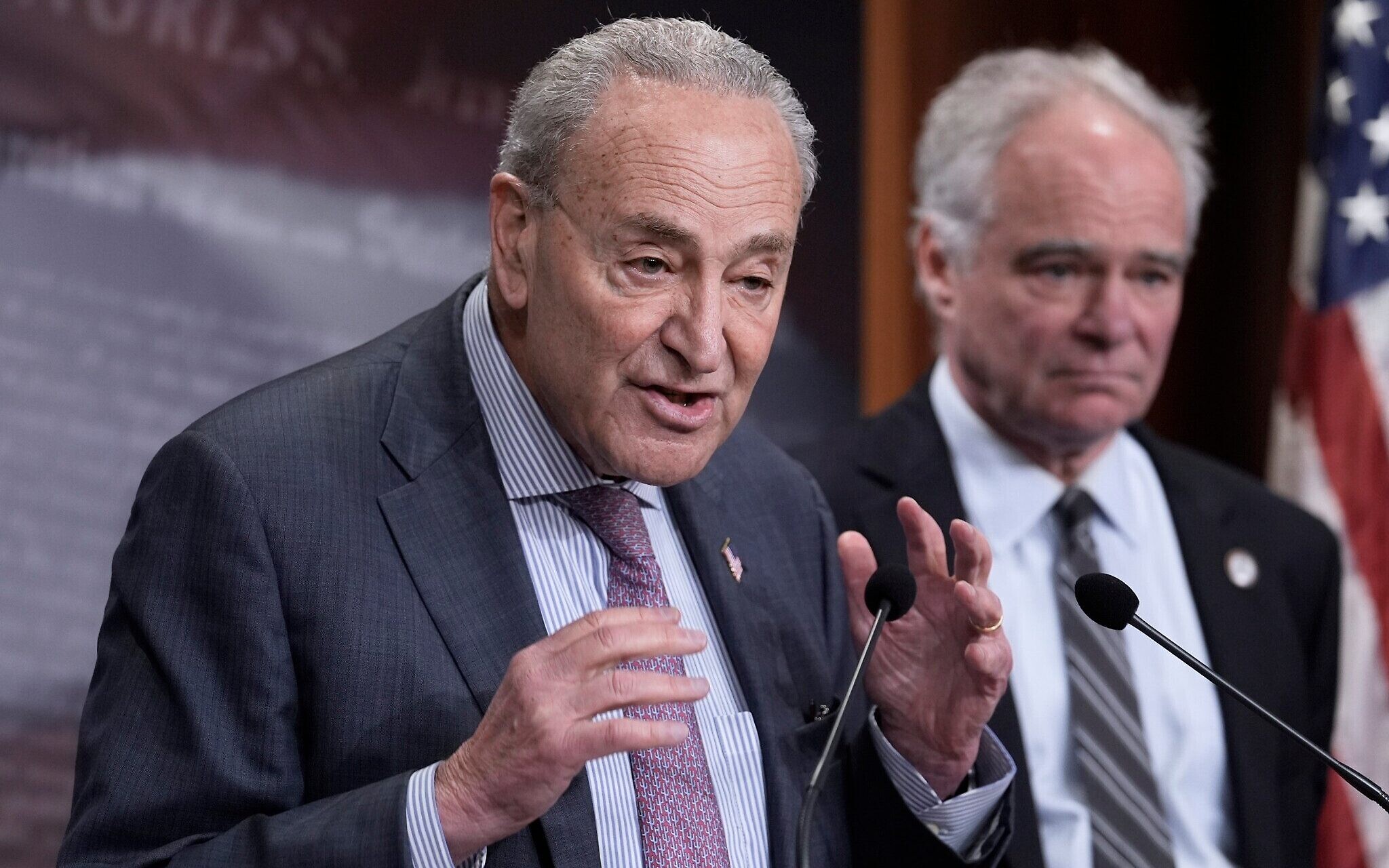
“Here’s the main thing you’ve got to understand. Republicans are independently minded. Democrats are monolithic sheep that follow the Fuhrer Schumer’s orders,” Moreno says.
The German word Fuhrer is a political title meaning “leader” that is most associated with Hitler, who led his country into World War Two and was responsible for the deaths of six million Jews.
Schumer has just had a book published titled “Antisemitism in America: A Warning.”
Asked about the comment, a Schumer spokesperson replied, “That’s textbook antisemitism, so we won’t comment on it.”
US official says $510 million in grants for Brown to be frozen over campus antisemitism

Students and community members hold an anti-Israel, pro-Palestinian rally at the encampment at Brown University in Providence, Rhode Island, on April 29, 2024. (Joseph Prezioso/AFP)
The administration of President Donald Trump plans to freeze $510 million in grants to Brown University over what it calls antisemitism on campus, a US official tells Reuters, but the university says it has not yet been formally notified.
The administration’s action makes Brown the latest academic institution targeted by Trump over this issue. The US Education Department sent a letter last month to 60 universities, including Brown, warning it could bring enforcement actions against them.
The US official speaks on condition of anonymity.
Trump has threatened to slash federal funding for universities over allegations of antisemitism during pro-Palestinian campus protests against US ally Israel over the war with Hamas in Gaza.
Trump has called the protesters antisemitic, and has labeled them as sympathetic to Hamas terrorists and as foreign policy threats.
Protesters, including some Jewish groups, say the Trump administration wrongly conflates their criticism of Israel’s actions in Gaza and advocacy for Palestinian rights with antisemitism and support for Hamas.
In an email to campus leaders shared by a Brown University spokesperson, its provost, Frank Doyle, says the university is aware of “troubling rumors emerging about federal action on Brown research grants” but added it had “no information to substantiate any of these rumors.”
“We are closely monitoring notifications related to grants, but have nothing more we can share as of now,” he adds.
Numerous streets to be closed for Jerusalem Marathon
Many streets in Jerusalem will be closed this morning due to the Jerusalem Marathon, now in its 14th year.
14th annual Jerusalem Marathon kicks off

Jerusalem Mayor Moshe Lion (R) and freed hostage Karina Ariev (C) at the 14th annual Jerusalem Marathon, April 4, 2025. (Zev Stub/Times of Israel)
The Jerusalem Marathon has begun, with tens of thousands of runners from Israel and around the world taking part in the 14th annual event.
Under the slogan “Am Yisrael ratz” (the nation of Israel runs), the event honors the contribution of IDF soldiers and emergency responders throughout the Gaza war.
The race takes runners through some of the city’s most famous modern and historical landmarks, including the Old City, Hebrew University, the Israel Museum, Sultan’s Pool, the Tower of David, the Armenian Quarter, and Jaffa Street.
Released hostage Karina Ariev, a surveillance soldier taken hostage by Hamas from the Nahal Oz base on October 7, 2023 and released in January after 477 days in captivity, will run the 5 kilometer race along with Jerusalem Mayor Moshe Lion. She is expected to give a short speech before the start.
The temperature just after 6 a.m., as runners gather at the starting line in front of the Knesset building for the marathon and half-marathon, is 10 Celsius (50 Fahrenheit). It is expected to get up to 19 Celsius (66 Fahrenheit) by the time the last runners cross the finish line.
As the marathon arrangements disrupt traffic around the city for most of the day, many Jerusalem residents are expected to come out and cheer runners and enjoy the festivities at the capital’s central Sacher Park.
US National Security Agency director and deputy fired from posts — report
WASHINGTON, April 3 (Reuters) – The director of the US National Security Agency was fired yesterday, the Washington Post reports, citing two current and one former US officials.
Timothy Haugh, who is also head of US Cyber Command, was dismissed along with his deputy at the NSA, Wendy Noble, the newspaper says.
Noble was reassigned to a job within the Pentagon’s office of the Undersecretary of Defense for Intelligence, the newspaper says. The NSA is part of the US Defense Department.
The current and former officials cited by the Washington Post say they do not know the reason for Haugh’s dismissal or Noble’s reassignment.
US Cyber Command deputy William Hartmann has been named acting NSA director and Sheila Thomas, who was the executive director at the NSA, is named acting deputy, the newspaper says.
The Pentagon and the White House do not immediately respond to requests for comment.
Republican President Donald Trump, since taking office on January 20, has fired multiple top officials at US agencies and installed loyalists.
The NSA is one of the United States’ premier intelligence agencies and uses top-tier, specialized technology and systems to collect and analyze intelligence. US Cyber Command carries out both offensive and defensive operations and monitors the networks of the Department of Defense.
Report: Senior Hamas official killed in overnight strike in Sidon, southern Lebanon
An Israeli drone strike is reported to have targeted a residential building in the southern Lebanon city of Sidon overnight, killing three.
The pro-Hezbollah Al Mayadeen news outlet reports that senior Hamas operative Hassan Farhat was killed in the strike.
Footage from the scene of the strike shows one floor of the apartment block in flames, with smoke pouring out of it. The other floors appear to be relatively unscathed.
There is no immediate comment from the IDF.
Reports of a precision-airstrike earlier by the Israeli Air Force, on an apartment building inside the city of Sidon in southern Lebanon. Reports that the target eliminated in Sidon was a senior Hamas official. It is also reported that his family was eliminated along with him. pic.twitter.com/YQMheOFYiC
— Eretz Israel (@EretzIsrael) April 4, 2025
IDF says it widened ground operations in northern Gaza, aiming to expand buffer zone
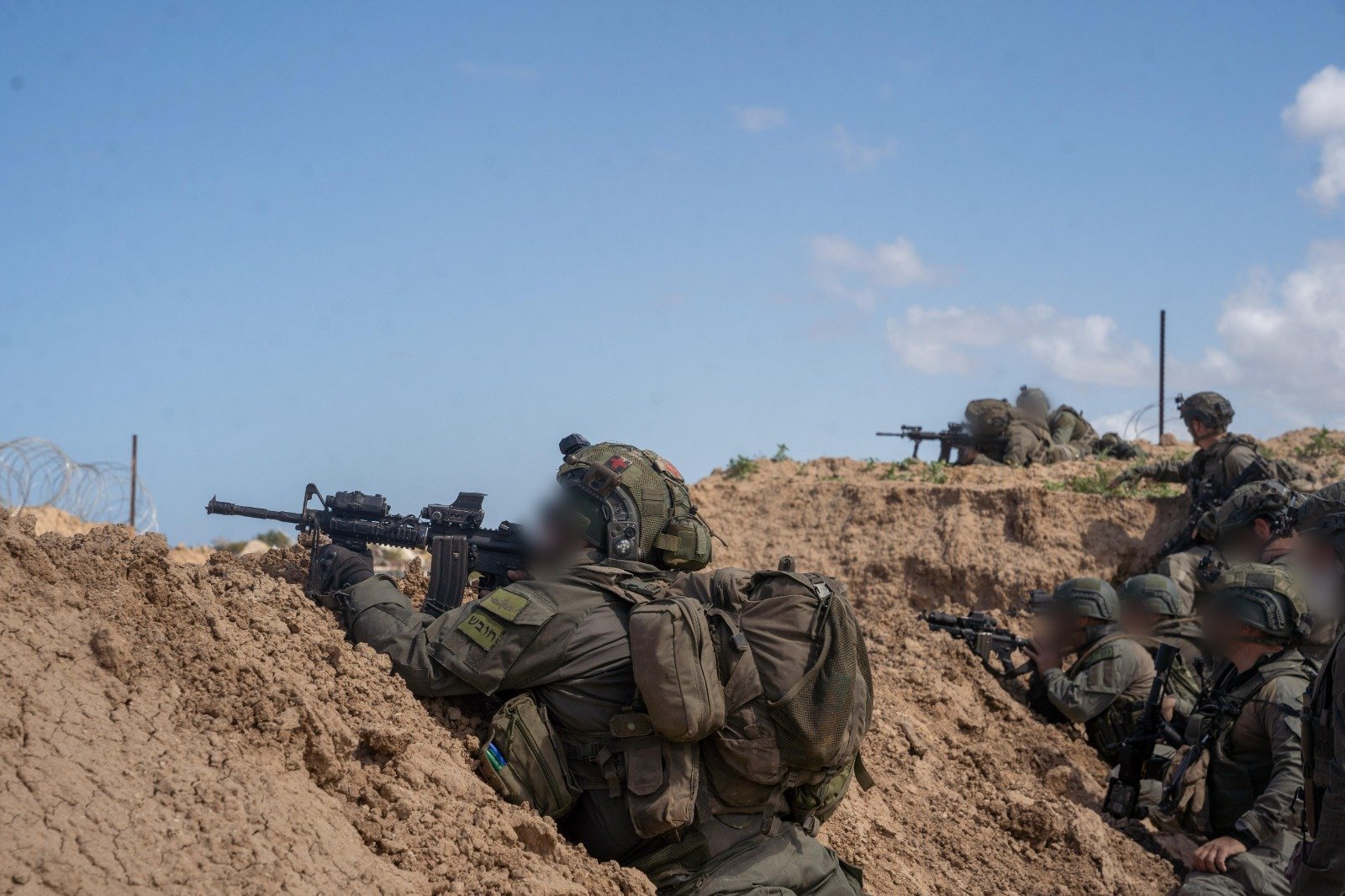
IDF troops operate in the northern Gaza Strip in a handout photo issued on April 4, 2025. (Israel Defense Forces)
Early this morning, the IDF says it expanded its ground operations in the northern Gaza Strip, with troops pushing into Gaza City’s eastern Shejaiya neighborhood.
According to the military, the operations are aimed at expanding Israel’s buffer zone along the Gaza border.
The IDF says that so far, troops have killed several terror operatives and destroyed infrastructure, including a Hamas command center.
The military says it is enabling civilians to evacuate the area “for their safety.” It had issued evacuation warnings for Shejaiya yesterday.
IDF confirms it killed senior Hamas commander in southern Lebanon overnight
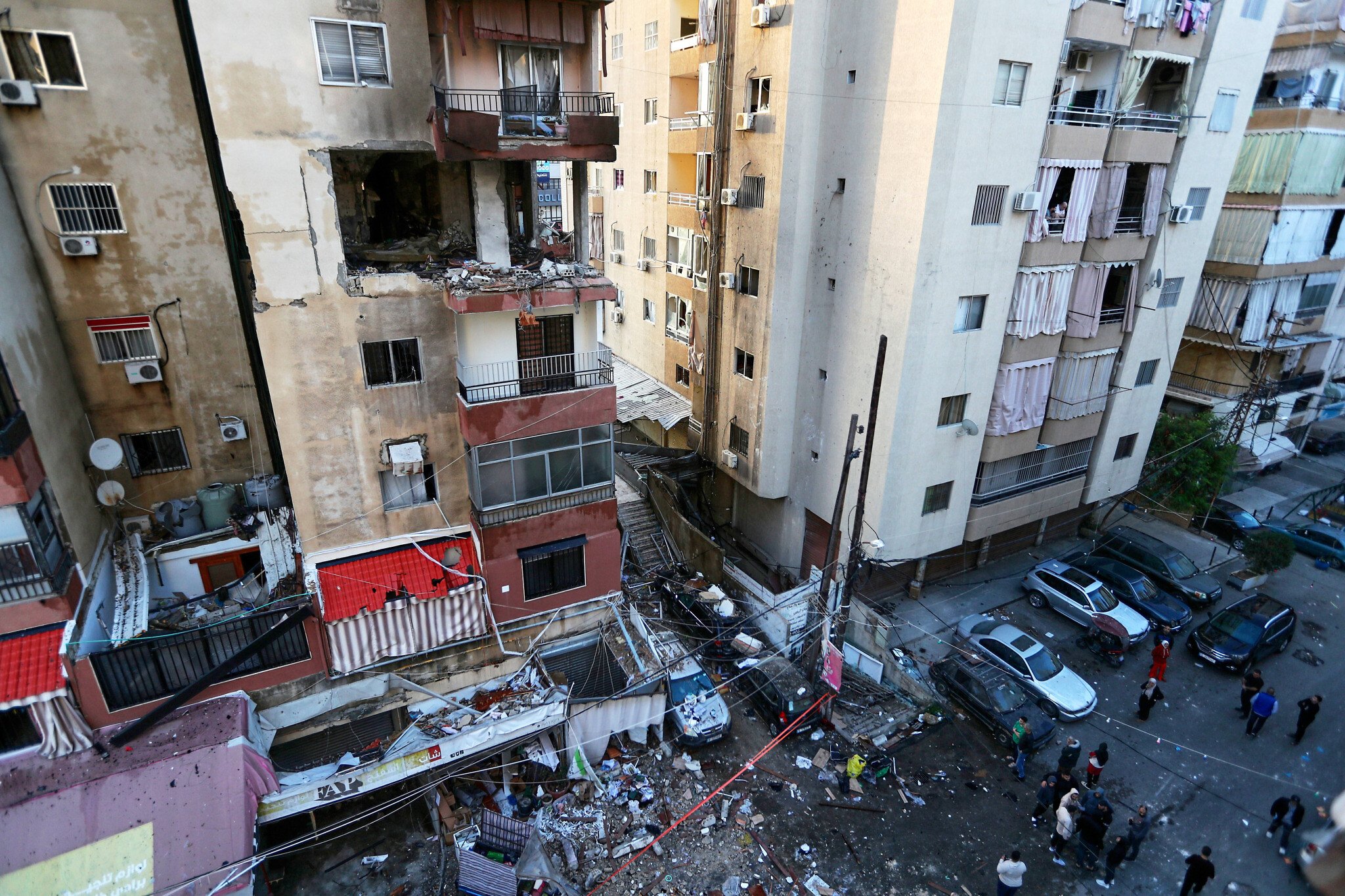
Residents gather near an apartment that was hit earlier by an Israeli airstrike targeting a senior Hamas commander, in the southern port city of Sidon, Lebanon, April 4, 2025. (AP Photo/Mohammed Zaatari)
A senior Hamas commander was killed in an Israeli airstrike in the coastal Lebanese city of Sidon overnight, the military announces.
Hassan Farhat had headed Hamas’s forces in the western sector of Lebanon, according to the IDF.
The Israeli airstrike had hit an apartment building in Sidon.
During the war, the military says Farhat advanced numerous attacks on Israeli civilians and IDF troops, and was responsible for a rocket attack on the Northern Command base in Safed on February 14, 2024, killing Staff Sgt. Omer Sarah Benjo and wounding other troops.
“The terrorist was involved in advancing terror attacks against the State of Israel in recent months, and his activities constituted a threat to the State of Israel and its citizens,” the IDF says.
At start of Jerusalem Marathon, ex-hostage Karina Ariev says running symbolizes ‘strength, freedom’
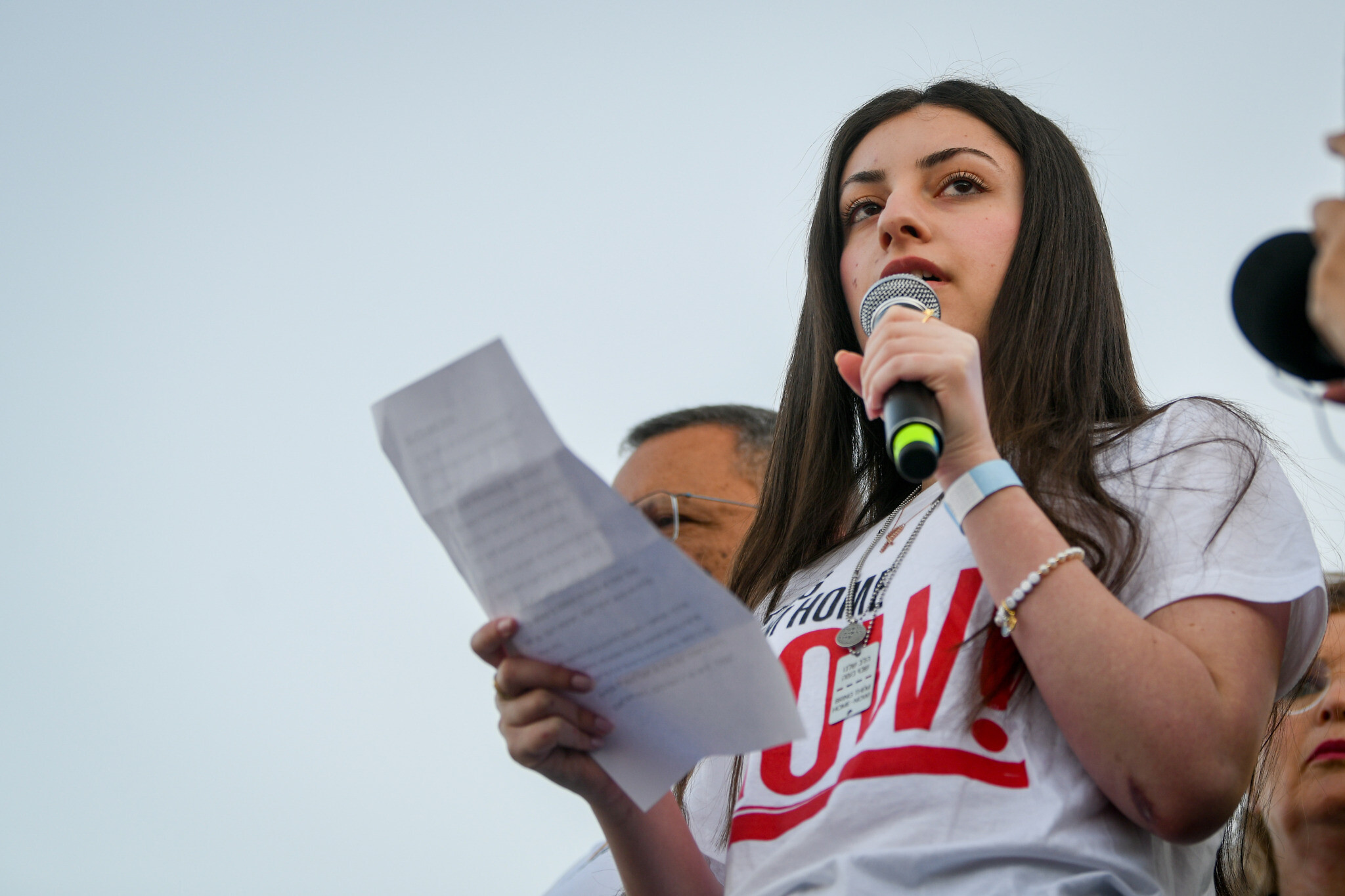
Former hostage Karina Ariev speaks at the start line of the Jerusalem Marathon, April 4, 2025. (Arie Leib Abrams/Flash90)
Freed hostage Karina Ariev delivers a brief speech at the start of the Jerusalem Marathon, where she is running the five-kilometer race along with Jerusalem mayor, Moshe Lion.
“My name is Karina Ariev, and I’m standing here today, after 477 days in captivity. I am privileged to be here with you at the start line, free,” she starts, to applause from the crowd.
“Until two months ago, I didn’t think I would get to come home from captivity, let alone start a marathon in Jerusalem, the city that I was born and raised in,” says Ariev, a surveillance soldier snatched by Hamas from the Nahal Oz outpost on October 7, 2023 and freed during the recent ceasefire.
“For me, running symbolizes strength, and above all, freedom,” says Ariev. “I’m not just here for myself, I am here for those who were not able to return, for those who fell, for those who are still waiting, and for those who are forever in our hearts.”
She asks the marathon participants to “feel the freedom” as they run today.
“Dedicate your run to the memories of our heroes who laid down their lives so that we could be here today, to the hostages who should return safely and quickly, and to us, and for all the people of Israel,” she adds.
שורדת השבי קרינה ארייב נואמת בהזנקת מרתון ירושלים: "כשתרוצו הרגישו את החופש, הקדישו את הריצה לזכר הגיבורים והגיבורות שלנו שהקריבו את חייהם כדי שנוכל לעמוד פה היום, עבור החטופים שיחזרו בשלמות ובמהרה, עבורנו ועבור כל עם ישראל"@nakash_noam pic.twitter.com/QqITNa0HBC
— גלצ (@GLZRadio) April 4, 2025
Jerusalem marathon brings out local runners, families
The 14th annual Jerusalem Marathon brings tens of thousands of runners and their families out on a sunny Friday morning in the capital, each with their own stories and reasons for participating.
“We are talking about 40,000 people who came from all over Israel, from abroad, and from within Jerusalem to run this morning,” says Jerusalem mayor, Moshe Lion. It’s a beautiful day, and we are very proud of this event.”
Lion ran the 5k alongside released hostage Karina Ariev, a surveillance soldier taken hostage by Hamas from the Nahal Oz base on October 7, 2023, and released in January after 477 days in captivity.
It’s easy for her to run, at her age,” Lion says. “For me, it’s not so easy.”

Hillel Weiser, an 11-year-old Jerusalem resident, is running his first 10k with his parents, in memory of his cousin, Staff Sgt. Roey Weiser, a Golani soldier born to American immigrants who was killed while serving near Gaza on October 7. “I’m hoping to finish without stopping,” Wesier says. “It’s a very special day.
Marty Gordon, a 79-year-old resident and former athlete, participated in the Jerusalem run for the first time. “The energy was wonderful,” he said. “It’s an experience that everyone should have.”

Gordon didn’t push himself for the race. “I walked the 5k,” he said. “I’m an old guy. I’ve done my marathons. These knees are almost 80 years old.”
Jerusalem resident Rachel Green ran the 5k with her eight-year-old son Natan, participating in his first run. “I ran the whole thing,” Natan says proudly, showing off the medal around his neck. “It was a lot of fun.”

Ukrainian, Kenyan win the Jerusalem Marathon

Jerusalem Marathon winner Bogdan Simanovich crosses the finish line, April 4, 2025. (sportphotography)
The winner of the Jerusalem marathon is Bogdan Simanovich, 39, from Ukraine, with an official time of 2:22:47.
The first woman to finish the full marathon is Salgong Pauline Gepkirui, 37, from Kenya, with a time of 2:51:58.
Some 40,000 runners from all over the world are taking part in the 14th annual Jerusalem Marathon, which this year honors the contribution of IDF soldiers and emergency responders throughout the war in Gaza.

Police again ask to extend remand of PM aides Urich and Feldstein by seven days
Police have again asked to extend the detention of Netanyahu aides Jonatan Urich and Eli Feldstein by seven days, amid the ongoing probe into the so-called Qatargate scandal, in which they are central suspects.
The Rishon LeZion Magistrate’s Court rejected the same request yesterday, choosing instead to extend the remand by just 24 hours.
Police detained Urich and Feldstein for questioning on Monday. They suspect both of having taken money to spread pro-Qatari messaging to reporters, with the goal of boosting the Gulf state’s image as a mediator in hostage talks between Israel and Hamas, while in the prime minister’s employ.
Jerusalem non-profits celebrate, fundraise with marathon teams
Some 27 non-profit organizations assembled teams of runners at the 14th annual Jerusalem Marathon, many raising money in support of terror victims and their families.
About 120 runners joined the Remembering Roey team, created in memory of Staff Sgt. Roey Weiser, a Golani soldier born to American immigrants who was killed while serving near Gaza on October 7. “His whole division is here, along with other friends,” says his father, Yami Weiser. “People from all over the country came to join.”

Another team raised money for the Ari Fuld Project, created in memory of the pro-Israel activist killed by a Palestinian terrorist in 2018.
“We’re here fighting for Israel, which is exactly what Ari did during his lifetime,” says Miriam Fuld, Ari’s widow and chairman of the organization. “Ari came to the marathon every year and loved running through the streets of Jerusalem. We’re continuing his work by being here and by spreading truth and justice. It’s amazing to see so many people here and so happy on a beautiful morning.”
Another organization, Just One Chesed, assembled an international team of 50 runners to raise money for an organization encouraging people to do more good deeds. “We’re so excited to be here today and see the nation come together, united as one,” says the organization’s founder, Jerry Latinik. ” It’s been a long year for Israel, and we’re excited to have a booth and spread kindness and inspire people.”

Qatargate: Urich’s lawyer claims he collapsed during interrogation, was told to ‘shut up’ by police when he complained of chest pain
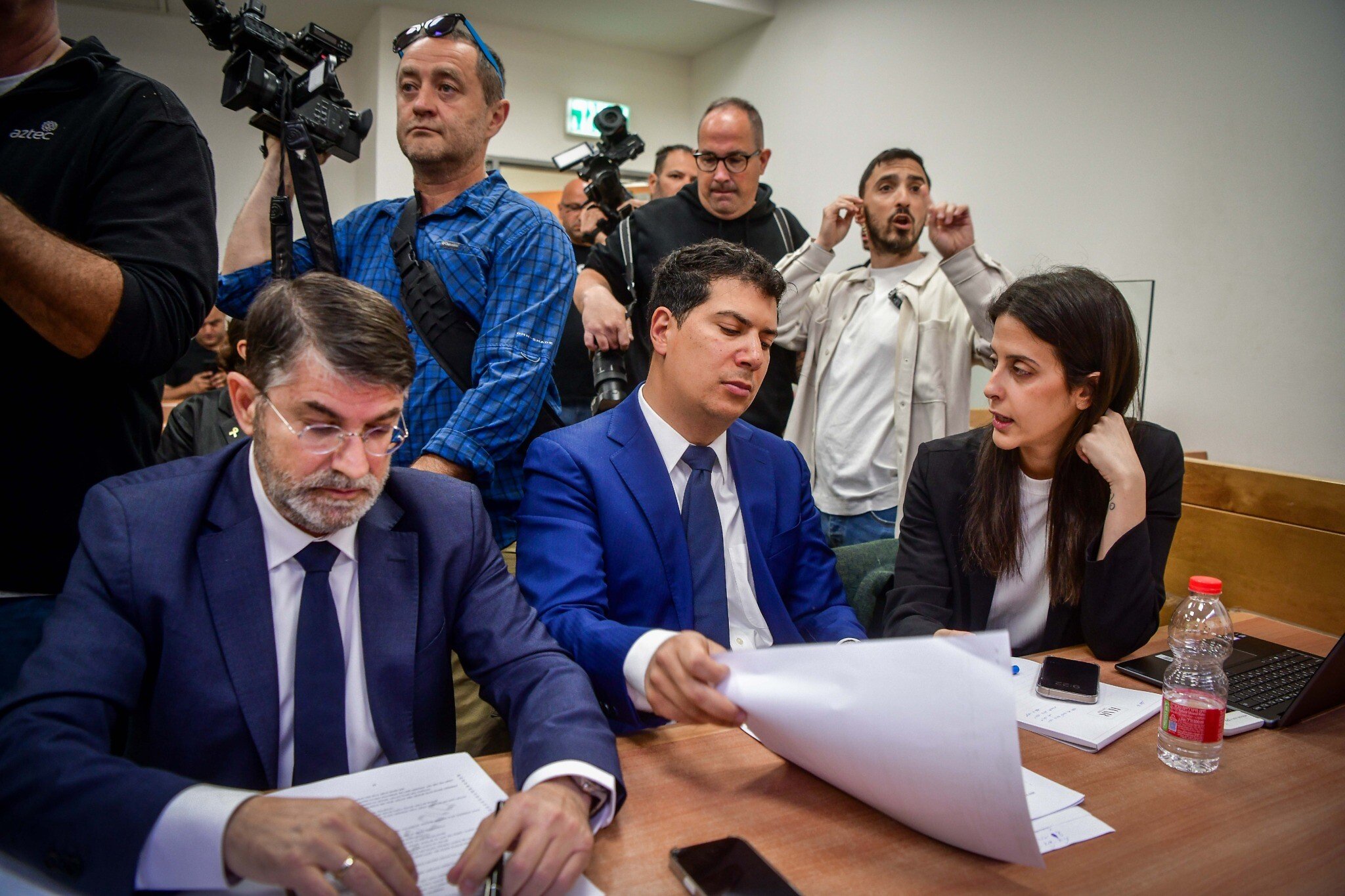
Eli Feldstein's attorney Oded Savoray (left), Jonatan Urich's attorney Amit Hadad (center) and other attorneys attend a court hearing at which police asked to extend the remand of Prime Minister Benjamin Netanyahu's aides Urich and Feldstein amid the ongoing Qatargate investigation, at the Rishon LeZion Magistrate's Court, April 3, 2025. (Avshalom Sassoni/Flash90)
Attorney Amit Hadad, who is representing Jonatan Urich in the so-called Qatargate scandal, alleges in a hearing at the Rishon LeZion Magistrate’s Court that his client collapsed during a police interrogation the other day.
The focus of the hearing is a police request to extend Urich’s remand, and that of fellow suspect Eli Feldstein, by an additional seven days.
In an exchange reported on by Channel 12, Hadad tells the court that Urich had informed the police detective questioning him that he was having chest pain but was told to “Shut up.”
The police representative present at the court hearing denies Hadad’s version of events.
“You didn’t do anything about his pain until he was on his way to the [police] car, and then Urich lost consciousness and fell to the ground,” Hadad asserts, adding that only then was an ambulance called.
Counteracting him, the police representative says Hadad’s version of events is “not accurate.”
The police representative claims that he “came immediately to the parking lot” when informed that Urich had passed out and needed an ambulance.
“I saw Urich sitting on the ground, but he wasn’t unconscious,” he says.
He says Urich had refused to be taken to the hospital because he didn’t want to be seen in handcuffs, and so was instead treated by Magen David Adom in the interrogation room.
Urich and Feldstein to be released to house arrest after judge rejects request to extend remand; police lodge appeal
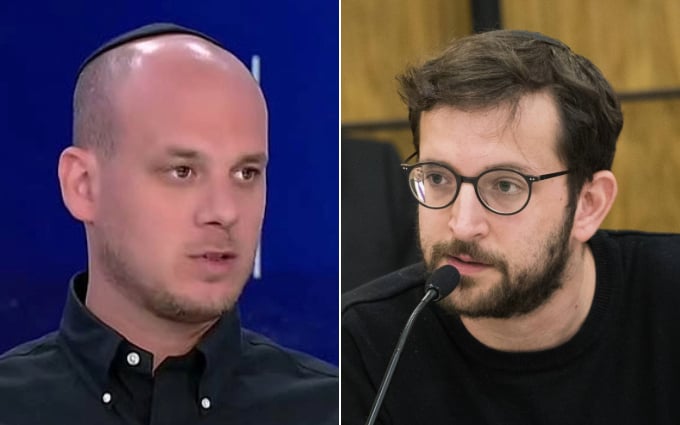
Eli Feldstein (left,) a former spokesman in the office of Prime Minister Benjamin Netanyahu (Kan screenshot, used in accordance with clause 27a of the copyright law); Likud spokesman Jonatan Urich speaks at a Central Elections Committee meeting at the Knesset in Jerusalem, April 3, 2019. (Yonatan Sindel/Flash90)
Rejecting a police request to extend the remand of key Qatargate suspects Jonatan Urich and Eli Feldstein, the Rishon LeZion Magistrate’s Court rules that they will be released to house arrest until April 22.
The two are also forbidden from contacting anyone involved in the affair, including Prime Minister Benjamin Netanyahu, for 60 days, and barred from leaving the country for the next 80 days.
The police immediately seek leave to appeal their release.
Judge Menachem Mizrahi also levels criticism at the police investigators, saying that he suspects they didn’t focus solely on Urich and Feldstein’s alleged ties to Qatar during the last few days of interrogations, but also used the opportunity to probe the two prime ministerial aides about the classified documents leak from the Prime Minister’s Office, in which Feldstein is also a central suspect.
In the so-called Qatargate affair, Urich and Feldstein are suspected of multiple offenses tied to their alleged work for a pro-Qatar lobbying firm, including contact with a foreign agent and a series of corruption allegations involving lobbyists and businessmen.
Separately, Feldstein has been indicted in a scandal in the PMO in which a classified document ostensibly detailing Hamas’s priorities and tactics in hostage negotiations was unlawfully removed from the IDF’s military intelligence database and material from it was leaked to Germany’s Bild newspaper.
Lebanon’s new central bank governor says bank must counter terror financing, money laundering
Lebanon’s newly appointed central bank governor Karim Souaid said on Friday the bank must counter money laundering and terrorist financing.
He also said at a press conference that the bank would work to reschedule public debt and pay back depositors.
IDF Central Command chief blasts reservists who vandalized Palestinian village, settlers who set fire to cop car
The chief of the IDF Central Command, Maj. Gen. Avi Bluth slams acts of vandalism by reservist soldiers in a Palestinian village and the arson of a police cruiser by settlers this week.
“We are working well amid Ramadan, which is going by quietly, but we have irregular incidents,” Bluth said to troops yesterday.
“Unfortunately, the activities of our reserve troops in Deheisha are not what we expect — vandalism, graffiti, during operational activity, this is an unacceptable event,” he says.
Photos taken by Palestinian residents in Deheisha near Bethlehem on Thursday showed the defacement of walls by Israeli soldiers, including Stars of David graffitied over Arabic slogans.
“It is inconceivable that IDF soldiers do not follow their commanders’ instructions. We are determined to stop this phenomenon, we will act harshly in this matter,” Bluth says.
Overnight between Wednesday and Thursday, dozens of settlers at a wedding near Kochav Hashachar attacked police responding to a noise complaint. The settlers hurled stones at the officers and set fire to their vehicle.
“Besides this crossing a red line, and it will be treated severely, there is no greater ingratitude than this,” Bluth says on the burning of the police car.
‘Use whatever tools you have’: Ex-hostage Tal Shoham appeals for UN to push for release of remaining captives
Released hostage Tal Shoham visits the United Nations offices in Vienna with the families of hostages Guy Gilboa-Dalal and Evyatar David, with whom he was held during his captivity and who have yet to be freed.
In an appeal to the dozens of diplomats, Shoham urges them to use their positions to advocate for the release of his friends and all remaining 59 hostages.
“Forty days ago, I was born for the second time,” he says. “Forged from Hamas’s terrible cruelty. Emerging from hell into the sanity of a civil nation.”
He says that during his 505 days in captivity, he “had to turn inward, finding strength from within” in order to survive.
“I learned a great deal about myself, who I am, and what I want to dedicate my new life to,” he says.
“Speaking here today is not something I would have imagined doing in my previous life,” Shoham acknowledges. “But the man I am today is willing to face his fears, and sees them as opportunities to bring about much-needed change. I’m here because I believe each and every one of you sitting here today has power. Power that can be used to accelerate the return of my brothers still held hostage in Gaza.
I’m here today to motivate you to do what desperately needs to be done. to use whatever tools you have to pressure the release of the hostages. As individuals, we may not have this power, but as a community, especially as representatives of the United Nations, you definitely have this power,” he says.
Briefing by the Israel Mission to @UN_Vienna. Freed #Hamas hostage Tal Shoham tells his story with the families of Guy Gilboa-Dalal and https://t.co/q4LXZSzZe7
— Israel at UN, OSCE & Intl Organizations in Vienna (@ILMissionVienna) April 4, 2025
He then offers the room a blow-by-blow account of his time in captivity, starting from the final, peaceful days leading up to October 7, 2023, and ending with his release, when he was forced to leave behind Gilboa-Dalal and David.
“I would like to start from the beginning. From when we still lived normal lives, before we could have imagined the magnitude of evil we were about to face,” he says. “When we lived our lives just like any of you.”
He tells them about how he and his wife and children made the two-and-a-half hour drive down to Kibbutz Be’eri on October 5, to spend a long weekend with his wife’s parents, Shoshan and Avshalom Haran.
He describes a “peaceful” October 6, during which his children played in the local playground and went on long bike rides, before enjoying a festive holiday meal in the Kibbutz dining room with his wife’s relatives, Lilach and Eviatar Kipnis.
As he speaks, photos of his family play on large screens around the room.
“It was supposed to be just another family weekend,” Shoham says.
IDF says a deputy commander of Hamas’s Nukhba force killed in northern Gaza drone strike
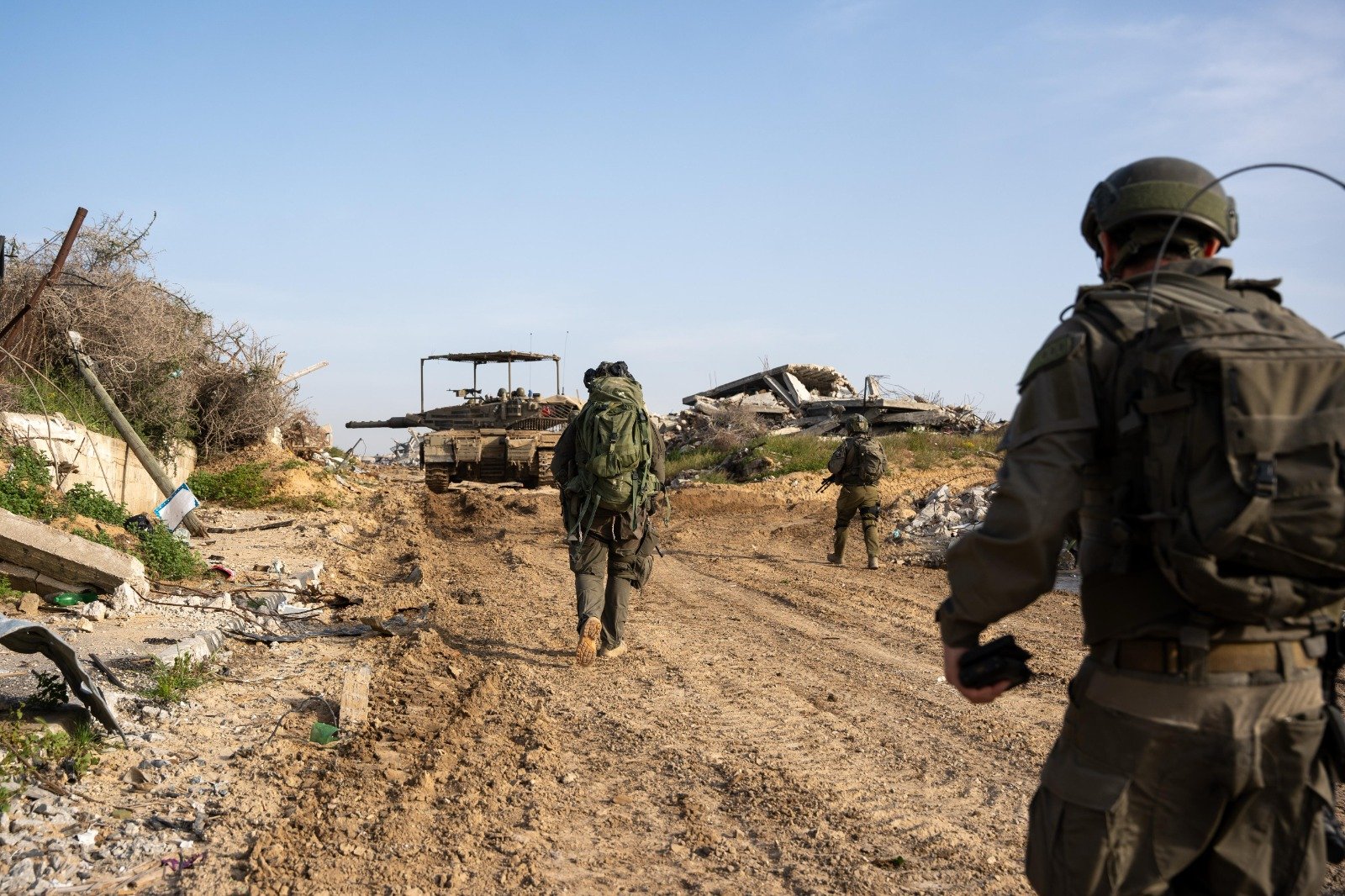
IDF troops of the 401st Armored Brigade operate in the northern Gaza Strip in a handout photo issued on April 4, 2025. (Israel Defense Forces)
A deputy commander of a Hamas Nukhba force company was killed in recent drone strike in the northern Gaza Strip, the military says.
The strike was directed by troops of the 401st Armored Brigade.
The brigade killed several more operatives and destroyed rocket launchers and other Hamas infrastructure during their operations in northern Gaza, the IDF says.
Senior IDF officer who allowed 71-year-old researcher to enter Lebanon, where he was killed, says he thought he was a reservist
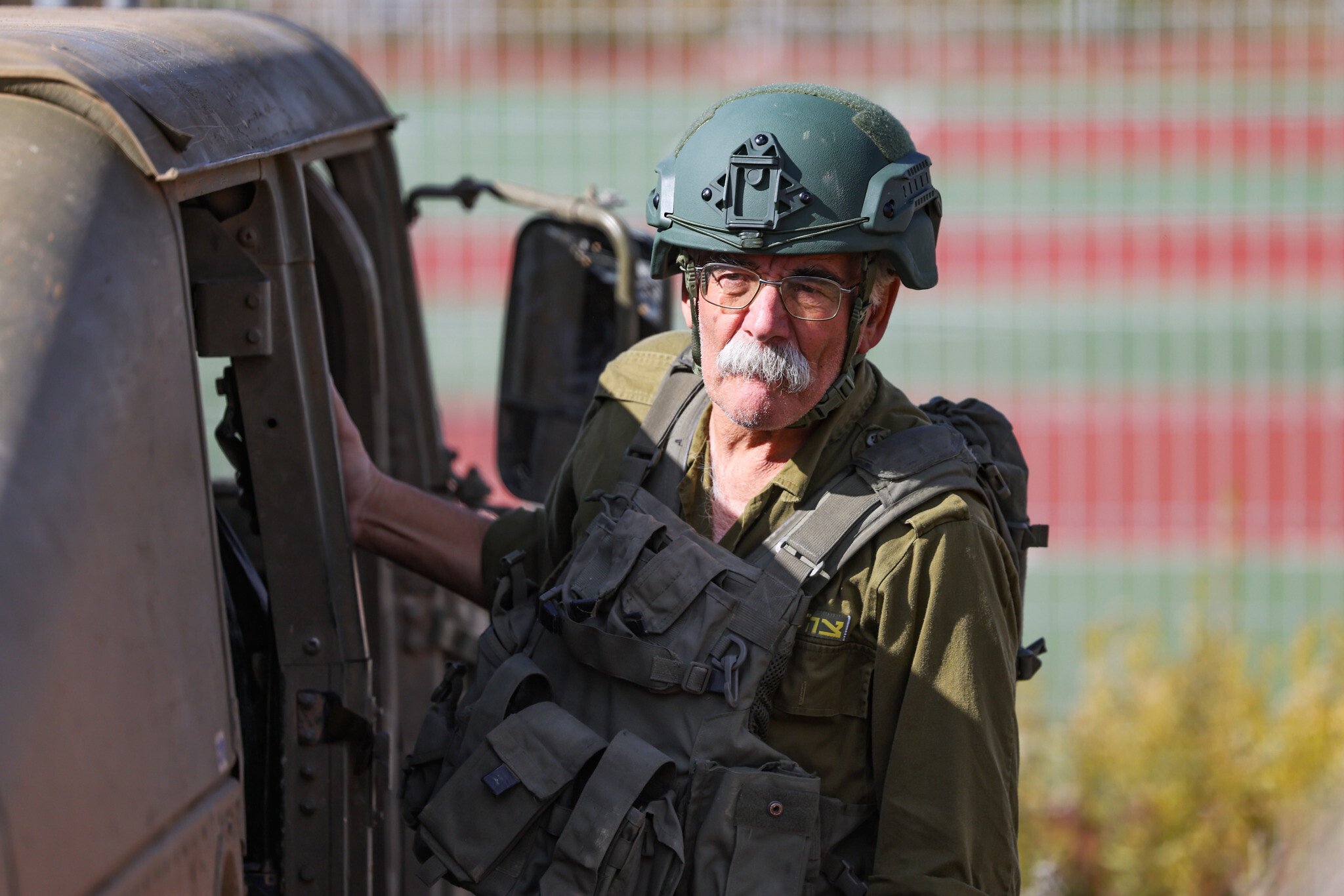
Israeli researcher Zeev Erlich seen in IDF uniform before entering into southern Lebanon on November 20, 2024, hours before he was killed in a gun battle with Hezbollah operatives. (Chaim Goldberg/Flash90)
Col. (res.) Yoav Yarom, the Golani Brigade’s chief of staff who accompanied civilian researcher Zeev Erlich into southern Lebanon last November, where he was killed by a Hezbollah terrorist, tells Channel 12’s “Uvda” investigative program that he allowed the 71-year-old archeology expert to join troops in Lebanon for an “educational tour” because he believed him to be an IDF reservist.
According to Yarom, Erlich would show up every week “with a uniform, a helmet and a weapon,” and would talk in various groups about where he’d been and with which senior IDF commander.
He says that Erlich, who had independently published dozens of academic papers on archaeological research in the West Bank and other parts of the region, would regularly “give educational tours” to soldiers, including in one instance, in Maroun al-Ras, just past the Israel-Lebanon border.
“No one in the IDF, no commander, would have prevented Jabo (Erlich’s nickname) from entering,” Maroun al-Ras,” he says, defending the decision. “As far as I was concerned, he was a reservist.”
The incident in which Erlich was killed occurred in the village of Shamaa, in the Tyre District of southern Lebanon, some five kilometers from the border with Israel.
Despite the belief that the village had been cleared of threats, two Hezbollah operatives were hiding at the site and opened fire at the researcher, along with Yarom and other soldiers who were accompanying them. Along with Erlich, Sgt. Gur Kehati was also killed in the incident.
While Yarom acknowledges that he “exceeded” his authority by allowing Erlich to accompany troops to the village, he claims to Uvda that the area was “no more dangerous than any other place Jaobo entered in the past 40 years.”
“The encounter [with Hezbollah terrorists] wasn’t because he was a civilian,” Yarom insists. “They died in a clash with an enemy inside the company’s holding area. That’s why they died.”
Turkish foreign minister says Ankara not looking for confrontation with Israel in Syria
Turkey wants no confrontation with Israel in Syria after repeated Israeli attacks on military sites there undermined the new government’s ability to deter threats, Turkish Foreign Minister Hakan Fidan tells Reuters.
In an interview on the sidelines of a meeting of NATO foreign ministers in Brussels, Fidan says Israel’s actions in Syria — where the administration of President Ahmed al-Sharaa is a close Turkish ally — are paving the way for future regional instability.
If the new administration in Damascus wants to have “certain understandings” with Israel, which, like Turkey, is a neighbour of Syria, then that is their own business, he adds.
Israel has carried out numerous airstrikes targeting military infrastructure inside Syria since the fall of Bashar al-Assad’s regime in December 2024.
The strikes have led to further tension between Jerusalem and Ankara, with both accusing each other of trying to assert dominance in the region.
Foreign Minister Gideon Sa’ar has accused Turkey of trying to turn Syria into a “Turkish protectorate,” leading Turkey to retort that Israel “has become the greatest threat to regional security.”
Justice minister lauds ‘integrity’ of judge who ordered Qatargate suspects’ release to house arrest
Justice Minister Yariv Levin welcomes the decision of a judge at the Rishon Lezion Magistrate’s Court who has ordered the release to house arrest of the two key suspects in the so-called Qatargate scandal.
The court ruled earlier today that Prime Minister Benjamin Netanyahu’s aides Jonatan Urich and Eli Feldstein are to be released to house arrest until April 22, rejecting a police request to extend their remand for a week.
Police submitted an appeal against the decision in the following hours, asserting that the judge had acted on his own personal interests.
“What happened today is another step in the collapse of the selective enforcement policy that has been implemented here for decades,” Levin crows, calling the ruling “a testament to the new winds blowing in the judicial system.”
Levin, who is the architect of a slew of highly controversial judicial overhaul legislation, claims that due to his work as justice minister, “more and more judges are showing integrity and independence, and are not submitting to the dictates of the system’s heads.”
“The struggle to change the judicial system, to stop selective enforcement and to restore democracy is a difficult struggle against those who have held corrupt and unlimited power for decades,” Levin triumphs. Determination is required, unity is required, and patience is also required. Today, we can already see the fruits of our struggle.”
Police accuse judge who released Qatargate suspects to house arrest of acting on personal interests
In an appeal against the decision of the Rishon Lezion Magistrate’s Court to release two key suspects in the Qatargate scandal to house arrest, the Israel Police charge that Judge Menachem Mizrahi has been acting on his own personal interests.
“From the start of the hearing in this case, the judge has been acting in a way that we do not understand,” police say. “It started with the fact that he completely removed the sweeping gag order. Even when we asked to just reduce the gag order, he rejected us outright. Even when we filed for a stay of execution, he said there wasn’t any room for that.”
The police say they feel as though the judge is “‘giving his regards’ to the Judicial Selection Committee in order to pave the way for him to be appointed as a district judge.”
They further accuse him of forcing police investigators to discuss “sensitive documents” in hearings and say he writes his case decisions as though he is writing “press releases.”
“He writes classified things and then deletes them from the minutes after the media has already published them,” police charge.
Trump says ‘my policies will never change’ as markets plunge
US President Donald Trump vows to stick to his policies as new US tariffs triggered sharp falls in global stock markets, and he pledged investors in the country would benefit.
“To many investors coming into the United States and investing massive amounts of money, my policies will never change,” Trump says on Truth Social.
“TO THE MANY INVESTORS COMING INTO THE UNITED STATES AND INVESTING MASSIVE AMOUNTS OF MONEY, MY POLICIES WILL NEVER CHANGE. THIS IS A GREAT TIME TO GET RICH, RICHER THAN EVER BEFORE!!!” he writes.
Doctors Without Borders ‘appalled’ by second staff member killed in Gaza within weeks
Global medical charity Doctors Without Borders says it is appalled and saddened by the killing of one of its staff by an air strike in Gaza, the second within two weeks.
Hussam Al Loulou died in the strike on April 1 in central Gaza, alongside his wife and 28-year-old daughter, the organization says.
US sending Israel 20K assault rifles that Biden delayed due to concerns they’d be used by extremist settlers
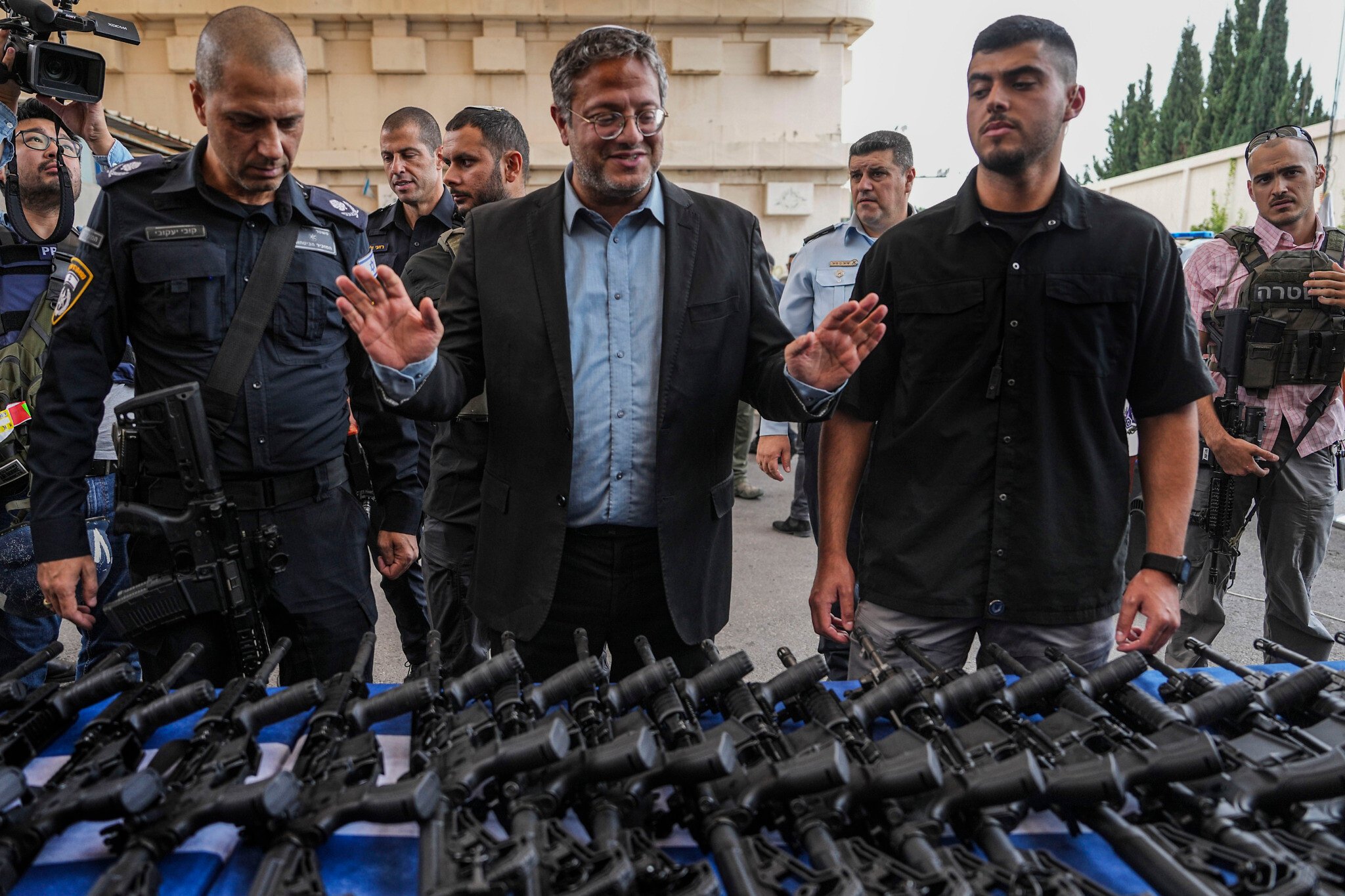
National Security Minister Itamar Ben-Gvir attends an event to deliver weapons to local volunteer security group members in Ashkelon, October 27, 2023. (AP/Tsafrir Abayov)
The Trump administration advanced the sale of more than 20,000 US-made assault rifles to Israel last month, according to a document seen by Reuters and a source familiar with the matter, pushing ahead with a sale that the administration of former president Joe Biden had delayed over concerns they could be used by extremist Israeli settlers.
The State Department sent a notification to Congress on March 6 for the $24 million sale, saying the end user would be the Israeli National Police, according to the document.
The rifle sale is a small transaction next to the billions of dollars worth of weapons that Washington supplies to Israel. But it drew attention when the Biden administration delayed the sale over concerns that the weapons could end up in the hands of Israeli settlers, some of whom have carried out attacks on Palestinians in the West Bank.
The Biden administration has imposed sanctions on individuals and entities accused of committing violence in the Israeli-occupied West Bank, which has seen a rise in settler attacks on Palestinians.
On his first day in office on January 20, Trump issued an executive order rescinding US sanctions on Israeli settlers in a reversal of US policy. Since then, his administration has approved the sale of billions of dollars worth of weapons to Israel.
The March 6 congressional notification said the US government had taken into account “political, military, economic, human rights, and arms control considerations.”
The State Department did not respond to a request for comment when asked if the administration sought assurances from Israel on the use of the weapons.
The rifle sale had been put on hold after Democratic lawmakers objected and sought information on how Israel was going to use them. The congressional committees eventually cleared the sale but the Biden administration kept the hold in place. His administration had repeatedly insisted that the only hold in place on Israeli weapons was one on a shipment of 2,000 lb bombs that it was concerned would be used in densely populated areas in which would harm civilians.
Israel’s National Security Minister Itamar Ben-Gvir, a far-right member of Prime Minister Benjamin Netanyahu’s government, oversees the Israeli police force. The Times of Israel in October 2023 reported that his office has put “a heavy emphasis on arming civilian security squads” in the aftermath of the October 7 onslaught.
Turkey says any Ukraine peace deal hard to digest – but better than more death
Turkish Foreign Minister Hakan Fidan tells Reuters that any potential peace agreement between Ukraine and Russia would be “difficult to digest” but would still be better than the alternative of more death and destruction.
Turkey, a NATO member, has maintained cordial ties with both Kyiv and Moscow since Russia’s full-scale invasion of Ukraine in 2022. It has voiced support for Ukraine’s territorial integrity and provided it with military help, while opposing sanctions on Russia.
In an interview on the sidelines of a meeting of NATO foreign ministers in Brussels, Fidan says Turkey supports a US initiative to seek an end to the war in Ukraine, but that the sides remained a “little bit far away” from reaching a deal.
“It will be extremely difficult to digest any proposal,” Fidan says. “But when we look at the other option, which is more death and destruction, I think whatever the conditions that we have… will be more reasonable” than the alternative.
US President Donald Trump “is finally following an agenda to stop the war,” he adds.
Asked about potential security guarantees for Ukraine, Fidan says Europe could not provide them on its own without U.S. support, but added that a deterrence factor was needed for the fighting not to restart.
“There is a huge effort to get the American side again to engage in security support to Ukraine,” he says, referring to recent talks among European states.
He adds that “we should expect” that all sides including Russia would honor any ultimate agreement.
The prospect of ending the war has heightened Turkey’s role in regional security, making it a key potential partner in the restructuring of Europe’s security architecture, as European powers scramble to bolster their own defenses and seek guarantees for Ukraine under any forthcoming peace deal.
Kyiv has said Turkey, with the second-largest army in NATO, would be an important guarantor for security. Ankara has said it would consider joining a peace initiative on the ground, though it has said details of such a mission remain unclear.
Fidan repeats Turkey’s offer to host Russia and Ukraine for possible peace talks, after having hosted initial talks in 2022.
IDF: We killed Hamas ‘psychological terror operative’ in airstrike this week
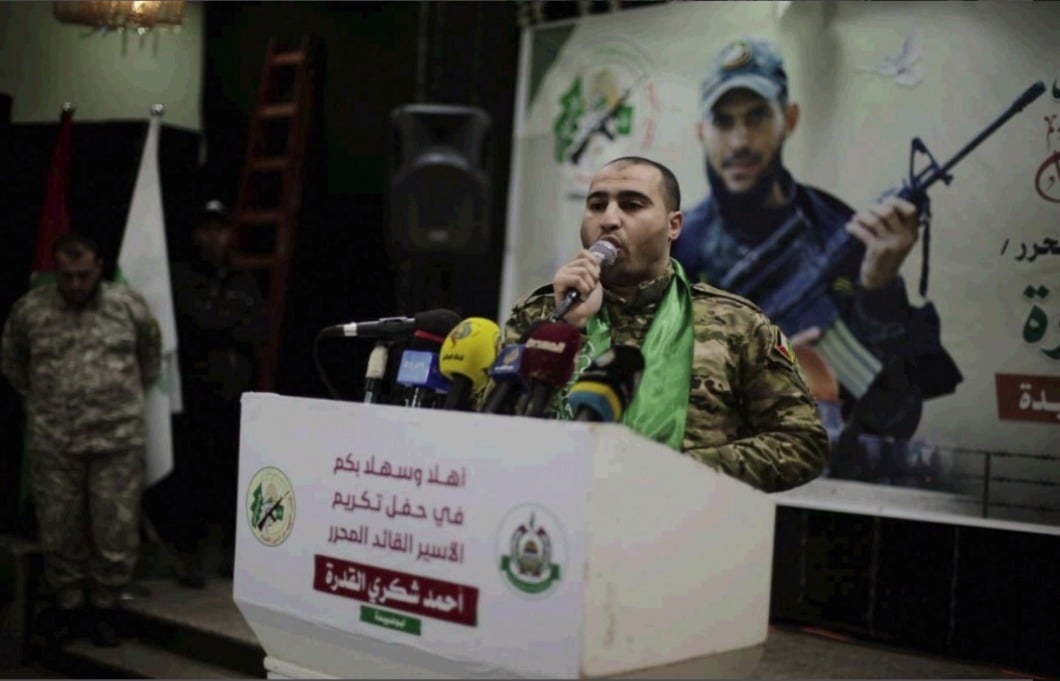
This undated photo published by the IDF on April 4, 2025, shows Hamas operative Mohammed Saleh al-Bardawil. (Via Israel Defense Forces; used in accordance with Clause 27a of the Copyright Law)
The IDF and Shin Bet announced that a Hamas member who “served as a propaganda and psychological terror operative” was killed in an airstrike in the Gaza Strip this week.
Mohammed Saleh al-Bardawil “played a central role in Hamas’s propaganda apparatus, systematically spreading false information and leveraging media as a tool for psychological terror and to promote the murderous narrative of the Hamas terrorist organization,” the military says.
Bardawil also worked as a broadcaster with the Hamas-run Al-Aqsa Radio.
The IDF says that “while he was referred to as a well-known journalist in Gaza, he was an integral part of Hamas’s incitement and terror infrastructure.”
“Bardawil took an active part in producing the cynical propaganda videos distributed by the terrorist organization Hamas, in which the abducted Israelis were filmed during their captivity in Gaza,” the IDF adds.
According to Palestinian media, Bardawil was killed on Monday in southern Gaza’s Khan Younis, alongside his wife and three children.
Shin Bet chief reveals PM urged him to tell corruption trial judges it wasn’t safe for him to testify
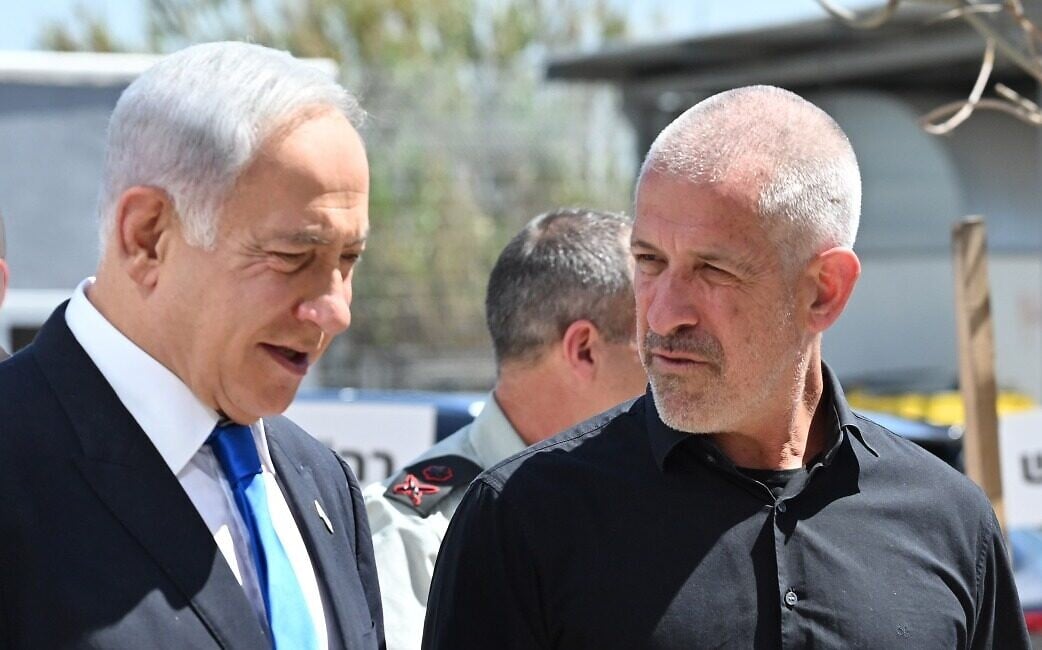
Prime Minister Benjamin Netanyahu (left) and Shin Bet chief Ronen Bar, on April 4, 2023. (Kobi Gideon/GPO)
Shin Bet chief Ronen Bar reveals that Prime Minister Benjamin Netanyahu repeatedly demanded that he inform the judges in the premier’s corruption trial that Netanyahu should not be allowed to regularly testify in court due to security reasons.
In a letter to the High Court of Justice ahead of its hearing on petitions against the government’s decision to fire him, Bar says his refusal to heed Netanyahu’s request led to a breakdown in trust between them. Netanyahu cited his lack of trust in Bar as the reason for his removal.
Bar says he adhered to his job’s requirement that he maintain “professional independence,” rather than act out of personal loyalty to the premier.
Netanyahu’s demands were ostensibly made last year when Israel was still dealing with a second front from the north. While Netanyahu sought to have the trial postponed indefinitely due to concerns about Hezbollah drone strikes on the Jerusalem District Court, where he was slated to testify several times a week for hours on end, the judges decided to move proceedings to the Tel Aviv District Court, which has a fortified basement.
The Shin Bet chief urges the court to reverse the government’s decision to fire him.
“The significance of advancing hastily carried out termination proceedings during a sensitive period, while criminal investigations are being conducted into the prime minister’s associates, without due process and detailed allegations against me and without giving me a fair opportunity to respond to the allegations, would convey a clear message to the entire chain of command in the Shin Bet, including to the next heads of the agency, that if one falls out of favor with the political echelon, they will immediately be fired,” Bar writes.
AG tells High Court allowing Shin Bet chief’s dismissal risks robbing agency of its independence
Attorney General Gali Baharav-Miara formally submits her stance against the government’s decision to fire Shin Bet chief Ronen Bar, telling the High Court of Justice that the dismissal is “tainted with a personal conflict of interest” with Prime Minister Benjamin Netanyahu due to the criminal investigations of his associates.”
She is referring to the Shin Bet’s ongoing investigation into the premier’s aides’ allegedly illicit ties to Qatar.
In a letter sent to the court ahead of its hearing next week on petitions against the firing, Baharav-Miara says, “This decision has implications that go far beyond the interests of the current Shin Bet chief and that leaving the decision intact “will undermine the ability of future Shin Bet chiefs to act independently,” as opposed to out of loyalty to the government.
PM said to continue consulting with adviser who resigned amid sexual misconduct allegations
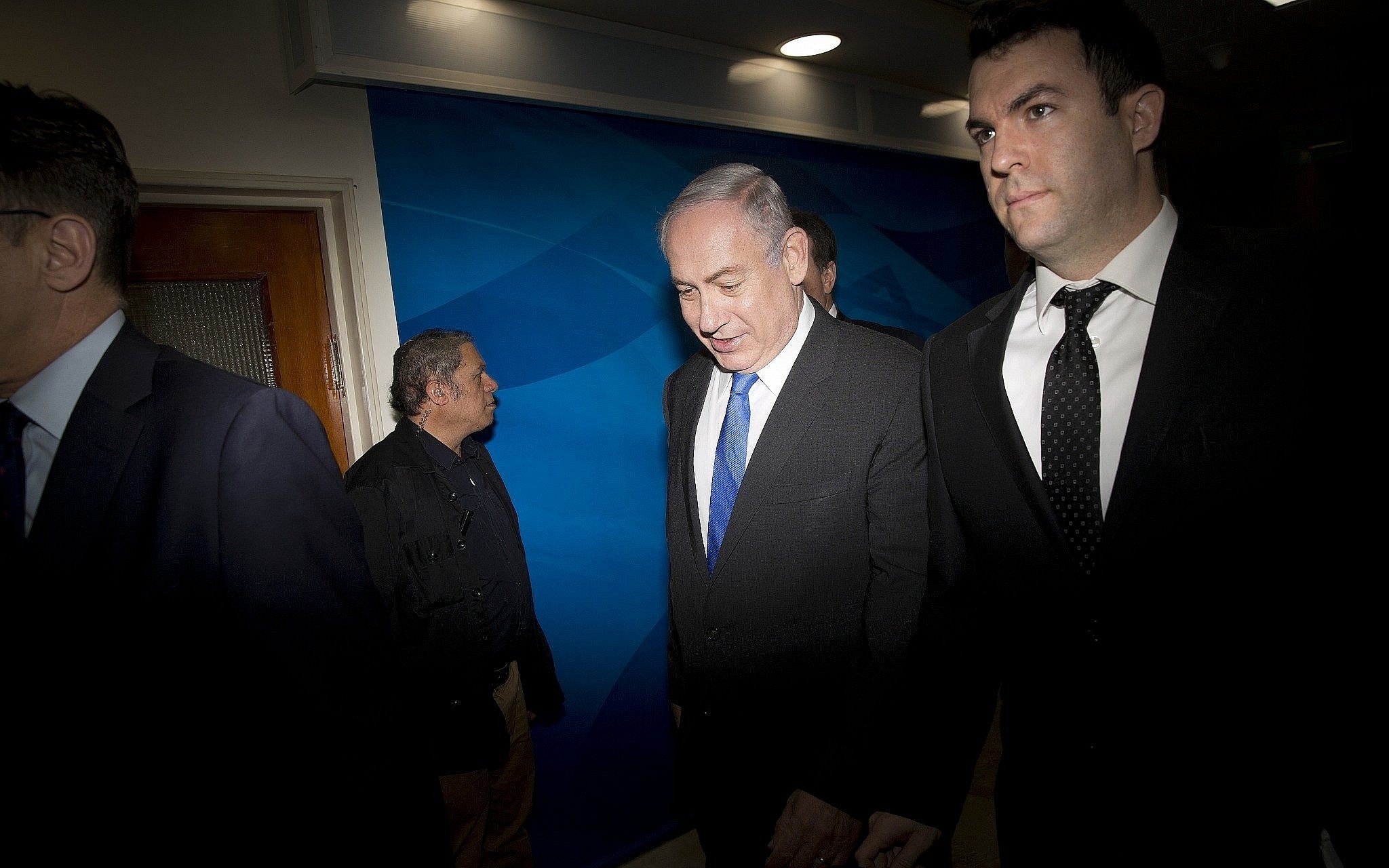
David Keyes, right, with Prime Minister Benjamin Netanyahu in Jerusalem on May 7, 2017. (AP/Oded Balilty, Pool)
Prime Minister Benjamin Netanyahu has reportedly continued to use the services of his former international media spokesman David Keyes who resigned in 2018 after allegations of sexual misconduct against him surfaced.
Keyes denied the allegations.
The Civil Service Commission closed its probes into alleged misbehavior against Keyes, saying at the time that no wrongdoing was found on his part that would require further disciplinary action.
Despite the resignation, Netanyahu has remained in frequent contact with Keyes, who is serving as an external adviser, Israel Hayom reports.
Keyes helped write the speech Netanyahu gave before the US Congress last year. Keyes also sees himself as an integral part of Netanyahu’s inner circle, the newspaper writes.
Netanyahu’s office tells Israel Hayom its report is incorrect, without elaborating.
Keyes declines a request to comment.
Netanyahu denies asking Bar to deem it to dangerous for PM to testify in corruption trial
Firing back after Shin Bet chief Ronen Bar’s letter to the High Court of Justice alleging that Prime Minister Benjamin Netanyahu asked him to tell judges that the premier should not testify in his own corruption trial for security reasons, Netanyahu’s office says the statement is “tainted with severe conflict of interest.”
“This statement is full of lies,” says the PMO in a statement, “such as the claim that the Prime Minister asked the Shin Bet to use the organization’s powers inappropriately against Israeli citizens — something that never happened. The prime minister spoke with the Shin Bet about ways to allow his testimony in court in light of the missile threats against Israel and against the prime minister in particular.”
Netanyahu and Bar did discuss the testimony, his office says, but only talked about where it should be held: “Indeed, the Shin Bet professionals determined that the hearings should be held in the protected area of the Tel Aviv District Court and not elsewhere. And so the hearings are indeed taking place.”
The PMO also says that Netanyahu’s and the cabinet’s lack of trust in Bar “did not stem from a question of personal loyalty, but rather from a lack of trust in his performance after his decisive role in the failure of October 7, in which he chose not to update the political echelon along with a series of other events that subsequently undermined professional trust in him.”
Bar said in his letter that he is being fired because he adhered to his job’s requirement that he maintain “professional independence,” rather than act out of personal loyalty to the premier.
“The only one motivated by personal motives is the Shin Bet head, who clings to the altar and insists on remaining in his position after losing the trust of the entire government,” says Netanyahu’s office.
Partially accepting police appeal, court extends Qatargate suspect Urich’s remand until Monday and releases Feldstein to house arrest

Likud media adviser Jonatan Urich arrives at a conference organized by Makor Rishon and the Israeli Democracy Institute at the International Convention Center in Jerusalem, November 11, 2019. (Noam Revkin/ File)
Prime Minister Benjamin Netanyahu’s top adviser Jonatan Urich”s remand has been extended until Monday, while former spokesperson Eli Feldstein has been released to house arrest. The two are the key suspects in the so-called Qatargate probe.
The decisions by the Lod District Court amount to a partial acceptance of the police’s requests to extend both Urich and Feldstein’s remand amid the ongoing investigation into their allegedly illicit ties to Qatar.
Police had appealed an earlier decision by the Petah Tikva Magistrate’s Court to release the two Netanyahu aides to a two-week house arrest.
The Lod District Court Judge has also barred Urich and Feldstein from contacting anyone involved in the Qatargate probe — including Netanyahu — for 60 days. The two are also banned from leaving the country for 80 days.
IDF says it killed operative involved in funneling money to Hamas military wing
The IDF and Shin Bet announce that a Hamas operative involved in funneling money to the terror group’s military wing was killed in an airstrike yesterday.
Saeed Ahmad Abed Khudari was the head of the Al Wefaq Co. currency exchange company, which had been designated as a terror organization by the Defense Ministry for its involvement in transferring money to Hamas.
“Khudari has been involved in numerous financial transfers to Hamas’s military wing over the years and especially throughout a war,” the IDF says.
The military says his involvement in funneling funds to Hamas increased following the killing of his brother, Hamed Khudari, in 2019. His brother had also served as a money man for Hamas, according to the military.
Khudari’s elimination yesterday is “a significant blow to the terror organization’s ability to rearm and reestablish itself,” the IDF adds.
Jews targeted in 39 hate crimes in NYC last month — NYPD
Jews were targeted in 39 hate crimes in New York City last month, according to NYPD data.
There were more antisemitic crimes than hate incidents targeting all other groups combined, like nearly every other month.
The number of antisemitic crimes amounted to 58% of the total 67 hate crimes reported to police last month.
Last month’s total for antisemitic crimes was the same as March 2024.
There have been 85 antisemitic crimes reported to police in the first three months of this year, amounting to around one incident every 26 hours. Jewish security officials say many more antisemitic crimes likely go unreported.
The NYPD figures are preliminary and subject to change if, for example, an incident that had appeared discriminatory turns out to have had other motivations.
Hate crimes incidents range from physical assaults to property damage and harassment.
Jews targeted in 39 hate crimes in New York City last month, according to NYPD, more than all other groups combined as usual pic.twitter.com/3wbVLJkPE0
— Luke Tress (@luketress) April 4, 2025
IDF chief tells skeptical hostage families Gaza offensive advancing their loved ones’ return
IDF Chief of Staff Lt. Gen. Eyal Zamir met today with the families of several hostages held by the Hamas terror group in the Gaza Strip, the military says.
Zamir has been meeting with the families of hostages once a week since he entered the role last month. The IDF says he is set to meet with additional families in the coming period.
During the meeting today, Zamir told the families of the goals of the current offensive against Hamas in Gaza and “the IDF’s commitment to return the hostages, [which is] a supreme goal.”
Most hostage families feel otherwise, warning that the ongoing IDF offensive in Gaza endangers their loved ones.
‘Senior Israeli official’ claims multiple countries interested in taking in Gazans
A “senior Israeli official” briefing reporters on Prime Minister Benjamin Netanyahu’s trip to Hungary says Jerusalem is in contact with multiple countries about taking in Palestinians from Gaza.
While the US is reportedly not actively working to advance President Donald Trump’s plan to take over Gaza and permanently relocate all of its Palestinians, Israel is very serious about it, the “senior Israeli official” says, claiming that several countries are interested.
“They want something in return — not necessarily money, but also strategic matters,” the “senior Israeli official” says.
“We want to free the hostages and eliminate Hamas and then there is a possibility for wide-scale emigration,” he claims, citing an unspecified poll that found 60% of Gaza’s roughly 2 million residents are interested in emigrating.
Israeli officials insist that Gazans won’t be forced to leave, but critics of the initiative argue that it amounts to white-washed ethnic cleansing.
Arab countries have fervently refused US and Israeli requests to take in Palestinians, arguing that Gazans should be allowed to remain on their land and warning that allowing such an initiative under these conditions will simply export the conflict into their borders.
Jerusalem has yet to publicly commit that those who leave Gaza will be allowed to return. A small group of Gazans who reportedly left last month for work in Indonesia reportedly had to sign onto a declaration acknowledging that they might not be able to return due to the security situation.
“Gaza is in ruins — because of Hamas, not because of us,” the “senior Israeli official” asserts.
He adds that Israel may “hold onto territory” in Gaza, even though it is not interested in permanently occupying the Strip.
While Israel will retain overall security control over Gaza, it wants to transfer control of the Strip to a “consortium of Arab countries” led by the Gulf states who would manage the Strip until further notice, he says.
Saudi Arabia, the United Arab Emirates, Jordan, Egypt, Morocco and others have all expressed willingness to take part in the post-war management of Gaza but they have also all conditioned such assistance on Israel granting a foothold in the Strip to the Palestinian Authority in order to create a pathway to an eventual two-state solution.
Netanyahu has long rejected these conditions and his continued insistence that Arab countries will foot the bill regardless has infuriated them.
While Hamas has yet to cave in hostage talks, Israeli official insists military pressure working
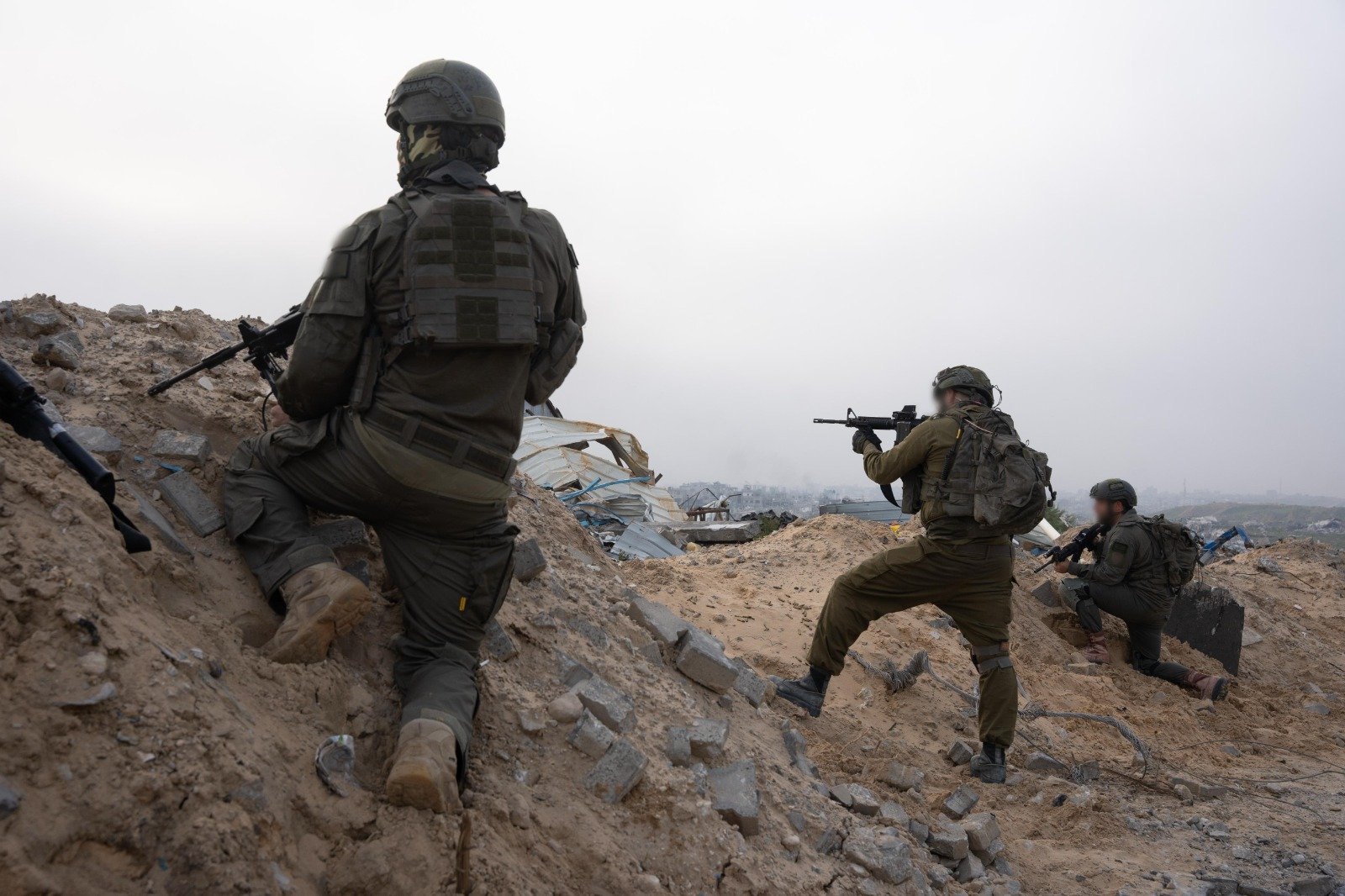
IDF troops of the 401st Armored Brigade operate in the northern Gaza Strip in a handout photo issued on April 4, 2025. (Israel Defense Forces)
Commenting on the government’s efforts to free the remaining hostages during a briefing with reporters on Prime Minister Benjamin Netanyahu’s trip to Hungary, a “senior Israeli official” says Jerusalem is currently placing an emphasis on military pressure against Hamas.
The majority of hostage families oppose this strategy, warning that it risks the lives of their loved ones.
The “senior Israeli official” claims that Israel has identified “cracks” in Hamas due to the IDF’s renewed offensive in Gaza. The “cracks” are between Hamas’s military leaders in the northern and southern Strip and between Hamas leaders in Gaza and Hamas leaders abroad. However, he acknowledges that the terror group has not yet shifted its approach in the talks.
Hamas has insisted on sticking to the original terms of the deal, which was supposed to enter its second phase on March 2. That phase envisions the return of all living hostages in exchange for a full Israeli withdrawal from Gaza and a permanent end to the war — two conditions Netanyahu has refused, arguing that they leave Hamas in power.
He has instead sought to secure an extension of the first phase of the ceasefire, which would see the release of additional hostages while still allowing Israel to resume fighting.
The “senior Israeli official” briefing reporters says Israel will not agree to end the war in exchange for the hostages because Hamas is demanding significant guarantees, including through a UN Security Council resolution, that would bar Israel from resuming operations in Gaza.
The official claims that some Hamas operatives holding hostages may decide to leave the Strip due to Israel’s latest offensive — something that has not yet occurred.
The “senior Israeli official” insists that he understands that the hostages are suffering in captivity. However, he says that most of the hostages’ deaths — either by their captors or by Israeli airstrikes–— took place before February 2024, while eight were killed over the past year.
The official says at least 21 and as many as 24 hostages are still alive. There are 59 hostages in total.
Israel will hold dialogue with US about lowering tariffs, senior official says; no date yet for PM trip to US
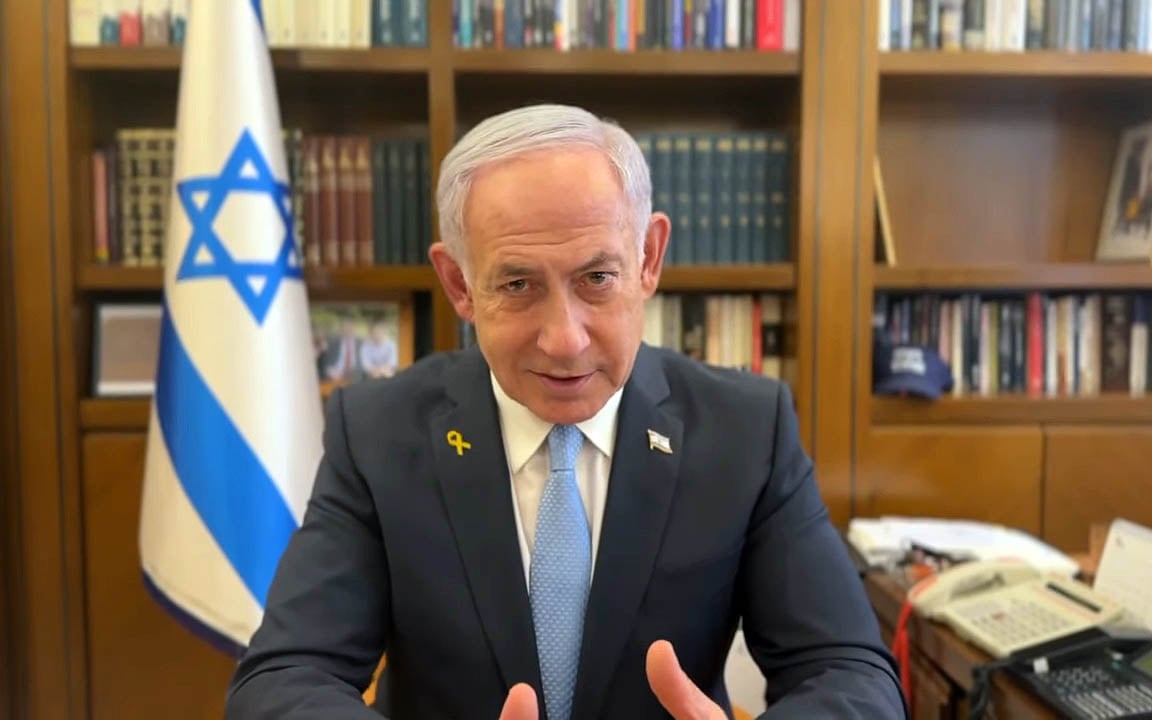
Prime Minister Benjamin Netanyahu gives a video statement on April 2, 2025. (Screen capture)
Prime Minister Benjamin Netanyahu discussed tariffs imposed by US President Donald Trump in their phone call yesterday, says a “senior Israeli official” briefing reporters during the premier’s trip to Hungary.
“We are discussing it,” says the official. “I believe we will enter a dialogue with them. They have a trade representative.”
“In the end, most of it is solvable.”
While Trump said yesterday that Netanyahu would likely visit the US next week, the “senior Israeli official” says that a date has not yet been set.
Axios cites another Israeli official who says the premier is considering a short visit during the week of April 13.
Israel opposes Turkish military presence near Syrian border, seeks no conflict — official
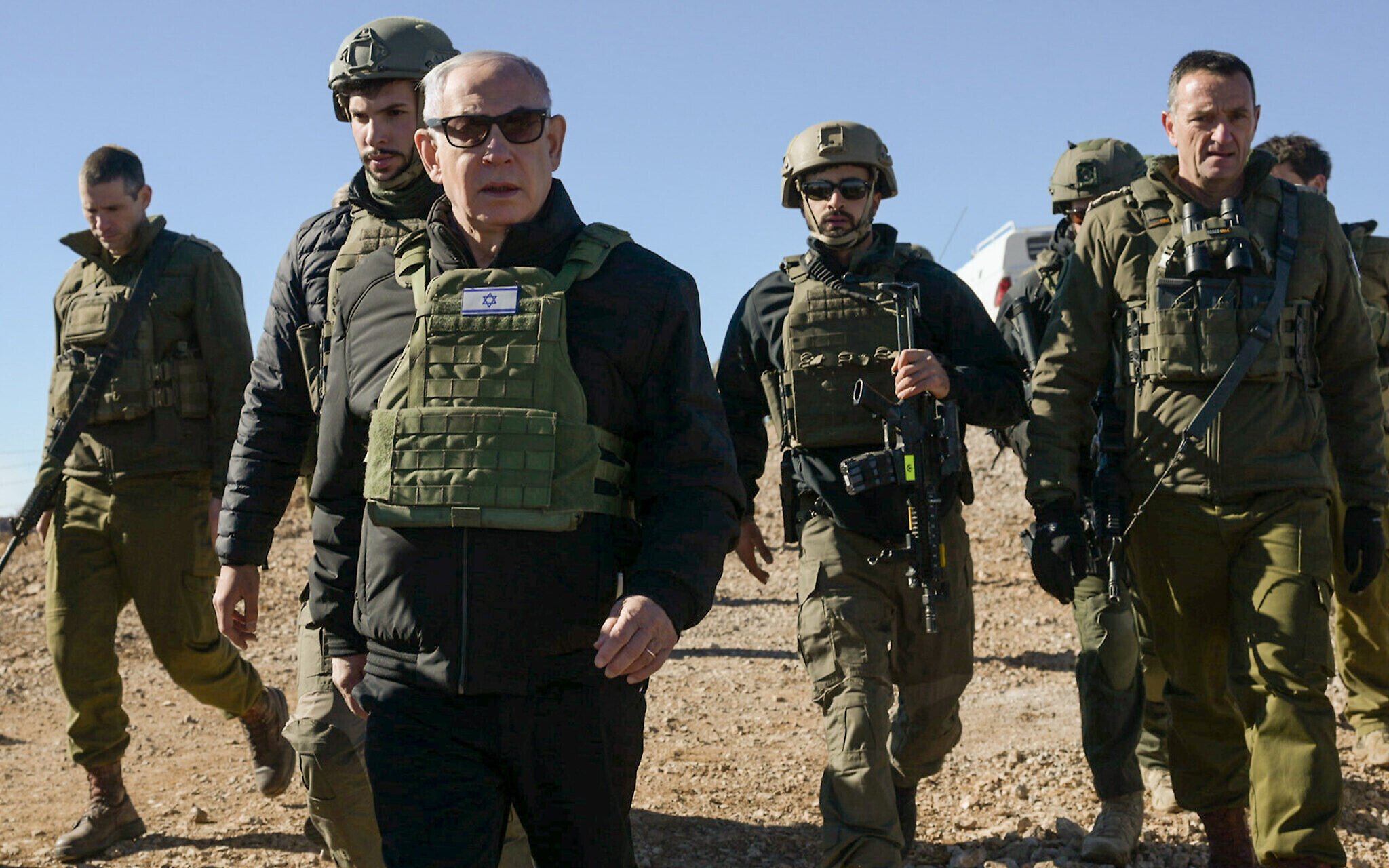
Prime Minister Benjamin Netanyahu visits the top of the Syrian side of Mount Hermon along with IDF Chief of Staff Herzi Halevi (right) and other troops, December 17, 2024. (Maayan Toaf/GPO)
As Israel carries out major airstrikes against a key base in Syria that Turkey is reportedly looking to turn into its own military facility, a senior Israeli official says that “we are not looking for conflict with Turkey. And we hope they’re not looking for a fight with us.”
“At the same time, we don’t want Turkey establishing itself on our borders,” says the official.
“Establishing military bases, naval and air bases under Turkish protection is something we want to prevent,” says the official.
“There are red lines.”
Jerusalem expects ICC to issue more warrants against Israelis — official
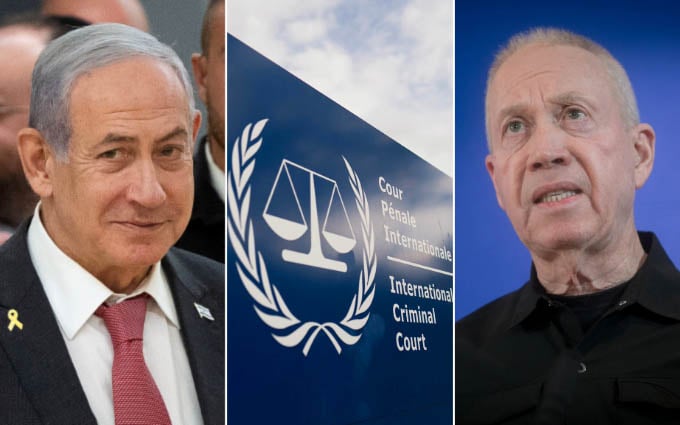
Israeli Prime Minister Benjamin (left) Netanyahu at the Knesset, November 11, 2024. (Yonatan Sindel/Flash90); An exterior view of the International Criminal Court, or ICC, in The Hague, Netherlands, on April 30, 2024. (AP/Peter Dejong); Then-defense Minister Yoav Gallant speaks during a press conference at the Kirya military headquarters in Tel Aviv, on November 5, 2024. (Miriam Alster/Flash90)
Jerusalem expects the International Criminal Court to issue more warrants against Israeli officials, says a “senior Israeli official” briefing reporters during Prime Minister Benjamin Netanyahu’s trip to Hungary.
Netanyahu and Hungarian PM Viktor Orban called Trump from Hungary yesterday and discussed ways to take measures against the ICC and its chief prosecutor, the Israeli official says.
The ICC has outstanding warrants for Netanyahu and former defense minister Yoav Gallant over alleged war crimes in Gaza.
Witkoff to meet with Dermer in Abu Dhabi early next week to discuss hostage talks
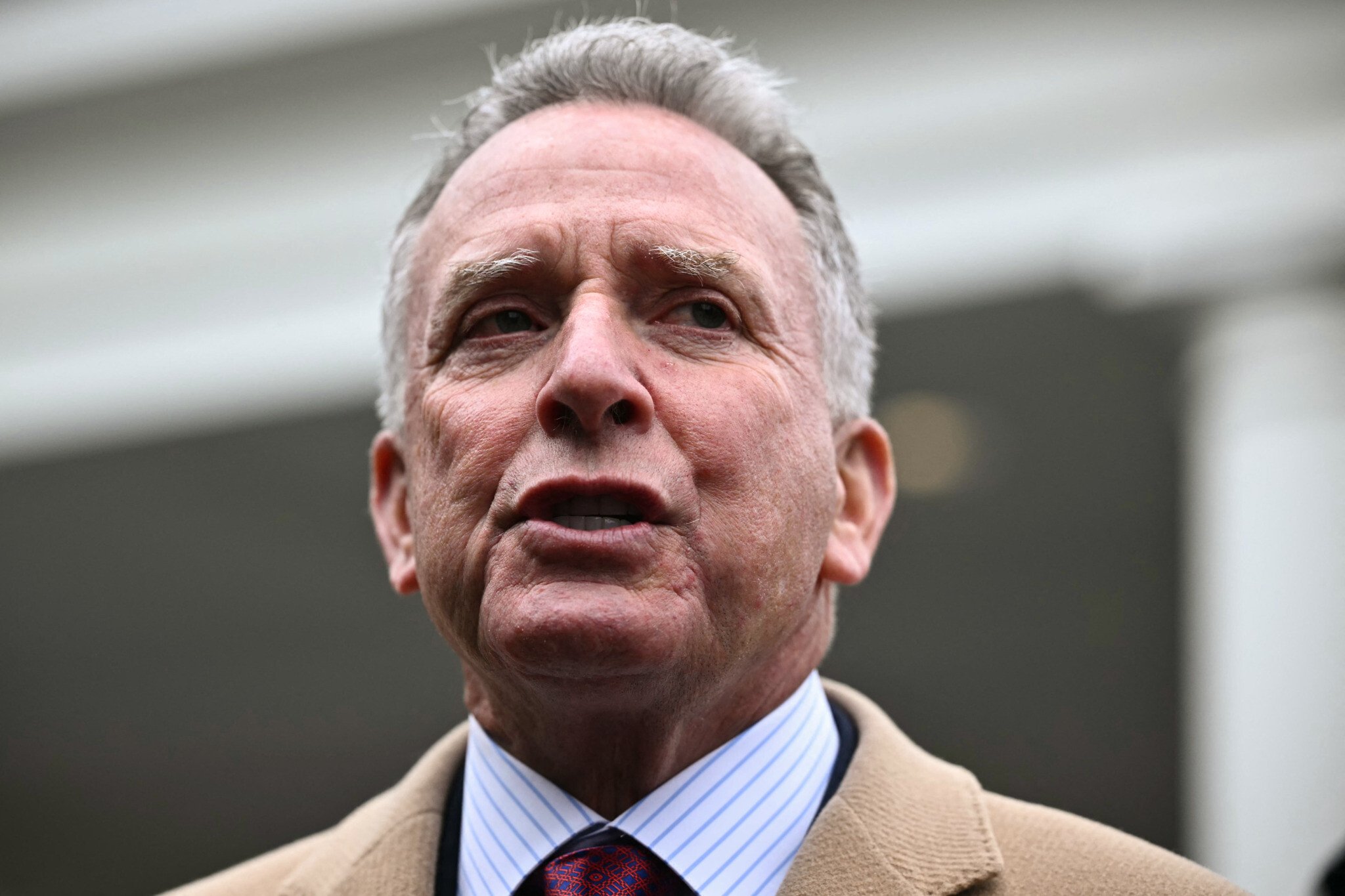
US Middle East envoy Steve Witkoff speaks to reporters outside the West Wing of the White House in Washington, DC on March 6, 2025 (Mandel NGAN / AFP)
US special envoy to the Mideast Steve Witkoff is slated to meet with Strategic Affairs Minister Ron Dermer early next week in Abu Dhabi to discuss the ongoing hostage talks, an Israeli official tells The Times of Israel.
If there is a breakthrough in the currently stuck talks, Witkoff will travel to either Doha or Cairo, whose governments are mediating between Israel and Hamas along with the US.
Witkoff met yesterday in Washington with a group of families whose loved ones are still being held in Gaza, Axios reports.
US and Israeli officials are hoping that the IDF’s renewed offensive against Hamas and the protests in Gaza against the terror group will lead Hamas to further compromise in the hostage talks, though, that has yet to take place.
Hamas: We won’t move hostages from areas being targeted by IDF; Israel is responsible for their lives
The Hamas terror group says it will not be moving living Israeli hostages out of areas in the Gaza Strip that the IDF has ordered to be evacuated in recent days.
The IDF has issued evacuation orders for the entire Rafah area, Gaza City’s Shejaiya neighborhood and other areas in the Strip’s north.
“Half of the living Israeli prisoners are located in areas in which the Israeli occupation army has requested to be evacuated in recent days,” claims Hudhaifa Kahlout — known by the nom de guerre Abu Obeida — the spokesman for Hamas’s military wing, the al-Qassam Brigades.
“We have decided not to transfer these prisoners from these areas, and to keep them under strict security measures, which are extremely dangerous to their lives,” Abu Obeida says in his statement, which is issued in Arabic, Hebrew and English.
He says that “if the enemy is concerned about the lives of these prisoners, they must immediately negotiate their evacuation or release.”
“The Netanyahu government bears full responsibility for the lives of the prisoners. Had they been concerned about them, they would have adhered to the agreement signed in January. Most of them would probably be in their homes today,” Abu Obeida adds.
Hamas has previously said it would execute hostages if Israeli troops are seen approaching areas where they are being held. In August, Hamas murdered six hostages in Rafah as Israeli forces were operating nearby.
Police probing suspected murder-suicide after 13-year-old finds both parents dead in Jerusalem home
Police are investigating a suspected murder-suicide in northern Jerusalem after a 13-year-old boy found both his parents dead in their home earlier today, after hearing the sound of gunshots from their room.
Officers called to the scene found a gun near the father, who held a firearm license, Hebrew outlets report, leading law enforcement to assume that the father, 38, shot his wife, 35, then killed himself with the weapon.
Meanwhile, police in an official statement say that the circumstances of the parents’ deaths are “at this stage unclear” as they continue to probe the incident.
Unprecedented numbers of Israelis have filed for personal firearm licenses since October 7. In the first two months following Hamas’s massacre, 274,279 people filed for a handgun license, a sharp rise from the total of 42,170 Israelis requesting a license the year prior.
IDF says it intercepted drone ‘from the east’; no sirens activated
A drone launched at Israel “from the east,” was intercepted by Israeli air defenses a short while ago, the military says.
The drone was likely launched from Yemen, according to initial military assessments.
Sirens were not activated in any towns.
The drone was shot down over the Aravah area in southern Israel.
Israel says it killed terrorist who oversaw kidnapping of Shiri, Ariel and Kfir Bibas, was likely involved in their murders

Muhammad Hassan Muhammad Awad, a senior Mujahideen Brigades terrorist who Israel says oversaw the abduction of Shiri Bibas and her two young sons, and was likely involved in their murders, seen in a poster released by the terror group following his killing by Israel on April 4, 2025. (Telegram)
Israel says it has killed the terrorist who oversaw the abduction of Shiri Bibas and her two young sons, and was likely involved in their murders.
Muhammad Hassan Muhammad Awad, a senior member of the Mujahideen Brigades, a relatively small terror group in the Gaza Strip, was killed in an airstrike today, the IDF and Shin Bet announce.
In a joint statement, they say that Awad was among the terrorists who invaded Kibbutz Nir Oz during the Hamas-led October 7 onslaught, and that he led the abduction of Shiri, Ariel and Kfir Bibas.
The IDF says Awad was also “likely involved in their murders” during the early weeks of the war. Their bodies were returned to Israel in February.
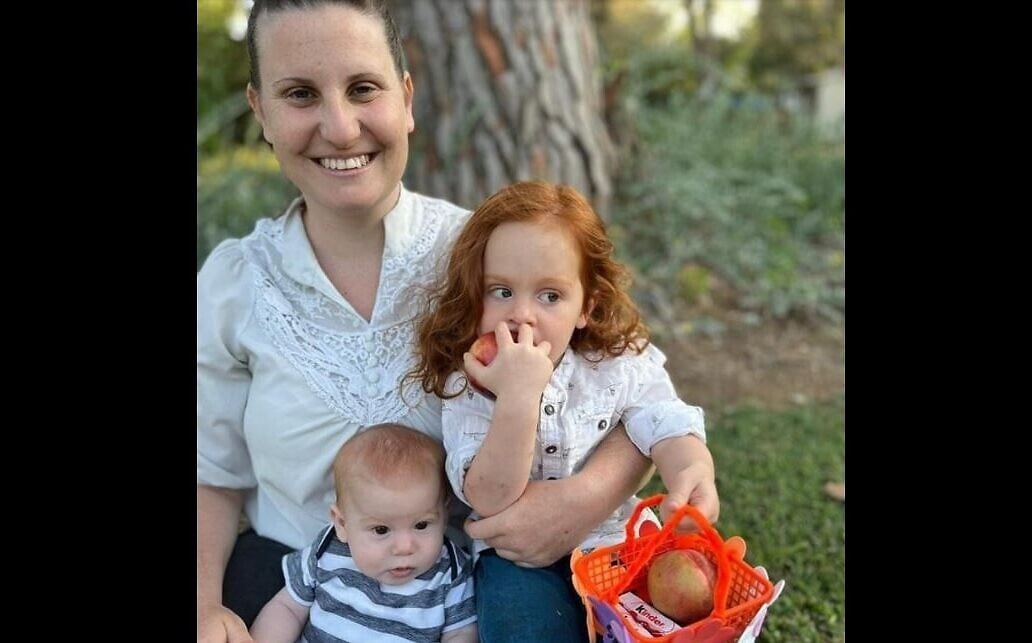
Awad was also responsible for the abduction of Gadi Haggai and Judih Weinstein, who were both killed amid the onslaught in Nir Oz, along with several Thai nationals taken hostage from the kibbutz, the military says.
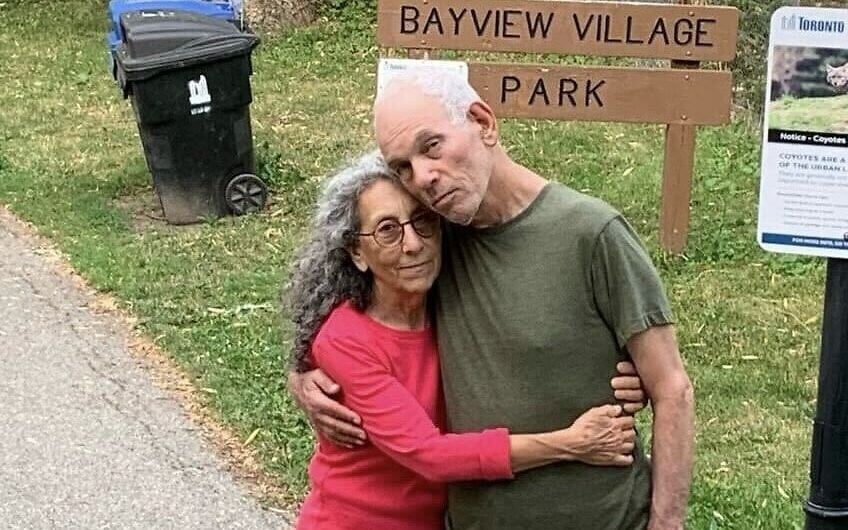
Earlier today, Awad was targeted and killed in a strike in the northern Gaza Strip.
The terror group also confirmed his death, saying he was a senior military commander and head of its intelligence division. The IDF says he was considered close to the leadership of the Mujahideen Brigades.
“Additionally, as part of his role in the terror group, Awad was engaged in recruiting terror operatives in [the West Bank] and Israel [proper], through which they advanced and carried out attacks against Israelis,” the military says.
During the war, the IDF says the Mujahideen Brigades, which is allied with Hamas, carried out several attacks on Israeli forces in Gaza and against Israel.
Autopsy on Palestinian who collapsed and died in Israeli prison last week said to reveal signs of starvation

The Megiddo prison, where a nearly 1,800-year-old decorated floor from an early Christian prayer hall was discovered by Israeli archaeologists in 2005, is seen on August 13, 2023. (Ariel Schalit/AP)
The autopsy of a Palestinian minor who collapsed and died last week in Israel’s Megiddo Prison reportedly revealed signs of starvation and medical neglect.
The family of Waleed Ahmad tells the Haaretz daily that the 17-year-old was healthy, athletic and had no pre-existing conditions.
Ahmad’s death comes amid weeks of complaints by detainees at the Megiddo Prison of a bacterial infection that has been causing diarrhea and vomiting due to inadequate nutrition in the facility, Haaretz says.
Ahmad has been in prison since September of last year when he was arrested for allegedly throwing stones and a Molotov cocktail.
Six months later, after several brief court appearances during which no trial date was set, Walid collapsed on March 23 in a prison yard and struck his head, dying soon after, Palestinian officials said, citing eyewitness accounts from other prisoners.
Prison authorities deny any systematic abuse and say they investigate accusations of wrongdoing by prison staff. But the Israeli ministry overseeing prisons acknowledges conditions inside detention facilities have been reduced to the minimum level allowed under Israeli law.
Israel’s prison service did not respond to questions about the cause of death. It said only that a 17-year-old from the West Bank had died in Megiddo Prison, a facility that has previously been accused of abusing Palestinian inmates, “with his medical condition being kept confidential.” It said it investigates all deaths in detention.
The family believes Ahmad contracted amoebic dysentery from the poor conditions in the prison, an infection that causes diarrhea, vomiting and dizziness — and can be fatal if left untreated.
The Palestinian Authority says Ahmad is the first Palestinian under 18 to die in Israeli detention — and the 63rd Palestinian from the West Bank or Gaza since the start of the war. Palestinian prisoner rights groups say that is about one-fifth of the roughly 300 Palestinians who have died in Israeli custody since the 1967 Mideast war, when Israel captured the West Bank, Gaza and East Jerusalem. The Palestinians want all three territories for their future state.
Jon Polin in message to PM: Enough with the paranoid TikTok videos; bring back the hostages
![Prime Minister Benjamin Netanyahu seen pointing to a plant in his office corridor and stating “They want me and the government to be a potted plant [and not do anything]," in a social media video filmed on March 19, 2025. (Screen capture/X)](https://static-cdn.toi-media.com/www/uploads/2025/03/8555.jpeg "Prime Minister Benjamin Netanyahu seen pointing to a plant in his office corridor and stating “They want me and the government to be a potted plant [and not do anything],\" in a social media video filmed on March 19, 2025. (Screen capture/X)")
Prime Minister Benjamin Netanyahu seen pointing to a plant in his office corridor and stating “They want me and the government to be a potted plant [and not do anything]," in a social media video filmed on March 19, 2025. (Screen capture/X)
Jon Polin, whose son Hersh Goldberg-Polin was murdered last year in Hamas captivity, pans Prime Minister Benjamin Netanyahu’s handling of the ongoing war in addition to his broader conduct as of late.
“Not everything is political. Some things are simply human. The exemplary people of Israel deserve more. Do things with broad consensus. Bring back our 59 loved ones. Accept responsibility, say ‘I’m sorry,’ [establish a national commission of inquiry, [advance] a fair sharing of national service,” Polin tweets, without naming Netanyahu.
“Enough with the division, stop blaming, stop dividing, stop ignoring the will of the people, enough with the paranoid TikTok videos,” he says, an apparent reference to the videos Netanyahu has been posting on social media in which he rails against the “deep state” and dismisses the allegations against his aides in the ongoing Qatargate probe
“Why vacation during war? We Israelis deserve better,” Polin says of Netanyahu’s decision to extend his diplomatic trip so that he and his wife can spend the weekend in Hungary at the Israeli tax-payer’s expense while 59 hostages remain in captivity.
‘You made me a scapegoat!’: Joint interrogation of Netanyahu’s aides said to nearly turn physical
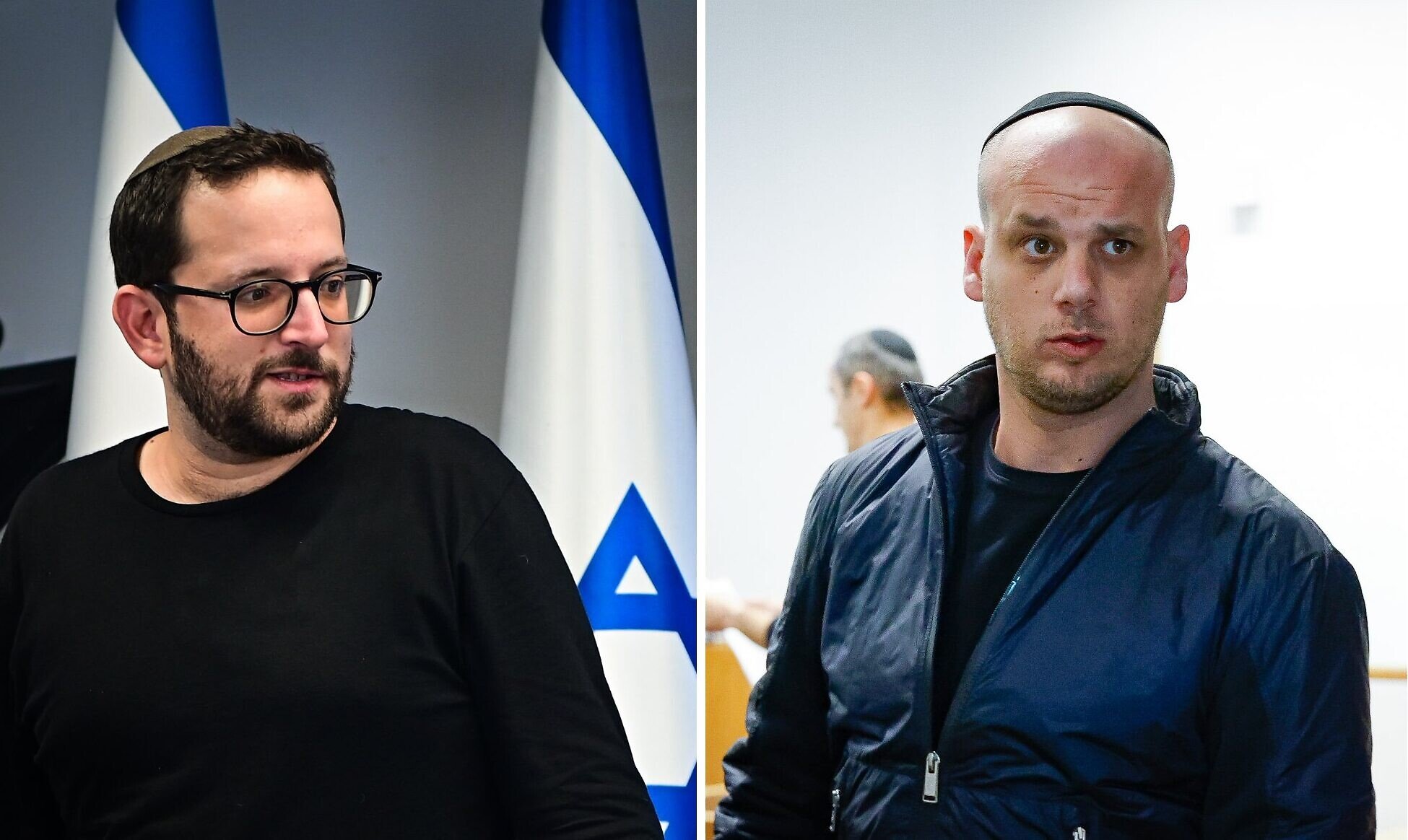
(L) Jonatan Urich, adviser to Benjamin Netanyahu, in Tel Aviv on October 3, 2022 (Avshalom Sassoni/ Flash90/ File) and (R) Eli Feldstein arrive for a court hearing at the Tel Aviv District Court on March 11, 2025. (Yehoshua Yosef/ Flash90)
Channel 12 publishes leaked transcripts from the joint interrogation it held on Wednesday with two of the main suspects in the Qatargate probe, Jonatan Urich and Eli Feldstein.
Police decided to place them in a room together after the pair offered contradicting testimony regarding.
The interaction quickly became heated and almost turned into a physical brawl, according to Channel 12.
Feldstein blasted Urich for refusing to speak out during an earlier investigation in which the former is accused of having leaked classified intelligence to the German Bild daily in order to scuttle a potential hostage deal. Feldstein has insisted that he was acting off of Urich’s orders on Netanyahu’s behalf.
“You know that you did everything with the prime minister’s permission. Who told me about “Bild?” Who told me the prime minister was pleased [after the story was published]? Who told me to bring [the matter] to [campaign advisor Yisrael] Einhorn? You already abandoned me then,” Feldstein told Urich.
“I will give you evidence that this time [Qatargate], you abandoned me as well. I saw at yesterday’s [remand extension] hearing that all of the prime minister’s aides came — Topaz Luk, Ofer Golan, Guy Levy, David Sharan… when I was in custody, no one came. You don’t care about me. No one in your office cares about me,” Feldstein continues.
“You’re blaming the entire affair on me. I have nothing. Tell them [the investigators] the truth about the [stolen intel] documents probe. Forget about Qatar for a moment. What about the documents probe? I am accused of harming national security when I was going off of your orders. You know that everything I did I’d ask you about [beforehand],” he says.
Urich refrained from answering and put his head down.
“Do you want me to pick your head up so you can look me in the eye?” Feldstein says, getting up out of his chair and moving toward Urich before being blocked by the interrogators.
“Talk to me! I’m being put on trial here. Jonatan, speak up! Open your mouth and tell the truth!” Feldstein yells.
“Eli, what do you want from me? What do you want from me? I don’t know [Israeli businessman Gil] Birger, I don’t know [Qatari lobbyist Jay] Footlik,” Urich responds, referring to the two men who were allegedly behind payments to Netanyahu’s aides on behalf of Qatar.
“You know there are messages [between us that show otherwise]. You know everything you deleted. You know it’s all in my possession. And you know everything about this matter. You made me a scapegoat. Where were you when I was arrested? Why didn’t you send anyone to court (to support me)?” Feldstein shot back.
“I’m a Zionist patriot. It’s bad enough what you’ve done to me, but how could you do this to my parents as well? How many millions does my father have to pay because of this trial? You’ve killed my parents!” Feldstein added.
Trump extends TikTok sale deadline by 75 days
US President Donald Trump has extended the deadline for TikTok to find a non-Chinese buyer or face a ban in the United States, giving his administration 75 more days to find a solution.
“A transaction requires more work to ensure all necessary approvals are signed, which is why I am signing an Executive Order to keep TikTok up and running for an additional 75 days,” Trump writes on Truth Social.
Zelensky says deadly strike on home city shows Russia ‘does not want ceasefire’
Ukrainian President Volodymyr Zelensky says that a deadly strike on his home city of Kryvyi Rig, which killed 14 people, shows that Russia does not want a ceasefire.
“There is only one reason why this continues: Russia does not want a ceasefire, and we see it. The whole world sees it,” Zelensky posts on Telegram.
Hundreds gather in Algiers for rare pro-Palestinian rally

Libyans wave flags and hold a banners with portraits of Hamas's slain leaders Yahya Sinwar and Ismail Haniyeh (not seen) during a demonstration in solidarity with Gaza at Martyrs Square in the capital Tripoli on April 4, 2025. (Mahmud Turkia / AFP)
Hundreds of Algerians join a rare demonstration in solidarity with Palestinians, authorized by the North African country’s authorities, an AFP correspondent says.
At least 800 people gathered in front of the Algiers headquarters of the Islamist party Movement of Society for Peace (MSP), which had called the demonstration.
They massed in the capital’s Mouradia neighborhood not far from the presidential palace just after the Friday afternoon prayers, the correspondent says.
“Rage, rage, we’re heading to the embassy,” some protesters shout, determined to make their way to the diplomatic mission of key Israel backer the United States, but held at bay by the police.
Though Algiers has been historically known for its stance in support of the Palestinians, demonstrations are seldom authorized.
“This vigil has been organized to break the oppression and silence,” says MSP leader Abdelali Hassani Cherif, calling on the authorities to “allow the people to express their position.”
He later calls on the crowd to disperse silently, saying, “We don’t want Algerians to clash, we want them to unite for the good of Palestine.”
Trump tariffs likely to cause higher inflation, slower growth — US fed chair
The tariffs introduced by US President Donald Trump have increased the risk of higher unemployment and will likely cause higher inflation and slower growth, Federal Reserve Chair Jerome Powell says.
“It is now becoming clear that the tariff increases will be significantly larger than expected,” Powell tells an event in Virginia in prepared remarks.
“The same is likely to be true of the economic effects, which will include higher inflation and slower growth,” he says, adding that it was “too soon” to consider making changes to US monetary policy.
Trump pressures US fed chair to cut interest rates
US President Donald Trump tells the Federal Reserve chairman to “quickly” cut interest rates.
“This would be a PERFECT time for Fed Chairman Jerome Powell to cut Interest Rates. He is always “late,” but he could now change his image, and quickly,” Trump writes in a Truth Social post minutes before Powell was due to deliver a speech.
Poll: Most Israelis don’t believe Netanyahu’s claim that he knew nothing about aides’ ties to Qatar
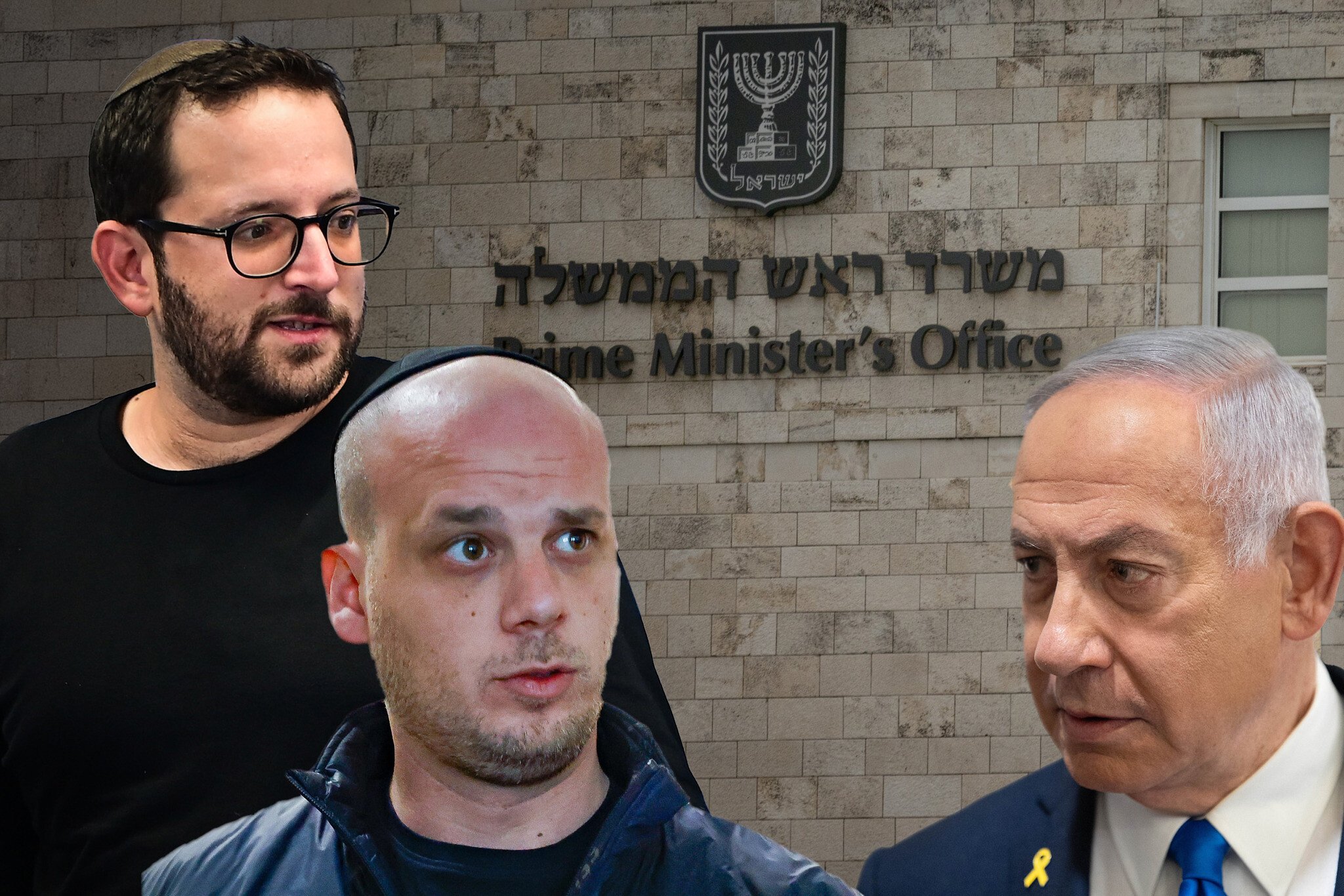
From left: Jonatan Urich, Eli Feldstein, Prime Minister Benjamin Netanyahu (Composite: Flash90)
Asked who is better suited to serve as prime minister, 38% of respondents said Benjamin Netanyahu, compared to 27% who said Opposition chair Yair Lapid, and 31% who said neither of them, according to a poll aired on Channel 12.
When Netanyahu was polled against National Unity chair Benny Gantz, the former received 36%, compared to the latter, who received 24% — a further drop for Gantz, who once polled ahead of Netanyahu and Lapid. Thirty-six percent of respondents said neither Netanyahu nor Gantz is suited to serve as premier.
Former prime minister Naftali Bennett is the only politician polled who performed better than Netanyahu in a head-to-head matchup, receiving 40%, compared to the current premier’s 35%, while 22% of respondents said neither of them is suited for the position. The 40% figure for Bennett appears to be the highest yet.
Asked who should lead the center-left camp in the next election, 24% of respondents said Gantz’s deputy Gadi Eisenkot, 18% said Democrats chief Yair Golan, 17% said Gantz, 15% said Lapid, 8% said Opposition Yisrael Beytenu party leader Avigdor Liberman, 7% said someone else and 11% said they weren’t sure.
Asked if they believe Netanyahu’s claims that he knew nothing about his aides’ allegedly illicit contact with Qatar, 59% of the public said they don’t believe the premier, compared to 30% who do. Among coalition voters, 28% of them don’t believe him, while 58% do.


read more: