

 From the Liveblog of
Thursday, April 23, 2026
From the Liveblog of
Thursday, April 23, 2026
Report: IRGC generals effectively ruling Iran, sidelining ‘gravely injured’ supreme leader Mojtaba Khamenei
 Add ToI as a Preferred Source on Google
Stav Levaton is a military reporter for The Times of Israel
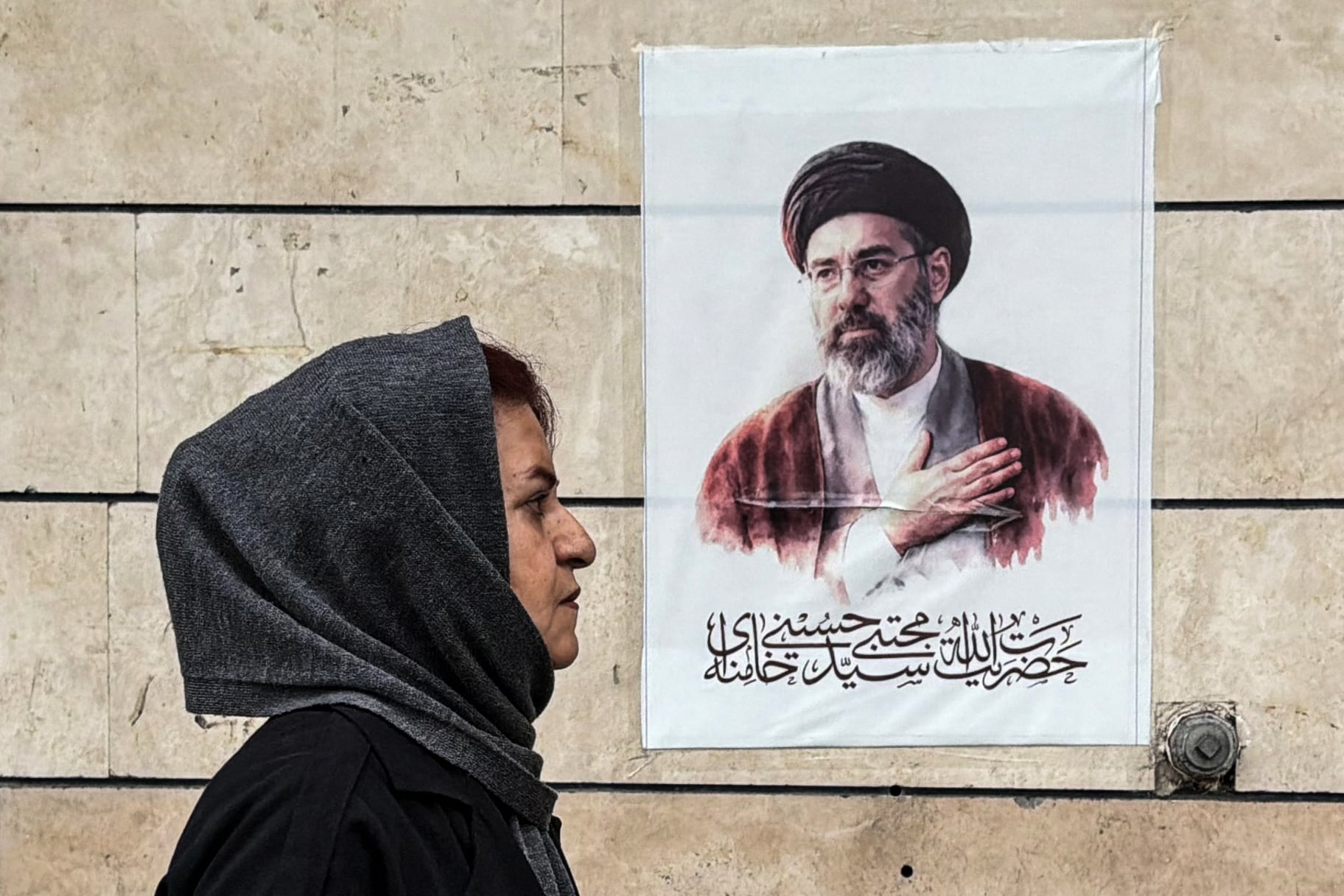
Iran’s new supreme leader, Ayatollah Mojtaba Khamenei, is not exercising the same centralized authority as his father, the late Ali Khamenei, with power instead shifting to senior commanders in the Islamic Revolutionary Guard Corps, according to a report by The New York Times.
Access to Khamenei “is extremely difficult and limited now,” the report says. “He is surrounded mostly by a team of doctors and medical staff who are treating the injuries” he sustained in the airstrikes at the start of the war.
It adds that senior officials and military chiefs do not visit him, for fear of being targeted by Israel. And it says Iran’s President, Masoud Pezeshkian, a heart surgeon, has helped with his medical care.
Khamenei was “gravely wounded” but is “sharp and engaged,” the report says, citing four senior Iranian officials familiar with his health. “One leg was operated on three times, and he is awaiting a prosthetic. He had surgery on one hand and is slowly regaining function. His face and lips have been burned severely, making it difficult for him to speak,” the report elaborates. “Eventually, he will need plastic surgery.
The report is based on interviews with current and former Iranian officials, members of the IRGC, a senior cleric, and individuals familiar with Khamenei and the country’s leadership structure.
Abdolreza Davari, a former adviser to former Iranian president Mahmoud Ahmadinejad, says the younger Khamenei – who has not been seen or heard publicly since taking office in March after his father was killed in a US-Israeli airstrike – is “managing the country as though he is the director of the board,” adding that “he relies heavily on the advice and guidance of the board members… The generals are the board members.”
“Mojtaba is not yet in full command or control,” says Sanam Vakil, director of the Middle East and North Africa for Chatham House, with contacts in Iran, adding that he is largely presented with “fait accompli” decisions.
Khamenei has reportedly been in hiding since US and Israeli strikes on February 28 killed his father and left him seriously wounded, with severe burns and injuries that have limited his ability to speak. Communication with him is conducted through handwritten messages passed via couriers, the report says.
Officials cited in the report say he has refrained from issuing any video or audio statements so far, seeking to avoid appearing weakened or vulnerable in his first public address.
The combination of his injuries, security concerns, and limited access has reportedly led him to delegate authority to IRGC generals, who now dominate decisions on wartime strategy and diplomacy.
The shift marks a significant change from the previous system, in which the elder Khamenei held final authority. Now, Ali Vaez, the Iran director of the International Crisis Group, says, “Mojtaba is subservient to the Revolutionary Guards,” calling him a leader only in name.
According to the report, the generals have led key wartime decisions, including attacks on Israel, the closure of the Strait of Hormuz, and engagement in ceasefire and diplomatic talks with the United States.
Disagreements are said to persist within Iran’s leadership, including over talks with Washington, but the report says the generals have prevailed over political figures, including in a recent decision to halt negotiations with the US amid tensions over a maritime blockade in the Strait of Hormuz.




The Times of Israel Community.