

 From the Liveblog of
Wednesday, April 1, 2015
From the Liveblog of
Wednesday, April 1, 2015
You can’t ignore threats, says Boehner
 Add ToI as a Preferred Source on Google
US House Speaker John Boehner and Prime Minister Netanyahu hail Wednesday the “strong” ties between their nations, amid tensions between Netanyahu and the Obama administration.
Ahead of a meeting in Jerusalem, they both avoided directly addressing negotiations between world powers and Iran over Tehran’s contested nuclear program.
Arriving in Jerusalem as head of a delegation of lawmakers visiting US allies in the Middle East, Boehner said that wherever they have been, the “message is the same — you can’t continue to turn your eye away from the threats that face all of us.”
Addressing ties with Israel, Boehner said: “The bonds between the United States and Israel are as strong as ever.”
“Our two countries cooperate on many different levels. While we may have political disagreements from time to time, the bonds between our two nations are strong, and they’re going to continue to be strong.”
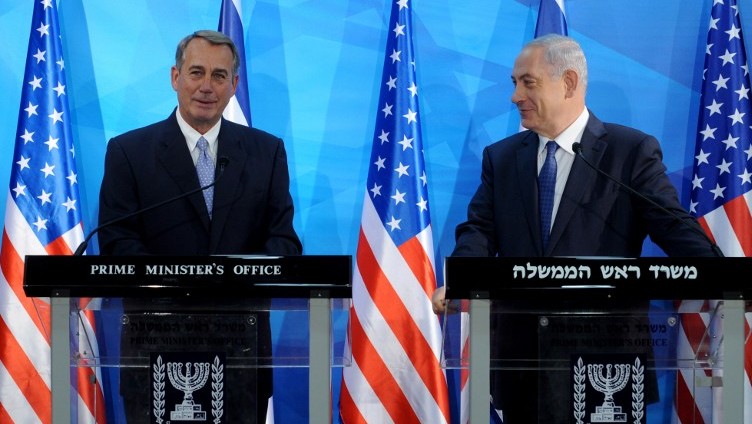
Netanyahu, who urged world powers earlier Wednesday to toughen their positions in the nuclear talks, focused solely on the ties with Washington, which is leading world powers in the Iran talks.
“In this violent and unstable region, where states are imploding and fanaticism is exploding, one thing remains rock solid – our friendship, our alliance, our partnership,” he said.
“It makes both our countries stronger; it makes both our countries safer,” Netanyahu said. “And it’s the anchor for our shared hopes for peace and stability in this region.”
Boehner caused a furor earlier this year when he invited Netanyahu to address a joint session of Congress on the Iran talks, without consulting the White House. In the speech, Netanyahu warned of the perils of agreeing to an imperfect deal with Iran. Obama declined to meet with him during his Washington visit.
— AFP







The Times of Israel Community.