

London councillors reject plan for high-rise building next to historic synagogue
Supporters of Bevis Marks shul argued tower would block light from house of worship, which relies on sunlight and candles during prayer services
 Add ToI as a Preferred Source on Google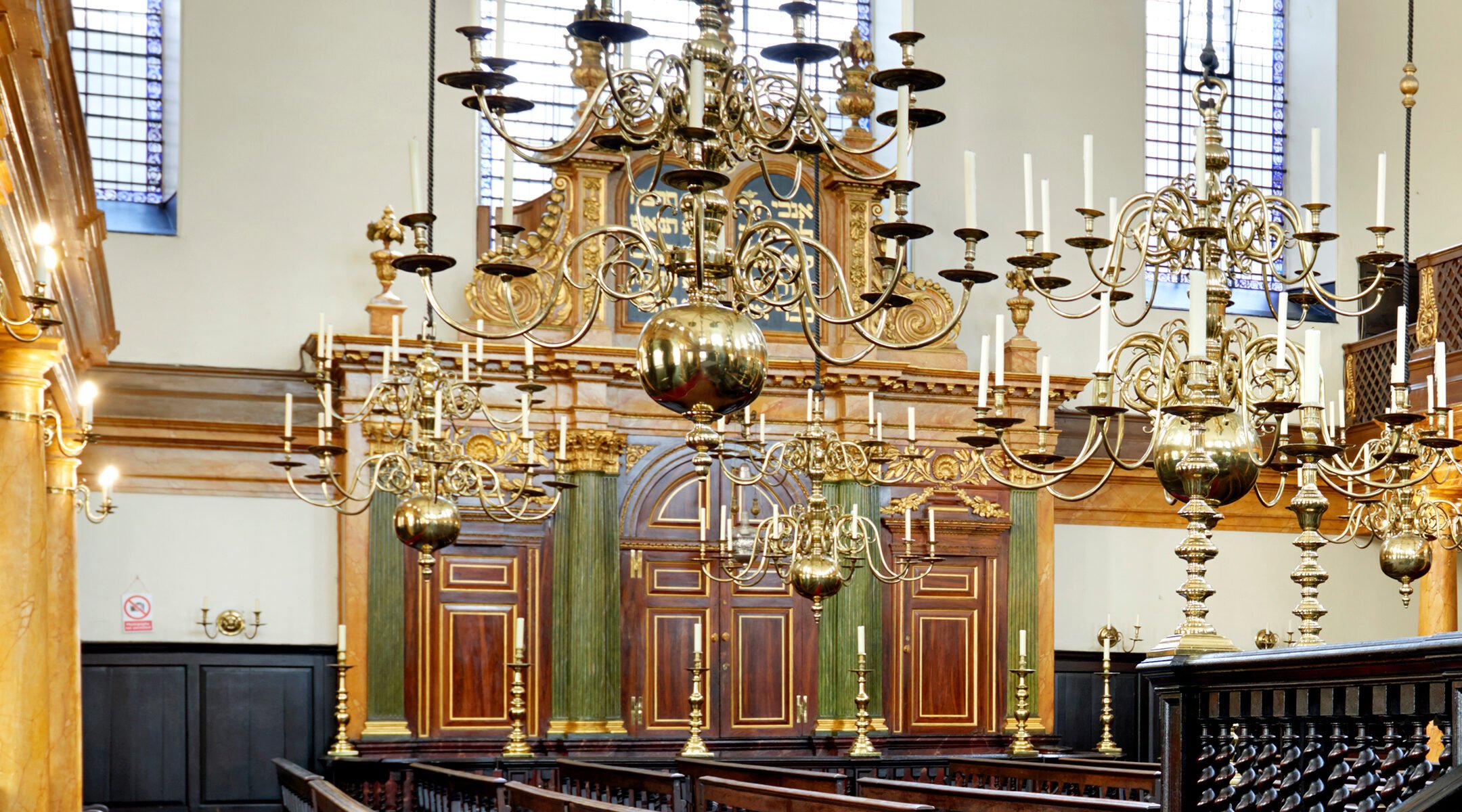
City council members in London voted against a controversial plan to build a high-rise building near an 18th-century synagogue.
The plan by developers would have replaced a seven-story building adjacent to the Bevis Marks synagogue in central London with a 48-story tower. The plan was rejected on Tuesday in a 14-7 vote, the BBC reported.
The custodians of the synagogue, which today serves the Spanish and Portuguese Jewish community of London, argued the envisioned building would block sunlight to the synagogue, though the developers disputed this.
As in other large synagogues of communities of Sephardi Jews who left the Iberian Peninsula after the Spanish Inquisition, which began in the 15th century, Bevis Marks depends for lighting on candles and sunlight.
“We already find it difficult at times to read prayers and carry out a normal service due to poor light conditions,” Shalom Morris, a resident rabbi at Bevis Marks, told the BBC. He said he was “delighted” that the plan was canceled.
Several thousand people signed a petition against the plan, including prominent British Jews such as Simon Schama, a renowned historian, author, and television presenter.
“Saving the light for Bevis Marks is a matter of the deepest historical and cultural significance,” the Jewish Chronicle quoted Schama as saying.
???? @cityoflondon planning committee rejects plans for 48-storey tower overshadowing Britain's oldest synagogue despite recommendation for approval ???? Bevis Marks dates from 1701 and is grade I listed????➡️https://t.co/MyFySwnDnE pic.twitter.com/0Q7Ssgcwo6
— SAVE Britain's Heritage (@SAVEtoReuse) October 5, 2021
Morris said the synagogue is still facing a fight to stop another planned 21-story building nearby.
Bevis Marks was built in 1701 after Oliver Cromwell allowed Jews back into England in 1655, reversing an expulsion order from 1290.
It is thought to be the oldest European synagogue to have been in continuous use.









The Times of Israel Community.