

IS terror chief Baghdadi believed killed in major US raid in Syria
Trump to give ‘major statement’ after cryptic tweet of ‘something big’; report coincides with accounts of heavy fighting in area
 Add ToI as a Preferred Source on Google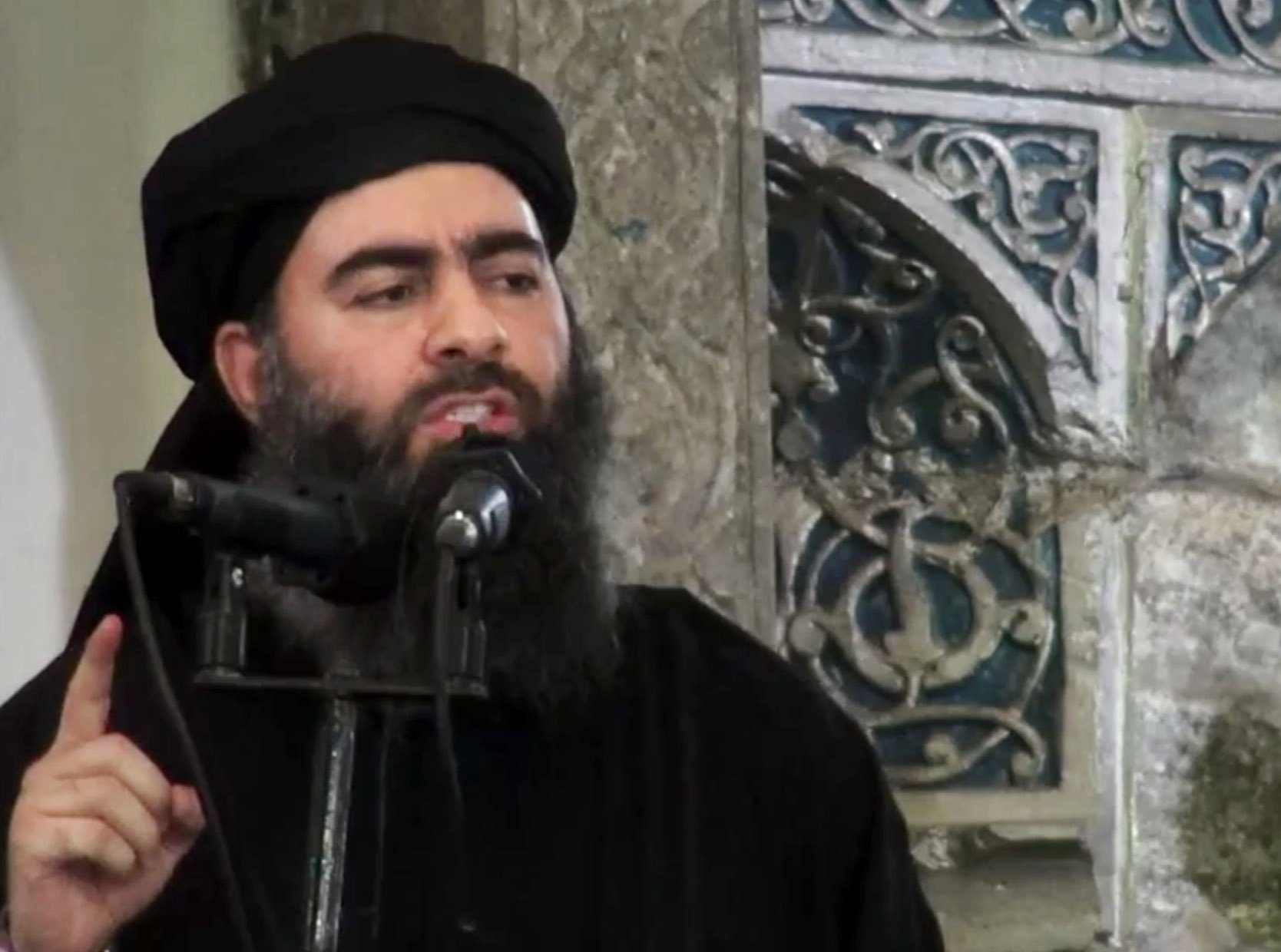
US special forces reportedly carried out a high-level raid in Syria targeting elusive Islamic State terror leader Abu Bakr al-Bahgdadi, who may have been killed in the operation, according to US-based news outlets early Sunday.
There was no immediate confirmation of the death of Baghdadi, the head of the group known for its gruesome campaign of killings across the Middle East, Europe and elsewhere. The raid was first reported by Newsweek and later several other news organizations as well, citing US sources.
A US official told The Associated Press late Saturday that al-Baghdadi was targeted in Syria’s Idlib province. The official said confirmation that the IS chief was killed in an explosion is pending.
Two Iranian officials told the Reuters news agency that Tehran was informed by Syrian sources that Baghdadi had been killed.
Baghdadi may have killed himself with a suicide vest as US special operations forces descended, media said citing multiple government sources.
The report came amid unconfirmed accounts of heavy fighting, including helicopter gunships and bombings, in the Barisha area of Idlib in northwest Syria late Saturday and early Sunday.
Idlib is the last major rebel stronghold in the country.
The Syrian Observatory for Human Rights, a Syria war monitor, reported an attack carried out by a squadron of eight helicopters accompanied by a warplane belonging to the international coalition on positions of the Hurras al-Deen (al-Qaeda affiliated group – Guardians of the Jihad) and where IS operatives are believed to be hiding in the Barisha area north of Idlib city, after midnight on Saturday-Sunday.
It said the helicopters targeted IS positions with heavy strikes for about 120 minutes, during which jihadists targeted the helicopters with heavy weapons. The Syrian Observatory documented the death of 9 people as a result of the coalition helicopter attack. It is not yet known whether al-Baghdadi is one of them, it said, adding that the death toll is likely to rise due to the presence of a large number of wounded.
Tonight's activities according to Syrian sources: Around 11 PM local time, locals began hearing drone movement, helicopter gunships & bombing of Barisha, Idlib. The area have several HQs of militant groups who use the proximity to the border w/ Turkey to reduce risk of attack. pic.twitter.com/oUZ2uBTjgi
— Elizabeth Tsurkov???? (@Elizrael) October 27, 2019
Iraqi state television on Sunday broadcast footage of what it said was the site of the raid, with a crater and blood-stained clothing on the ground, Reuters reported. The broadcaster also quoted an terror expert who said Iraqi intelligence agencies had helped to locate Baghdadi.
US President Donald Trump fueled speculation when he tweeted that “Something very big has just happened!” but did not elaborate.
White House deputy press secretary Hogan Gidley said Trump would make a “major statement” at 9 a.m. in Washington, without giving further details.
Something very big has just happened!
— Donald J. Trump (@realDonaldTrump) October 27, 2019
According to Newsweek, which cited unnamed US defense sources, Trump approved the secret mission nearly a week ago. It was carried out by a team from the Joint Special Operations Command, based on what the report described as “actionable intelligence.”
A Pentagon source was quoted saying that Baghdadi was dead “pending verification.”
A Fox News correspondent tweeted that DNA tests were underway on the target of the raid to confirm that it was Baghdadi, citing “well place military sources.”
Acc to well placed military sources, a high value ISIS target believed to be Abu Bakr al Baghdadi was killed by US led forces in Idlib, Syria. US military cannot yet confirm identity of deceased target. DNA tests underway. POTUS expected to make an announcement Sunday morning.
— Jennifer Griffin (@JenGriffinFNC) October 27, 2019
According to CNN, the CIA was involved in locating Baghdadi.
With a $25 million US bounty on his head, Baghdadi is the world’s most wanted man, responsible for steering his chillingly violent organization into mass slaughter of opponents, and directing and inspiring terror attacks across continents and in the heart of Europe.
Shifting away from the airline hijackings and other mass-casualty attacks that came to define al-Qaeda, al-Baghdadi and other IS leaders supported smaller-scale acts of violence that would be harder for law enforcement to prepare for and prevent.
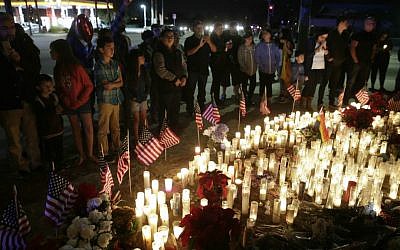
They encouraged jihadists who could not travel to the caliphate to kill where they were, with whatever weapon they had at their disposal. In the US, multiple extremists have pledged their allegiance to al-Baghdadi on social media, including a woman who along with her husband committed a 2015 massacre at a holiday party in San Bernardino, California.
Many of Baghdadi’s top aides have been killed, mostly in US-led coalition airstrikes.
Although largely seen as a symbolic figurehead of the global terror network — he was described as “irrelevant for a long time” by a coalition spokesman in 2017 — Baghdadi’s capture or death would be a coveted prize for the various players across both Syria and Iraq.
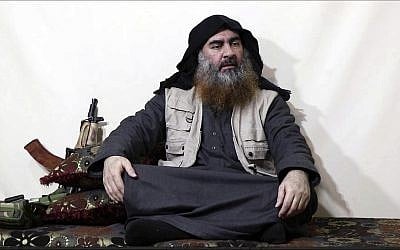
He has been reported as killed or captured several times in the past, but in April emerged into view with a new video of himself, his first sighting in some two years.
His only known public appearance was in Mosul in 2014, where he declared an Islamic “caliphate” in the swathes of territory IS then held in Syria and Iraq.
Al-Baghdadi was born Ibrahim Awwad Ibrahim Ali al-Badri al-Samarrai in 1971 in Samarra, Iraq, and adopted his nom de guerre early on. Because of anti-US militant activity, he was detained by US forces in Iraq and sent to Bucca prison in February 2004, according to IS-affiliated websites.
He was released 10 months later, after which he joined the al-Qaeda branch in Iraq of Abu Musab al-Zarqawi. He later assumed control of the group, known at the time as the Islamic State of Iraq.
After Syria’s civil war erupted in 2011, al-Baghdadi set about pursuing a plan for a medieval-style Islamic State, or caliphate.
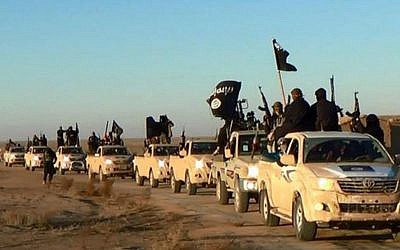
He merged a group known as the Nusra Front, which initially welcomed moderate Sunni rebels who were part of the uprising against Syrian President Bashar Assad, with a new one known as the Islamic State of Iraq and the Levant. Al-Qaeda’s central leadership refused to accept the takeover and broke with al-Baghdadi.
Al-Baghdadi’s fighters captured a contiguous stretch of territory across Iraq and Syria, including key cities, and in June 2014, it announced its own state — or caliphate. Al-Baghdadi became the declared caliph of the newly renamed Islamic State group. Under his leadership, the group became known for macabre massacres and beheadings — often posted online on militant websites — and a strict adherence to an extreme interpretation of Islamic law.

The Times of Israel Community.