

NATO, Kremlin defend nuclear deterrence after ICAN Nobel win
Calling for ‘verifiable and balanced reduction of nuclear weapons,’ NATO chief warns full disarmament approach irresponsible in light of global security ‘realities’
 Add ToI as a Preferred Source on Google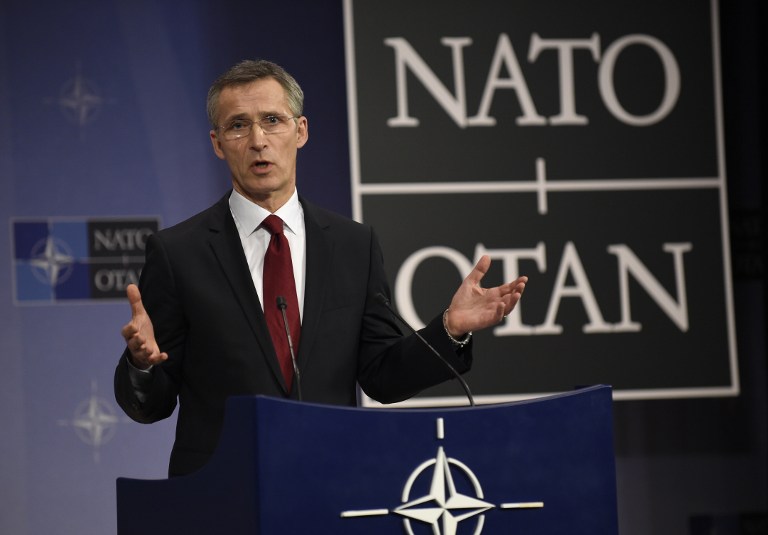
BRUSSELS, Belgium — NATO gave a chilly reception to nuclear disarmament group ICAN’s Nobel Peace Prize win Friday, saying efforts to end the atomic bomb must take into account the “realities” of global security.
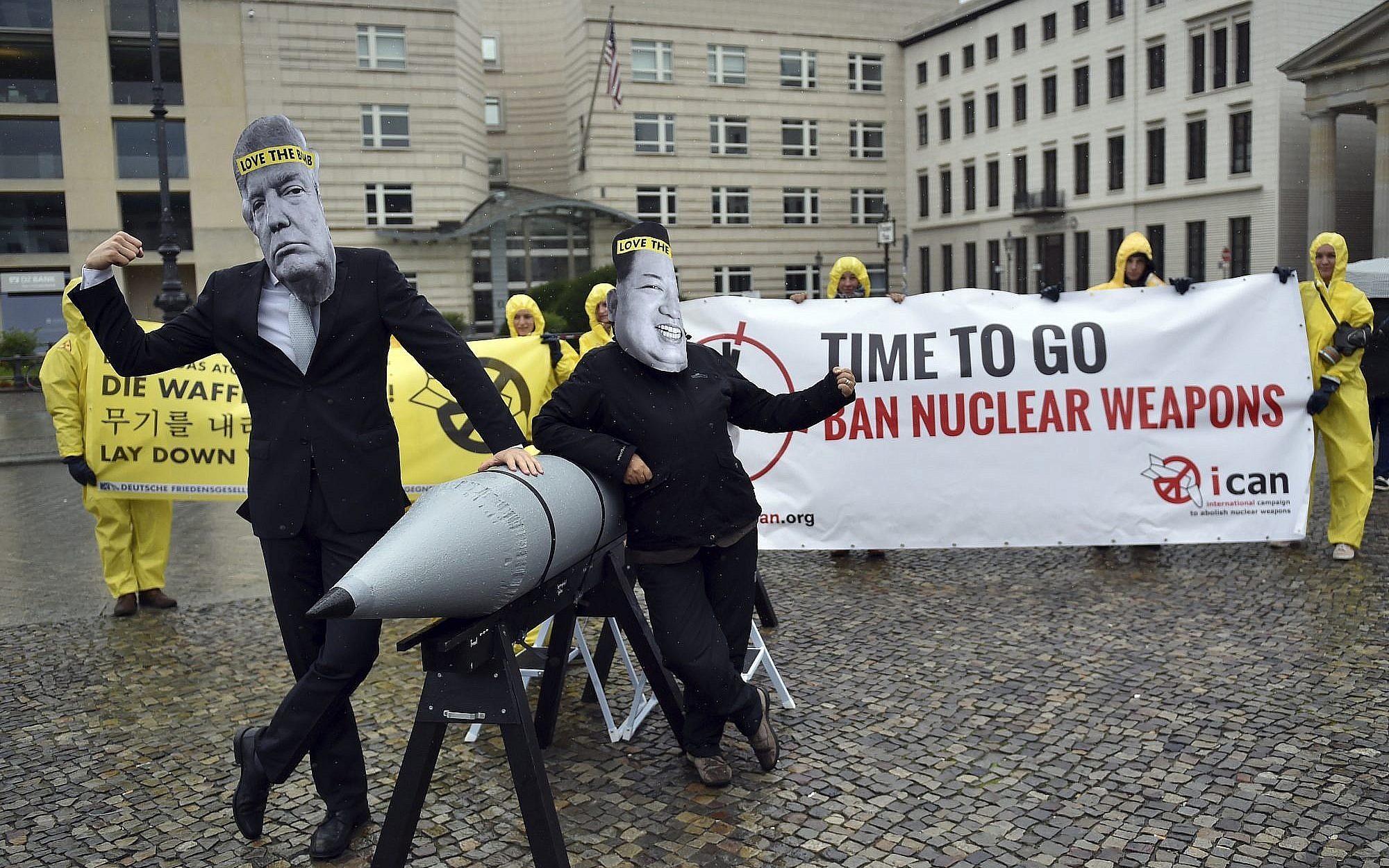
The Geneva-based organization, recognized by the Nobel committee for its decade-long campaign, was a key player in the adoption of a treaty symbolically banning nuclear weapons, signed by 122 countries at the UN in July.
NATO, which has three of the world’s nuclear powers in its ranks, strongly criticized the treaty, saying it risked undermining the international response to North Korea’s atomic weapons program.
Jens Stoltenberg, the alliance’s secretary-general, welcomed “the attention given to the issue” of disarmament by the Nobel Committee and said NATO was committed to creating conditions for a world without nuclear weapons.
But he restated his criticism of the nuclear ban treaty — which was shunned by all nuclear powers — saying it put years of progress on non-proliferation at risk.
“What we need is verifiable and balanced reduction of nuclear weapons. The Nuclear Non-Proliferation Treaty, which all NATO Allies have signed, remains the cornerstone of international efforts to do so,” he said in a statement, adding that NATO would remain a nuclear alliance as long as nuclear weapons existed.
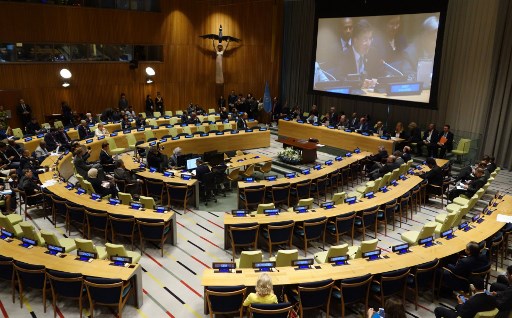
“NATO regrets that the conditions for achieving nuclear disarmament are not favorable today, but efforts towards disarmament must take into account the realities of current security environment.”
Disarmament campaigners hailed the July treaty as an important step but most NATO members boycotted the talks to prepare the text, as did Japan — the only country to have suffered nuclear attacks, in 1945.
Nuclear powers argue their arsenals serve as a deterrent and say they remain committed to the gradual approach to disarmament outlined in the nuclear Non-Proliferation Treaty.
ICAN says its main objective is the adoption of an international treaty banning nuclear weapons, along the lines of earlier agreements forbidding the use of biological and chemical weapons, landmines and cluster munitions.
Russia also chimed in on Friday on the ICAN win, with President Vladimir Putin’s spokesman saying there is “no alternative to nuclear parity” for global security.
“President Vladimir Putin has spoken many times about the importance of nuclear parity, for which there is no alternative from the point of view of global security and stability,” Dmitry Peskov told reporters.
He reiterated Russia’s “consistent and active position aimed at the non-proliferation of nuclear weapons.”
“Russia is a responsible member of the nuclear club,” Peskov said, adding that one had to “respect” the decision of the Nobel committee.
A former head of the Soviet Union, Mikhail Gorbachev, meanwhile, hailed the awarding of the peace prize to ICAN, saying it reinforces the position that he and Ronald Reagan took at the Reykjavik summit a generation ago.
Gorbachev, who has himself campaigned against nuclear weapons since leaving office in 1991, said he was “very worried that military doctrines again allow the use of nuclear weapons.
He added in a statement: “I would like to remind about a joint statement we signed with Ronald Reagan: A nuclear war can’t be won and must never be fought.”
Although the 1986 Reykjavik meeting collapsed at the last minute, it led to the 1987 Intermediate-Range Nuclear Forces treaty that banned all land-based cruise and ballistic missiles with a range between 500 and 5,500 kilometers (310 and 3,410 miles).





The Times of Israel Community.